Loading...
Please wait while we load the content...

Loading...
Please wait while we load the content...
Stay informed about our latest publications, calls for proposals, and special announcements. As a subscriber, you'll also enjoy exclusive member discounts of 10%-20% on all orders. Join our community of scholars, librarians, and readers today.


Availability
In stock
ISBN
9798881904470
Edition
1
Publication Date
March 31, 2026
Physical Size
236 x 160mm
Illustrations
5 Color
Number of Pages
216
Currency
Quantity
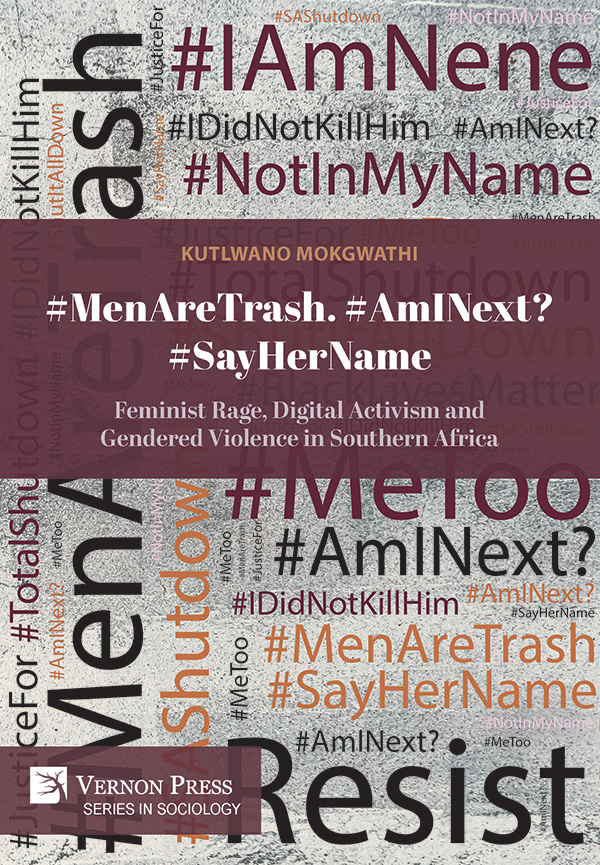
Located primarily in Southern African contexts, but with global relevance and resonance, this rich and nuanced perspective on gender-based violence addresses brutal and everyday male violences against women, children and the LGBTQ+ community, both institutionalized and interpersonal, through the productive lens of contemporary Digital Black and African Feminisms. Calling out the silencing of violence against Black and African women in particular, the book disrupts such erasures and plays witness to such violences. Rather than repeating tropes of damage and victimhood that African feminists have called out, the book also speaks to activisms and agencies, particularly as articulated in contemporary virtual spaces. In this way, the book raises and challenges the ongoing and silenced violences against Black women — remembering, mourning and bearing witness to these — while also protesting against them and the conditions that make such violences possible and imaginable. Importantly, the book, as all feminist scholarship hopes to be, is both political and personal. It works not only with dense theory and literature, but also with embodiment, affect and lived experience, memory and subjective narratives. Indeed, Kutlwano Mokgwathi's beautifully articulated narrative is stitched through with rage, grief, and other entangled affective engagements. What most stands out for the reader is the way in which this powerful and valuable account of contemporary African Feminist Digital activism, weaves both a despairing and reparative or hopeful narrative, what the author calls ‘respair’: we are reminded to remember the violated and dead, to ‘name’ violence, resist forgetting, to ‘disrupt’ denial, whilst also to ‘mobilise’ against systemic and interpersonal violence, and to engage creative and radical ‘reimaginings’, through reflexivity, care, solidarity and love.
Tamara Shefer
Professor, Women’s and Gender Studies
University of the Western Cape, South Africa
Dr. Mokgwathi provides a valuable addition to the literature on feminisms and socio-political challenges in Africa. By centering the longue durée of patriarchy in Africa, particularly the impact of colonialism, and placing digital feminist/womanist activist organizing in their historical context, she offers a thoughtful examination of “the routine violence that structures women’s lives." Mokgwathi’s book contributes to our understanding of how the past has shaped contemporary feminist and womanist movements in Africa in an increasingly digital world.
James J. Fisher
Researcher, Jonathan M. Tisch College of Civic Life
Tufts University
Discover books that expand on the themes explored in this work—titles that engage with similar questions, intersecting disciplines, and complementary perspectives to deepen understanding and broaden the conversation.
Browse all titles
Eulalia Pérez Sedeño, Lola S. Almendros, S. García Dauder, and Esther Ortega Arjonilla (Eds.)
View more
Bernadette Wegenstein and Lauren Benjamin Mushro (Eds.)
View more