Loading...
Please wait while we load the content...

Loading...
Please wait while we load the content...
Stay informed about our latest publications, calls for proposals, and special announcements. As a subscriber, you'll also enjoy exclusive member discounts of 10%-20% on all orders. Join our community of scholars, librarians, and readers today.
Availability
In stock
ISBN
9798881902711
Edition
1
Publication Date
July 22, 2025
Physical Size
236mm x 160mm
Number of Pages
248
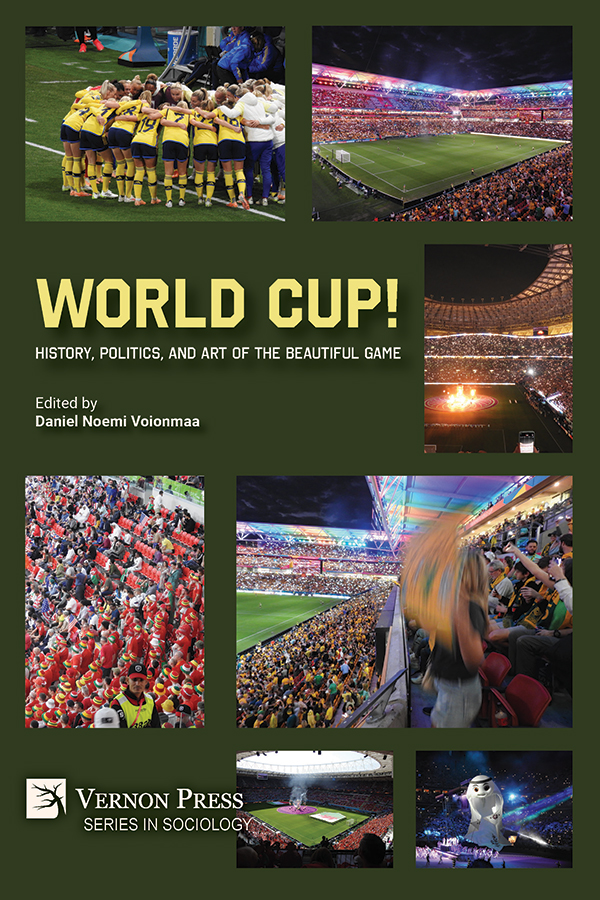
A highly engaging anthology that offers an interdisciplinary and global perspective on the history of the FIFA World Cup, spanning from the inaugural tournament in 1930 in Uruguay to the politically charged 1978 tournament in Argentina and culminating with the most recent and controversial World Cup held in Qatar in 2022. The essays included in this collection not only examine European and Latin American nations, such as England and Argentina, traditionally associated with football, but also explore countries like Israel and India, where football does not necessarily occupy the status of a national sport. This volume invites both scholars and football enthusiasts to critically engage with the political, social, and economic dimensions of the sport, often referred to as the most important of the unimportant things.
Dr. Resul Karaca
Fakultät für Kulturwissenschaften
Institut für Romanistik
Universität Paderborn, Germany
This book depicts a colorful mosaic of the political, artistic, and economic intricacies of some famous (and not-so-famous) historical football episodes that allow us to track how the sport became a global phenomenon. Each chapter dives into a part of the history of soccer to give the reader a new distorted image of an impossible journey that has produced millions of fans despite its profound contradictions. If football helps us understand “who we are,” as Noemi cleverly quotes Camus, this collection of essays reflects how the ‘beautiful sport’ is deeply embedded in our society, to the point that it cannot be detached from the history of capitalism and the formation of many national identities.
Professor Federico Pous
Elon University
Discover books that expand on the themes explored in this work—titles that engage with similar questions, intersecting disciplines, and complementary perspectives to deepen understanding and broaden the conversation.
Browse all titles
Diego Compagna and Stefanie Steinhart (Eds.)
View more
Steve Gennaro and Blair Miller (Eds.)
View more


