Loading...
Please wait while we load the content...

Loading...
Please wait while we load the content...
Stay informed about our latest publications, calls for proposals, and special announcements. As a subscriber, you'll also enjoy exclusive member discounts of 10%-20% on all orders. Join our community of scholars, librarians, and readers today.


Availability
In stock
ISBN
9781648895142
Edition
1
Publication Date
September 20, 2022
Physical Size
236mm x 160mm
Illustrations
23 Color
Number of Pages
164
Currency
Quantity
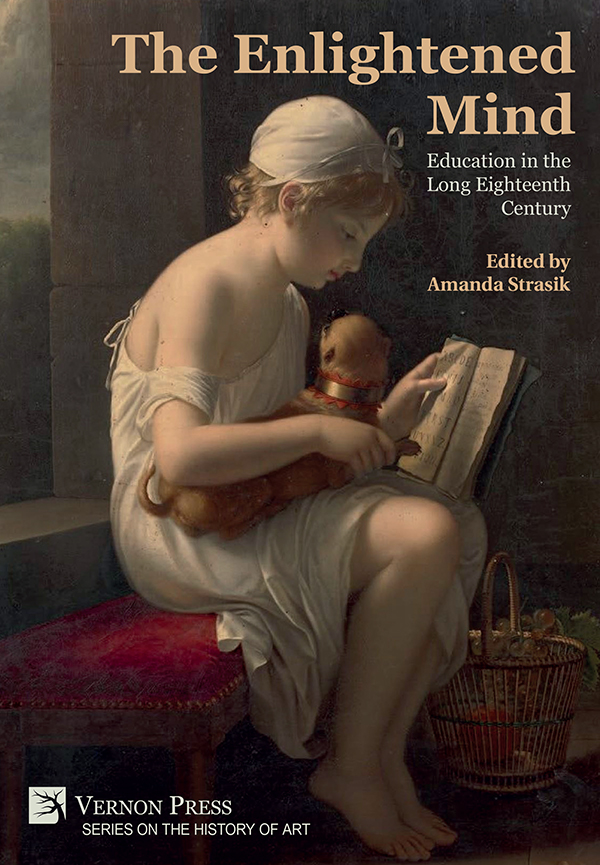
Through the exploration of an impressive range of textual and visual materials, this book adds to the growing scholarship on education during the long eighteenth century. The collection is distinguished by its diverse social-economical and material range. The inclusion of Spain and America gives it some geographical breath as well. Essays offer original and thought-provoking interpretations of well-known eighteenth-century philosophical treatises and artworks as well as introduces readers to lesser-known writers and artists. The book serves as a great resource for specialists in eighteenth-century culture, gender studies, and women’s history as well as for students interested in the period.
Dr. Christina K. Lindeman
Department of Art & Art History
University of South Alabama
This useful collection of essays addresses eighteenth-century culture, particularly as related to the visual arts and gender, through the lens of education in fresh and instructive ways. I suspect most readers will find in the essays a compelling mixture of familiarity and revelation: familiar themes, artists, and ideas are cast in a new light, expanded in interesting ways, animated alongside less well-known figures, and broadened to inform new questions. Originating from a session on education at the American Society for Eighteenth-Century Studies conference in 2021—chaired by Amanda Strasik and Karissa Bushman—the seven papers engage French, British, American, and Spanish topics, including anatomical training for artists in Paris, the context for better understanding Jeanne-Elisabeth Chaudet’s ‘Little Girl Teaching Her Dog to Read,’ the significance of embroidered pictures after designs by Angelica Kauffman, shifting prescriptions for teaching drawing to children, the educational utility of experience and being outside from Madame d’Epinay’s ‘Conversations d’Emilie,’ new conceptions of pedagogical ideals in Spain, and the impact of Goya’s education on his depictions of saints. At the risk of noting favorites, I am especially excited about the generative articles by Dorothy Johnson (on artistic anatomy), Rachel Harmeyer (on embroidery), and Franny Brock (on drawing instruction). Contributing both a chapter and an introduction framing the period’s educational ideals as shaped by philosophical and social developments, Amanda Strasik, as the volume’s editor, should be congratulated for bringing together a fascinating range of materials, underscoring how important the eighteenth century remains for understanding the world we live in today, including our own varied educational ideals—just as such questions now feel more relevant than ever.
Dr. Craig Hanson
Professor of Art History
Calvin University
“The Enlightened Mind” explores the complex landscape of education in eighteenth-century Europe and the United States, offering insight into how new ideas about learning not only permeated gender and class boundaries, but also influenced visual and material culture. The seven essays in this volume examine the wide-reaching effects of learning and its many environments. The book covers a broad range of countries and subjects, but the authors’ art historical and textual analyses encourage readers to draw thematic connections across each chapter.
Readers will discover how Enlightenment thought influenced traditional education at the Académie royale de peinture et de sculpture in France, from its anatomy curriculum in the Ancien Régime (Johnson) to critical discourse at its Post-Revolutionary Salon exhibitions (Strasik, Brock). They also explore other spaces dedicated to knowledge, from girls’ schoolhouses in Britain and North America (Harmeyer) to religious education led by the Spanish clergy (Bushman, Sutherland-Meier) and domestic instruction led by tutors, mothers, and Nature itself (Brock, Weltman-Aron). “The Enlightened Mind” examines a remarkably broad range of objects, artworks, and texts designed to facilitate learning in the 18th century. The authors consider anatomically precise écorche, ABC primers, dolls, intricately embroidered pictures, as well as traditional paintings and sketches. They also analyze pedagogical texts – from educational treatises to drawing manuals – demonstrating that eighteenth-century discourse was filled with ideas that frequently complimented and contradicted one another.
A paradox of learning in the eighteenth century is that, despite the insistence of Enlightenment authors that knowledge should be accessible to all, education remained a privilege primarily enjoyed by middle- and upper-class white populations. Several authors call attention to these inequities, focusing especially on the ways in which women influenced spaces of learning as artists, authors, and educators. “The Enlightened Mind” ultimately reveals that educational discourse influenced many aspects of eighteenth-century life and culture. This book is important for its contributions to art history, education, and historical studies, and will be enjoyed by experts and newcomers alike.
Dr. Maura Gleeson,
Art Historian, Educator, and Independent Scholar
[...] the volume covers an impressive diversity of material, including lesser-studied texts, artists, and art practices, as well as a recurring focus on women’s cultural contributions. The authors effectively demonstrate how eighteenth-century artworks and texts were shaped by period ideas while also serving as tools to extend those lessons within bourgeois and elite society. The essays included in the volume, in turn, enhance the reader’s knowledge on subjects of interest to multiple specializations, including eighteenth-century culture, art history, literature, and gender studies.
[Extract from book review on 'XVIII New Perspectives on the Eighteenth Century', Vol. 21, Summer 2024, pp. 103-105. Reviewer: Katherine Arpen (Auburn University) https://www.seasecs.org/npec]
Discover books that expand on the themes explored in this work—titles that engage with similar questions, intersecting disciplines, and complementary perspectives to deepen understanding and broaden the conversation.
Browse all titles
Eulalia Piñero Gil and María Laura Arce Álvarez (Eds.)
View more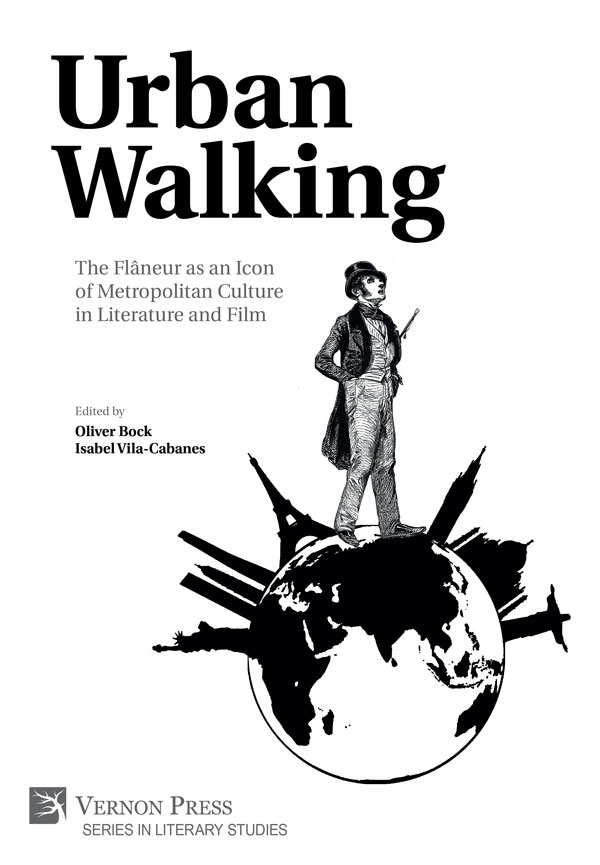
Oliver Bock and Isabel Vila-Cabanes (Eds.)
View more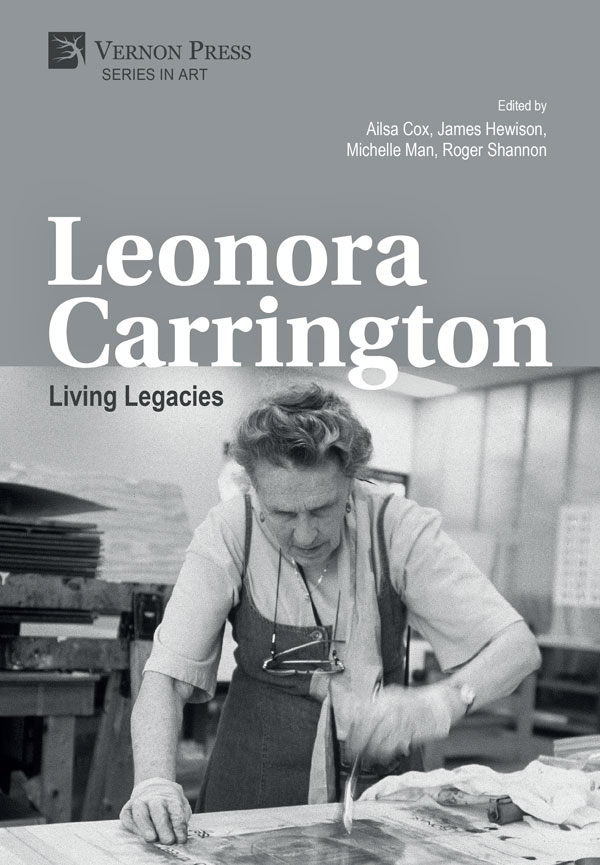
Ailsa Cox, James Hewison, Michelle Man, and Roger Shannon (Eds.)
View more