Loading...
Please wait while we load the content...

Loading...
Please wait while we load the content...
Stay informed about our latest publications, calls for proposals, and special announcements. As a subscriber, you'll also enjoy exclusive member discounts of 10%-20% on all orders. Join our community of scholars, librarians, and readers today.


Availability
In stock
ISBN
9781648895074
Edition
1
Publication Date
January 31, 2023
Physical Size
236mm x 160mm
Number of Pages
200
Currency
Quantity
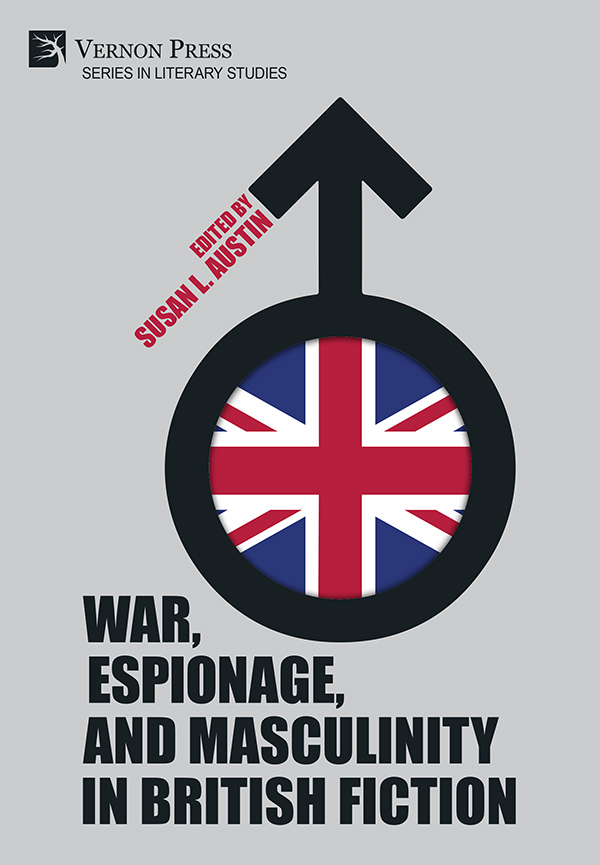
“War, Espionage, and Masculinity in British Fiction” is an enjoyably sprawling study that spans from Kipling’s 1891 novel “The Light that Failed” to Susanne Bier’s 2016 television adaptation of John Le Carré’s “The Night Manager.” The breadth of its inquiry is matched by the depth of its essays, which move in a broadly chronological fashion from narratives about the British involvement in the Mahdist War of the 1880s and 1890s, through both world wars and the Cold War, to post-9/11 London. This study, as a whole, analyzes how men navigate both political landscapes (fraught with physical danger, spying, surveillance, and double agents) and the terrain of heteronormative masculinity, with its insistence on male invulnerability, sexual dominance, unlimited agency, and compulsory aggression. This volume explores a compelling range of writers (R. C. Sherriff, Dorothy Sayers, Graham Greene, Ian Fleming, Ian McEwan) who interrogate the contours of a hegemonic masculinity that damages whatever comes into its orbit, including men themselves. At a time of increased media attention paid to the toxic behaviors of entitled men (be they politicians, entertainers, corporate leaders, or clergy), this study offers an engaging and highly readable examination of a British literary/cultural tradition that has, for more than a century, been scrutinizing masculinity.
Some standout essays in this collection are the two historically rich studies of Ian McEwan’s “The Innocent” (1990), set in the context of “Operation Gold,” a joint spying initiative of the MI6 and CIA; the gracefully careful reading of Graham Greene’s “The Heart of the Matter” (1948); and the critically observant comparison of Bond-style masculinity in John Glen’s 1987 film “The Living Daylights” and its Ian Fleming source material.
This book will make a significant contribution to the fields of genre studies, cultural studies, British modernism, and masculinity studies.
Dr. Paul M. Puccio
Professor of English
Bloomfield College
The essays in the edited volume “War, Espionage, and Masculinity in British Fiction” describe the myriad ways that works of fiction defined and redefined British masculinities through the 20th C and into the first decades of the 21st. Each essay is impressively well-grounded in scholarship across several disciplines, yet each also offers new ideas and fresh perspectives. Seen as a whole, this collection acknowledges earlier scholarship that focused on narratives of masculinity, war and espionage composed during WW1 and its aftermath, re-examines their questions and provocations, and carries them forward to the present day. In so doing, it deftly traces themes of patriotism, duty and self-doubt as they responded to (and against) ever-shifting cultural currents and cross-currents. The result is a collection that breaks much new ground and suggests intriguing directions for further study. I imagine this book would be of interest to fields of literary studies, literary history, cultural studies, gender studies and military studies.
Dr. David Toomey
Dept of English
South College
University of Massachusetts
Discover books that expand on the themes explored in this work—titles that engage with similar questions, intersecting disciplines, and complementary perspectives to deepen understanding and broaden the conversation.
Browse all titles
Vanessa Guignery and Wojciech Drąg (Eds.)
View more
Oliver Bock and Isabel Vila-Cabanes (Eds.)
View more