Loading...
Please wait while we load the content...

Loading...
Please wait while we load the content...
Landmark College
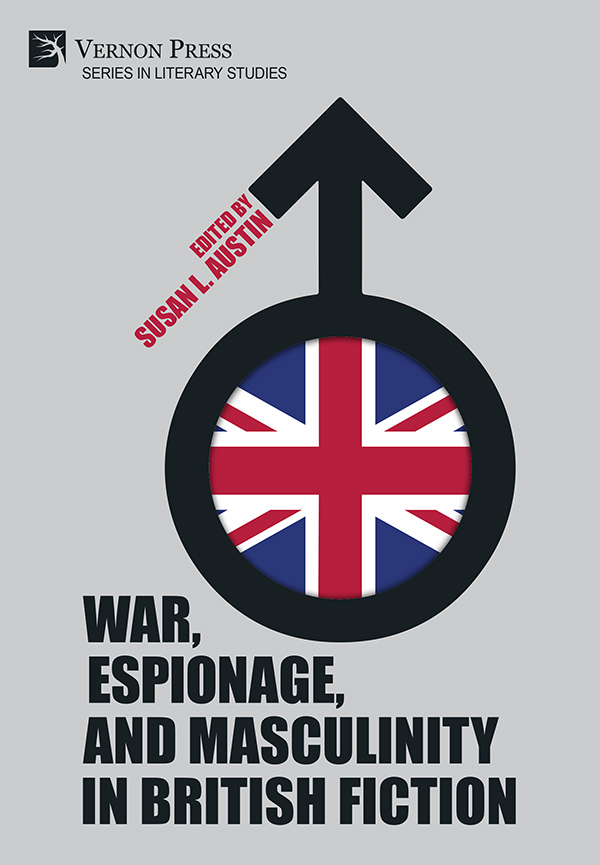
Jonathan Readey, Dany Jacob, Roxana Oltean, Patrick Thomas Henry, Li Chen, Dennis S. Gouws, Pierre Dumont, Elizabeth Carroll, Adrienne Major, and Susan L. Austin
'War, Espionage, and Masculinity in British Fiction' explores the masculinities represented in British works spanning more than a century. Studies of Rudyard Kipling’s 'The Light That Failed' (1891) and Erskine Childer’s 'The Riddle of the Sands' (1903) investigate masculinities from before World War I, at the height of the British Empire. A discussion of R.C. Sherriff’s play 'Journey’s End' takes readers to the battlefields of World War I, where duty and the harsh realities of modern warfare require men to perform, perhaps to die, perhaps to be unmanned by shellshock. From there we see how Dorothy Sayers developed the character of Peter Wimsey as a model of masculinity, both strong and successful despite his own shellshock in the years between the world wars. Graham Greene’s The Heart of the Matter (1948) and The Quiet American (1955) show masculinities shaken and questioning their roles and their country’s after neither world war ended all wars and the Empire rapidly lost ground. Two chapters on 'The Innocent' (1990), Ian McEwan’s fictional account of a real collaboration between Great Britain and the United States to build a tunnel that would allow them to spy on the Soviet Union, dig deeply into the 1950’s Cold War to examine the fictional masculinity of the British protagonist and the real world and fictional masculinities projected by the countries involved. Explorations of Ian Fleming’s 'Casino Royale' (1953) and 'The Living Daylights' (1962) continue the Cold War theme. Discussion of the latter film shows a confident, infallible masculinity, optimistic at the prospect of glasnost and the potential end of Cold War hostilities. John le Carré’s 'The Night Manager' (1993) and its television adaptation take espionage past the Cold War. The final chapter on Ian McEwan’s 'Saturday' (2005) shows one man’s reaction to 9/11.
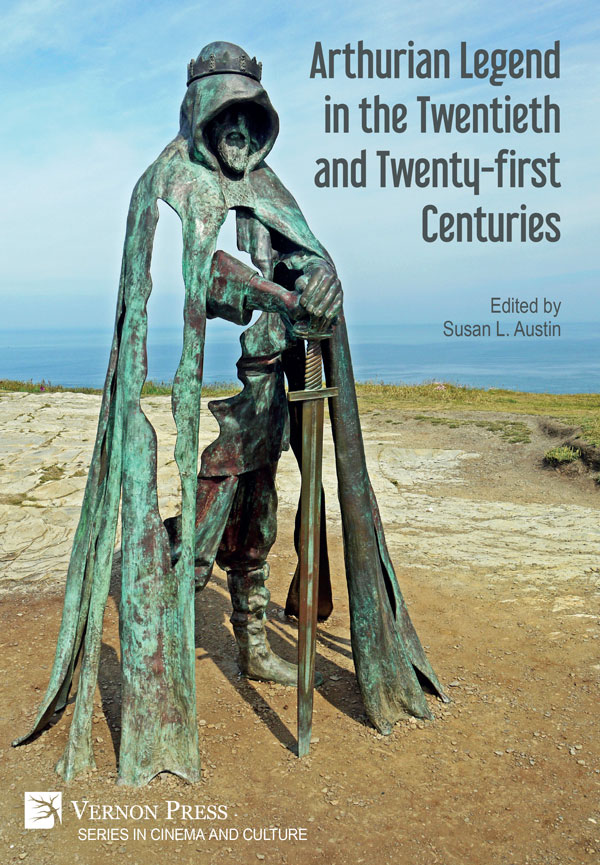
Adrienne Major, Sarah Gordon, Carl Sell, Tracey Thomas, Zainah Usman, Erin Mullally, Leah Hamilton, and Susan L. Austin
The King Arthur we imagine did not exist in history. He is the result of stories told and retold, changed and added to by storytellers for centuries, each making the story reflect the storyteller’s time and values. The chapters in this book look at movies, manga, comic books, a television show, and traditional books released since 1960 to explore some of the ways King Arthur has been reimagined in the past 60 years. Interpreting Avalon High and The Kind Who Would Be King, Camelot 3000 and King Arthur vs. Dracula, Fate/Zero, John Steinbeck’s The Acts of King Arthur and His Noble Knights, the influence of Arthurian legend on Harry Potter, Terry Gilliam’s The Fisher King, John Boorman’s Excalibur, Jerry Zucker’s First Knight, Antoine Fuqua’s King Arthur, Guy Ritchie’s King Arthur: The Legend of the Sword, Matthew Vaughn’s Kingsman: The Secret Service, Iris Murdoch’s The Time of the Angels, and the BBC series Merlin, the authors find that while we are still interested in the idea of King Arthur, we may also want his story to be more racially and gender inclusive, less elitist, and in some cases, more secular.