Loading...
Please wait while we load the content...

Loading...
Please wait while we load the content...
The University of the West Indies, Cave Hill Campus, Barbados
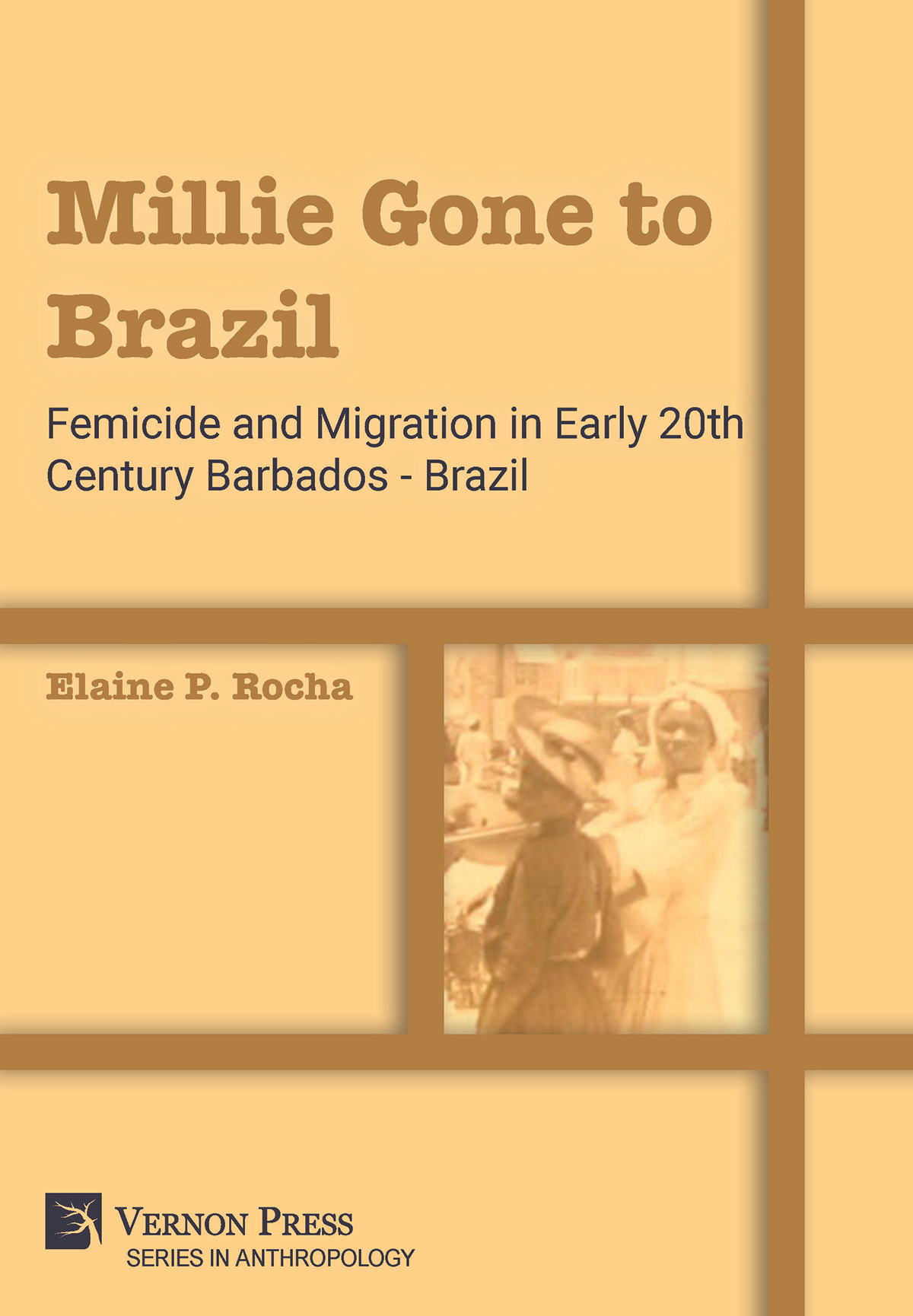
Femicide and migration in early 20th century Barbados - Brazil
Elaine P. Rocha
'Millie Gone to Brazil' is the title of one of the most popular folk songs in Barbados. Written in the early 20th century by an unknown author, the song has travelled with Barbadian migrants to Cuba, the United States of America, Canada and England. It tells the story of a young woman – Millie – killed by her lover, who claimed that she had left Barbados to go to Brazil. This book focuses on the killings of Millicent Gittens, murdered in Barbados in 1916 and of Christine Minggs, a Barbadian immigrant murdered in Brazil in 1924. As a backdrop to those crimes, it depicts the poverty and marginality among Black populations during the post-abolition period in Barbados and Brazil, emphasizing the low status of black women and their vulnerabilities. To understand the vulnerability of Black Barbadian women. At the turn of the 20th century, economic, social and political exclusion drove thousands of people to emigrate from the small islands of the Caribbean in search of a better life. Black immigrants, although much necessary labor force, faced discrimination and limited opportunities to improve their lives, for women, life was harder. Who speaks on behalf of the dead women? In criminal processes, they are the victim, the corpse, not a person. 'Millie Gone to Brazil' sheds some light on the anonymous lives of Black people from lower classes in Barbados and examines a not well-known migration path of West Indians to the rainforest region of Brazil. Women and men struggled to make a life in Barbados and in Brazil, working, loving, building families, facing conflicts. Some survived, some perished. Scraps of their stories were registered in the pages of newspapers, in police reports, in criminal processes, and in popular songs. Some of those stories are narrated in this book.
Elaine P. Rocha, Carlos Eduardo Coutinho da Costa, Nielson da Rosa Bezerra, João-Manuel Neves, Marco Aurelio Schaumloeffel, Petronio Jose Domingues, Katia Cilene Couto, Karl Monsma, Patricia Bosenbecker, and Lucia Helena Oliveira Silva
Since the first contact with Europeans, the Americas have been a continent of immigrants as much as a continent of continuous migrations. Black migrations represent more than the transit of people between countries and regions and from rural areas to urban centers. It contributed to constructing networks that made survival possible, creating neighborhoods and cultural expression, impacting dietary habits, exchanging crops and agricultural techniques, and uplifting families from slavery and misery to ownership, education, and political representation. The most dangerous elements that moved from place to place with blacks were the ideas of freedom and citizenship. This book brings together articles from authors dedicated to the study of black migrations in diverse countries as well as in diverse historical periods to highlight that the movement of black people has been continuous over the centuries. Sometimes voluntarily, others coerced, people have moved from one place to another, carrying with them history and important cultural traditions such as language, music, and religion. Moreover, dangerous ideas of liberty and equality would spread through the African Diaspora. Ten authors from renowned universities contributed with their works on black migrations from a transnational perspective, exploring how people have transited between regions, countries, and continents, carrying their ideas, costumes, beliefs, and strategies for survival. In their trajectories, migrants built communities, created religions, musical traditions, languages, and much more. They influenced politics, contributed to revolutions and wars, to the economy, and shaped societies. For centuries, Latin America's official history has pushed black immigrants' histories to the margins, keeping them in the shadows and denying their importance in the construction of the modern world. The works brought together in this book aim to contribute to breaking this pattern, bringing the experiences of black migrants from the margins to the center.