Loading...
Please wait while we load the content...

Loading...
Please wait while we load the content...
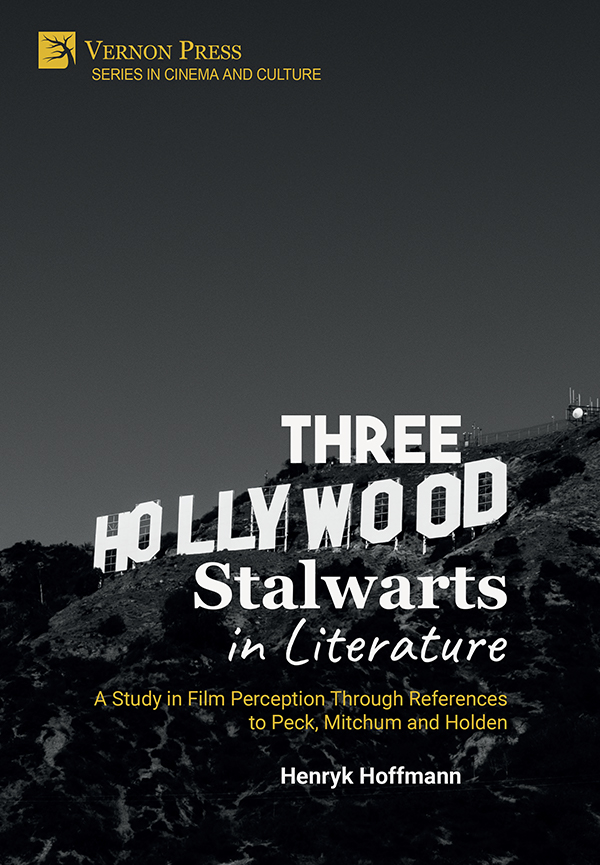
A Study in Film Perception Through References to Peck, Mitchum and Holden
Henryk Hoffmann
This book focuses on the perception of the names, personae, performances and films of three Hollywood megastars, Gregory Peck, Robert Mitchum and William Holden, as presented in the references and allusions encountered in American and foreign literature. Its secondary aim is to establish the ‘impact factor’ of the three actors and their major films and provide extensive data for further studies on the complex and bilateral relationships between film and literature. The pertinent quotations in ‘Three Hollywood Stalwarts in Literature: A Study in Film Perception Through References to Peck, Mitchum and Holden’ have been extracted from nearly 220 works by about 140 authors. The majority of the works were written by acclaimed authors; amongst them are some well-known American mainstream writers such as John Updike, John Irving, Fannie Flagg and Anne Tyler; some leaders of the mystery genre include Martha Grimes, Stuart Kaminsky, Elmore Leonard, Sara Paretsky; and a few masters of other popular genres, such as Stephen King and Dean Koontz. The global flavor of the citations is provided by international authors (e.g., Julio Cortázar, Elizabeth Hay, Henri Charrière, Sebastien Japrisot) and authors born to first-generation U.S. immigrants (e.g., Oscar Hijuelos). Almost seventy films referenced in world literature are discussed in the book, and those mentioned in the biggest number of works include ‘Sunset Boulevard’, ‘The Wild Bunch’, ‘To Kill a Mockingbird’, ‘Roman Holiday’, ‘Spellbound’, ‘The Guns of Navarone’, and ‘Duel in the Sun’, among others. This book will appeal to college professors and students interested in film studies, specifically film analysis and criticism, film perception, and film genres. It will also hold interest for the general reader interested in biographies of movie personalities and the careers of the three actors, movie and stage actors, and fans of the western, film noir, and war genres.
Who Says It’s a Dead Language?
Henryk Hoffmann
The goal of this book is to prove that Latin is not a dead language by demonstrating how prevalent and strong it still is in modern Western culture. In order to do so, the author, an English philologist with a long experience as a Latin educator, catalogues, explains and interprets Latin quotations and references in a multitude of twentieth- and twenty-first-century literary works by—primarily—mainstream authors (from Aldous Huxley to Saul Bellow to John Irving), crime/mystery writers (from Raymond Chandler to Elizabeth George to Dennis Lehane) and frontier/western novelists (from Emerson Hough to Larry McMurtry). The three areas of fiction constituting the main scope of the book indicate the author’s major interest and preference, as well as the subject matter of his extensive research, both prior and current—the former related to his already published books. The writers offering the most impressive contributions to the thesis are featured in the three parts of the main body; those with lesser input are listed in the Appendix. The prospective readers of the book include all Latin students and educators at the secondary and college levels worldwide.
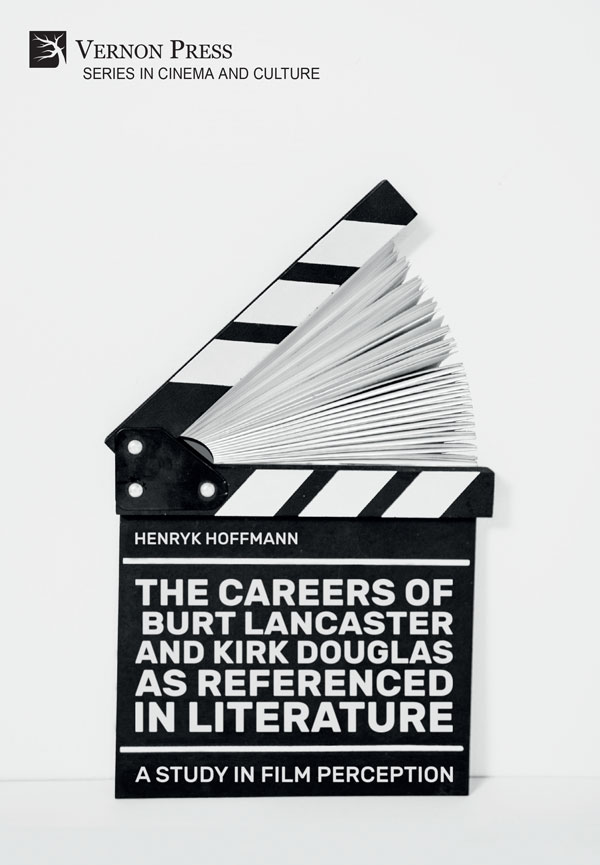
A Study in Film Perception
Henryk Hoffmann
The Careers of Burt Lancaster and Kirk Douglas as Referenced in Literature is a study of the perception of these two Hollywood megastars and their work, as presented in the text and context of references and allusions found in world literature. This book also aims to establish the impact factor of the two actors and their major films, as well as to provide extensive data for further studies of the complex and bilateral relationships between film and literature. The pertinent quotations have been extracted from over 150 works—novels, short stories, plays, poems and some nonfiction biographies and memoirs (excluding those focused on film celebrities)—by more than 120 authors. The main body of the book consists of two parts, each devoted to one actor and each having five identical sections. In the first section, references to the actor’s films are discussed while the second section presents references to the actor himself. The third section shows the complete list of references found to the actor and his films, including references not mentioned in the first two sections—either because of their relative insignificance, the lack of an English translation in case of foreign-language works or repetitiveness and/or abundance in a given work. The fourth section offers the credits of the films referenced, and the fifth section presents the actor’s complete monographic bibliography. The third part of the book, ‘Epilogue: Final Remarks and Conclusions,’ provides an analysis and classification of all the references and allusions presented in the main body, and it elaborates on the friendship of the two actors. College professors and students interested in film studies, particularly film analysis and criticism, film perception and film genres, will find this book of great interest. It will also appeal to people interested in biographical books on movie personalities and movie fans, especially those interested in westerns, film noir and the careers of Burt Lancaster and Kirk Douglas.