Loading...
Please wait while we load the content...

Loading...
Please wait while we load the content...
Carlo Vinti, Elisabeth M. Yang, Xiaoxi Wu, Mateo Scozia, Peter Reynaert, Spartaco Pupo, Laura J. Mueller, Yong Lu, Grzegorz Holub, Marc Djaballah, Bianca Bellini, Giusy Gallo, Claudia Stancati, R. T. Allen, Moeller Carol, Endre Nagy, Randall Auxier, and James Beauregard
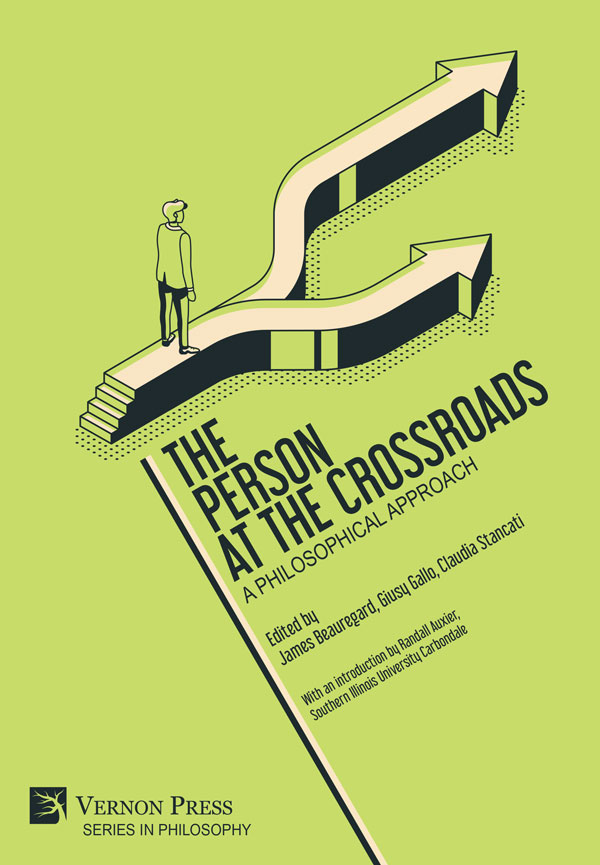
‘The Person at the Crossroads: A Philosophical Approach’ brings together scholars from around the world who share a common interest in the nature and activity of the human person. Personhood is examined from a variety of perspectives, both philosophical and theological, drawing on the rich traditions of both Western and Eastern thought. Readers will find themselves on a journey through the works of past and current scholars including, Confucius, Augustine, David Hume, Immanuel Kant, Horace Bushnell, Maurice Merleau-Ponty, Michael Polanyi, Rudolf Carnap, Karol Wojtyla, Erazim Kohak, and many other authors who touch upon the personalist tradition and the human person. This volume will be of particular interest to readers interested in the nature of the human person, as well as philosophy and theology undergraduate and graduate students and professors teaching in these areas.
Christian Perspectives on Forgiveness
Melissa Chia-Mei Tan, Richard Thomas, Joshue Orozco, William J. Devlin, William Lane Craig, J. Michael Cervantez, Chad Bogosian, Everett L. Worthington, Jr., Raymond Aaron Younis, Dylan Pahman, R. T. Allen, John McClellan, Kathleen Poorman Dougherty, and David Wright
The Philosophy of Forgiveness, Volume IV: Christian Perspectives on Forgiveness is a collection of essays that explores different Christian views on forgiveness. Each essay takes up a different topic, such as the nature of divine forgiveness, the basis for forgiving our enemies, and the limits of forgiveness. In some chapters, the views of different philosophers and theologians are explored, figures such as St. John Climacus, Bonaventure, and Nietzsche. In other chapters, the concept of forgiveness is analyzed in light of historical events, such as the Nickel Mines shooting, the Charleston shooting, and the Armenian genocide. The contributors to the volume come from different backgrounds, including philosophy, theology, and psychology. The essays are written for scholars in the humanities, social sciences, and theology, as well as graduate students and upper-division undergraduate students.
Klaus Allerbeck, Tihamer Margitay, Endre Nagy, Viktor Geng, R. T. Allen, Richard W. Moodey, Phil Mullins, and Simon Smith
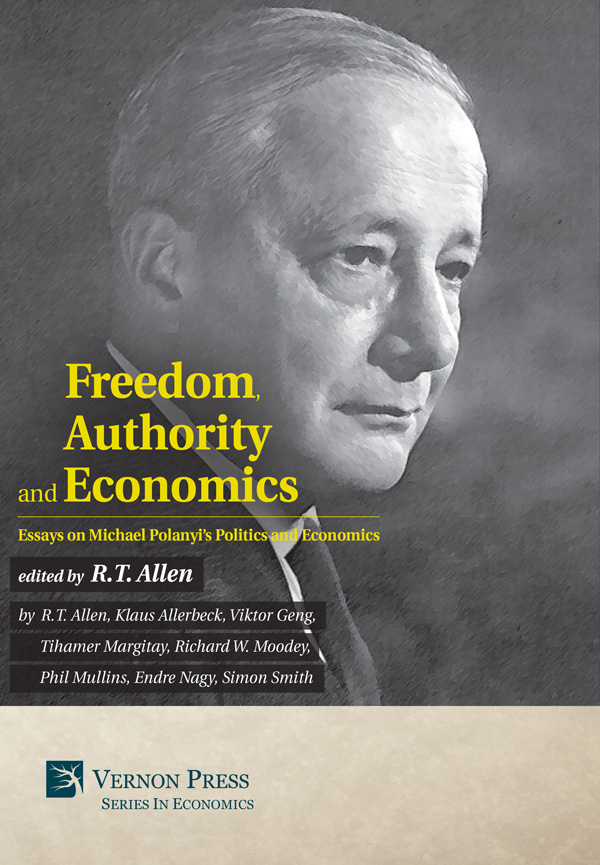
This edited volume of original contributions deals with the economic and political thought of Michael Polanyi. Requiring little prior knowledge of Polanyi, this volume further develops a somewhat neglected side of Polanyi's work. In particular it examines the 'tacit integration', of subsidiary details into focal objects or actions as central to all knowing and action. It traces ontological counterparts in the structures of comprehensive entities and complex actions, and a multi-level universe in which lower levels have their boundary conditions, the extents to which they apply, determined by those of the next higher level, whilst each possessing its own laws or operative principles. This schema of 'dual control' preserves the reality and relative autonomy of each level, and its interactions with others, against the various reductions. The essays in this volume also employ and develop important additional concepts and distinctions such as: 'corporate' and 'spontaneous' order; 'public' and 'private' liberties; 'general' and 'specific authority'; and 'moral inversion'; which, as the essays show, are necessary for understanding and maintaining a free society and the freedom of institutions within it. Among the topics treated with them are: more of the prerequisites of freedom in public liberties dedicated to principles and transcendent values; totalitarianism and society as spontaneous order; the balance of general and specific authority in society and particular institutions; reductionism, totalitarianism and consumption in consumer societies, as moral inversions; the mutual interactions of economics and politics as distinct and autonomous but interacting levels; the sociological aspects of economics; and Polanyi's own contributions to sociology. Although, as indicated, Polanyi has his special terms, the essays in this volume, like his works, give them meaning with concrete examples and so avoid merely shuffling a mass of abstractions. Together the essays show that his work is a rich seam of ideas and inspiration for yet further extension and application.