Loading...
Please wait while we load the content...

Loading...
Please wait while we load the content...
Loyola University New Orleans
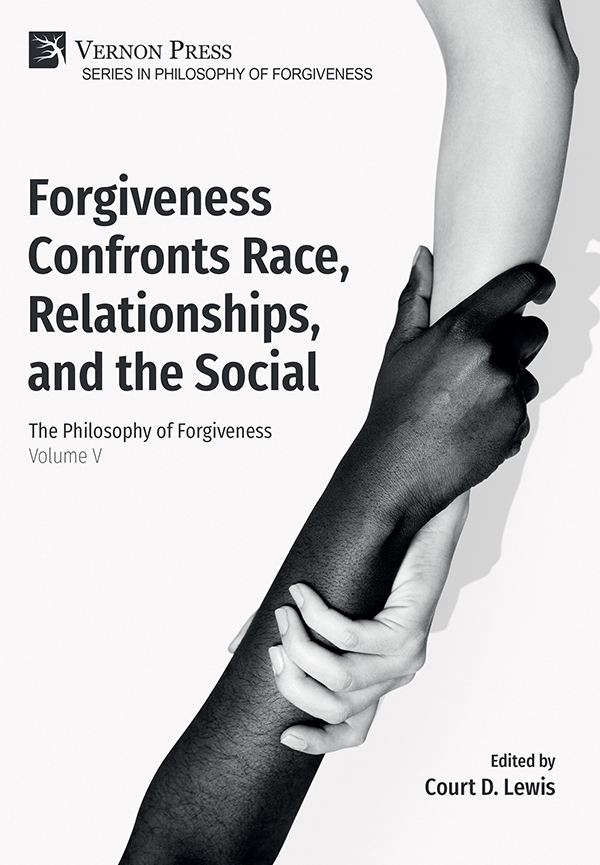
The Philosophy of Forgiveness - Volume V
Andrew J. Latham, Merianna Neely Harrelson, Bennet Soenen, Isadora Mosch Hefner, L. Brooke Rudow, Laci Hubbard-Mattix, Subhobroto Banerjee, Jason Cook, William N. Schabio Jr., Elisa Rapaport, Colin Lewis, James Norton, Kristie Miller, Russell Luke, Jennifer Kling, Adam Barkman, Leonard Kahn, Gregory L. Bock, and Court D. Lewis
'Forgiveness Confronts Race, Relationships, and the Social', Volume V of Vernon Press’s The Philosophy of Forgiveness series, is an exercise in listening. Listening to others, and not just waiting for them to stop speaking, requires a willingness to recognize the worth of the other and to believe that what they say is worthy of consideration. Much like reading a book, one must strive to quiet the constant voice in one’s head in order to hear and process the information communicated. Listening is not always easy, and it takes considerable practice, but it is one of the most effective means for developing understanding and growing as an intellectual and moral person. Literature dealing with forgiveness lacks many important voices, including those from First Peoples, African American, LatinX, and LGTBQ+ , and many others, and the authors of 'Forgiveness Confronts Race, Relationships, and the Social' begin the task of closing these gaps, discussing topics from folk and other social and political issues to racism, systems of oppression, and religion. The authors were asked to explore forgiveness from their own understandings of underrepresented aspects of forgiveness, and readers will hopefully be enlightened and inspired to make their own diverse voices of forgiveness heard, creating a true dialogue of diversity and wisdom.
New Dimensions of Forgiveness
Joshua M. Hall, Adrian Switzer, Zachary Thomas Settle, Ryan Michael Murphy, John McClellan, Jeff Lambert, Leonard Kahn, A.G. Holdier, Kathleen Poorman Dougherty, Mariano Crespo, Elisabetta Bertolino, Court D. Lewis, and Frederik Kaufman
Volume II of Vernon Press’s series on the Philosophy of Forgiveness offers several challenging and provocative chapters that seek to push the conversation in new directions and dimensions. Volume I, Explorations of Forgiveness: Personal, Relational, and Religious, began the task of creating a consistent multi-dimensional account of forgiveness, and Volume II’s New Dimensions of Forgiveness continues this goal by presenting a set of chapters that delve into several deep conceptual and metaphysical features of forgiveness. New Dimensions of Forgiveness creates a theoretical framework for understanding the many nuanced features of forgiveness, namely, third-party forgiveness, forgiveness as an aesthetic process, the role of resentment in warranting forgiveness, the moral status of self-forgiveness, epistemic trust, forgiveness’s influence on the moral status of persons, forgiveness in time, the status of Substance and Subject within a Hegelian framework, Jacques Derrida’s “impossible” forgiveness, and the use of imaginative “magic” to become a maximal forgiver. Readers will be challenged to question and come to terms with many oft-overlooked, yet important philosophical dimensions of forgiveness.
Explorations of Forgiveness: Personal, Relational, and Religious
Elisabetta Bertolino, Court D. Lewis, Joshua M. Hall, Adrian Switzer, Zachary Thomas Settle, Ryan Michael Murphy, John McClellan, Jeff Lambert, Frederik Kaufman, Leonard Kahn, A.G. Holdier, Kathleen Poorman Dougherty, and Mariano Crespo
Volume II of Vernon Press’s series on the Philosophy of Forgiveness offers several challenging and provocative chapters that seek to push the conversation in new directions and dimensions. Volume I, Explorations of Forgiveness: Personal, Relational, and Religious, began the task of creating a consistent multi-dimensional account of forgiveness, and Volume II’s New Dimensions of Forgiveness continues this goal by presenting a set of chapters that delve into several deep conceptual and metaphysical features of forgiveness. New Dimensions of Forgiveness creates a theoretical framework for understanding the many nuanced features of forgiveness, namely, third-party forgiveness, forgiveness as an aesthetic process, the role of resentment in warranting forgiveness, the moral status of self-forgiveness, epistemic trust, forgiveness’s influence on the moral status of persons, forgiveness in time, the status of Substance and Subject within a Hegelian framework, Jacques Derrida’s “impossible” forgiveness, and the use of imaginative “magic” to become a maximal forgiver. Readers will be challenged to question and come to terms with many oft-overlooked, yet important philosophical dimensions of forgiveness.