Loading...
Please wait while we load the content...

Loading...
Please wait while we load the content...
Nord University, Norway
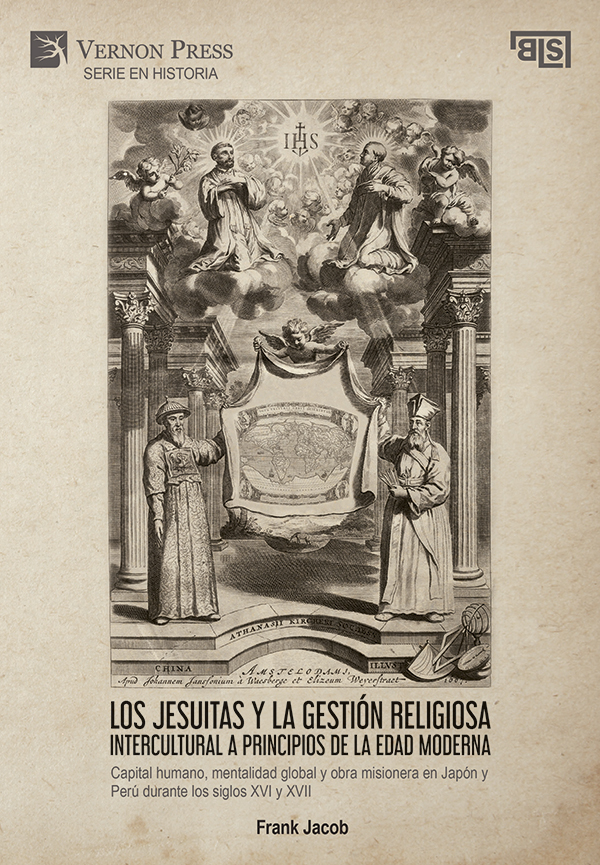
Capital humano, mentalidad global y obra misionera en Japón y Perú durante los siglos XVI y XVII
Frank Jacob
Este libro analiza el papel del capital humano y la mentalidad global de la exitosa gestión intercultural de la Compañía de Jesús en los contextos geográficos de Japón y Perú durante los siglos XVI y XVII. Evalúa y analiza datos históricos de más de 200 jesuitas según la teoría de gestión moderna. El trabajo es, por tanto, un estudio interdisciplinario relacionado con la historia de las órdenes religiosas, la expansión europea, la gestión transcultural o intercultural, y muestra cómo los misioneros jesuitas en Japón y Perú lograron y estimularon una expansión exitosa de la influencia de su orden en estas regiones del mundo. Si bien analiza un tema histórico, el libro también será de interés para los gerentes de hoy en día, y para todos aquellos interesados en crear una exitosa estrategia para la gestión intercultural.
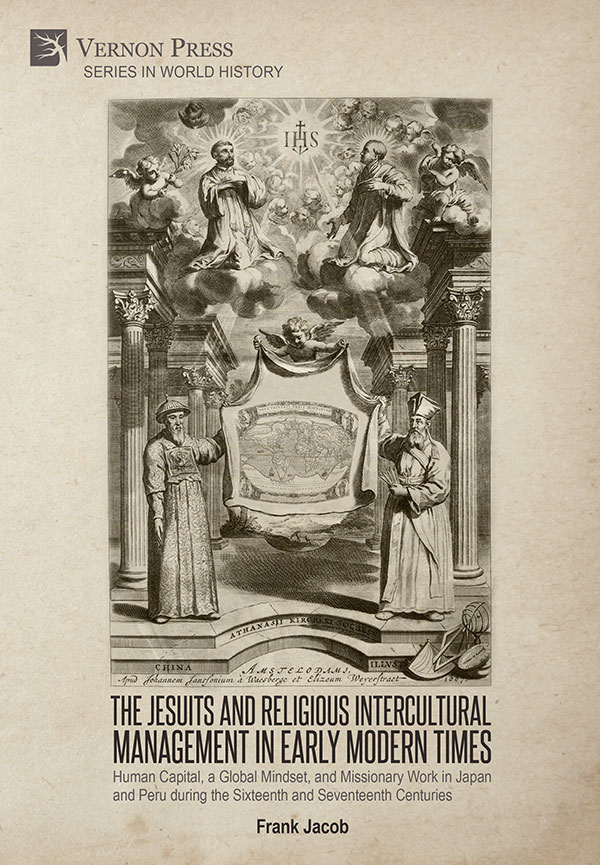
Human Capital, a Global Mindset, and Missionary Work in Japan and Peru during the Sixteenth and Seventeenth Centuries
Frank Jacob
This book discusses the role of human capital and a global mindset for a successful intercultural management of the Society of Jesus in the geographical contexts of Japan and Peru during the sixteenth and seventeenth centuries. Historical data for more than 200 Jesuits has been evaluated and analyzed according to modern management theory. The work is, therefore, an interdisciplinary study related to the history of religious orders, European expansion, and trans- or intercultural management and shows how the Jesuit missionaries in Japan and Peru were able to achieve and stimulate a successful expansion of their order’s influence in these regions of the world. While analyzing a historical topic, the book is also of interest to modern day managers and those who are interested in creating a successful strategy for intercultural management.

Frank Jacob
This book recounts the story of Florentine Ariosto Jones, who after the Civil War decided to manufacture watches. Combining the cheap labor available at the time in Switzerland with US manufacturing technologies, Jones embarked on his venture to produce affordable watches for the American market. Consequently, he became a pioneer in the business of outsourcing labor for economic purposes through his contracting of labor to Europe. While the company still exists today, very little is known about Jones. The present book will undoubtedly change this by telling the fascinating story of an American adventurer and his pursuit to globalize American watchmaking at the end of the 19th Century.
Frank Jacob
This book recounts the story of Florentine Ariosto Jones, who after the Civil War decided to manufacture watches. Combining the cheap labor available at the time in Switzerland with US manufacturing technologies, Jones embarked on his venture to produce affordable watches for the American market. Consequently, he became a pioneer in the business of outsourcing labor for economic purposes through his contracting of labor to Europe. While the company still exists today, very little is known about Jones. The present book will undoubtedly change this by telling the fascinating story of an American adventurer and his pursuit to globalize American watchmaking at the end of the 19th Century.
Frank Jacob, Bruno Surace, Giacomo Calorio, Remo Gramigna, Mattia Thibault, Gianmarco Thierry Giuliana, and Juan Manuel Montoro
Our images of non-Western cultures are often based on stereotypes that are replicated over the years. These stereotypes often appear in popular media and are responsible for a pre-set image of otherness. The present book investigates these processes and the media representation of otherness, especially as an artificial construct based on stereotypes and their repetition, in the case of Japan. 'Western Japaneseness' thereby illustrates how the Western image of Japan in popular media is rather a construct that, in a way, replicated itself, instead of a more serious encounter with a foreign and different cultural context. This book will be of great value to students and academics who hold interest in media studies, Japanese studies, and cultural studies. It will also appeal to a broader audience with interests in Japan more generally.
Ryan D. Whittington, Kendra R. Parker, Jessica Doble, Tatiana Prorokova, Octavia Cade, Almudena Nido, Stephanie Flint, Svetlana Seibel, Simon Bacon, Verena Bernardi, and Frank Jacob
We know all kinds of monsters. Vampires who suck human blood, werewolves who harass tourists in London or Paris, zombies who long to feast on our brains, or Godzilla, who is famous in and outside of Japan for destroying whole cities at once. Regardless of their monstrosity, all of these creatures are figments of the human mind and as real as they may seem, monsters are and always have been constructed by human beings. In other words, they are imagined. How they are imagined, however, depends on many different aspects and changes throughout history. The present volume provides an insight into the construction of monstrosity in different kinds of media, including literature, film, and TV series. It will show how and by whom monsters are really created, how time changes the perception of monsters and what characterizes specific monstrosities in their specific historical contexts. The book will provide valuable insights for scholars in different fields, whose interest focuses on either media studies or history.
Frank Jacob and Mark D. Van Ells
For many the postcard may seem trivial, little more than a mundane souvenir or a way to keep in touch with friends and relatives while on vacation. But if we look carefully, postcards offer valuable insights into the time periods in which they were created and the mentalities of those who bought or sent them. Frank Marhefka, while serving in the U.S. Army Motor Transportation Corps during the First World War, amassed a collection of more than 150 postcards and photographs while in France, and bound them into a souvenir album. Marhefka’s collection provides a diverse and vivid look into a period of history that – in many soldiers’ accounts – is not usually visualized with all its cruelties. Emphasizing the pictorial turn of the Great War, this album offers personal insight into a conflict that caused so much death and destruction. The book begins with an introduction providing a history of postcards and their extensive use by soldiers during the Great War. Then, after a biography of Marhefka, his postcard collection is presented in its entirety. Accompanying the images are brief texts that place them into historical context, as well as suggestions for further reading. As a visual artifact of the First World War and the perspective of one U.S. soldier, this book is aimed at students, scholars, postcard collectors, and general readers alike who have an interest in military history and popular culture.
Emilia Salvanou, Adam Luedtke, Frank Jacob, Alexander Caviedes, Sotiris Chtouris, DeMond Miller, Raymond Taras, Glen M.E. Duerr, Martin A. Schain, Simon Reich, Kristian Alexander, Georges Naufal, Jenny Morrison, Froilan Malit, and Justin D. García
The anthology explores the interrelationship between migration and a supposedly existent crisis of the modern nation state. The argument of such a crisis is mainly used by the New Right to stimulate nationalist feelings and provoke hate and aggression. We, in contrast to this perception, argue that from a historical and current perspective, migration is not endangering the nation state, but rather changing the idea of a nation itself by redefining it. In historical as well as current case studies, the authors determine the political dangers of right wing demagogues, while emphasizing the chances, immigration is offering the progress of the nation state. While it will be discussed how nationalism is impacting on the perception of migration, we also want to emphasize how it is perceived by the people in the specific regions, which are either confronted with migration or those which are not. The authors for the volume come from different fields, namely history and political sciences, and are consequently able to offer the reader a broad insight into the historical roots and the current consequences nationalism had or has on the perception and the local as well as global policies towards migration. The analysis of particular immigrant groups (e.g. North Koreans in post-war Korea, South Asians in the Emirates, Middle Eastern refugees in Europe, Hispanics in the United States) as well as a close reading of crisis related media (newspapers and other media in Europe and the US) will, all in all, establish a broad perspective, due to which the reader will be able to compare and connect the national events to a larger global picture.