Loading...
Please wait while we load the content...
Loading...
Please wait while we load the content...

Author information not available
No description available
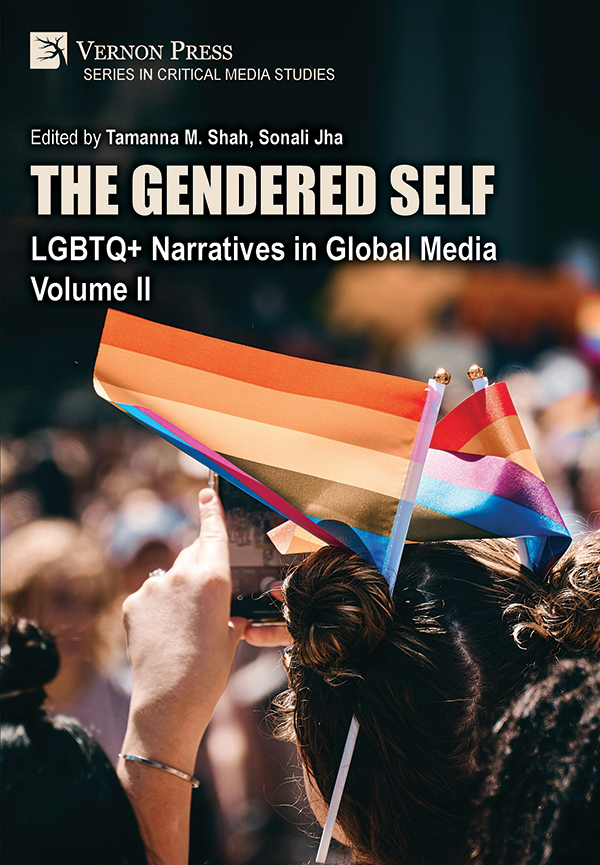
Kazım Tolga Gürel, Sonali Jha, Sarah E. Page, Yang Yang, Yuxuan Mu, Niveditha Jayaraj, G. Sadhana, and Mabel Gardner
'The Gendered Self: LGBTQ+ Narratives in Global Media, Volume II' challenges the restrictive frameworks that have long defined gender and sexuality. Moving beyond simplistic dichotomies, this volume explores how LGBTQ+ identities are shaped, represented, and contested across diverse cultural, historical, and political contexts. Through case studies from Turkey, the United States, China, and India, contributors reveal the lived complexities of queer experience. Chapters trace transgender journeys of identity transformation, dissect the weaponization of queer bodies in moral panics, and analyze the digital self-representations of Chinese gay men. Others investigate how Indian OTT platforms and Malayalam cinema expand space for queer narratives, while historical accounts of activists like Paula Grossman illustrate the fraught relationship between representation, activism, and backlash. Across these explorations, the volume highlights how media, politics, and cultural traditions simultaneously affirm and erase queer lives. It uncovers the deep roots of erasure in mythology and religion, while also showing how digital platforms and popular culture create new opportunities for resistance and recognition. This collection insists that the “gendered self” must be understood as fluid, intersectional, and culturally situated, pushing readers to reimagine identity beyond binaries and toward broader visions of inclusion and justice.
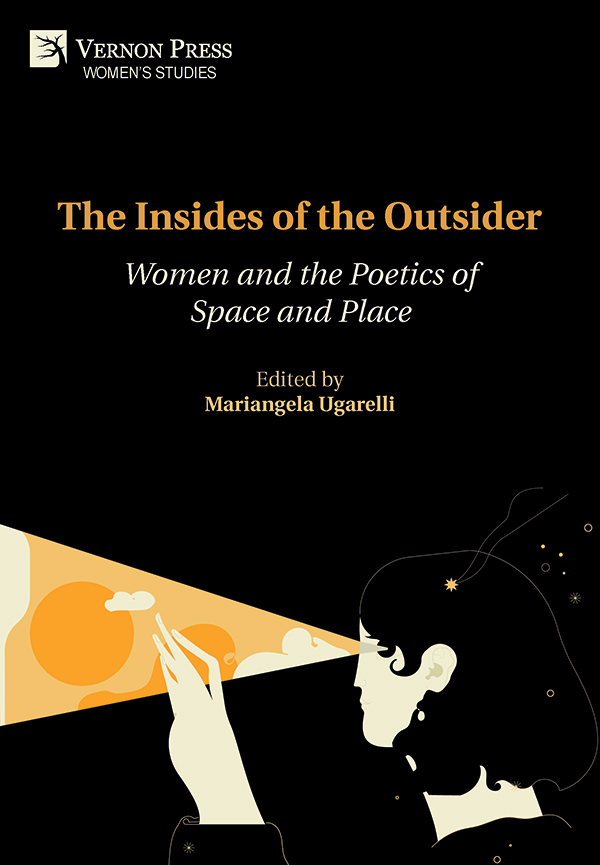
Lisu Wang, Victoria Mallorga Hernández, Liliana Galindo Orrego, Alexandra Arana Blas, Erna Anderson, Rachel Williams, Cecilia Esparza, Mariangela Ugarelli, Lauren Benjamin Mushro, Juan Diego Perez, and Jhonn Guerra Banda
When asked if being a woman had a negative impact on her ability to succeed as a writer, Argentine poet Alejandra Pizarnik stated that, even if not a physical impediment, being a woman in a patriarchal society is ‘a tragedy’ in itself. She followed this comment by saying: ‘What matters is what we do with our own tragedies’. Beyond sex assigned at birth, feminized bodies around the world share a similar phenomenological experience, which is dictated by a complicated relationship to space. Before setting pen to paper, the woman writer, a monster herself within patriarchal discourse, must confront the role society has set for her. For a writer in a feminized body, thus, the act of writing never begins with a tabula rasa but with a refusal and a challenge, an ushering out of the supposed ‘eden’ of the domestic. The question of the women-writer’s space is further exacerbated when considering matters of intersectionality. The poetics of space and place change within the confines of different geopolitical structures and their relations amongst each other. How do they shift when the center becomes de-centered and writing stems not from a place of political power but from the quieted voices of minor literature, queer and racialized bodies or subalternized latitudes? This volume will attempt to address these questions with input from a diverse group of scholars dealing with an equally diverse corpus. North and Latin America converse with Europe while ‘genre’ literature, minor literature and ‘gendered’ literatures take center stage. By taking into account a wide array of cultural objects, from poetry and children’s literature to Gothic tales and television shows, this collection of articles reveals the profound link between space and the female experience through the lens of art and literature.
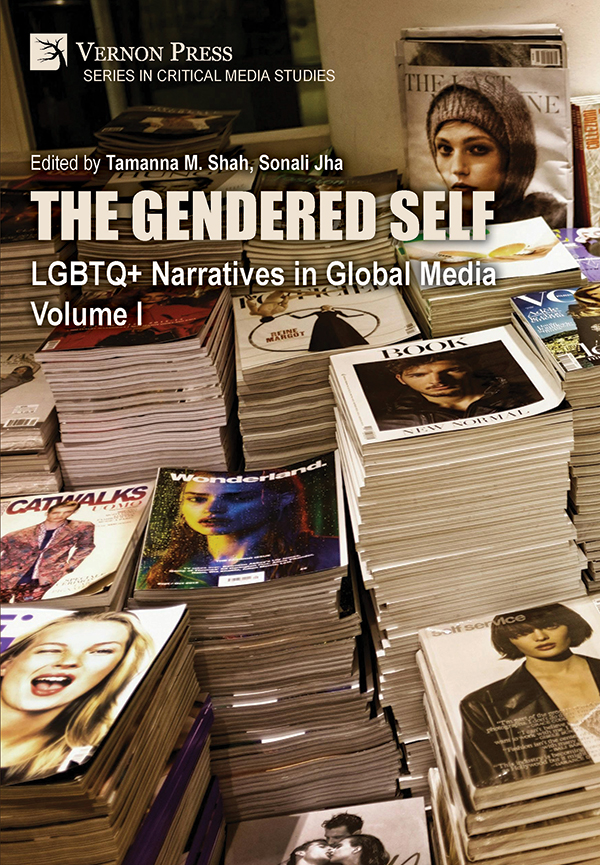
Terrell Robinson, Sheyla Finkelshteyn, Enakshi Roy, Victoria L. LaPoe, Taylor Orcutt, Bruce E. Drushel, Cassandra Hayes, and Sarah Liese
'The Gendered Self: LGBTQ+ Narratives in Global Media, Volume I' explores how media serves as a powerful arena for visibility, identity formation, and social change. Across global contexts, the chapters uncover how LGBTQ+ lives are framed, celebrated, silenced, or contested in television, film, news, advertising, and digital platforms. Contributors examine themes such as queer infrastructures in cinema, televised celebrations that disrupt tradition, the erasure and recovery of queer histories, and the lived experiences of Indigenous Two-Spirit and Māhū identities. Other chapters address the role of international law in shaping sexual rights, the tensions of representation in Muslim-majority societies, and the ways advertising and talk shows negotiate inclusivity. The volume concludes with a critique of how sitcoms both challenge and reassert patriarchal masculinity. The collection highlights that representation is never neutral. Media can validate identities, expand imaginaries, and amplify marginalized voices, yet it can also perpetuate stereotypes, erase histories, and reinforce exclusion. This volume brings these tensions into focus, revealing how the gendered self emerges at the intersection of culture, politics, and storytelling, and why media remains central to the global struggle for equality.
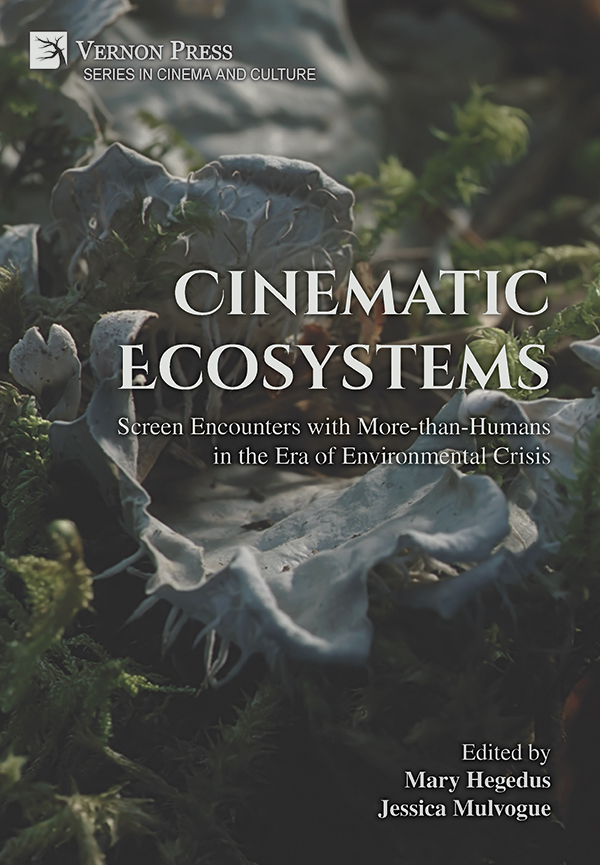
Brenda Longfellow, Virginia Luzón-Aguado, Belinda Smaill, Simon R. Troon, Melanie Ashe, Zeke Saber, McKew Devitt, Ariadna Cordal, Jennifer Schell, Aarón Lacayo, Mary Hegedus, Scott Birdwise, Emily Collins, Graig Uhlin, Elio Della Noce, Samantha R. Sharp, and Marek Jancovic
Motivated by the exigency of climate change, 'Cinematic Ecosystems: Screen Encounters with More-than-Humans in the Era of Environmental Crisis' takes cinema to be an audiovisual form whose creation and meaning are deeply connected to more-than-human worlds. As part of the third wave of ecocinema studies, this collection gathers contributions on multiple cinema forms from an international group of scholars and artists who offer diverse, critical perspectives that respond to the question: How does cinema help or hinder us in coming to know the more-than-human world? The collection homes in on the concept of the ecosystem as a biological and technological system that comprises a network of inter-relational living and their inanimate elemental affordances to explore encounters with cinema as a material object and practice, a spectatorial experience, and a representational text. The chapters cover environmental topics that span five continents and multiple histories. This book will be of special interest to film studies scholars and artists interested in cinema and climate change, environmental justice, and posthumanism.
Author information not available
‘¿Invisibles? Trans-identidades en la España contemporánea’ analiza la experiencia, corporeidad, identidad y representación de las personas trans en las producciones culturales españolas. Este volumen examina los fenómenos culturales que giran en torno a las trans-identidades, analizando la visibilidad del colectivo en los últimos 50 años y respondiendo a estas preguntas: ¿Cómo se representa a la comunidad trans en España? ¿Qué modelos de referencia hay en las producciones culturales? ¿Cómo combatir la transfobia existente? El libro denuncia la ausencia de un espacio realmente inclusivo en el panorama cultural y plantea la necesidad de aumentar la agencia y derechos de las identidades trans en el discurso público. Sus trece capítulos ofrecen una variedad de referentes sobre la diversidad genérico-sexual para visibilizar a unas personas vulnerables cuyas experiencias se han visto reducidas en numerosas ocasiones a rechazo y discriminación.
Author information not available
In times of increased East-West confrontation and various global crises, it becomes increasingly clear that, for most people, the neoliberal restructuring of society has not resulted in greater freedom or a more self-determined lifestyle. Instead, we are experiencing a precarization of working and living conditions, rising isolation, and a widespread sense of political powerlessness linked to the rise of right-wing governments, nationalist, and far-right forces in recent years. In light of these developments, it is especially important to take an unbiased look at concepts and practical models for alternative social and political change and to reflect on what lessons can be learned from historical events for today’s politics. The Soviet example appears particularly instructive, as the October Revolution of 1917 marked the start of a period of profound change in which a fundamentally different culture and education system emerged in just a few months and years. As this volume’s contributions demonstrate, the complex transformation process in the early years of the Soviet Union involved both the creation of new elements and the preservation of old ones. As the interview with Kristen R. Ghodsee shows, figures like Alexandra Kollontai, through their progressive socialist theory and practice, brought about sweeping changes that extended beyond the sphere of production. They fundamentally transformed social life as a whole, especially gender relations, leading to significant improvements in living conditions – particularly for female workers – and achievements such as public childcare. The contributions and the interview with Dietmar Dath also explore the development of a new education system and the restructuring of art and culture, as well as their significance beyond the historical contexts in which they originated, continuing to influence today. Through this, the volume aims to open new perspectives on the legacy of Soviet education, gender, and cultural policies and to provide insightful analyses and materials for researchers in disciplines such as educational sciences, history, art and cultural studies, literature, social and political science, anthropology, philosophy, and gender studies.
Javier Arroyo Bretaño
El contexto sociohistórico contemporáneo, gracias a los feminismos de tercera y cuarta ola y al progreso de las teorías ‘queer’, ha favorecido la puesta en duda del binarismo sexo-género. Esto, junto a la revolución comunicativa de las dinámicas de web 2.0, ha provocado que proliferen identidades al margen de lo masculino y lo femenino, englobadas bajo el concepto de lo no binario. De la mano de estas identidades ha llegado su representación dentro y fuera del ámbito de la ficción, así como el debate en torno a su expresión gramatical. En ese sentido, mientras que en lengua inglesa existen entidades académicas como el diccionario ‘Merriam-Webster’ o el ‘Cambridge Dictionary’, que las aceptan y definen, la Real Academia Española se muestra contraria a recogerlas. El conflicto surge, pues, a la hora de traducir esas realidades identitarias al español, pues no hay consenso en torno a su representación lingüística. De esta manera, dado que diversos estudios avalan tanto la capacidad de la traducción para favorecer cambios sociológicos como la relación que esto guarda con el género, la traducción se nos presenta como una herramienta poderosa a la hora de favorecer la implementación de una gramática de lo no binario: dado que hay que traducirlas, urge debatir cómo representar estas identidades emergentes. Por tanto, a través de la importación de sus narrativas, la traducción puede favorecer la instauración de las identidades no binarias en lengua española.
Yvonne Bennett, Amanda Norman, Sharon Jagger, Nicole Holt, Miles Greenford, Pip Wylde, Clair James, and Emily-Louise Wain
This book is the second volume edited by Yvonne Bennett examining the lived religious lives of women in 21st-century Britain. The authors continue to explore contemporary women’s spirituality by looking at the way women use rituals and rites within their lives. Coming from different academic fields, the contributors bring together an interdisciplinary collection of voices on the topic of rituals and ritualistic behaviours. The chapters are woven together to shine a heterogeneous light on religion in the twenty-first century and the impact it has on women in Britain today. The volume also examines the editors’ own spirituality alongside that of the participants, offering a hybrid academic-practitioner viewpoint on ritual. The chapters begin and end with a philosophical examination of ritual and the manner in which ritualistic behaviours are incorporated into human experience. This book takes the reader on a journey from the cradle to the grave and from medieval history to the present day.
Political, Economic and Legal Empowerment: Initiatives from Different Countries
George Mathew, Tamara Martsenyuk, Maya Lynum-Walker, and Talia Esnard
This volume on Women Empowerment is a showcase for readers interested in case studies on Women Empowerment in the Political, Economic, and Legal Contexts from different countries across the world. The case studies here are presented under four sub-themes.
Showing 1 to 10 of 1112 books
Discover our comprehensive collection of scholarly works in sociology. From cutting-edge research to foundational texts, find the resources you need for your academic journey.