Loading...
Please wait while we load the content...
Loading...
Please wait while we load the content...

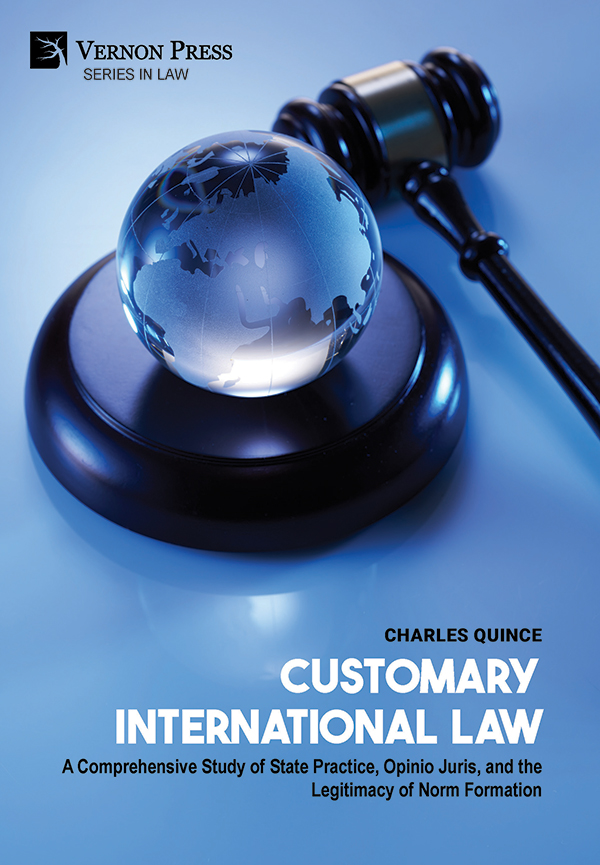
Charles Quince
This comprehensive study provides an essential examination of customary international law, addressing one of the most fundamental yet frequently misunderstood sources of international legal norms. The work bridges critical gaps in contemporary understanding through rigorous doctrinal analysis, extensive jurisprudential discussion, and illuminating case illustrations that demonstrate how custom operates within the global legal framework. As an authoritative reference tool, this volume serves legal scholars, practitioners, and students seeking to understand the complex mechanisms through which customary international law develops and functions, providing clear frameworks for identifying and interpreting customary norms across diverse legal contexts through its systematic approach to analyzing state practice and opinio juris. Beyond its reference value, the book offers practical methodological guidance for researchers investigating customary law formation. By examining evidentiary challenges and providing analytical frameworks, it equips scholars with robust tools for conducting empirical research on state practice and assessing the legitimacy of emerging international norms. The work’s structured approach to jurisprudential analysis serves as a valuable template for systematic legal research, while international law professionals will find the study particularly valuable for its practical applications in legal practice and policy development. The comprehensive exploration of norm formation processes, combined with detailed case studies, provides practitioners with insights essential for advocacy, treaty negotiation, and dispute resolution. Researchers benefit from the work’s contribution to theoretical understanding while gaining access to methodologies that enhance the consistency and reliability of customary law interpretation. This study ultimately advances the field by clarifying persistent ambiguities in customary international law, offering a more coherent understanding of its evolving role in contemporary global governance and legal order.
Charles Quince
This comprehensive study provides an essential examination of customary international law, addressing one of the most fundamental yet frequently misunderstood sources of international legal norms. The work bridges critical gaps in contemporary understanding through rigorous doctrinal analysis, extensive jurisprudential discussion, and illuminating case illustrations that demonstrate how custom operates within the global legal framework. As an authoritative reference tool, this volume serves legal scholars, practitioners, and students seeking to understand the complex mechanisms through which customary international law develops and functions, providing clear frameworks for identifying and interpreting customary norms across diverse legal contexts through its systematic approach to analyzing state practice and opinio juris. Beyond its reference value, the book offers practical methodological guidance for researchers investigating customary law formation. By examining evidentiary challenges and providing analytical frameworks, it equips scholars with robust tools for conducting empirical research on state practice and assessing the legitimacy of emerging international norms. The work’s structured approach to jurisprudential analysis serves as a valuable template for systematic legal research, while international law professionals will find the study particularly valuable for its practical applications in legal practice and policy development. The comprehensive exploration of norm formation processes, combined with detailed case studies, provides practitioners with insights essential for advocacy, treaty negotiation, and dispute resolution. Researchers benefit from the work’s contribution to theoretical understanding while gaining access to methodologies that enhance the consistency and reliability of customary law interpretation. This study ultimately advances the field by clarifying persistent ambiguities in customary international law, offering a more coherent understanding of its evolving role in contemporary global governance and legal order.
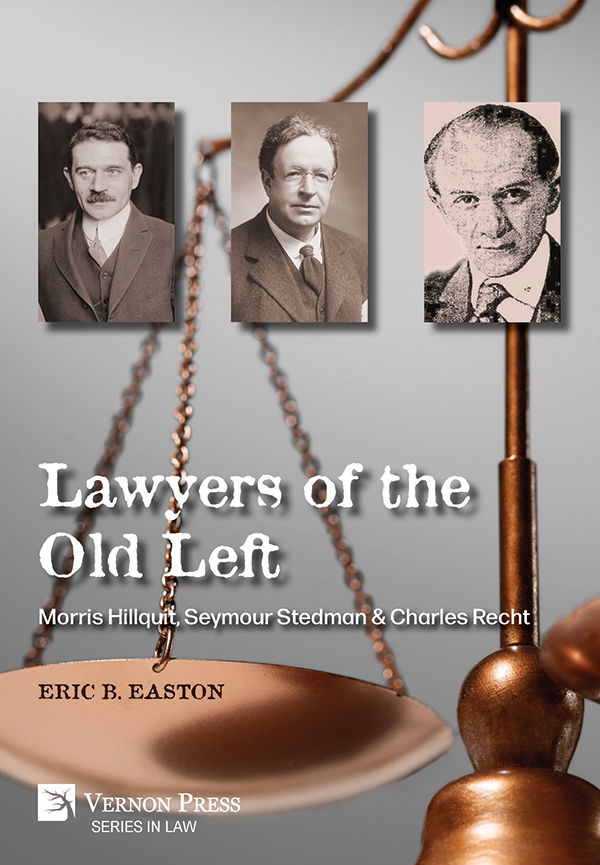
Eric B. Easton
'Lawyers of the Old Left' contains professional profiles of the three most important – if not the most famous – lawyers of the American Left in the first quarter of the twentieth Century. These men were involved in some of the most significant cases of the tumultuous era that surrounded World War I, and they all commanded the respect of both their contemporary colleagues and adversaries. Morris Hillquit was practically synonymous with the Socialist movement that flourished in New York City. Not only was he a prolific chronicler of the movement, but he also ran for political office several times under the Socialist banner. Hillquit took a leadership role in the defense of antiwar activists during wartime and the repression that followed. In time, he would become one of the nation’s pre-eminent labor lawyers. Seymour Stedman was a leader, with Eugene Debs and Victor Berger, of the home-grown Socialist movement that prevailed in Chicago, Milwaukee, and other midwestern cities. He rose to prominence at the national level, ultimately becoming the Party’s vice-presidential candidate in Debs’ campaign for the presidency in 1920. Charles Recht was unquestionably the most important American lawyer representing the Soviet Union, both before and after that country was recognized by the United States. He also participated in many important civil liberties cases, including the IWW and other anarchist-related cases. Recht also pursued a second career as a novelist, poet, and theatrical translator. Anyone interested in radical politics, the labor movement, and civil liberties law should be interested in reading this book. While these men played an outsized role in their time, they are largely forgotten today and appear only peripherally in the period literature. This book provides a perspective on the era that is otherwise largely unavailable.
Eric B. Easton
'Lawyers of the Old Left' contains professional profiles of the three most important – if not the most famous – lawyers of the American Left in the first quarter of the twentieth Century. These men were involved in some of the most significant cases of the tumultuous era that surrounded World War I, and they all commanded the respect of both their contemporary colleagues and adversaries. Morris Hillquit was practically synonymous with the Socialist movement that flourished in New York City. Not only was he a prolific chronicler of the movement, but he also ran for political office several times under the Socialist banner. Hillquit took a leadership role in the defense of antiwar activists during wartime and the repression that followed. In time, he would become one of the nation’s pre-eminent labor lawyers. Seymour Stedman was a leader, with Eugene Debs and Victor Berger, of the home-grown Socialist movement that prevailed in Chicago, Milwaukee, and other midwestern cities. He rose to prominence at the national level, ultimately becoming the Party’s vice-presidential candidate in Debs’ campaign for the presidency in 1920. Charles Recht was unquestionably the most important American lawyer representing the Soviet Union, both before and after that country was recognized by the United States. He also participated in many important civil liberties cases, including the IWW and other anarchist-related cases. Recht also pursued a second career as a novelist, poet, and theatrical translator. Anyone interested in radical politics, the labor movement, and civil liberties law should be interested in reading this book. While these men played an outsized role in their time, they are largely forgotten today and appear only peripherally in the period literature. This book provides a perspective on the era that is otherwise largely unavailable.
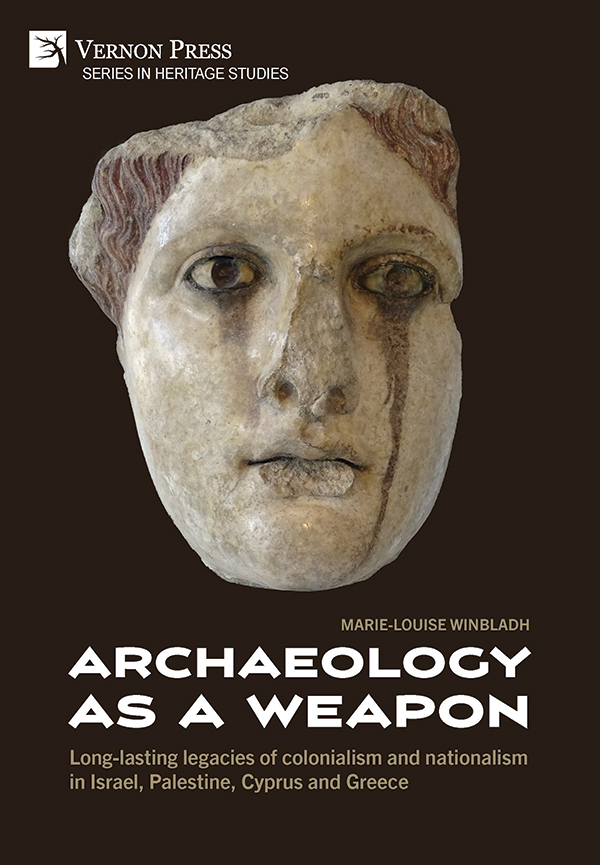
Marie-Louise Winbladh
In Israel, Palestine, Cyprus and Greece, the reconstruction of the past through archaeology has been used to strengthen national identity. Narratives about the past and origin myths have been constructed for political purposes. Cyprus and Palestine have both suffered from British colonialism since the early twentieth century, which has had a profound influence on their cultural heritage. Through nationalism, archaeology has been exploited by far-right movements and political parties to claim ownership of heritage and has become an efficient political tool. In Israel, archaeology and religion have been exploited to construct the Israeli state and still play a crucial role. The country claims to be the conqueror of Palestine under the protection of God, who they believe gave them possession of the land. Western religious groups are convinced that it is the religious duty of Christians to support the modern nation-state of Israel. Biblical archaeology has become an ultra-religious American speciality, marked by fraud and pseudoresearch. Notorious smuggling scandals were staged by American Christian multibillionaires buying artefacts looted from the National Museum of Iraq and other countries. Looting, plundering and blacklisting are among the most serious problems in Cyprus, causing irreparable damage to artefacts, monuments and society. Palestine’s rich archaeological, historical, and religious heritage has been undermined by occupation and land confiscation. Hundreds of sites have been looted during the Israeli occupation, and an illegal trade of ancient artefacts has occurred on a large scale. Populism is frequently associated with extreme nationalism and racism. Over the past few years, white nationalists and supremacists have seized the history of Greece and Rome. White nationalists and neo-Nazis in the US have used the slogan “Classics Made Great Again” showing their obsession with ancient sculptures and their alleged whiteness. When visiting Jerusalem, the Trump administration promoted an evangelical program where the politics of moral superiority is associated with white Christian supremacy.
Marie-Louise Winbladh
In Israel, Palestine, Cyprus and Greece, the reconstruction of the past through archaeology has been used to strengthen national identity. Narratives about the past and origin myths have been constructed for political purposes. Cyprus and Palestine have both suffered from British colonialism since the early twentieth century, which has had a profound influence on their cultural heritage. Through nationalism, archaeology has been exploited by far-right movements and political parties to claim ownership of heritage and has become an efficient political tool. In Israel, archaeology and religion have been exploited to construct the Israeli state and still play a crucial role. The country claims to be the conqueror of Palestine under the protection of God, who they believe gave them possession of the land. Western religious groups are convinced that it is the religious duty of Christians to support the modern nation-state of Israel. Biblical archaeology has become an ultra-religious American speciality, marked by fraud and pseudoresearch. Notorious smuggling scandals were staged by American Christian multibillionaires buying artefacts looted from the National Museum of Iraq and other countries. Looting, plundering and blacklisting are among the most serious problems in Cyprus, causing irreparable damage to artefacts, monuments and society. Palestine’s rich archaeological, historical, and religious heritage has been undermined by occupation and land confiscation. Hundreds of sites have been looted during the Israeli occupation, and an illegal trade of ancient artefacts has occurred on a large scale. Populism is frequently associated with extreme nationalism and racism. Over the past few years, white nationalists and supremacists have seized the history of Greece and Rome. White nationalists and neo-Nazis in the US have used the slogan “Classics Made Great Again” showing their obsession with ancient sculptures and their alleged whiteness. When visiting Jerusalem, the Trump administration promoted an evangelical program where the politics of moral superiority is associated with white Christian supremacy.
Eric B. Easton
'Lawyers of the Old Left' contains professional profiles of the three most important – if not the most famous – lawyers of the American Left in the first quarter of the twentieth Century. These men were involved in some of the most significant cases of the tumultuous era that surrounded World War I, and they all commanded the respect of both their contemporary colleagues and adversaries. Morris Hillquit was practically synonymous with the Socialist movement that flourished in New York City. Not only was he a prolific chronicler of the movement, but he also ran for political office several times under the Socialist banner. Hillquit took a leadership role in the defense of antiwar activists during wartime and the repression that followed. In time, he would become one of the nation’s pre-eminent labor lawyers. Seymour Stedman was a leader, with Eugene Debs and Victor Berger, of the home-grown Socialist movement that prevailed in Chicago, Milwaukee, and other midwestern cities. He rose to prominence at the national level, ultimately becoming the Party’s vice-presidential candidate in Debs’ campaign for the presidency in 1920. Charles Recht was unquestionably the most important American lawyer representing the Soviet Union, both before and after that country was recognized by the United States. He also participated in many important civil liberties cases, including the IWW and other anarchist-related cases. Recht also pursued a second career as a novelist, poet, and theatrical translator. Anyone interested in radical politics, the labor movement, and civil liberties law should be interested in reading this book. While these men played an outsized role in their time, they are largely forgotten today and appear only peripherally in the period literature. This book provides a perspective on the era that is otherwise largely unavailable.
Jawad Kadir
Despite using the metaphors of kin-states and blood-brothers for the India-Pakistan conflict, there is limited work exploring this phenomenon. India-Pakistan relations have mostly been theorized by situating them along with a bipolar ethnic and religious framework. This book presents a fresh conflict model to theorize their rivalry by positioning them as warring family branches with common ancient and cultural history. Therefore, this book not only competes with the existing literature but also claims to break new theoretical ground in the subject. This book will be of interest to researchers looking to theorize intergroup conflicts, academicians, students, social activists, politicians, practitioners, track-2 diplomats and above all, the policy makers in both countries. This book has theorized the tensions and dynamics of the India-Pakistan conflict as a process akin to a typical large South Asian family dispute after dividing its tangible assets. Categorizing and depicting India and Pakistan as two segments of such a large family, quarreling over gaining more prestige against the other after dividing ancestral land, this study does not remain unaware of other, larger pushes and pulls experienced in this intractable conflict, interfering in significant ways in the relationship between the partitioning members of the extended family. Arguing for the centrality of the concept of family relations in this context made increasing sense also as an explanation for the intensity of local emotions visible in this complex conflict. The core argument here is that the intractability, intensity, and intimacy associated with various dimensions of the India-Pakistan conflict can be better explained by analyzing it as a dispute between two warring branches of a huge joint family with an enormously rich and diverse ancient history.
Shahid Minhas, Özen Kurtulus, Sandra Castro, Luna Chung, Mustafa Yetim, Neela Hassan, Nurbanu Kesgin, Merve Hickok, Nalan Ova, Kazım Tolga Gürel, and Tamanna M. Shah
This study explores the intricate arrangements that serve the power and profit interests of the ruling classes. It examines how capital-driven approaches and life-colonizing construction goals form the backdrop to the events and analyses presented in these articles. Each contribution, regardless of its conclusion, begins with real-life experiences, interpreting specific theories and data through the lens of historical context. At the heart of the book lies the notion that all practices and elements of life are subject to colonization. Whether in the form of a nation-state or a party-state, the state functions as a power center shaping migration policies to serve ruling-class interests. The articles included were carefully selected by the editor. While some emphasize the concept of identity—an approach the editor may not fully endorse—these pieces were chosen to reflect a diversity of thought and to model the kind of genuine democracy that remains absent in today’s world. It is important to note that the book rejects any ideologies that violate human rights, such as fascism, racism, homophobia, misogyny, and xenophobia. This collection offers a compelling examination of themes including immigration, capitalism, and the media.
Kazım Tolga Gürel, Tamanna M. Shah, Shahid Minhas, Özen Kurtulus, Sandra Castro, Luna Chung, Neela Hassan, Nurbanu Kesgin, Mustafa Yetim, Merve Hickok, and Nalan Ova
This study explores the intricate arrangements that serve the power and profit interests of the ruling classes. It examines how capital-driven approaches and life-colonizing construction goals form the backdrop to the events and analyses presented in these articles. Each contribution, regardless of its conclusion, begins with real-life experiences, interpreting specific theories and data through the lens of historical context. At the heart of the book lies the notion that all practices and elements of life are subject to colonization. Whether in the form of a nation-state or a party-state, the state functions as a power center shaping migration policies to serve ruling-class interests. The articles included were carefully selected by the editor. While some emphasize the concept of identity—an approach the editor may not fully endorse—these pieces were chosen to reflect a diversity of thought and to model the kind of genuine democracy that remains absent in today’s world. It is important to note that the book rejects any ideologies that violate human rights, such as fascism, racism, homophobia, misogyny, and xenophobia. This collection offers a compelling examination of themes including immigration, capitalism, and the media.
Showing 1 to 10 of 336 books
Discover our comprehensive collection of scholarly works in political science and international relations. From cutting-edge research to foundational texts, find the resources you need for your academic journey.