Loading...
Please wait while we load the content...
Loading...
Please wait while we load the content...


Yvonne Bennett, Amanda Norman, Sharon Jagger, Nicole Holt, Miles Greenford, Pip Wylde, Clair James, and Emily-Louise Wain
This book is the second volume edited by Yvonne Bennett examining the lived religious lives of women in 21st-century Britain. The authors continue to explore contemporary women’s spirituality by looking at the way women use rituals and rites within their lives. Coming from different academic fields, the contributors bring together an interdisciplinary collection of voices on the topic of rituals and ritualistic behaviours. The chapters are woven together to shine a heterogeneous light on religion in the twenty-first century and the impact it has on women in Britain today. The volume also examines the editors’ own spirituality alongside that of the participants, offering a hybrid academic-practitioner viewpoint on ritual. The chapters begin and end with a philosophical examination of ritual and the manner in which ritualistic behaviours are incorporated into human experience. This book takes the reader on a journey from the cradle to the grave and from medieval history to the present day.
Civilizational Perspectives on Alienation/Ghayriyya (Otherness) in the Knowing/Existing
Amílcar Aldama Cruz, Hamedeh Rastaei, Mahdi Saatchi, Omneya Ayad, James Maffie, Ángel Horacio Molina, Luce López-Baralt, José Antonio Antón Pacheco, Hamidreza Ayatollahy, Hilal Oytun Altun, and Anthony F. Shaker
Latin America is a diverse mosaic of cultures that trace their origins back to Indigenous, African, Spanish, Portuguese and Islamic sources. Its philosophies, eloquently expressed by a long line of thinkers, are found not just in departments of philosophy, but also in its rich literature and art, which are given treatment in this volume. The Islamicate world is a unique, fourteen-century-old cultural mosaic that covers much of the known world. Despite its long civilizational experience, it too faces the challenge of emancipation from foreign domination and the chaotic cacophony of monologues afflicting our time. The papers collected here cover various aspects of the philosophies of these two constantly interacting traditions and how they impinge on an old problematic: “ghayriyya” (otherness) and “alienation”. Their themes include key figures like Ibn ʿArabī, Suhrawardī, Aḥmad b. Muṣṭafa al-ʿAlawī, Rudolfo Kusch, José Martí, Spain’s Moriscos, and contemporary Argentine philosophers; and expanding areas of research like the philosophy of the Nahua (popularly known as the “Aztec”) and the language reforms in Türkiye, both of which provide excellent examples of cultural self-alienation.
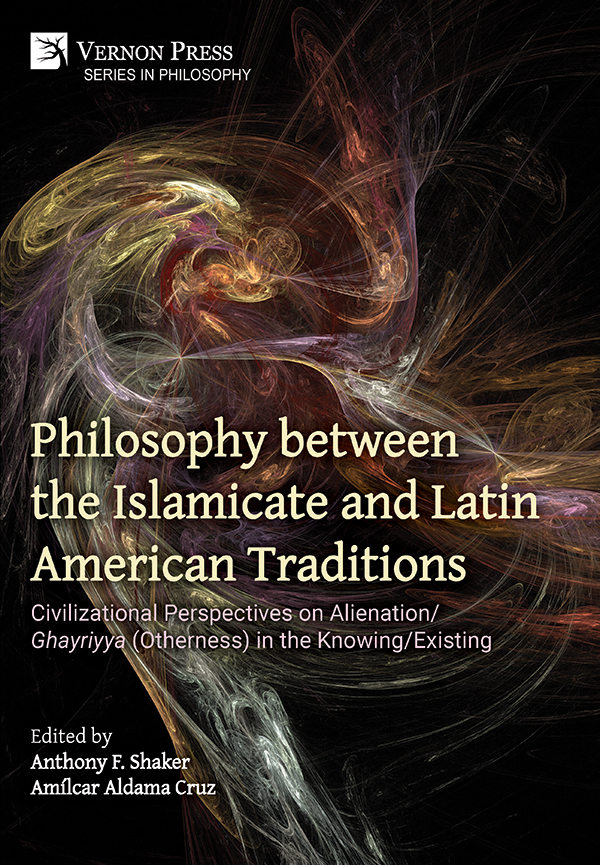
Civilizational Perspectives on Alienation/Ghayriyya (Otherness) in the Knowing/Existing
Ángel Horacio Molina, Hamedeh Rastaei, Mahdi Saatchi, Omneya Ayad, James Maffie, Luce López-Baralt, José Antonio Antón Pacheco, Hamidreza Ayatollahy, Hilal Oytun Altun, Amílcar Aldama Cruz, and Anthony F. Shaker
Latin America is a diverse mosaic of cultures that trace their origins back to Indigenous, African, Spanish, Portuguese and Islamic sources. Its philosophies, eloquently expressed by a long line of thinkers, are found not just in departments of philosophy, but also in its rich literature and art, which are given treatment in this volume. The Islamicate world is a unique, fourteen-century-old cultural mosaic that covers much of the known world. Despite its long civilizational experience, it too faces the challenge of emancipation from foreign domination and the chaotic cacophony of monologues afflicting our time. The papers collected here cover various aspects of the philosophies of these two constantly interacting traditions and how they impinge on an old problematic: “ghayriyya” (otherness) and “alienation”. Their themes include key figures like Ibn ʿArabī, Suhrawardī, Aḥmad b. Muṣṭafa al-ʿAlawī, Rudolfo Kusch, José Martí, Spain’s Moriscos, and contemporary Argentine philosophers; and expanding areas of research like the philosophy of the Nahua (popularly known as the “Aztec”) and the language reforms in Türkiye, both of which provide excellent examples of cultural self-alienation.
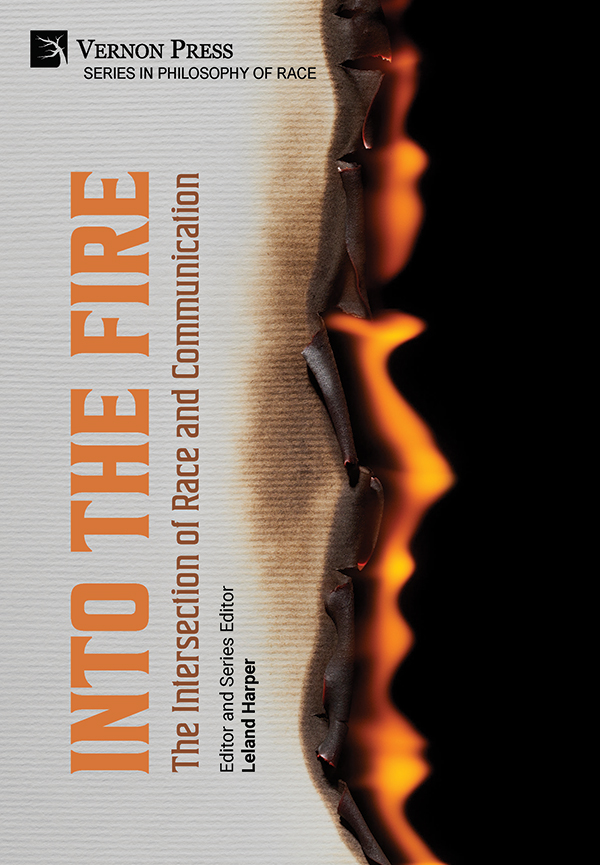
Erica Preston-Roedder, Gabriel Andrade, Elizabeth LaFray, Casey Rentmeester, Felipe E. Oliveira, Joseph Frigault, Eddy Souffrant, Leland Harper, Jennifer Kling, and Violet Victoria
Through the presentation of various perspectives, this collection of essays addresses some of the intersections of race and communication. The topics addressed include, but are not limited to, how we communicate about race, what our race communicates to others, how we can do a better job of educating others on race-related issues, and how we can better define certain terms often utilized in conversations about race. The perspectives shared in this volume contribute much-needed depth to the discussion of the philosophical and practical considerations of race and communication, broadly.
Author information not available
Through the presentation of various perspectives, this collection of essays addresses some of the intersections of race and communication. The topics addressed include, but are not limited to, how we communicate about race, what our race communicates to others, how we can do a better job of educating others on race-related issues, and how we can better define certain terms often utilized in conversations about race. The perspectives shared in this volume contribute much-needed depth to the discussion of the philosophical and practical considerations of race and communication, broadly.

Author information not available
For years, the American Association of Colleges and Universities (AAC&U) has called for colleges and universities to implement high-impact practices (HIPs), or educational procedures that provide significant academic advantages to students. 'High Impact & Experiential Learning as Enhancing Quality on Campus' provides examples of such strategies from thirteen colleges and universities as they have been applied in the classroom and in service of each featured college and university’s mission statement and quality enhancement plan. Each institution included in this collection has committed to some such project or initiative (in some cases, the commitment goes back multiple decades), and each reflects the diversity of contemporary higher education in the United States. Public and private, small and large, selective and open access, religiously affiliated and non-sectarian, are all included here. The institutions provide a variety of creative examples of implementing experiential learning and the myriad HIPs as identified by the AAC&U, including: Capstone Courses and Projects, ePortfolios, First-Year Seminars and Experiences, Service Learning/Community-Based Learning and Undergraduate Research. Each chapter is framed around the project’s scope and significance, a clear expression of the purpose of the project, evidence of the institution’s commitment and capacity for the effort and how the project is aligned with stated goals and institutional priorities. Drawing from fields as broad as sociology, psychology, the humanities, and environmental sciences and studies, 'High Impact & Experiential Learning as Enhancing Quality on Campus' appeals to multiple classrooms and institutional goals. Given the expanded interest in experiential learning/HIPs in higher education over the past two decades, this first-of-its-kind collection offers a roadmap for faculty and administrators to implement the practices outlined in each chapter in service of students’ learning and their larger institutional goals.
Joseph I. Breidenstein Jr.
Recent research has revealed a psychedelic inspiration for Nietzsche’s philosophy and, far from being a novelty in the history of philosophy, there is significant evidence that several of the first western philosophers ingested psychedelics as well. In his first book, Joseph I. Breidenstein Jr, PhD, maintained that western philosophy began as what we today would call a feminist religious reformation in the sense that many prominent presocratic philosophers were reviving a paleo/neolithic goddess-centered religiosity of rebirth within the largely patriarchal and death-glorifying culture of archaic Greece. And, in this book, Dr. Breidenstein Jr proposes that the presocratics’ psychedelic-reincarnationist-feminine model of education and/or worldview is better suited for democracy in the twenty-first century than the economic model of education that takes the west’s mainstream materialistic-secular worldview for granted. For several decades now, researchers have acknowledged both that the empirical evidence for reincarnation is overwhelming and that psychedelics can evoke past-life recollections, but ‘explanations’ for either reincarnation or how psychedelics do this have yet to be offered. By combining Nietzsche’s philosophy with the work of other thinkers, ‘Psychedelic Immortality’ both provides explanations for each of these phenomena and explores how situating education and democracy within the context of reincarnation can incite a renaissance of American culture and politics. For Nietzscheans and philosophers in particular, this book illustrates the contemporary relevance of two neglected aspects of Nietzsche scholarship—i.e. psychedelics and reincarnation—and, for researchers in such fields as feminist philosophy of religion, ecotheology, philosophy of education, social-political philosophy, and eastern philosophy, it offers a more plausible and healthier worldview in which to explore possibilities in their respective fields that are diminished by the mainstream paradigm. For spiritual seekers of all paths, it offers a conception of philosophy as a practice of awakening goddess consciousness that unfolds over the course of successive lifetimes.
Joseph I. Breidenstein Jr.
Recent research has revealed a psychedelic inspiration for Nietzsche’s philosophy and, far from being a novelty in the history of philosophy, there is significant evidence that several of the first western philosophers ingested psychedelics as well. In his first book, Joseph I. Breidenstein Jr, PhD, maintained that western philosophy began as what we today would call a feminist religious reformation in the sense that many prominent presocratic philosophers were reviving a paleo/neolithic goddess-centered religiosity of rebirth within the largely patriarchal and death-glorifying culture of archaic Greece. And, in this book, Dr. Breidenstein Jr proposes that the presocratics’ psychedelic-reincarnationist-feminine model of education and/or worldview is better suited for democracy in the twenty-first century than the economic model of education that takes the west’s mainstream materialistic-secular worldview for granted. For several decades now, researchers have acknowledged both that the empirical evidence for reincarnation is overwhelming and that psychedelics can evoke past-life recollections, but ‘explanations’ for either reincarnation or how psychedelics do this have yet to be offered. By combining Nietzsche’s philosophy with the work of other thinkers, ‘Psychedelic Immortality’ both provides explanations for each of these phenomena and explores how situating education and democracy within the context of reincarnation can incite a renaissance of American culture and politics. For Nietzscheans and philosophers in particular, this book illustrates the contemporary relevance of two neglected aspects of Nietzsche scholarship—i.e. psychedelics and reincarnation—and, for researchers in such fields as feminist philosophy of religion, ecotheology, philosophy of education, social-political philosophy, and eastern philosophy, it offers a more plausible and healthier worldview in which to explore possibilities in their respective fields that are diminished by the mainstream paradigm. For spiritual seekers of all paths, it offers a conception of philosophy as a practice of awakening goddess consciousness that unfolds over the course of successive lifetimes.
Sharon Jagger, Emily-Louise Wain, Clair James, Pip Wylde, Miles Greenford, Nicole Holt, Amanda Norman, and Yvonne Bennett
This book is the second volume edited by Yvonne Bennett examining the lived religious lives of women in 21st-century Britain. The authors continue to explore contemporary women’s spirituality by looking at the way women use rituals and rites within their lives. Coming from different academic fields, the contributors bring together an interdisciplinary collection of voices on the topic of rituals and ritualistic behaviours. The chapters are woven together to shine a heterogeneous light on religion in the twenty-first century and the impact it has on women in Britain today. The volume also examines the editors’ own spirituality alongside that of the participants, offering a hybrid academic-practitioner viewpoint on ritual. The chapters begin and end with a philosophical examination of ritual and the manner in which ritualistic behaviours are incorporated into human experience. This book takes the reader on a journey from the cradle to the grave and from medieval history to the present day.
Civilizational Perspectives on Alienation/Ghayriyya (Otherness) in the Knowing/Existing
Amílcar Aldama Cruz, Hilal Oytun Altun, Hamidreza Ayatollahy, José Antonio Antón Pacheco, Luce López-Baralt, Ángel Horacio Molina, James Maffie, Omneya Ayad, Mahdi Saatchi, Hamedeh Rastaei, and Anthony F. Shaker
Latin America is a diverse mosaic of cultures that trace their origins back to Indigenous, African, Spanish, Portuguese and Islamic sources. Its philosophies, eloquently expressed by a long line of thinkers, are found not just in departments of philosophy, but also in its rich literature and art, which are given treatment in this volume. The Islamicate world is a unique, fourteen-century-old cultural mosaic that covers much of the known world. Despite its long civilizational experience, it too faces the challenge of emancipation from foreign domination and the chaotic cacophony of monologues afflicting our time. The papers collected here cover various aspects of the philosophies of these two constantly interacting traditions and how they impinge on an old problematic: “ghayriyya” (otherness) and “alienation”. Their themes include key figures like Ibn ʿArabī, Suhrawardī, Aḥmad b. Muṣṭafa al-ʿAlawī, Rudolfo Kusch, José Martí, Spain’s Moriscos, and contemporary Argentine philosophers; and expanding areas of research like the philosophy of the Nahua (popularly known as the “Aztec”) and the language reforms in Türkiye, both of which provide excellent examples of cultural self-alienation.
Showing 1 to 10 of 535 books
Discover our comprehensive collection of scholarly works in philosophy. From cutting-edge research to foundational texts, find the resources you need for your academic journey.