Loading...
Please wait while we load the content...
Loading...
Please wait while we load the content...

Author information not available
In times of increased East-West confrontation and various global crises, it becomes increasingly clear that, for most people, the neoliberal restructuring of society has not resulted in greater freedom or a more self-determined lifestyle. Instead, we are experiencing a precarization of working and living conditions, rising isolation, and a widespread sense of political powerlessness linked to the rise of right-wing governments, nationalist, and far-right forces in recent years. In light of these developments, it is especially important to take an unbiased look at concepts and practical models for alternative social and political change and to reflect on what lessons can be learned from historical events for today’s politics. The Soviet example appears particularly instructive, as the October Revolution of 1917 marked the start of a period of profound change in which a fundamentally different culture and education system emerged in just a few months and years. As this volume’s contributions demonstrate, the complex transformation process in the early years of the Soviet Union involved both the creation of new elements and the preservation of old ones. As the interview with Kristen R. Ghodsee shows, figures like Alexandra Kollontai, through their progressive socialist theory and practice, brought about sweeping changes that extended beyond the sphere of production. They fundamentally transformed social life as a whole, especially gender relations, leading to significant improvements in living conditions – particularly for female workers – and achievements such as public childcare. The contributions and the interview with Dietmar Dath also explore the development of a new education system and the restructuring of art and culture, as well as their significance beyond the historical contexts in which they originated, continuing to influence today. Through this, the volume aims to open new perspectives on the legacy of Soviet education, gender, and cultural policies and to provide insightful analyses and materials for researchers in disciplines such as educational sciences, history, art and cultural studies, literature, social and political science, anthropology, philosophy, and gender studies.
Author information not available
For years, the American Association of Colleges and Universities (AAC&U) has called for colleges and universities to implement high-impact practices (HIPs), or educational procedures that provide significant academic advantages to students. 'High Impact & Experiential Learning as Enhancing Quality on Campus' provides examples of such strategies from thirteen colleges and universities as they have been applied in the classroom and in service of each featured college and university’s mission statement and quality enhancement plan. Each institution included in this collection has committed to some such project or initiative (in some cases, the commitment goes back multiple decades), and each reflects the diversity of contemporary higher education in the United States. Public and private, small and large, selective and open access, religiously affiliated and non-sectarian, are all included here. The institutions provide a variety of creative examples of implementing experiential learning and the myriad HIPs as identified by the AAC&U, including: Capstone Courses and Projects, ePortfolios, First-Year Seminars and Experiences, Service Learning/Community-Based Learning and Undergraduate Research. Each chapter is framed around the project’s scope and significance, a clear expression of the purpose of the project, evidence of the institution’s commitment and capacity for the effort and how the project is aligned with stated goals and institutional priorities. Drawing from fields as broad as sociology, psychology, the humanities, and environmental sciences and studies, 'High Impact & Experiential Learning as Enhancing Quality on Campus' appeals to multiple classrooms and institutional goals. Given the expanded interest in experiential learning/HIPs in higher education over the past two decades, this first-of-its-kind collection offers a roadmap for faculty and administrators to implement the practices outlined in each chapter in service of students’ learning and their larger institutional goals.
Understanding Academic Experiences in US Higher Education
Kruti S. Chaliawala
Navigating the intricate landscape of U.S. higher education can be profoundly challenging for international students. This groundbreaking work offers a vital, dual perspective, interweaving deeply personal lived experiences with rigorous academic research to illuminate the multifaceted journey of cultural and academic adaptation. Beyond the author’s compelling narrative in the preface, the book shares personal stories, making complex challenges tangible and relatable. From dissecting the nuances of U.S. grading systems and academic culture to exploring complex social integration, language proficiency hurdles, and the pervasive challenges of “othering” and discrimination, this book provides an honest and comprehensive account. A unique focus is placed on the distinct barriers faced by female students from conservative cultural backgrounds, offering empathetic insight into their unique struggles with participation, social norms, and mental well-being. Distinguished by its blend of personal narrative and evidence-based solutions, this book transcends mere description. It critically examines the role of institutional support, advocating for culturally sensitive mentorship, inclusive classroom practices, tailored mental health services, and essential cultural competency training for faculty and staff. 'Cultural Influences and International Students' is an indispensable resource for current and prospective international students seeking to understand and prepare for their journey. It is also an essential guide for higher education professionals, including faculty, advisors, administrators, and policymakers, providing actionable strategies to foster truly inclusive environments. This work stands as a powerful call to action for transforming U.S. campuses into spaces where every international student can thrive academically and personally.
Victor Pitsoe, Bokyung Kim, Gillian Greenhill Hannum, Sooran Choi, Kyunghee Pyun, Nancy Eder, Kelsey Frady Malone, Yan Yang, Ila Sheren, Anna Jozefacka, Malka Simon, Francesca Liuni, Laura Phillips, and Ace Lehner
'Pedagogical Reckoning: Decolonizing and Degendering the Art Historical Canon in the Classroom and Museum' brings together leading voices in art history, museum studies, and pedagogy to confront the Eurocentric and patriarchal foundations of traditional art historical education. This timely anthology provides a range of actionable strategies for reshaping curricula, exhibitions, and research through the lenses of decoloniality, gender justice, and global inclusion. Edited by Sooran Choi and Gillian Greenhill Hannum, the volume includes contributions from scholars, artists, and educators across institutional contexts—from large research universities to community colleges and art schools. Its chapters span three key areas: inclusive classroom pedagogy, critical museum and curatorial practice, and decolonial research methodologies. Essays explore intersectional frameworks informed by postcolonial theory, feminist critique, queer studies, and ethnic studies, while also providing practical tools such as sample assignments, case studies, and curatorial models. Uniquely, this anthology integrates scholarly analysis with pedagogical reflection, offering readers both conceptual frameworks and concrete applications. It builds on recent literature such as 'Teaching South and Southeast Asian Art' and 'Expanding the Parameters of Feminist Artivism', while extending the conversation through its focus on classroom agency, community-responsive teaching, and institutional reckoning. Ideal for art history instructors; museum professionals; and students in anthropology, cultural studies, and education, 'Pedagogical Reckoning' serves as both a critical resource and a methodological guide. It is suitable for classroom adoption, professional development, and curriculum planning, and will appeal to anyone committed to transforming the way we teach, curate, and write about art.
Victor Pitsoe, Bokyung Kim, Gillian Greenhill Hannum, Sooran Choi, Kyunghee Pyun, Nancy Eder, Kelsey Frady Malone, Yan Yang, Ila Sheren, Anna Jozefacka, Malka Simon, Francesca Liuni, Laura Phillips, and Ace Lehner
'Pedagogical Reckoning: Decolonizing and Degendering the Art Historical Canon in the Classroom and Museum' brings together leading voices in art history, museum studies, and pedagogy to confront the Eurocentric and patriarchal foundations of traditional art historical education. This timely anthology provides a range of actionable strategies for reshaping curricula, exhibitions, and research through the lenses of decoloniality, gender justice, and global inclusion. Edited by Sooran Choi and Gillian Greenhill Hannum, the volume includes contributions from scholars, artists, and educators across institutional contexts—from large research universities to community colleges and art schools. Its chapters span three key areas: inclusive classroom pedagogy, critical museum and curatorial practice, and decolonial research methodologies. Essays explore intersectional frameworks informed by postcolonial theory, feminist critique, queer studies, and ethnic studies, while also providing practical tools such as sample assignments, case studies, and curatorial models. Uniquely, this anthology integrates scholarly analysis with pedagogical reflection, offering readers both conceptual frameworks and concrete applications. It builds on recent literature such as 'Teaching South and Southeast Asian Art' and 'Expanding the Parameters of Feminist Artivism', while extending the conversation through its focus on classroom agency, community-responsive teaching, and institutional reckoning. Ideal for art history instructors; museum professionals; and students in anthropology, cultural studies, and education, 'Pedagogical Reckoning' serves as both a critical resource and a methodological guide. It is suitable for classroom adoption, professional development, and curriculum planning, and will appeal to anyone committed to transforming the way we teach, curate, and write about art.
Author information not available
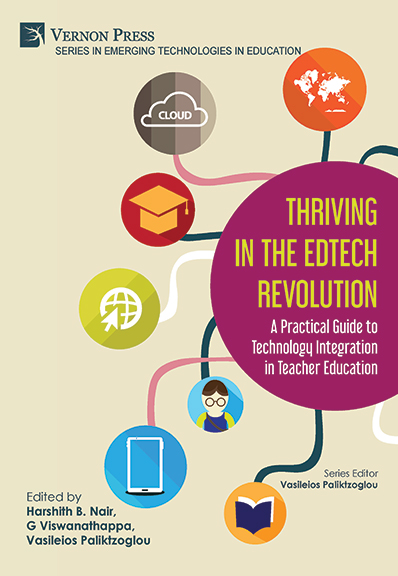
In an era where digital transformation is reshaping education, this book is a vital guide for educators, researchers, and policymakers navigating technology integration into learning. It explores educational technology’s theoretical foundations and practical applications, emphasizing innovative strategies to enhance teaching and learning. From artificial intelligence and machine learning to blended learning models and virtual reality, the book provides actionable insights into leveraging cutting-edge tools effectively while addressing critical issues like the digital divide, ethical technology use, and equitable access. Positioned at the intersection of pedagogy and technology, the work draws on global case studies and frameworks such as TPACK to present adaptable solutions for diverse educational contexts. It is unique in its focus on foundational and emerging trends, and it supports educators in building digital competencies and fostering student-centered learning environments. Designed for classroom adoption, professional development, and research, this book is an indispensable resource for teacher educators, in-service teachers, policymakers, and educational researchers committed to transforming education for the digital age. Its blend of actionable strategies, ethical considerations, and future-focused discussions equips readers to embrace technology as a tool for innovation and inclusivity in teaching and learning.
John Powers, Edgar Lopez, Nastasia Lawton-Sticklor, Cara Berg Powers, Soraya Chemaly, Nora Maybury, Amy Alvarez, Susan X. Jane, Jacquie Forbes, Rashid Faisal, Jayeesha Dutta, Ivy Alphonse-Crean, Siobhan Senier, Leif Taranta, Ana Maria Correa, Cabrina Kang, Regina Hardatt, Ezra Schwerner, Holly Dolan, Annie Cohn, Lora Barish, Kathryn Egnazcak, Meg Tighe, Kaila Skeet Browning, Carly Lazarus, Katie Newhouse, Maddie Neufeld, Anthony Peña, Malia Lazu, Mendrick Banzuela, Brittany Giroux, Brett Iarrobino, Elya, Bảo Nguyen, Francesca Toy, Ogechi Irondi, Anneliese Martinez, Jasmine Mao, Leigh Patel, Becky Thompson, Marla Marcum, Kira Kelley, Sophia Dantzic, Jaclyn Friedman, Deborah Powers, Jennifer Gaskin, Terran Ranier, Ella Berg Powers, Elliot Carelton, Ethan Carelton, Nora Duram-Minasian, Harriet Gage, Ella Mills, Zola Greenberg Norsigian, Mae Parham, and Gabriel Sticklor
'Uncovering Possible: Pedagogies for Apocalyptic Times' is an edited volume that holds our experiences as educators, activists, and community members navigating the global pandemic of the past several years. This pandemic is situated within the context of ongoing interconnected crises: oppressive systems, worsening climate, and economic urgency, all at an unsustainable pace. The work in this volume confronts the grief, loss, and injustice that apocalypse brings, while also engaging with the possibility and intentional, resilient joy necessary to build a better world. This volume is an invitation to explore both the impacts of this and many other apocalyptic events in learning spaces, as well as (re)imagine what’s essential to learning in community. Through research, storytelling, reflections from the field, poetry, and interactive activities, this volume shares lessons from those on the front lines of apocalyptic learning, inviting the reader to find their place in building the more equitable communities we need and deserve. This apocalypse is situated within a social context that extends beyond this single event. For many, apocalypse has, and continues to happen, through colonial white-supremacist capitalism. What we carry forward must include the collective knowledges capable of carrying us not just through this apocalypse but the apocalypses ahead.
John Powers, Edgar Lopez, Nastasia Lawton-Sticklor, Cara Berg Powers, Soraya Chemaly, Nora Maybury, Amy Alvarez, Susan X. Jane, Jacquie Forbes, Rashid Faisal, Jayeesha Dutta, Ivy Alphonse-Crean, Siobhan Senier, Leif Taranta, Ana Maria Correa, Cabrina Kang, Regina Hardatt, Ezra Schwerner, Holly Dolan, Annie Cohn, Lora Barish, Kathryn Egnazcak, Meg Tighe, Kaila Skeet Browning, Carly Lazarus, Katie Newhouse, Maddie Neufeld, Anthony Peña, Malia Lazu, Mendrick Banzuela, Brittany Giroux, Brett Iarrobino, Elya, Bảo Nguyen, Francesca Toy, Ogechi Irondi, Anneliese Martinez, Jasmine Mao, Leigh Patel, Becky Thompson, Marla Marcum, Kira Kelley, Sophia Dantzic, Jaclyn Friedman, Deborah Powers, Jennifer Gaskin, Terran Ranier, Ella Berg Powers, Elliot Carelton, Ethan Carelton, Nora Duram-Minasian, Harriet Gage, Ella Mills, Zola Greenberg Norsigian, Mae Parham, and Gabriel Sticklor
'Uncovering Possible: Pedagogies for Apocalyptic Times' is an edited volume that holds our experiences as educators, activists, and community members navigating the global pandemic of the past several years. This pandemic is situated within the context of ongoing interconnected crises: oppressive systems, worsening climate, and economic urgency, all at an unsustainable pace. The work in this volume confronts the grief, loss, and injustice that apocalypse brings, while also engaging with the possibility and intentional, resilient joy necessary to build a better world. This volume is an invitation to explore both the impacts of this and many other apocalyptic events in learning spaces, as well as (re)imagine what’s essential to learning in community. Through research, storytelling, reflections from the field, poetry, and interactive activities, this volume shares lessons from those on the front lines of apocalyptic learning, inviting the reader to find their place in building the more equitable communities we need and deserve. This apocalypse is situated within a social context that extends beyond this single event. For many, apocalypse has, and continues to happen, through colonial white-supremacist capitalism. What we carry forward must include the collective knowledges capable of carrying us not just through this apocalypse but the apocalypses ahead.
Adam Devitt, Rebecca G. Harper, Xiali Chang, Cristina Dumitru, Karis Jones, Lillian Ardell, Mrunal Chavda, Emily Hanke van Zee, Virginia Montero, Jaskaran Dhesi, Anna Katarzyna Woźniczka, Edda Óskarsdóttir, Karen Rut Gísladóttir, Hafdís Guðjónsdóttir, Svanborg Rannveig Jónsdóttir, Mona Beth Zignego, Susan A. Kirch, Pooneh Sabouri, Moyu Zhang, Kara Naidoo, Jean Kaya, Sherri Castillo, and Christian George Gregory
Within sociocultural traditions, language, dialogue, and social literacies play an institutional role in learning and human development. Discourse practices, however, go far beyond the traditional focus of using speaking and listening to support the learning of content knowledge. Teacher discourse practices ought to promote critical literacies and linguistic practices, and promote anti-racism and social and environmental justice. Classroom discourse, however, is missing from teacher education programs on a large scale in these significant ways. Teacher educators need to understand the social and political policies, pedagogical role, and multitude of practices for helping pre-service teachers and teacher practitioners learn to acquire and facilitate quality discursive practices in K-12 schools and understand related pedagogy. This book, ‘Cultivating Dialogue, Language, and Literacy for Social Justice in Teacher Education’, offers a variety of models for integrating discourse practices and pedagogies into the field of teacher education, including pre-service teaching, professional development, and even critiques on policy and subsequent affordances and consequences that inhibit or promote the quality of teacher discourse and the purposes for which teachers utilize classroom discourse. I would recommend this book for teacher education programs as well as professional developers who work with pre- and in-service teachers. Additionally, I recommend this book for researchers committed not only to classroom discourse analysis, but to promote speaking and listening among teachers and students in ways that enhance learning and development.
Adam Devitt, Rebecca G. Harper, Xiali Chang, Cristina Dumitru, Karis Jones, Lillian Ardell, Mrunal Chavda, Emily Hanke van Zee, Virginia Montero, Jaskaran Dhesi, Anna Katarzyna Woźniczka, Edda Óskarsdóttir, Karen Rut Gísladóttir, Hafdís Guðjónsdóttir, Svanborg Rannveig Jónsdóttir, Mona Beth Zignego, Susan A. Kirch, Pooneh Sabouri, Moyu Zhang, Kara Naidoo, Jean Kaya, Sherri Castillo, and Christian George Gregory
Within sociocultural traditions, language, dialogue, and social literacies play an institutional role in learning and human development. Discourse practices, however, go far beyond the traditional focus of using speaking and listening to support the learning of content knowledge. Teacher discourse practices ought to promote critical literacies and linguistic practices, and promote anti-racism and social and environmental justice. Classroom discourse, however, is missing from teacher education programs on a large scale in these significant ways. Teacher educators need to understand the social and political policies, pedagogical role, and multitude of practices for helping pre-service teachers and teacher practitioners learn to acquire and facilitate quality discursive practices in K-12 schools and understand related pedagogy. This book, ‘Cultivating Dialogue, Language, and Literacy for Social Justice in Teacher Education’, offers a variety of models for integrating discourse practices and pedagogies into the field of teacher education, including pre-service teaching, professional development, and even critiques on policy and subsequent affordances and consequences that inhibit or promote the quality of teacher discourse and the purposes for which teachers utilize classroom discourse. I would recommend this book for teacher education programs as well as professional developers who work with pre- and in-service teachers. Additionally, I recommend this book for researchers committed not only to classroom discourse analysis, but to promote speaking and listening among teachers and students in ways that enhance learning and development.
Showing 1 to 10 of 236 books
Discover our comprehensive collection of scholarly works in education. From cutting-edge research to foundational texts, find the resources you need for your academic journey.