Loading...
Please wait while we load the content...
Loading...
Please wait while we load the content...

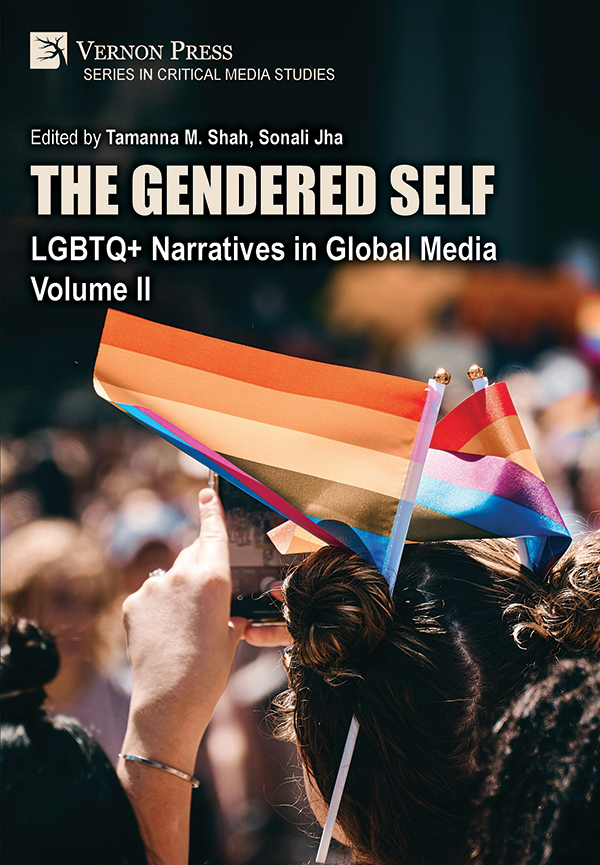
Kazım Tolga Gürel, Sonali Jha, Sarah E. Page, Yang Yang, Yuxuan Mu, Niveditha Jayaraj, G. Sadhana, and Mabel Gardner
'The Gendered Self: LGBTQ+ Narratives in Global Media, Volume II' challenges the restrictive frameworks that have long defined gender and sexuality. Moving beyond simplistic dichotomies, this volume explores how LGBTQ+ identities are shaped, represented, and contested across diverse cultural, historical, and political contexts. Through case studies from Turkey, the United States, China, and India, contributors reveal the lived complexities of queer experience. Chapters trace transgender journeys of identity transformation, dissect the weaponization of queer bodies in moral panics, and analyze the digital self-representations of Chinese gay men. Others investigate how Indian OTT platforms and Malayalam cinema expand space for queer narratives, while historical accounts of activists like Paula Grossman illustrate the fraught relationship between representation, activism, and backlash. Across these explorations, the volume highlights how media, politics, and cultural traditions simultaneously affirm and erase queer lives. It uncovers the deep roots of erasure in mythology and religion, while also showing how digital platforms and popular culture create new opportunities for resistance and recognition. This collection insists that the “gendered self” must be understood as fluid, intersectional, and culturally situated, pushing readers to reimagine identity beyond binaries and toward broader visions of inclusion and justice.
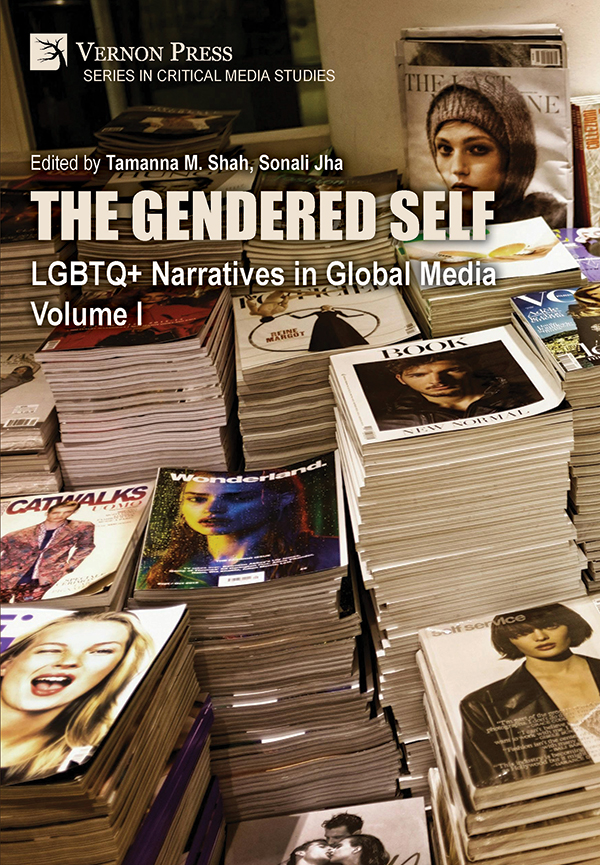
Cassandra Hayes, Bruce E. Drushel, Taylor Orcutt, Sarah Liese, Victoria L. LaPoe, Enakshi Roy, Terrell Robinson, and Sheyla Finkelshteyn
'The Gendered Self: LGBTQ+ Narratives in Global Media, Volume I' explores how media serves as a powerful arena for visibility, identity formation, and social change. Across global contexts, the chapters uncover how LGBTQ+ lives are framed, celebrated, silenced, or contested in television, film, news, advertising, and digital platforms. Contributors examine themes such as queer infrastructures in cinema, televised celebrations that disrupt tradition, the erasure and recovery of queer histories, and the lived experiences of Indigenous Two-Spirit and Māhū identities. Other chapters address the role of international law in shaping sexual rights, the tensions of representation in Muslim-majority societies, and the ways advertising and talk shows negotiate inclusivity. The volume concludes with a critique of how sitcoms both challenge and reassert patriarchal masculinity. The collection highlights that representation is never neutral. Media can validate identities, expand imaginaries, and amplify marginalized voices, yet it can also perpetuate stereotypes, erase histories, and reinforce exclusion. This volume brings these tensions into focus, revealing how the gendered self emerges at the intersection of culture, politics, and storytelling, and why media remains central to the global struggle for equality.
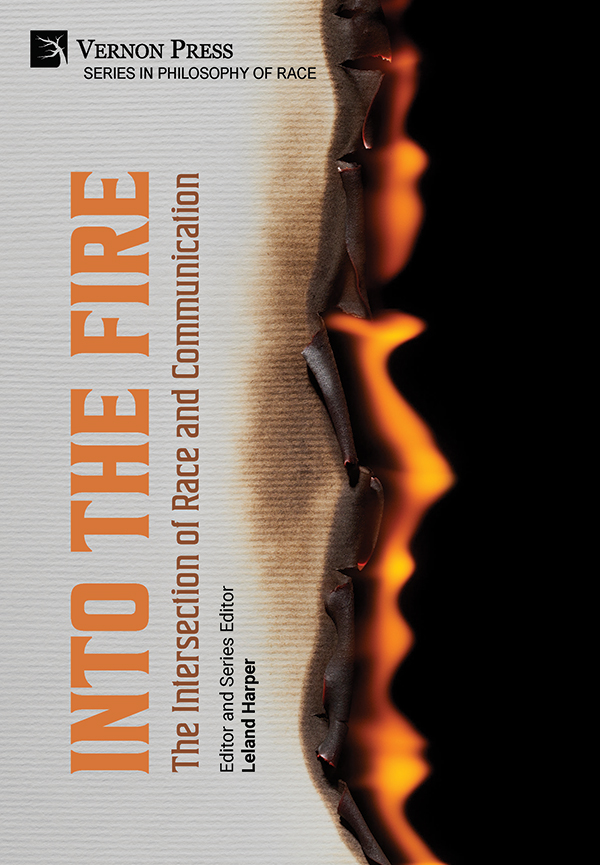
Jennifer Kling, Leland Harper, Eddy Souffrant, Joseph Frigault, Violet Victoria, Felipe E. Oliveira, Casey Rentmeester, Elizabeth LaFray, Gabriel Andrade, and Erica Preston-Roedder
Through the presentation of various perspectives, this collection of essays addresses some of the intersections of race and communication. The topics addressed include, but are not limited to, how we communicate about race, what our race communicates to others, how we can do a better job of educating others on race-related issues, and how we can better define certain terms often utilized in conversations about race. The perspectives shared in this volume contribute much-needed depth to the discussion of the philosophical and practical considerations of race and communication, broadly.
Author information not available
Through the presentation of various perspectives, this collection of essays addresses some of the intersections of race and communication. The topics addressed include, but are not limited to, how we communicate about race, what our race communicates to others, how we can do a better job of educating others on race-related issues, and how we can better define certain terms often utilized in conversations about race. The perspectives shared in this volume contribute much-needed depth to the discussion of the philosophical and practical considerations of race and communication, broadly.
Federico Gravino, Adelaide Madera, Montserrat Gas-Aixendri, Paola Cavaliere, Rejina M. Selvam, Gabriela Irrazábal, Ana Lucía Olmos Álvarez, Mariangela Galluccio, Caterina Gagliardi, Matteo Corsalini, Marc Grau-Grau, and Belén Zárate-Rivero
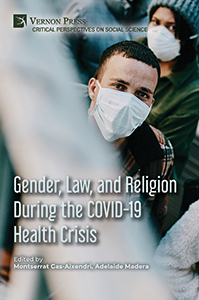
Looking at COVID-19 infection through a gendered lens reveals its deep impact on individuals in vulnerable positions, especially women. It raised new concerns about gender equity and inclusion, particularly when gender intersects with other identity markers such as religious affiliation. This intersection creates a “double vulnerability,” heightening the risk of discrimination, violence, hate speech, and harassment against women. In various legal contexts, women bear multiple roles and responsibilities. The interaction between gender, law, religion, and the pandemic has often resulted in disempowerment in shaping female identity. This is evident both in Western countries—where migrant women struggle for full integration—and in their countries of origin, where they often face the consequences of normative pluralism and insufficient state legal responses. The pandemic has generated not only a health crisis but also exacerbated social and economic issues, including increased gender-based violence in family settings and growing inequalities in access to fundamental rights such as healthcare, education, employment, and justice. In this complex framework, religious leaders face new challenges and must provide effective responses. Female leadership within religious contexts can play a crucial role in advocating for new paradigms that address evolving social, cultural, and legal needs. Religious actors are thus called upon to offer both guidance and support to vulnerable and marginalized members of their communities and to collaborate with governments in shaping a future where religious freedom, gender equality, gender justice, and freedom from discrimination are upheld. This volume aims to investigate the pandemic’s impact on women within faith communities, examine emerging balances between female religious/cultural claims and public welfare imperatives, and develop gendered, intersectional perspectives that promote women’s full integration, equality, and participation in civil society.
Federico Gravino, Adelaide Madera, Montserrat Gas-Aixendri, Paola Cavaliere, Rejina M. Selvam, Gabriela Irrazábal, Ana Lucía Olmos Álvarez, Mariangela Galluccio, Caterina Gagliardi, Matteo Corsalini, Marc Grau-Grau, and Belén Zárate-Rivero
Looking at COVID-19 infection through a gendered lens reveals its deep impact on individuals in vulnerable positions, especially women. It raised new concerns about gender equity and inclusion, particularly when gender intersects with other identity markers such as religious affiliation. This intersection creates a “double vulnerability,” heightening the risk of discrimination, violence, hate speech, and harassment against women. In various legal contexts, women bear multiple roles and responsibilities. The interaction between gender, law, religion, and the pandemic has often resulted in disempowerment in shaping female identity. This is evident both in Western countries—where migrant women struggle for full integration—and in their countries of origin, where they often face the consequences of normative pluralism and insufficient state legal responses. The pandemic has generated not only a health crisis but also exacerbated social and economic issues, including increased gender-based violence in family settings and growing inequalities in access to fundamental rights such as healthcare, education, employment, and justice. In this complex framework, religious leaders face new challenges and must provide effective responses. Female leadership within religious contexts can play a crucial role in advocating for new paradigms that address evolving social, cultural, and legal needs. Religious actors are thus called upon to offer both guidance and support to vulnerable and marginalized members of their communities and to collaborate with governments in shaping a future where religious freedom, gender equality, gender justice, and freedom from discrimination are upheld. This volume aims to investigate the pandemic’s impact on women within faith communities, examine emerging balances between female religious/cultural claims and public welfare imperatives, and develop gendered, intersectional perspectives that promote women’s full integration, equality, and participation in civil society.
Caroline Hensley, Yasuko Kase, Eliko Kosaka, Jun Okada, Yana Ya-chu Chang, Gayle Sato, Satarupa Sengupta, Jennie Snow, James Sun, and Ningning Huang
With a focus on the transpacific and transnational relationship between North America and Asia, 'Emerging from the Rubble: Asian/American Writings on Disasters' explores Asian/Americans’ complex and nuanced involvement in disastrous events. Included in this purview of disaster are not only the damages and threats of current ongoing climate change but also the long-lasting ruining effects inflicted by imperialism, neo/colonialism, wars, and these historical components’ entanglement with global capitalism that have generated both spontaneous and slow and/or prolonged violent effects. Moreover, disasters can be acknowledged as manifestations of the Anthropocene — an epoch shaped by human activity — or what scholars like Jason W. Moore and Donna J. Harraway term the ‘Capitalocene,’ a paradigm where nature and capitalist society are deeply intertwined, co-creating an intricate web of life. Asian/American involvement in such a web has never been simple but convoluted: some of them have experienced tremendous losses, whereas others have perpetuated obfuscation of the truth and/or induced violence, often contingently with or without acknowledging the facts. When considering Asian migrants including refugees from Southeast Asia who had little option but to seek asylum in the U.S., and Asian Americans who have pursued their “happiness” under the U.S.’s capitalist premise of constant progress, protection of “human rights,” and freedom of “choice,” it is important to note that Asian migrants and Asian ‘Americans’ have become simultaneously active players and exploited individuals within the context of U.S. racial capitalism. Acknowledging the impossibility of clearly differentiating natural and human-made disasters, scholars who contribute to this volume note the reciprocal influences between nature and civilization. They examine how the entanglements of natural and human-made disasters lead to the acceleration and expansion of damage. This volume explores how Asian Americans’ connections with their ancestral origins along with their particular racial positions, social classes, and socio-historical backgrounds in North American societies force them to experience and witness disastrous events differently from the mainstream discourse on eco-crises.
Caroline Hensley, Yasuko Kase, Eliko Kosaka, Jun Okada, Yana Ya-chu Chang, Gayle Sato, Satarupa Sengupta, Jennie Snow, James Sun, and Ningning Huang
With a focus on the transpacific and transnational relationship between North America and Asia, 'Emerging from the Rubble: Asian/American Writings on Disasters' explores Asian/Americans’ complex and nuanced involvement in disastrous events. Included in this purview of disaster are not only the damages and threats of current ongoing climate change but also the long-lasting ruining effects inflicted by imperialism, neo/colonialism, wars, and these historical components’ entanglement with global capitalism that have generated both spontaneous and slow and/or prolonged violent effects. Moreover, disasters can be acknowledged as manifestations of the Anthropocene — an epoch shaped by human activity — or what scholars like Jason W. Moore and Donna J. Harraway term the ‘Capitalocene,’ a paradigm where nature and capitalist society are deeply intertwined, co-creating an intricate web of life. Asian/American involvement in such a web has never been simple but convoluted: some of them have experienced tremendous losses, whereas others have perpetuated obfuscation of the truth and/or induced violence, often contingently with or without acknowledging the facts. When considering Asian migrants including refugees from Southeast Asia who had little option but to seek asylum in the U.S., and Asian Americans who have pursued their “happiness” under the U.S.’s capitalist premise of constant progress, protection of “human rights,” and freedom of “choice,” it is important to note that Asian migrants and Asian ‘Americans’ have become simultaneously active players and exploited individuals within the context of U.S. racial capitalism. Acknowledging the impossibility of clearly differentiating natural and human-made disasters, scholars who contribute to this volume note the reciprocal influences between nature and civilization. They examine how the entanglements of natural and human-made disasters lead to the acceleration and expansion of damage. This volume explores how Asian Americans’ connections with their ancestral origins along with their particular racial positions, social classes, and socio-historical backgrounds in North American societies force them to experience and witness disastrous events differently from the mainstream discourse on eco-crises.
Michael Wong, Jason A. Kaufman, Aaron M. Peterson, Scott Allison, Derek Tyler Attico, James Beggan, Claude Berube, Bradley O. Browne, Bradley Stewart Chilton, Michael Dismuke, Kelli Fitzpatrick, Jim Johnson, James LeDuc, Scott Maravilla, Drew Nichols, David Smith, Jason von Stietz, Sebastian Stoppe, Emily Strand, and Laurie Ulster
'Star Trek' provides an opportunity to explore the final frontier of leadership through its nearly six decades of series and films. With its basis in Enlightenment thinking (reason coupled to compassion) and its encouragement of diversity in its myriad forms, 'Star Trek' offers guidance on how to improve the human condition that has application in leadership across academic and professional fields. Leaders are constantly called upon to solve problems, direct institutional growth, and, on occasion, even solve humanitarian crises. Leadership development need not be complicated or overly staid. It should be engaging. 'Star Trek' provides us a venue through which to make it so. This book explores the application of 'Star Trek' to the practice of leadership across a diverse array of professional and academic fields. 'Second Star to the Right: Essays on Leadership in Star Trek' provides a set of exceptional chapters from a diverse range of scientists, professionals, writers, and thinkers. It will help you to utilize the wealth of 'Star Trek' canon applied across a robust array of fields to broadly inform the practice of leadership for a better world.
Michael Wong, Jason A. Kaufman, Aaron M. Peterson, Scott Allison, Derek Tyler Attico, James Beggan, Claude Berube, Bradley O. Browne, Bradley Stewart Chilton, Michael Dismuke, Kelli Fitzpatrick, Jim Johnson, James LeDuc, Scott Maravilla, Drew Nichols, David Smith, Jason von Stietz, Sebastian Stoppe, Emily Strand, and Laurie Ulster
'Star Trek' provides an opportunity to explore the final frontier of leadership through its nearly six decades of series and films. With its basis in Enlightenment thinking (reason coupled to compassion) and its encouragement of diversity in its myriad forms, 'Star Trek' offers guidance on how to improve the human condition that has application in leadership across academic and professional fields. Leaders are constantly called upon to solve problems, direct institutional growth, and, on occasion, even solve humanitarian crises. Leadership development need not be complicated or overly staid. It should be engaging. 'Star Trek' provides us a venue through which to make it so. This book explores the application of 'Star Trek' to the practice of leadership across a diverse array of professional and academic fields. 'Second Star to the Right: Essays on Leadership in Star Trek' provides a set of exceptional chapters from a diverse range of scientists, professionals, writers, and thinkers. It will help you to utilize the wealth of 'Star Trek' canon applied across a robust array of fields to broadly inform the practice of leadership for a better world.
Showing 1 to 10 of 177 books
Discover our comprehensive collection of scholarly works in communication and journalism. From cutting-edge research to foundational texts, find the resources you need for your academic journey.