Loading...
Please wait while we load the content...
Loading...
Please wait while we load the content...

Author information not available
No description available
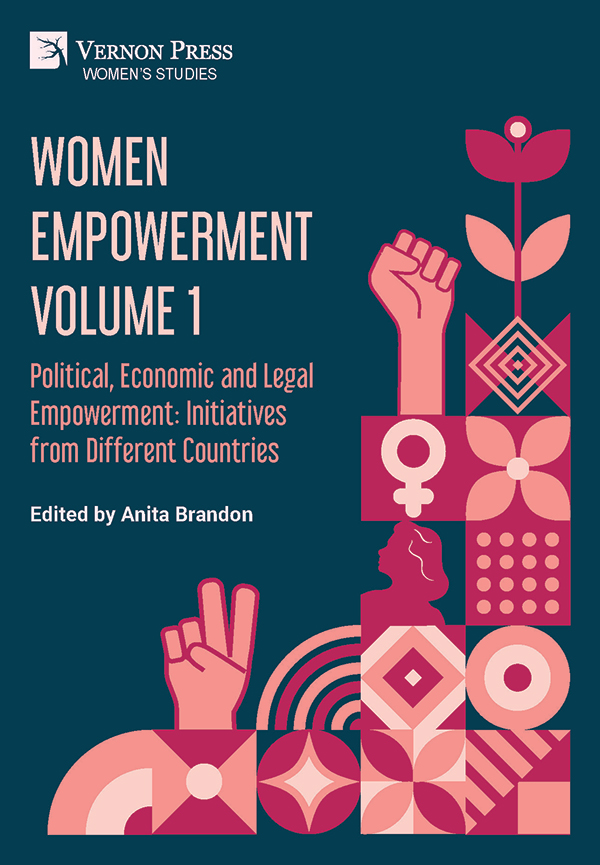
Political, Economic and Legal Empowerment: Initiatives from Different Countries
Talia Esnard, George Mathew, Tamara Martsenyuk, and Maya Lynum-Walker
This volume on Women Empowerment is a showcase for readers interested in case studies on Women Empowerment in the Political, Economic, and Legal Contexts from different countries across the world. The case studies here are presented under four sub-themes.
Political, Economic and Legal Empowerment: Initiatives from Different Countries
Talia Esnard, George Mathew, Tamara Martsenyuk, and Maya Lynum-Walker
This volume on Women Empowerment is a showcase for readers interested in case studies on Women Empowerment in the Political, Economic, and Legal Contexts from different countries across the world. The case studies here are presented under four sub-themes.
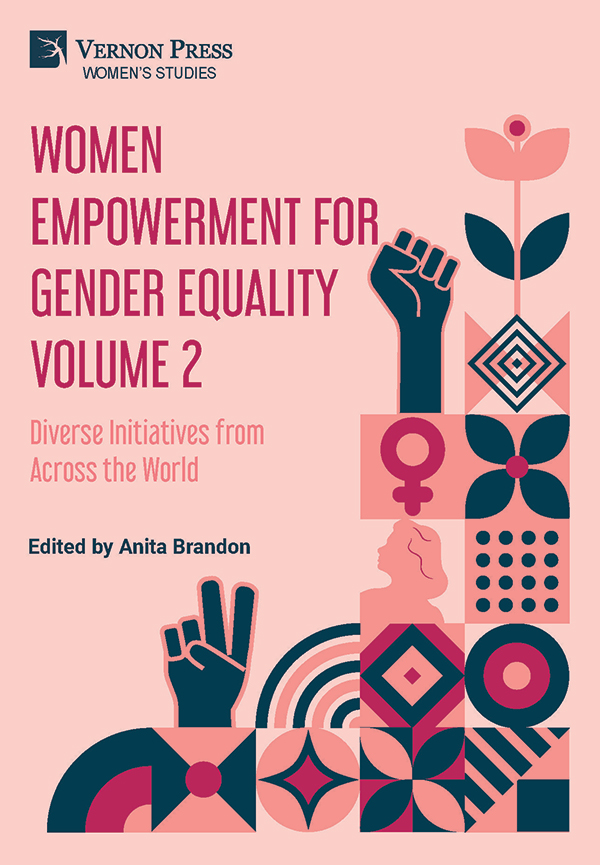
Diverse Initiatives from Across the World
Afsaneh Tavassoli, Afsaneh Tavassoli, Maliheh Abedi, Ruchira Bhattacharya, Justina Olufunke Aruna, Tarushikha Sarvesh, Hamida Mosharraf Moniea, Tasnim Tarannum, Chandra Shekhar Singhal, Veronica Valencia Gonzalez, and Kathleen Anangwe
This volume brings together powerful voices and lived experiences from across the globe, spotlighting how women are transforming their realities through health initiatives, education, entrepreneurship, social activism, and legal reforms. From rural India to urban Kenya, from the classrooms of Bangladesh to the legislative halls of the U.S., these stories reveal the multiple layers of struggle and strength that define the global movement for gender equality. Drawing from regions as diverse as Iran, Nigeria, and Latin America, the case studies dive deep into the intersections of gender with caste, age, class, and migration, showing how empowerment is not one-size-fits-all, but built through cultural context, resilience, and community. At the heart of this collection is a bold call to action: to rethink how we measure progress and to center women’s realities in policymaking and advocacy. Whether addressing reproductive health, digital entrepreneurship, or the challenges of elderly and immigrant women, the book highlights strategies that are as practical as they are inspiring. Finally, it offers a rich, comparative lens on how far we’ve come—and how much further we must go—to achieve true gender equality.
Diverse Initiatives from Across the World
Afsaneh Tavassoli, Afsaneh Tavassoli, Maliheh Abedi, Ruchira Bhattacharya, Justina Olufunke Aruna, Tarushikha Sarvesh, Hamida Mosharraf Moniea, Tasnim Tarannum, Chandra Shekhar Singhal, Veronica Valencia Gonzalez, and Kathleen Anangwe
This volume brings together powerful voices and lived experiences from across the globe, spotlighting how women are transforming their realities through health initiatives, education, entrepreneurship, social activism, and legal reforms. From rural India to urban Kenya, from the classrooms of Bangladesh to the legislative halls of the U.S., these stories reveal the multiple layers of struggle and strength that define the global movement for gender equality. Drawing from regions as diverse as Iran, Nigeria, and Latin America, the case studies dive deep into the intersections of gender with caste, age, class, and migration, showing how empowerment is not one-size-fits-all, but built through cultural context, resilience, and community. At the heart of this collection is a bold call to action: to rethink how we measure progress and to center women’s realities in policymaking and advocacy. Whether addressing reproductive health, digital entrepreneurship, or the challenges of elderly and immigrant women, the book highlights strategies that are as practical as they are inspiring. Finally, it offers a rich, comparative lens on how far we’ve come—and how much further we must go—to achieve true gender equality.
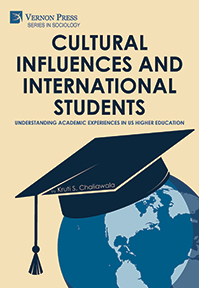
Understanding Academic Experiences in US Higher Education
Kruti S. Chaliawala
Navigating the intricate landscape of U.S. higher education can be profoundly challenging for international students. This groundbreaking work offers a vital, dual perspective, interweaving deeply personal lived experiences with rigorous academic research to illuminate the multifaceted journey of cultural and academic adaptation. Beyond the author’s compelling narrative in the preface, the book shares personal stories, making complex challenges tangible and relatable. From dissecting the nuances of U.S. grading systems and academic culture to exploring complex social integration, language proficiency hurdles, and the pervasive challenges of “othering” and discrimination, this book provides an honest and comprehensive account. A unique focus is placed on the distinct barriers faced by female students from conservative cultural backgrounds, offering empathetic insight into their unique struggles with participation, social norms, and mental well-being. Distinguished by its blend of personal narrative and evidence-based solutions, this book transcends mere description. It critically examines the role of institutional support, advocating for culturally sensitive mentorship, inclusive classroom practices, tailored mental health services, and essential cultural competency training for faculty and staff. 'Cultural Influences and International Students' is an indispensable resource for current and prospective international students seeking to understand and prepare for their journey. It is also an essential guide for higher education professionals, including faculty, advisors, administrators, and policymakers, providing actionable strategies to foster truly inclusive environments. This work stands as a powerful call to action for transforming U.S. campuses into spaces where every international student can thrive academically and personally.
Michael Wong, Jason A. Kaufman, Aaron M. Peterson, Scott Allison, Derek Tyler Attico, James Beggan, Claude Berube, Bradley O. Browne, Bradley Stewart Chilton, Michael Dismuke, Kelli Fitzpatrick, Jim Johnson, James LeDuc, Scott Maravilla, Drew Nichols, David Smith, Jason von Stietz, Sebastian Stoppe, Emily Strand, and Laurie Ulster
'Star Trek' provides an opportunity to explore the final frontier of leadership through its nearly six decades of series and films. With its basis in Enlightenment thinking (reason coupled to compassion) and its encouragement of diversity in its myriad forms, 'Star Trek' offers guidance on how to improve the human condition that has application in leadership across academic and professional fields. Leaders are constantly called upon to solve problems, direct institutional growth, and, on occasion, even solve humanitarian crises. Leadership development need not be complicated or overly staid. It should be engaging. 'Star Trek' provides us a venue through which to make it so. This book explores the application of 'Star Trek' to the practice of leadership across a diverse array of professional and academic fields. 'Second Star to the Right: Essays on Leadership in Star Trek' provides a set of exceptional chapters from a diverse range of scientists, professionals, writers, and thinkers. It will help you to utilize the wealth of 'Star Trek' canon applied across a robust array of fields to broadly inform the practice of leadership for a better world.
Michael Wong, Jason A. Kaufman, Aaron M. Peterson, Scott Allison, Derek Tyler Attico, James Beggan, Claude Berube, Bradley O. Browne, Bradley Stewart Chilton, Michael Dismuke, Kelli Fitzpatrick, Jim Johnson, James LeDuc, Scott Maravilla, Drew Nichols, David Smith, Jason von Stietz, Sebastian Stoppe, Emily Strand, and Laurie Ulster
'Star Trek' provides an opportunity to explore the final frontier of leadership through its nearly six decades of series and films. With its basis in Enlightenment thinking (reason coupled to compassion) and its encouragement of diversity in its myriad forms, 'Star Trek' offers guidance on how to improve the human condition that has application in leadership across academic and professional fields. Leaders are constantly called upon to solve problems, direct institutional growth, and, on occasion, even solve humanitarian crises. Leadership development need not be complicated or overly staid. It should be engaging. 'Star Trek' provides us a venue through which to make it so. This book explores the application of 'Star Trek' to the practice of leadership across a diverse array of professional and academic fields. 'Second Star to the Right: Essays on Leadership in Star Trek' provides a set of exceptional chapters from a diverse range of scientists, professionals, writers, and thinkers. It will help you to utilize the wealth of 'Star Trek' canon applied across a robust array of fields to broadly inform the practice of leadership for a better world.
Chanelle Dupuis, Hsuan L. Hsu, Rachel S. Herz, Théophile Robert-Rimsky, Jieling Xiao, PerMagnus Lindborg, Shyama Ramsamy Goomany, Renata Pękowska, Helen Shaw, Andrew Milne, Annick Le Guérer, Roksana Zgierska, Fernanda Alves, Erzsébet Fanni Tóth, Benjamin Thorne, Andrew Kettler, Shari Bloom, and Linda Kopitz
How are the senses and memory linked? What do sensory approaches to research reveal about the functions of memory? This edited volume encompasses various interdisciplinary projects that showcase the value of viewing the world through all of the senses and the ways that memory is multisensorial. From smell’s “Proust effect” to music’s ability to improve memory and mood, we remember and memorize the world through sensory input. This book expands research on multimodal work, the senses and materiality, the senses and methodology, sensing memories of the past, and technology’s impact on sensory lives. The chapters included cover all the senses, as well as the cross-modal experience of synesthesia. Each chapter further covers concepts related to memory studies, ranging from nostalgia, traumatic memories, and memorials to remembering the past (history), archives, and questions of identity. This edited volume is divided into five sections, each containing two to three chapters. The five sections, “Sensing Place and Space,” “Art as a Medium of Memory,” “In the Mind of Synesthesia,” “Making Sense of Materiality,” and “Technology and the Sensorium,” describe different groupings of interest. From questions of spatiality to digital life, each section invites the reader to explore new developments in the fields of memory studies and sensory studies and new insights on established topics. In these intimate, critical, and penetrating chapters, the authors of this book share new visions of what it means to write at the crossroads of the senses and memory and present new methodologies, frameworks, and pedagogies for examining this interconnection. A resource for both research and teaching, this volume represents a valuable guide for scholars working in sensory studies and memory studies. The hope is that "The Senses and Memory " will inspire future research and thinking in these evolving and expanding fields of study.
Chanelle Dupuis, Hsuan L. Hsu, Rachel S. Herz, Théophile Robert-Rimsky, Jieling Xiao, PerMagnus Lindborg, Shyama Ramsamy Goomany, Renata Pękowska, Helen Shaw, Andrew Milne, Annick Le Guérer, Roksana Zgierska, Fernanda Alves, Erzsébet Fanni Tóth, Benjamin Thorne, Andrew Kettler, Shari Bloom, and Linda Kopitz
How are the senses and memory linked? What do sensory approaches to research reveal about the functions of memory? This edited volume encompasses various interdisciplinary projects that showcase the value of viewing the world through all of the senses and the ways that memory is multisensorial. From smell’s “Proust effect” to music’s ability to improve memory and mood, we remember and memorize the world through sensory input. This book expands research on multimodal work, the senses and materiality, the senses and methodology, sensing memories of the past, and technology’s impact on sensory lives. The chapters included cover all the senses, as well as the cross-modal experience of synesthesia. Each chapter further covers concepts related to memory studies, ranging from nostalgia, traumatic memories, and memorials to remembering the past (history), archives, and questions of identity. This edited volume is divided into five sections, each containing two to three chapters. The five sections, “Sensing Place and Space,” “Art as a Medium of Memory,” “In the Mind of Synesthesia,” “Making Sense of Materiality,” and “Technology and the Sensorium,” describe different groupings of interest. From questions of spatiality to digital life, each section invites the reader to explore new developments in the fields of memory studies and sensory studies and new insights on established topics. In these intimate, critical, and penetrating chapters, the authors of this book share new visions of what it means to write at the crossroads of the senses and memory and present new methodologies, frameworks, and pedagogies for examining this interconnection. A resource for both research and teaching, this volume represents a valuable guide for scholars working in sensory studies and memory studies. The hope is that "The Senses and Memory " will inspire future research and thinking in these evolving and expanding fields of study.
Showing 1 to 10 of 178 books
Discover our comprehensive collection of scholarly works in cognitive science and psychology. From cutting-edge research to foundational texts, find the resources you need for your academic journey.