Loading...
Please wait while we load the content...
Loading...
Please wait while we load the content...

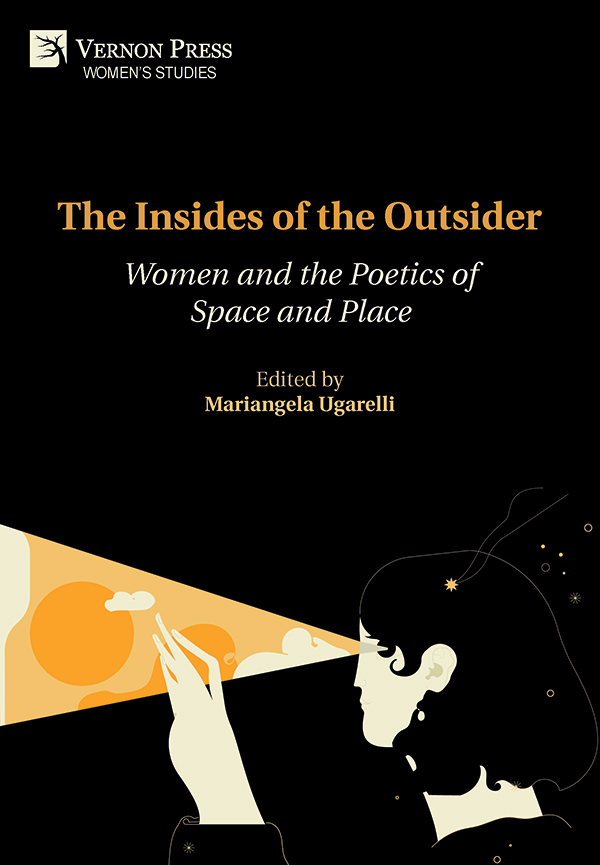
Jhonn Guerra Banda, Juan Diego Perez, Lauren Benjamin Mushro, Mariangela Ugarelli, Cecilia Esparza, Rachel Williams, Erna Anderson, Lisu Wang, Alexandra Arana Blas, Liliana Galindo Orrego, and Victoria Mallorga Hernández
When asked if being a woman had a negative impact on her ability to succeed as a writer, Argentine poet Alejandra Pizarnik stated that, even if not a physical impediment, being a woman in a patriarchal society is ‘a tragedy’ in itself. She followed this comment by saying: ‘What matters is what we do with our own tragedies’. Beyond sex assigned at birth, feminized bodies around the world share a similar phenomenological experience, which is dictated by a complicated relationship to space. Before setting pen to paper, the woman writer, a monster herself within patriarchal discourse, must confront the role society has set for her. For a writer in a feminized body, thus, the act of writing never begins with a tabula rasa but with a refusal and a challenge, an ushering out of the supposed ‘eden’ of the domestic. The question of the women-writer’s space is further exacerbated when considering matters of intersectionality. The poetics of space and place change within the confines of different geopolitical structures and their relations amongst each other. How do they shift when the center becomes de-centered and writing stems not from a place of political power but from the quieted voices of minor literature, queer and racialized bodies or subalternized latitudes? This volume will attempt to address these questions with input from a diverse group of scholars dealing with an equally diverse corpus. North and Latin America converse with Europe while ‘genre’ literature, minor literature and ‘gendered’ literatures take center stage. By taking into account a wide array of cultural objects, from poetry and children’s literature to Gothic tales and television shows, this collection of articles reveals the profound link between space and the female experience through the lens of art and literature.
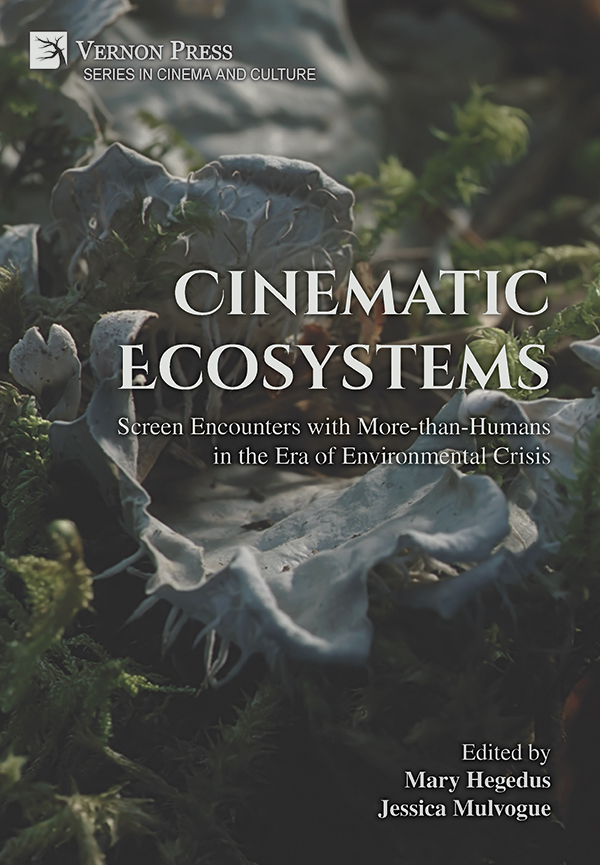
Brenda Longfellow, Virginia Luzón-Aguado, Belinda Smaill, Simon R. Troon, Melanie Ashe, Zeke Saber, McKew Devitt, Ariadna Cordal, Jennifer Schell, Aarón Lacayo, Mary Hegedus, Scott Birdwise, Emily Collins, Graig Uhlin, Elio Della Noce, Samantha R. Sharp, and Marek Jancovic
Motivated by the exigency of climate change, 'Cinematic Ecosystems: Screen Encounters with More-than-Humans in the Era of Environmental Crisis' takes cinema to be an audiovisual form whose creation and meaning are deeply connected to more-than-human worlds. As part of the third wave of ecocinema studies, this collection gathers contributions on multiple cinema forms from an international group of scholars and artists who offer diverse, critical perspectives that respond to the question: How does cinema help or hinder us in coming to know the more-than-human world? The collection homes in on the concept of the ecosystem as a biological and technological system that comprises a network of inter-relational living and their inanimate elemental affordances to explore encounters with cinema as a material object and practice, a spectatorial experience, and a representational text. The chapters cover environmental topics that span five continents and multiple histories. This book will be of special interest to film studies scholars and artists interested in cinema and climate change, environmental justice, and posthumanism.
Author information not available
‘¿Invisibles? Trans-identidades en la España contemporánea’ analiza la experiencia, corporeidad, identidad y representación de las personas trans en las producciones culturales españolas. Este volumen examina los fenómenos culturales que giran en torno a las trans-identidades, analizando la visibilidad del colectivo en los últimos 50 años y respondiendo a estas preguntas: ¿Cómo se representa a la comunidad trans en España? ¿Qué modelos de referencia hay en las producciones culturales? ¿Cómo combatir la transfobia existente? El libro denuncia la ausencia de un espacio realmente inclusivo en el panorama cultural y plantea la necesidad de aumentar la agencia y derechos de las identidades trans en el discurso público. Sus trece capítulos ofrecen una variedad de referentes sobre la diversidad genérico-sexual para visibilizar a unas personas vulnerables cuyas experiencias se han visto reducidas en numerosas ocasiones a rechazo y discriminación.
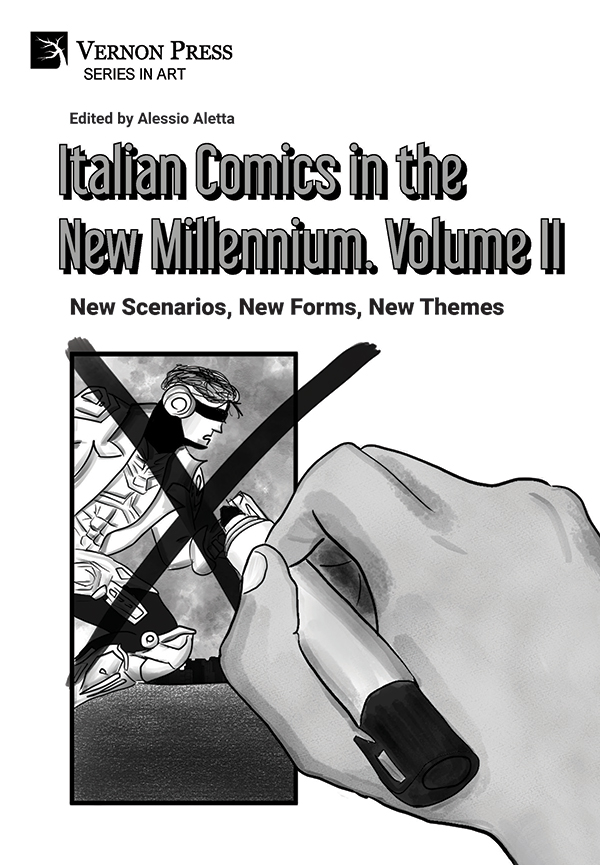
Giorgio Busi Rizzi, Silvia Vari, Lisa Maya Quaianni Manuzzato, Lorenzo Di Paola, Yesim Tonga, Francesca Leonardi, Francesca Fino, Nicole Crescenzi, Maria Luisa Catoni, Dario Boemia, Rodolfo Dal Canto, Alice Parrinello, Claudia Cerulo, and Lorenzo Bonoldi
Volume II of 'Italian Comics in the New Millennium' offers an in-depth exploration of the dynamic transformations in the Italian comics industry, focusing on the intersections of innovation, tradition, and contemporary socio-political issues. This collection highlights the rapidly evolving production and consumption landscape, including the rise of self-publishing, digital comics, and the impact of online platforms. The book examines the role of digital comics in reshaping narrative and aesthetic possibilities, while also addressing the changing working conditions of comics creators in the digital age. Key themes explored in this volume include the integration of comics into journalism; the emergence of reality-based narratives; and the growing representation of gender, sexuality, and immigration in contemporary graphic novels. Special attention is given to new waves of Italian comics that explore regional identities, historical memory, and personal lineage, offering a diverse range of case studies from emerging authors and established figures. This collection is a vital resource for researchers, students, and professionals in comics studies, media, and cultural studies. It provides an extensive overview of the most recent developments in Italian comics, offering a blend of critical analysis and fresh perspectives on the medium’s cultural significance. With its focus on evolving narrative forms and innovative production models, this volume serves as both a reference tool and a thought-provoking exploration of the present – and future – of Italian comics.
Giorgio Busi Rizzi, Silvia Vari, Lisa Maya Quaianni Manuzzato, Lorenzo Di Paola, Yesim Tonga, Francesca Leonardi, Francesca Fino, Nicole Crescenzi, Maria Luisa Catoni, Dario Boemia, Rodolfo Dal Canto, Alice Parrinello, Claudia Cerulo, and Lorenzo Bonoldi
Volume II of 'Italian Comics in the New Millennium' offers an in-depth exploration of the dynamic transformations in the Italian comics industry, focusing on the intersections of innovation, tradition, and contemporary socio-political issues. This collection highlights the rapidly evolving production and consumption landscape, including the rise of self-publishing, digital comics, and the impact of online platforms. The book examines the role of digital comics in reshaping narrative and aesthetic possibilities, while also addressing the changing working conditions of comics creators in the digital age. Key themes explored in this volume include the integration of comics into journalism; the emergence of reality-based narratives; and the growing representation of gender, sexuality, and immigration in contemporary graphic novels. Special attention is given to new waves of Italian comics that explore regional identities, historical memory, and personal lineage, offering a diverse range of case studies from emerging authors and established figures. This collection is a vital resource for researchers, students, and professionals in comics studies, media, and cultural studies. It provides an extensive overview of the most recent developments in Italian comics, offering a blend of critical analysis and fresh perspectives on the medium’s cultural significance. With its focus on evolving narrative forms and innovative production models, this volume serves as both a reference tool and a thought-provoking exploration of the present – and future – of Italian comics.
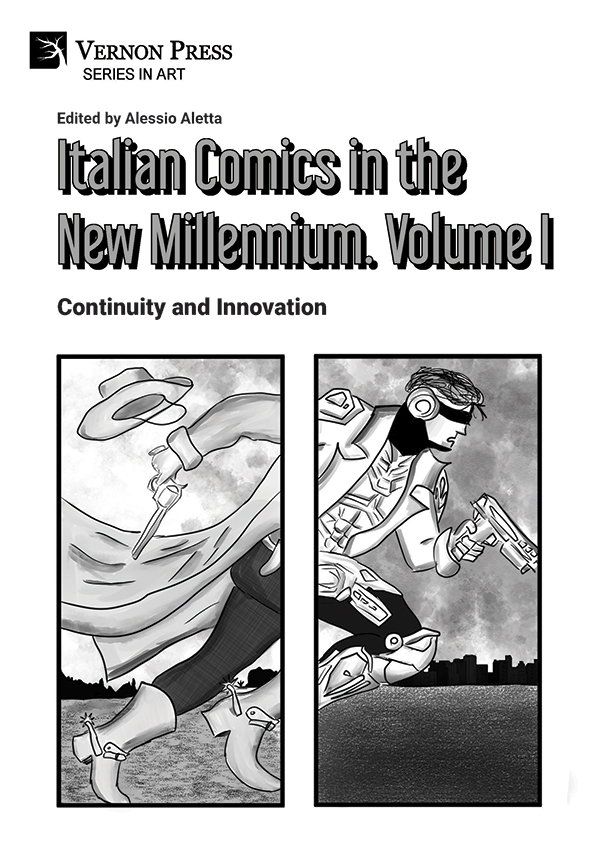
Alessio Aletta, Andrea Tosti, Marialaura Pancini, Francisco Sáez de Adana, Manuela Di Franco, Antonio Mirizzi, Carlotta Vacchelli, Mario Tirino, and Umberto Rossi
The first issue of a two-volume collection, this book explores the transformation of Italian comics in the new millennium, offering a comprehensive analysis of the evolving landscape of “fumetti” through both historical and contemporary lenses. The book examines iconic serials from Disney Italia and Sergio Bonelli Editore, alongside innovative auteur-driven works, providing readers with an in-depth look at how Italy’s most influential comics publishers have adapted to shifting cultural and industrial contexts. Contributions focus on the challenges of maintaining the essence of beloved series while integrating modern sensibilities, exploring shifts in audience, narrative strategies, and thematic explorations. The volumes also delve into the works of influential Italian comic artists, from the groundbreaking legacy of Andrea Pazienza to the contemporary innovations of Gipi and Zerocalcare, offering fresh insights into narrative styles, intermedial experimentation, and socio-political commentary. With contributions from leading scholars in the field, this collection highlights the vibrant, dynamic nature of Italian comics and their growing international recognition. This work provides a vital resource for anyone interested in the intersection of popular culture, artistic innovation, and the evolving nature of graphic storytelling. Drawing on a rich variety of methodological approaches, the book serves as both a reference tool and a thought-provoking exploration of the role of comics in contemporary society in the Italian context.
Alessio Aletta, Andrea Tosti, Marialaura Pancini, Francisco Sáez de Adana, Manuela Di Franco, Antonio Mirizzi, Carlotta Vacchelli, Mario Tirino, and Umberto Rossi
The first issue of a two-volume collection, this book explores the transformation of Italian comics in the new millennium, offering a comprehensive analysis of the evolving landscape of “fumetti” through both historical and contemporary lenses. The book examines iconic serials from Disney Italia and Sergio Bonelli Editore, alongside innovative auteur-driven works, providing readers with an in-depth look at how Italy’s most influential comics publishers have adapted to shifting cultural and industrial contexts. Contributions focus on the challenges of maintaining the essence of beloved series while integrating modern sensibilities, exploring shifts in audience, narrative strategies, and thematic explorations. The volumes also delve into the works of influential Italian comic artists, from the groundbreaking legacy of Andrea Pazienza to the contemporary innovations of Gipi and Zerocalcare, offering fresh insights into narrative styles, intermedial experimentation, and socio-political commentary. With contributions from leading scholars in the field, this collection highlights the vibrant, dynamic nature of Italian comics and their growing international recognition. This work provides a vital resource for anyone interested in the intersection of popular culture, artistic innovation, and the evolving nature of graphic storytelling. Drawing on a rich variety of methodological approaches, the book serves as both a reference tool and a thought-provoking exploration of the role of comics in contemporary society in the Italian context.
Victor Pitsoe, Bokyung Kim, Gillian Greenhill Hannum, Sooran Choi, Kyunghee Pyun, Nancy Eder, Kelsey Frady Malone, Yan Yang, Ila Sheren, Anna Jozefacka, Malka Simon, Francesca Liuni, Laura Phillips, and Ace Lehner
'Pedagogical Reckoning: Decolonizing and Degendering the Art Historical Canon in the Classroom and Museum' brings together leading voices in art history, museum studies, and pedagogy to confront the Eurocentric and patriarchal foundations of traditional art historical education. This timely anthology provides a range of actionable strategies for reshaping curricula, exhibitions, and research through the lenses of decoloniality, gender justice, and global inclusion. Edited by Sooran Choi and Gillian Greenhill Hannum, the volume includes contributions from scholars, artists, and educators across institutional contexts—from large research universities to community colleges and art schools. Its chapters span three key areas: inclusive classroom pedagogy, critical museum and curatorial practice, and decolonial research methodologies. Essays explore intersectional frameworks informed by postcolonial theory, feminist critique, queer studies, and ethnic studies, while also providing practical tools such as sample assignments, case studies, and curatorial models. Uniquely, this anthology integrates scholarly analysis with pedagogical reflection, offering readers both conceptual frameworks and concrete applications. It builds on recent literature such as 'Teaching South and Southeast Asian Art' and 'Expanding the Parameters of Feminist Artivism', while extending the conversation through its focus on classroom agency, community-responsive teaching, and institutional reckoning. Ideal for art history instructors; museum professionals; and students in anthropology, cultural studies, and education, 'Pedagogical Reckoning' serves as both a critical resource and a methodological guide. It is suitable for classroom adoption, professional development, and curriculum planning, and will appeal to anyone committed to transforming the way we teach, curate, and write about art.
Victor Pitsoe, Bokyung Kim, Gillian Greenhill Hannum, Sooran Choi, Kyunghee Pyun, Nancy Eder, Kelsey Frady Malone, Yan Yang, Ila Sheren, Anna Jozefacka, Malka Simon, Francesca Liuni, Laura Phillips, and Ace Lehner
'Pedagogical Reckoning: Decolonizing and Degendering the Art Historical Canon in the Classroom and Museum' brings together leading voices in art history, museum studies, and pedagogy to confront the Eurocentric and patriarchal foundations of traditional art historical education. This timely anthology provides a range of actionable strategies for reshaping curricula, exhibitions, and research through the lenses of decoloniality, gender justice, and global inclusion. Edited by Sooran Choi and Gillian Greenhill Hannum, the volume includes contributions from scholars, artists, and educators across institutional contexts—from large research universities to community colleges and art schools. Its chapters span three key areas: inclusive classroom pedagogy, critical museum and curatorial practice, and decolonial research methodologies. Essays explore intersectional frameworks informed by postcolonial theory, feminist critique, queer studies, and ethnic studies, while also providing practical tools such as sample assignments, case studies, and curatorial models. Uniquely, this anthology integrates scholarly analysis with pedagogical reflection, offering readers both conceptual frameworks and concrete applications. It builds on recent literature such as 'Teaching South and Southeast Asian Art' and 'Expanding the Parameters of Feminist Artivism', while extending the conversation through its focus on classroom agency, community-responsive teaching, and institutional reckoning. Ideal for art history instructors; museum professionals; and students in anthropology, cultural studies, and education, 'Pedagogical Reckoning' serves as both a critical resource and a methodological guide. It is suitable for classroom adoption, professional development, and curriculum planning, and will appeal to anyone committed to transforming the way we teach, curate, and write about art.
Jhonn Guerra Banda, Juan Diego Perez, Lauren Benjamin Mushro, Mariangela Ugarelli, Cecilia Esparza, Rachel Williams, Erna Anderson, Lisu Wang, Alexandra Arana Blas, Liliana Galindo Orrego, and Victoria Mallorga Hernández
When asked if being a woman had a negative impact on her ability to succeed as a writer, Argentine poet Alejandra Pizarnik stated that, even if not a physical impediment, being a woman in a patriarchal society is ‘a tragedy’ in itself. She followed this comment by saying: ‘What matters is what we do with our own tragedies’. Beyond sex assigned at birth, feminized bodies around the world share a similar phenomenological experience, which is dictated by a complicated relationship to space. Before setting pen to paper, the woman writer, a monster herself within patriarchal discourse, must confront the role society has set for her. For a writer in a feminized body, thus, the act of writing never begins with a tabula rasa but with a refusal and a challenge, an ushering out of the supposed ‘eden’ of the domestic. The question of the women-writer’s space is further exacerbated when considering matters of intersectionality. The poetics of space and place change within the confines of different geopolitical structures and their relations amongst each other. How do they shift when the center becomes de-centered and writing stems not from a place of political power but from the quieted voices of minor literature, queer and racialized bodies or subalternized latitudes? This volume will attempt to address these questions with input from a diverse group of scholars dealing with an equally diverse corpus. North and Latin America converse with Europe while ‘genre’ literature, minor literature and ‘gendered’ literatures take center stage. By taking into account a wide array of cultural objects, from poetry and children’s literature to Gothic tales and television shows, this collection of articles reveals the profound link between space and the female experience through the lens of art and literature.
Showing 1 to 10 of 411 books
Discover our comprehensive collection of scholarly works in art. From cutting-edge research to foundational texts, find the resources you need for your academic journey.