Loading...
Please wait while we load the content...
Loading...
Please wait while we load the content...

Author information not available
No description available
Erik Stanley, Sarah Snyder, Rory O’Dea, Adith K. Suresh, Kayla Kruse West, Chak-kwan Ng, Sony Jalarajan Raj, Keitaro Morita, Kumar Sawan, Will Anderson, and Mayank Kejriwal
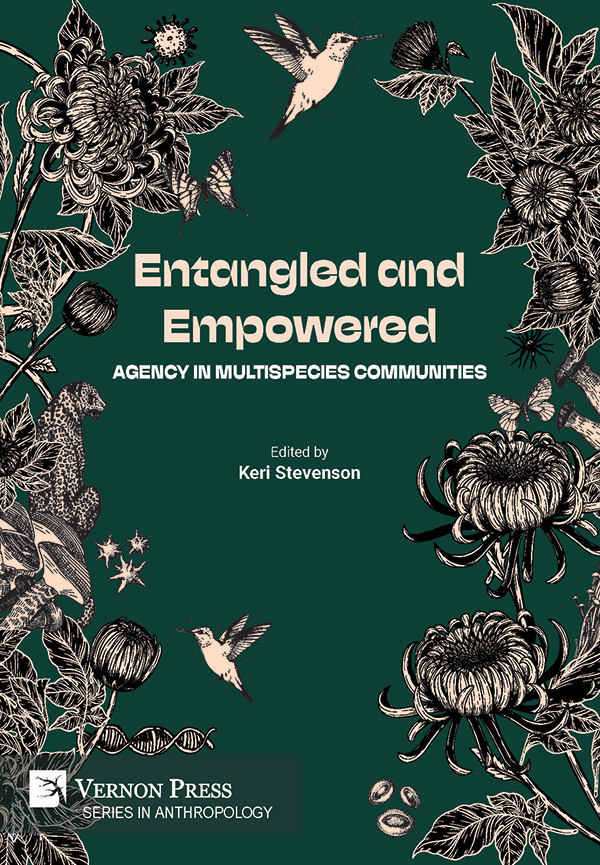
'Entangled and Empowered: Agency in Multispecies Communities' is a collection that approaches the inevitable reality of entanglement between humans and other beings from a perspective of action and wonder. It argues that actors as diverse as bacteria, snakes, butterflies, ducks, and cacao trees can help us enact joy in fields as different as art, cinema, literature, and anthropology. While acknowledging the imminent reality of climate change, the sixth extinction, and other overwhelming threats to the Earth, this book argues that humans continue to live, and so do the beings whose lives are entwined with ours, for whom we can acknowledge and work to improve their existence. The nine essays in this volume trace that acknowledgment and work through three sections centered on visual media, queer and feminist readings of empowerment, and movements beyond the boundaries enacted by anthropocentric Western society. Drawing on theories such as new materialism, posthumanism, and ecofeminism, and with an international perspective from authors working at American, South Asian, and East Asian universities, 'Entangled and Empowered' finds hope in the shadow of despair. It engages with work by Anna Lowenhaupt Tsing on entanglement, Donna Haraway on kin-making and multispecies communities, and Karen Barad on intra-actions, among others, while also showing how critiques of these ideas can make the world both more promising and more endangered. This collection will be useful for scholars working in all subfields of environmental humanities, especially those intersecting with the theories described above and as an archive of examples analyzing practical aspects of agency in diverse multispecies communities. Scholars studying texts as well-known as 'The Handmaid’s Tale' and as obscure as the codices of the Mopan Maya will find value in having both under one cover.

Rory O’Dea, Mayank Kejriwal, Will Anderson, Kumar Sawan, Keitaro Morita, Sony Jalarajan Raj, Chak-kwan Ng, Kayla Kruse West, Adith K. Suresh, Sarah Snyder, and Erik Stanley
'Entangled and Empowered: Agency in Multispecies Communities' is a collection that approaches the inevitable reality of entanglement between humans and other beings from a perspective of action and wonder. It argues that actors as diverse as bacteria, snakes, butterflies, ducks, and cacao trees can help us enact joy in fields as different as art, cinema, literature, and anthropology. While acknowledging the imminent reality of climate change, the sixth extinction, and other overwhelming threats to the Earth, this book argues that humans continue to live, and so do the beings whose lives are entwined with ours, for whom we can acknowledge and work to improve their existence. The nine essays in this volume trace that acknowledgment and work through three sections centered on visual media, queer and feminist readings of empowerment, and movements beyond the boundaries enacted by anthropocentric Western society. Drawing on theories such as new materialism, posthumanism, and ecofeminism, and with an international perspective from authors working at American, South Asian, and East Asian universities, 'Entangled and Empowered' finds hope in the shadow of despair. It engages with work by Anna Lowenhaupt Tsing on entanglement, Donna Haraway on kin-making and multispecies communities, and Karen Barad on intra-actions, among others, while also showing how critiques of these ideas can make the world both more promising and more endangered. This collection will be useful for scholars working in all subfields of environmental humanities, especially those intersecting with the theories described above and as an archive of examples analyzing practical aspects of agency in diverse multispecies communities. Scholars studying texts as well-known as 'The Handmaid’s Tale' and as obscure as the codices of the Mopan Maya will find value in having both under one cover.
Abdul Karim Bangura and Leonid A. Zhigun
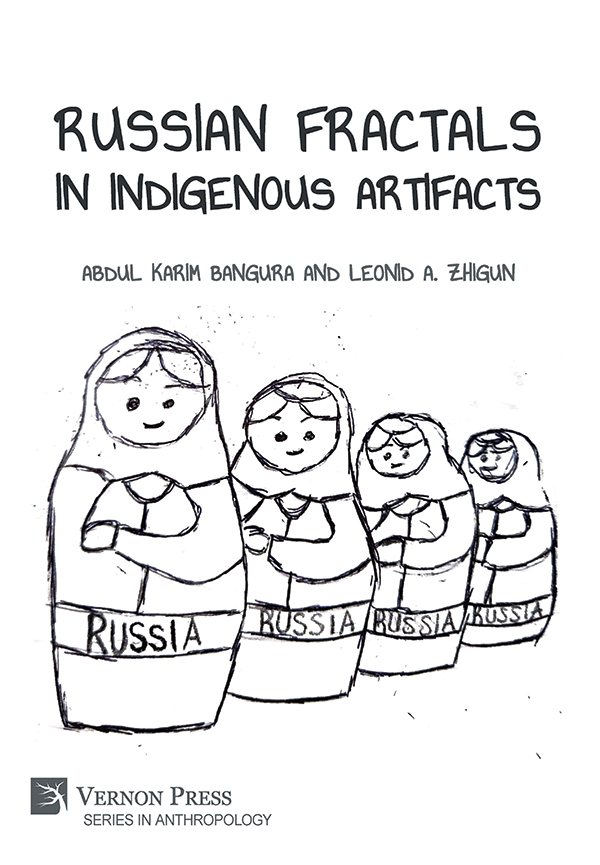
This book is the first comprehensive work on Russian Fractals in indigenous artifacts. While existing works focus on universal phenomena, such as liquid crystal or finance, none explore the intersection between Fractals and Russia. 'Russian Fractals in Indigenous Artifacts' therefore investigates how indigenous Russian cultures have a wonderful Fractal heritage that was originally tied to socially just and ecologically sustainable social practices, including those of indigenous northern groups such as the Yakut. Fractal designs originally allowed unalienated value, both human and nonhuman, to be visible, thereby enabling just and sustainable living. This book also examines how the tsarist elite encouraged the creation of unique creative masterpieces, developing and strengthening traditional crafts and art of indigenous people—hence, Fabergé, or imperial architecture. Today, the challenge for contemporary Russia is to reestablish the relationship between the social and ecological sustainability of indigenous cultures and practices, for which we can now provide modeling and analysis. Lay attempts at this have only limited success, as they have based the attempts on a purely religious basis, which recognizes the ecological aspects but often succumbs to authoritarian nationalism. However, the freely accession of indigenous peoples to Russia for the sake of national liberation has had a positive effect on enriching them with spirituality and creativity by Fractal artifacts through friendly exchanges with one another. In 'Russian Fractals in Indigenous Artifacts,' Bangura and Zhigun express why there is a need for a forward-thinking Fractal renaissance in Russia, bringing together contemporary computational and scientific analyses with these ecologically and socially sustainable traditions.
Abdul Karim Bangura and Leonid A. Zhigun
This book is the first comprehensive work on Russian Fractals in indigenous artifacts. While existing works focus on universal phenomena, such as liquid crystal or finance, none explore the intersection between Fractals and Russia. 'Russian Fractals in Indigenous Artifacts' therefore investigates how indigenous Russian cultures have a wonderful Fractal heritage that was originally tied to socially just and ecologically sustainable social practices, including those of indigenous northern groups such as the Yakut. Fractal designs originally allowed unalienated value, both human and nonhuman, to be visible, thereby enabling just and sustainable living. This book also examines how the tsarist elite encouraged the creation of unique creative masterpieces, developing and strengthening traditional crafts and art of indigenous people—hence, Fabergé, or imperial architecture. Today, the challenge for contemporary Russia is to reestablish the relationship between the social and ecological sustainability of indigenous cultures and practices, for which we can now provide modeling and analysis. Lay attempts at this have only limited success, as they have based the attempts on a purely religious basis, which recognizes the ecological aspects but often succumbs to authoritarian nationalism. However, the freely accession of indigenous peoples to Russia for the sake of national liberation has had a positive effect on enriching them with spirituality and creativity by Fractal artifacts through friendly exchanges with one another. In 'Russian Fractals in Indigenous Artifacts,' Bangura and Zhigun express why there is a need for a forward-thinking Fractal renaissance in Russia, bringing together contemporary computational and scientific analyses with these ecologically and socially sustainable traditions.
Iain Sinclair, Gökhan Tekir, James D. Seymour, Faiza Mazhar, Abby Fryman, Subhadra Mitra Channa, Mukesh Shankar Bharti, Mohamad Zreik, and Suvro Parui
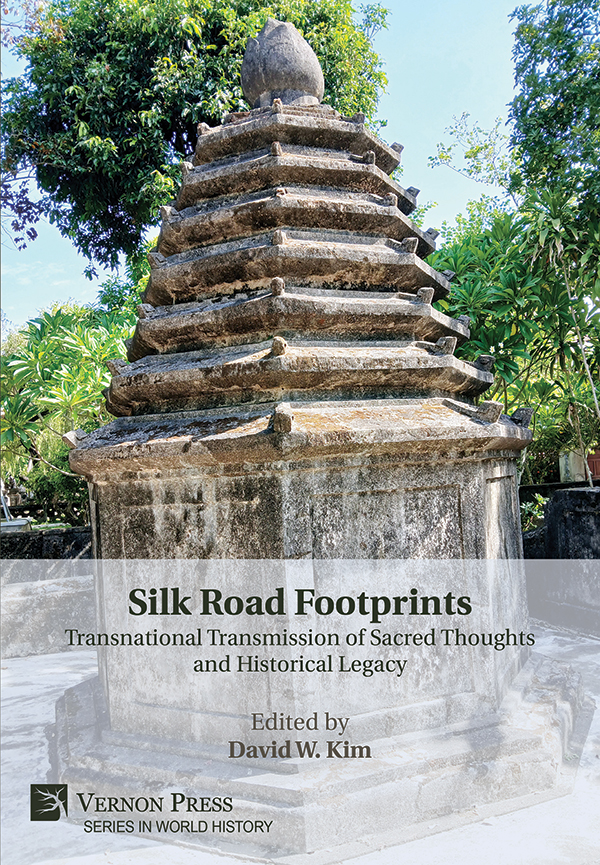
The Silk Road generally evokes images of places, cultures and peoples linked by the exchange of exotic goods and fabled treasures. The notion of the subject, however, often disregards the historical fact that the Silk Road routes functioned as a unique channel for spreading religious ideas, culture and literature. The personal or community beliefs of the Silk Road were changed radically as a result of the impact of external influences. 'Silk Road Footprints: Transnational Transmission of Sacred Thoughts and Historical Legacy' demonstrates that sacred communities interacted, coexisted, competed and influenced each other over long periods. These include those local traditions that evolved in ancient China, the Middle East, Africa, Central Asia, Korea and Japan and the subsequent larger traditions that arose in the region—Judaism, Buddhism, Christianity and Islam—as well as the shamanistic and animistic traditions of various nomadic peoples. The history of religions along the Silk Road is a remarkable illustration of how beliefs and civilisations often reflect a broad pattern of synthesis rather than clash. This book indicates that Asia (South, Southeast, East Asia and China), one of the most pluralistic religious regions in the world, has become a center of attention as a bridge between cultures. Ultimately, the creative study of the Silk Road and religious transnationalism evidences the implication that the local groups have been developed under the new environment of sacred principles and traditions as well as political influence.
Faiza Mazhar, James D. Seymour, Gökhan Tekir, Iain Sinclair, Subhadra Mitra Channa, Mukesh Shankar Bharti, Mohamad Zreik, Suvro Parui, and Abby Fryman
The Silk Road generally evokes images of places, cultures and peoples linked by the exchange of exotic goods and fabled treasures. The notion of the subject, however, often disregards the historical fact that the Silk Road routes functioned as a unique channel for spreading religious ideas, culture and literature. The personal or community beliefs of the Silk Road were changed radically as a result of the impact of external influences. 'Silk Road Footprints: Transnational Transmission of Sacred Thoughts and Historical Legacy' demonstrates that sacred communities interacted, coexisted, competed and influenced each other over long periods. These include those local traditions that evolved in ancient China, the Middle East, Africa, Central Asia, Korea and Japan and the subsequent larger traditions that arose in the region—Judaism, Buddhism, Christianity and Islam—as well as the shamanistic and animistic traditions of various nomadic peoples. The history of religions along the Silk Road is a remarkable illustration of how beliefs and civilisations often reflect a broad pattern of synthesis rather than clash. This book indicates that Asia (South, Southeast, East Asia and China), one of the most pluralistic religious regions in the world, has become a center of attention as a bridge between cultures. Ultimately, the creative study of the Silk Road and religious transnationalism evidences the implication that the local groups have been developed under the new environment of sacred principles and traditions as well as political influence.
Knowledge, Collaboration, and Representation in the Digital Age
Sean Heath, Henrike Neuhaus, Ben Hildred, Thomas F. Carter, Francesco Fanoli, Arthur Gaillard, Julia Haß, Jasmin Seijbel, and Gwyneth Talley
To do anthropology in a sporting world, one must reckon with the digital. As digital technologies become more widespread and increasingly sophisticated, people develop new ways to use them when playing, watching, and learning sport. This volume adds to the growing literature in the Anthropology of Sport by framing key debates in the light of this digital context. More importantly, the authors articulate how apparently trivial contexts such as sport are crucial for exploring the ways human beings incorporate digital technologies in their everyday lives. From taekwondo in Argentina to horse-riding in Morocco, the contributors to this volume explore a diverse range of sports across a variety of global locales. Through insightful ethnography, they show how fundamental elements of sport, including movement, competition, and values are increasingly mediated by digital technologies. Whether it is Sri Lankan cricketers analysing their practice frame-by-frame, English youth swimmers curating their Instagram feeds, or women footballers navigating urban spaces safely in Brazil, such examples indicate the diverse relationships that exist between sport and the digital. Throughout, the authors reflect on issues around knowledge, collaboration, and representation and consider their implications for undertaking anthropological work. This reveals how the fundamental relationship between anthropologist and interlocutor continues to change in the digital age. This book will be of interest to both students and scholars in anthropology and the social sciences, including sociology, sports sciences, cultural studies, geography, and history. The nuanced yet accessible discussion of method will be useful for students preparing to undertake ethnographic work, while the contribution to theoretical debates will aid researchers exploring sport and/or the digital. The international scope of this volume, combined with the broad scope of the arguments therein, ensure a wide appeal for many readers.
Knowledge, Collaboration, and Representation in the Digital Age
Arthur Gaillard, Gwyneth Talley, Jasmin Seijbel, Julia Haß, Francesco Fanoli, Thomas F. Carter, Ben Hildred, Henrike Neuhaus, and Sean Heath
To do anthropology in a sporting world, one must reckon with the digital. As digital technologies become more widespread and increasingly sophisticated, people develop new ways to use them when playing, watching, and learning sport. This volume adds to the growing literature in the Anthropology of Sport by framing key debates in the light of this digital context. More importantly, the authors articulate how apparently trivial contexts such as sport are crucial for exploring the ways human beings incorporate digital technologies in their everyday lives. From taekwondo in Argentina to horse-riding in Morocco, the contributors to this volume explore a diverse range of sports across a variety of global locales. Through insightful ethnography, they show how fundamental elements of sport, including movement, competition, and values are increasingly mediated by digital technologies. Whether it is Sri Lankan cricketers analysing their practice frame-by-frame, English youth swimmers curating their Instagram feeds, or women footballers navigating urban spaces safely in Brazil, such examples indicate the diverse relationships that exist between sport and the digital. Throughout, the authors reflect on issues around knowledge, collaboration, and representation and consider their implications for undertaking anthropological work. This reveals how the fundamental relationship between anthropologist and interlocutor continues to change in the digital age. This book will be of interest to both students and scholars in anthropology and the social sciences, including sociology, sports sciences, cultural studies, geography, and history. The nuanced yet accessible discussion of method will be useful for students preparing to undertake ethnographic work, while the contribution to theoretical debates will aid researchers exploring sport and/or the digital. The international scope of this volume, combined with the broad scope of the arguments therein, ensure a wide appeal for many readers.
Sarah Snyder, Rory O’Dea, Adith K. Suresh, Kayla Kruse West, Chak-kwan Ng, Sony Jalarajan Raj, Keitaro Morita, Kumar Sawan, Will Anderson, Mayank Kejriwal, and Erik Stanley
'Entangled and Empowered: Agency in Multispecies Communities' is a collection that approaches the inevitable reality of entanglement between humans and other beings from a perspective of action and wonder. It argues that actors as diverse as bacteria, snakes, butterflies, ducks, and cacao trees can help us enact joy in fields as different as art, cinema, literature, and anthropology. While acknowledging the imminent reality of climate change, the sixth extinction, and other overwhelming threats to the Earth, this book argues that humans continue to live, and so do the beings whose lives are entwined with ours, for whom we can acknowledge and work to improve their existence. The nine essays in this volume trace that acknowledgment and work through three sections centered on visual media, queer and feminist readings of empowerment, and movements beyond the boundaries enacted by anthropocentric Western society. Drawing on theories such as new materialism, posthumanism, and ecofeminism, and with an international perspective from authors working at American, South Asian, and East Asian universities, 'Entangled and Empowered' finds hope in the shadow of despair. It engages with work by Anna Lowenhaupt Tsing on entanglement, Donna Haraway on kin-making and multispecies communities, and Karen Barad on intra-actions, among others, while also showing how critiques of these ideas can make the world both more promising and more endangered. This collection will be useful for scholars working in all subfields of environmental humanities, especially those intersecting with the theories described above and as an archive of examples analyzing practical aspects of agency in diverse multispecies communities. Scholars studying texts as well-known as 'The Handmaid’s Tale' and as obscure as the codices of the Mopan Maya will find value in having both under one cover.
Showing 1 to 10 of 104 books
Discover our comprehensive collection of scholarly works in anthropology. From cutting-edge research to foundational texts, find the resources you need for your academic journey.