Loading...
Please wait while we load the content...
Loading...
Please wait while we load the content...

Explore peer - reviewed titles across the humanities and social sciences - rigorous research, fresh perspectives, and scholarship that inspires dialogue across disciplines.
Stay informed about our latest publications, calls for proposals, and special announcements. As a subscriber, you'll also enjoy exclusive member discounts of 10%-20% on all orders. Join our community of scholars, librarians, and readers today.

From special discounts and global distribution partners to downloadable catalogs, flyers, and high-resolution covers, we make it easy to enrich your library’s collection. Access bibliographic data, explore subject-specific listings, and stay updated on forthcoming titles.
Become part of our librarian network and access dedicated tools, discounts, and resources to support collection development and promote new titles to your patrons.

Partner with Vernon Press to provide your customers with high-quality, peer-reviewed scholarship. We offer flexible ordering options, reseller agreements, and promotional materials to support your sales and outreach.

Vernon Press provides dedicated resources to help instructors adopt our books for courses and to support students with affordable access to high-quality scholarship. From desk and examination copies to tailored student editions, we aim to make our titles accessible in the classroom.
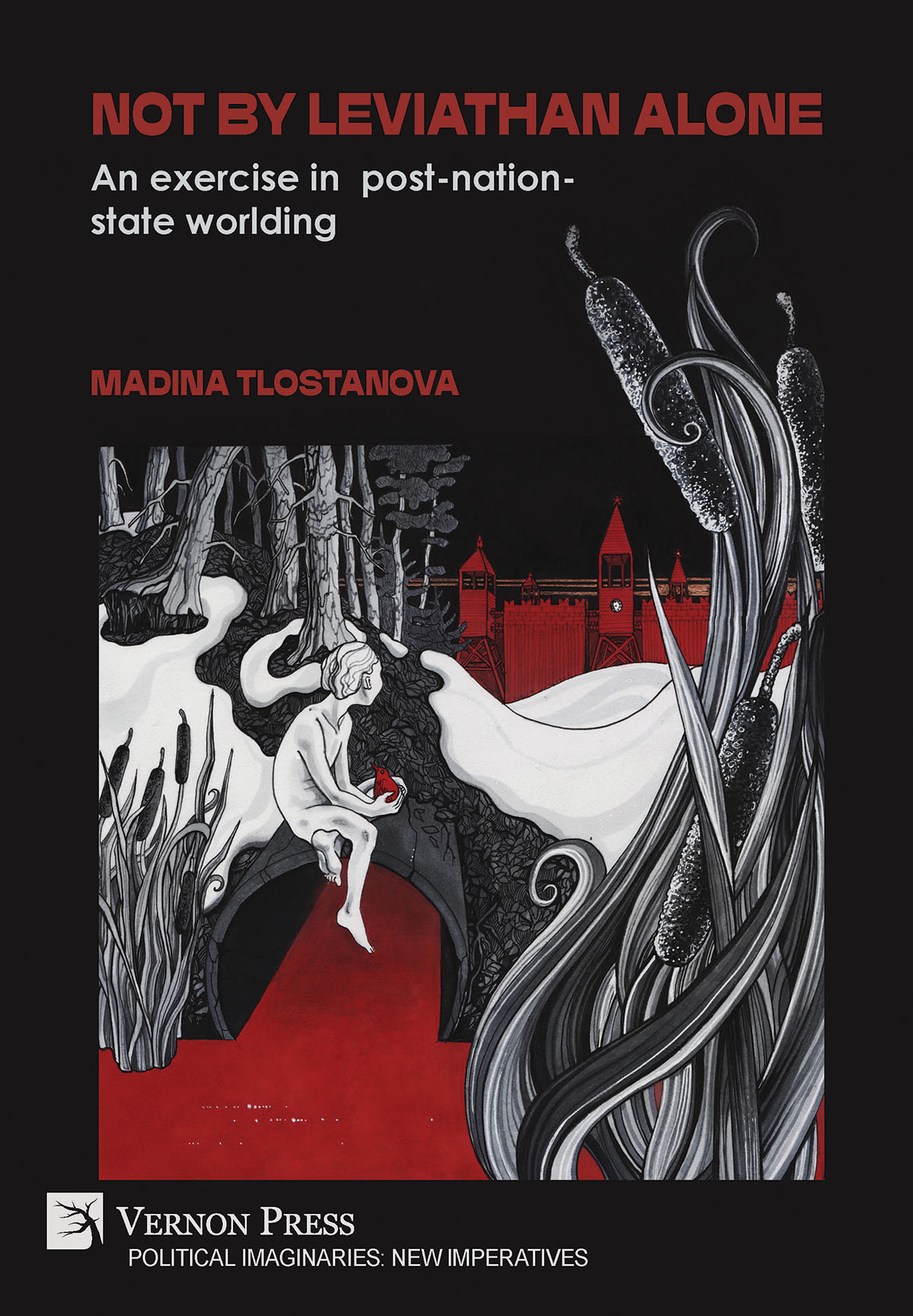
An exercise in post-nation-state worlding
Madina Tlostanova
The book is an open-ended, meta-critical reflection on the discrepancy between the nation-state as an institution and contemporary and future (geo)political, social, enviro-climatic, technological and onto-epistemic challenges, written primarily from the position of the systematically excluded from the identification frameworks of the nation-state. Epistemically, the work stems from the decolonial and indigenous critique of coloniality of knowledge and from feminist skepticism towards objectivist, rationalist thinking modes. The author invites the readers to imagine other possible ways of political organization that would contribute to extending life on Earth, and the paths to their implementation. Without aiming at an exhaustive overview of the existing opinions on this vast topic or offering a single correct recipe for the emerging post-state political development, the book experiments instead with various tools, stimulating the readers to relearn how to imagine politically. The established methods, such as thinking together and arguing with authors from different areas and disciplines - from postcolonial studies, decolonial feminist positions to indigenous and libertarian anarchist stances, from critical environmental humanities to techno-fix pseudo-solutions and neo-imperial geopolitical accounts, are intertwined with engaging conversations with political/social/cultural activists, artists and thinkers and with experimental speculative fiction using creative writing as a mode of inquiry. Through its co-creative interactive style, this trans- and post-disciplinary work invites the audience to engage in praxis beyond the actual reading of the book. The book can be used in undergraduate and graduate elective courses in migration studies, critical security studies, human geography, decolonial and postcolonial studies, environmental humanities. It will be of interest to social, political and cultural activists, artists and writers and to broader audiences concerned with the question of whether and how it is possible to live politically beyond the nation-state, without sliding into (neo)imperial, totalitarian or corporate specters.
Author information not available
The book is totally preoccupied with thinking beyond existing political thought and institutions. It recognizes that irrespective of who or where we are, and no matter if we know it or not, “we” now all live in “the end times.” Most explicitly, this moment is expressed by evolutionary biology, making clear that planetary life is at the start of the sixth extinction event – a situation indivisible from climate change impacts. The already unstable geopolitical “state of the world” and its dangers will amplify the coming eco-environmental conditions, resulting in population displacement, resource stress, critical conditions of food security, and conflict. Globally, across all political ideologies, existing institutional politics demonstrate an incapability of responding to these situations. There is an evident temporal disjuncture between how extant politics is positioned in time and the moment of an ever-accelerating end times. Effectively, political institutions, their theory and practice, are out-of-step with terminal speeding “defuturing” events. As the book makes clear, this situation needs to be fully recognised. At the same time, there are visions and political positions presenting themselves as directing what will come after the end times. Viewing these positions indicates that the future will be plural and contested. In one direction, technology and corporations will become even more powerful (as a critique of the literature on “accelerationism” shows). But at the other extreme, a huge swathe of displaced humanity is almost certain to be abandoned. In the face of these prospects, new political thinking and practices are essential. But this will not come from the existing political paradigm. Such change needs a new political imagination. Responding to this need is a primary focus of the book. To do this, the influence of Spinoza on political imagination provides a key point of engagement and departure.