Loading...
Please wait while we load the content...
Loading...
Please wait while we load the content...

Explore peer - reviewed titles across the humanities and social sciences - rigorous research, fresh perspectives, and scholarship that inspires dialogue across disciplines.
Stay informed about our latest publications, calls for proposals, and special announcements. As a subscriber, you'll also enjoy exclusive member discounts of 10%-20% on all orders. Join our community of scholars, librarians, and readers today.

From special discounts and global distribution partners to downloadable catalogs, flyers, and high-resolution covers, we make it easy to enrich your library’s collection. Access bibliographic data, explore subject-specific listings, and stay updated on forthcoming titles.
Become part of our librarian network and access dedicated tools, discounts, and resources to support collection development and promote new titles to your patrons.
Partner with Vernon Press to provide your customers with high-quality, peer-reviewed scholarship. We offer flexible ordering options, reseller agreements, and promotional materials to support your sales and outreach.

Vernon Press provides dedicated resources to help instructors adopt our books for courses and to support students with affordable access to high-quality scholarship. From desk and examination copies to tailored student editions, we aim to make our titles accessible in the classroom.
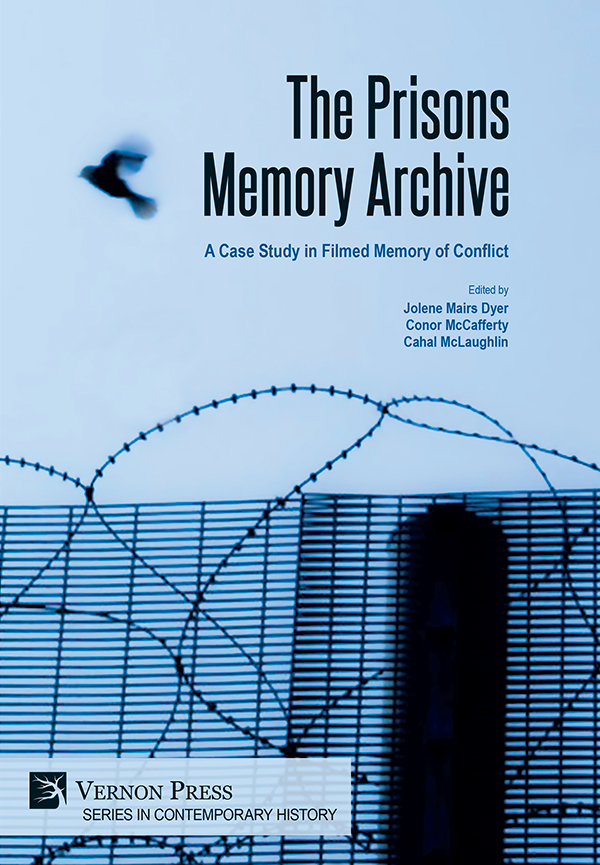
Lorraine Bourke, Elizabeth Woodcraft, Melania Terrazas, William Mitchell, Kevin McSorley, Joanna McMinn, Laurence McKeown, Sarah McDonagh, Jenny Meegan, Laney Lenox, Kate Keane, Rosie Hickey, Sarah Feinstein, Amanda Dunsmore, Lorraine Dennis, Laura Aguiar, Conor McCafferty, and Cahal McLaughlin
The Prisons Memory Archive (PMA) explores ways that narratives of a conflicted past are filmed at the site of the experiences and later negotiated in a contested present in the North of Ireland. Given the state’s failed attempts at establishing an official process for addressing the legacy of the conflict that lasted between 1968 and 1998, there are a number of community and academic initiatives that have taken up this task. The Prisons Memory Archive is one such project, whose aim is to research the possibilities of engaging with the story of the ‘other’ in a society that is emerging from decades of political violence. The PMA filmed back inside the prisons with those who passed through Armagh Gaol (2006) and the Maze and Long Kesh Prison (2007), which were both touchstone and tinderbox during the 30 years of violent conflict. We applied protocols of co-ownership, where participants become co-authors of their own story, with the right to withdraw up to the point of exhibition; inclusivity to ensure a multi-narrative archive with prison staff, prisoners, visitors, teachers, chaplains, etc.; and life-story telling, where leading questions are eschewed in order to return more agency to the participants. Currently, the full archive, made up of 160 walk-and-talk recordings totaling 300 hours of filmed material, is available at the Public Record Office of Northern Ireland, where it is preserved and made accessible to the public, and a website has been designed for educational use of the archive. This collection offers critical reflections on the processes of recording, archiving and utilising the archive in its several manifestations, e.g. feature films, website, and full archive at the Public Records Office. The perspectives offer a range of reflections, including filming, editing, archiving, web design, education, and museum practice.
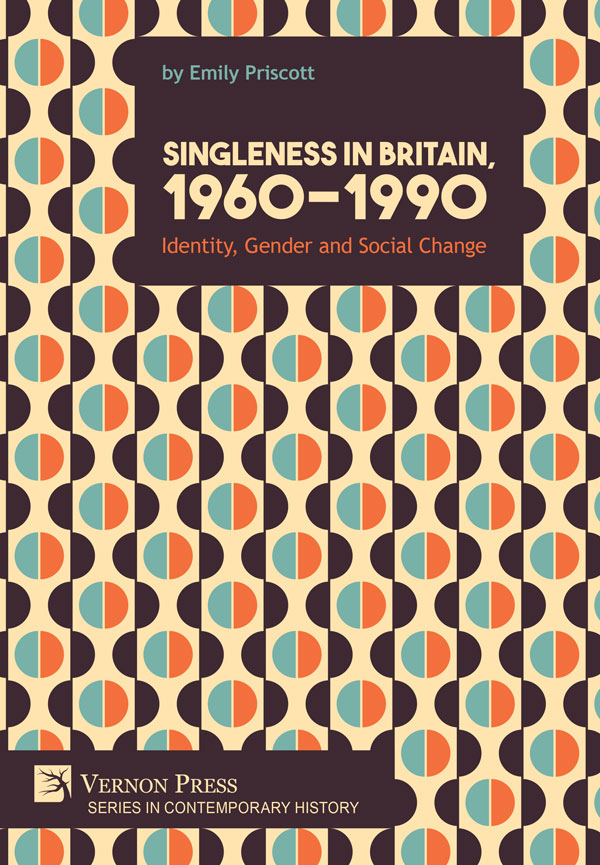
Emily Priscott
This book contributes to an emerging field of research, looking at the significance of marital status to debates about identity and gender. It examines representations and experiences of single men and women between 1960 and 1990, using a wide variety of sources, including digitized British newspapers, social research, films, and lifestyle literature. Whilst much-existing work focuses on the early-to-mid 20th centuries (such as Katherine Holden’s ground-breaking work, The Shadow of Marriage: Singleness in England, 1914-1960), this book alternatively examines the impact of the 1960s and the aftermath of changing attitudes to singleness. While Holden and others, such as Virginia Nicholson in Singled Out, focus largely on social status and lived experience (often through oral testimony), the author is just as interested in finding new ways of looking at gender and sexuality. This work starts from the premise that a distinct double standard existed in attitudes towards single men and women, which continued even after the wave of legislation to improve women’s status during the 1960s. Examining these often vastly different expectations reveals a complex web of progress, continuity, and contradictions, highlighting the uneven pace of social change and its frequent compromises and limitations. Using theoretical approaches such as feminism and queer theory, this work explores the impact of changing gender norms on issues including single fatherhood, old maid stereotypes, and experiences of homelessness. It can be used as a study aid for 20th-century British history and gender studies courses, and might also interest both established academics and intellectually curious non-academic readers. The author has made efforts, where possible, to clearly explain her theoretical approaches and interventions for those who might be unfamiliar with them.
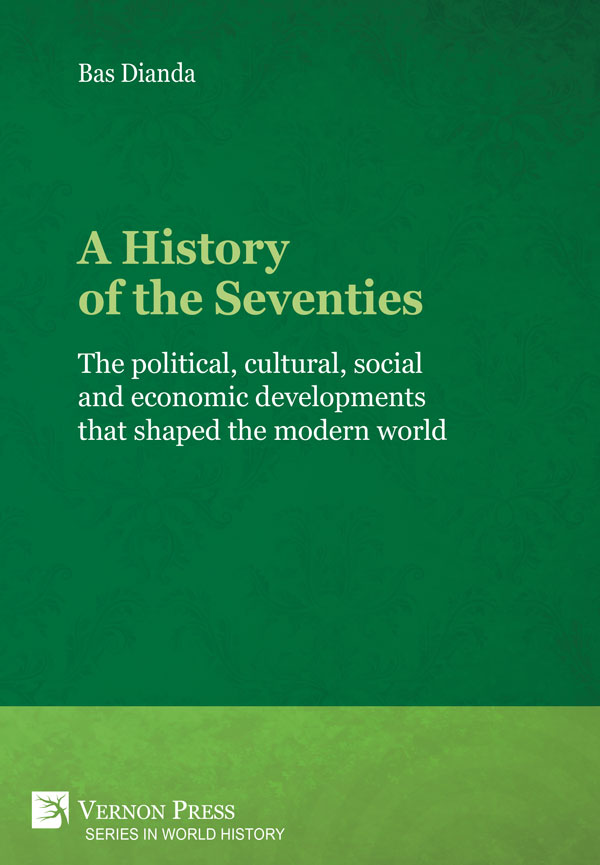
Bas Dianda
Relegated to the back bench, the Seventies are often considered as no more than a bridge between the more momentous decades of the Sixties and Eighties. However, delving into this historical period, this book asks; how significant were the Seventies in terms of political, economic and cultural developments? And, to what extent did this decade change the course of the second half of the twentieth century? Seeking to uncover the extraordinary transformative capacity of this era, this book reveals how important events from this decade marked history for many years to come. Grounded in a ‘history of developments,’ this book investigates connections of causality or concomitant causality with events that were yet to come. The first part of this volume traces the economic, political and cultural trends that prevailed during this decade, before turning its attention to the legacies of the Seventies and the events that changed the course of history and that are still having repercussions to this day. From the oil crisis to microwaves, this book offers an in-depth and complete look at the Seventies that will not only be of interest to historians and economists, but also sociologists and those intrigued by the evolution of political, economic and cultural developments.