Loading...
Please wait while we load the content...
Loading...
Please wait while we load the content...

Explore peer - reviewed titles across the humanities and social sciences - rigorous research, fresh perspectives, and scholarship that inspires dialogue across disciplines.
Stay informed about our latest publications, calls for proposals, and special announcements. As a subscriber, you'll also enjoy exclusive member discounts of 10%-20% on all orders. Join our community of scholars, librarians, and readers today.

From special discounts and global distribution partners to downloadable catalogs, flyers, and high-resolution covers, we make it easy to enrich your library’s collection. Access bibliographic data, explore subject-specific listings, and stay updated on forthcoming titles.
Become part of our librarian network and access dedicated tools, discounts, and resources to support collection development and promote new titles to your patrons.

Partner with Vernon Press to provide your customers with high-quality, peer-reviewed scholarship. We offer flexible ordering options, reseller agreements, and promotional materials to support your sales and outreach.

Vernon Press provides dedicated resources to help instructors adopt our books for courses and to support students with affordable access to high-quality scholarship. From desk and examination copies to tailored student editions, we aim to make our titles accessible in the classroom.
Tanupriya, Tamanna Priya, Sanchita Khurana, Shiv Kumar, Shalini Jayprakash, Soma Mandal, Sruthi Sasidharan, Jay Kumar, Ashish Gautam, and Deepak
This comprehensive body of work illuminates the new ways to remember caste and comprehend the enduring anguish it has imposed upon individuals across generations, thereby paving the way for a more informed understanding of its profound impact on Dalit lives throughout the annals of time. This work not only adds depth to the existing discourse but also serves as a catalyst for broader understanding and appreciation of the complexities inherent in Dalit experiences and their representation or (mis)representation. In doing so, the volume challenges the traditional social order's ability to address caste-based discrimination effectively and also makes an attempt to find alternative ways to understand the conundrum of caste. It delves into the necessity of alternative discourse, particularly the significance of Dalit discourse, and hence the imperative need for diverse and inclusive discourses. The volume represents the individual voices of the editors and contributors, who are eminent academics, and provides a more holistic approach to the examination of the socio-economic, cultural and political landscape of the Dalit community in contemporary India. Their contribution enriches the current body of literature on Dalit Studies, with a specific focus on the evolving dynamics within politics, academia, popular culture, digital culture, political economy, ideological perspectives, and representation or (mis)representation, among others. The chapters also demonstrate the profound impact of various modern influences on the lives of the younger generation of Dalits. In doing so, it sheds light on how access to information technology, the pervasive use of social media- digital media, the influential role of music and cinema in cultural resistance, and the discourse of protest politics collectively shape the experiences and perspectives of the young Dalit community. This literary work presents an invaluable opportunity for scholars, researchers, and students, and a methodological aid for classroom adoption for discerning readers to immerse themselves in an exploration of a significant community in India and its multifaceted presence within contemporary literature and culture.
Martha Bohachevsky Chomiak, Yuri Shapoval, Larissa Zaleska Onyshkevych, Olga Gomilko, Ostap Kushnir, Natalia Kudriavtseva, Domagoj Krpan, Bohdan A. Futey, Antonina Berezovenko, Lada Kolomiyets, and Myroslava Tomorug Znayenko
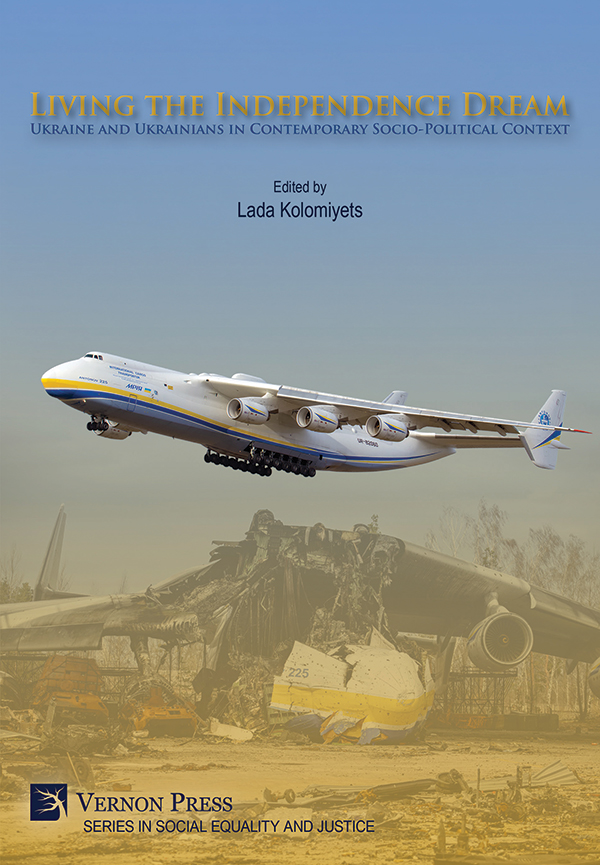
For many Ukrainians, 1991 was a crucial point when their long-held dream of independence came true. The image of the future life in independent Ukraine was then almost identical to folklore images of Ukraine as the land of milk and honey. "Living the Independence Dream" takes a multi-dimensional look at the period of regained independence as a time of advancement towards the realization of collective dreams shaping the post-Soviet nation, even through everyday disappointments, anxiety, and uncertainty. The collection features personal accounts of several generations of Ukrainians who found themselves displaced by political upheavals in foreign lands, as well as the voices of recently displaced people who left the Donbas or other regions of Ukraine following the outbreak of the Russian aggression. It revisits the legacy of Soviet dissidents and explores the ideologies of Ukrainian language revival and the ways that memory and language construct Ukrainian identity and generate vital energy amidst war. The collection "Living the Independence Dream" aims to analyze the agency of contemporary Ukrainian people and the role of media, literature, and digital folklore in creating new messages, meanings, and values formed during the Independence decades.
A Pan-African Victory
Gnaka Lagoke
The International Criminal Court (ICC), created in 2002 to combat impunity, projects a sense of unfairness and stirs an unending debate. A trial before the court epitomizes the controversy surrounding it, perceived as a neocolonialist tool in the hands of the most powerful nations. This research critically examines the trial of the former president of Ivory Coast, Laurent Gbagbo. The two-decade crisis in Ivory Coast was a series of armed, diplomatic, and political conflicts in which human rights were violated by all sides. Military confrontation resumed as a result of an electoral stalemate that followed a controversial presidential election in the fall of 2010. The most atrocious human rights abuse was perpetrated at the end of March 2011 by the rebel forces backed by the French and the United Nations troops: the massacre of Duékoué. In one day, hundreds of Laurent Gbagbo’s followers were killed. However, the ICC undertook a selective prosecution against Gbagbo’s camp. After a trial of eight years, Laurent Gbagbo was finally acquitted. The news of his unanticipated acquittal shocked the world. Later, that decision was overturned and transformed into freedom with binding and coercive conditions by the Appeals Chamber, which had succumbed to political pressure. The former president of Ivory Coast spent months of confinement in Belgium until the Appeals Chamber rebutted the prosecutor’s appeal against his release and confirmed his total acquittal and that of Blé Goudé. He eventually went back to Ivory Coast on June 17, 2021. The trial of Laurent Gbagbo before the ICC, despite his acquittal (a tardy one), reflects a series of biases germane to international law and international justice, such as the victor’s justice stance, the conflict between national law and international law, the question of sovereignty, and the issue of lawfare. The trial of Laurent Gbagbo, which was the hallmark of the selective international justice system embedded in unfairness, led to a historical landmark with his shocking acquittal, which led to the indictment of the International Court, whose fate has thus been sealed before history.
Chuck Grose
Dealing with Differences is a pervasive issue everyone is faced with, yet our responses are not always just and mutually enriching. This book argues that our ability for empathy can become an internal lens to overcome the fear of differences. Dealing with Differences begins with the reader’s experience, introspection and problem solving, and the book often includes references to current events. Within each chapter readers develop their own stories on dealing with difference. This includes journaling about changing feelings and thoughts, and applying chapter information to everyday experience. Readers use empathy to address privilege, race, gender/sexuality, violence and other realities. The pursuit of justice is encouraged. Every reader can do something, sometime, somewhere to effectively deal with differences.