Loading...
Please wait while we load the content...
Loading...
Please wait while we load the content...

Explore peer - reviewed titles across the humanities and social sciences - rigorous research, fresh perspectives, and scholarship that inspires dialogue across disciplines.
Stay informed about our latest publications, calls for proposals, and special announcements. As a subscriber, you'll also enjoy exclusive member discounts of 10%-20% on all orders. Join our community of scholars, librarians, and readers today.

From special discounts and global distribution partners to downloadable catalogs, flyers, and high-resolution covers, we make it easy to enrich your library’s collection. Access bibliographic data, explore subject-specific listings, and stay updated on forthcoming titles.
Become part of our librarian network and access dedicated tools, discounts, and resources to support collection development and promote new titles to your patrons.

Partner with Vernon Press to provide your customers with high-quality, peer-reviewed scholarship. We offer flexible ordering options, reseller agreements, and promotional materials to support your sales and outreach.

Vernon Press provides dedicated resources to help instructors adopt our books for courses and to support students with affordable access to high-quality scholarship. From desk and examination copies to tailored student editions, we aim to make our titles accessible in the classroom.
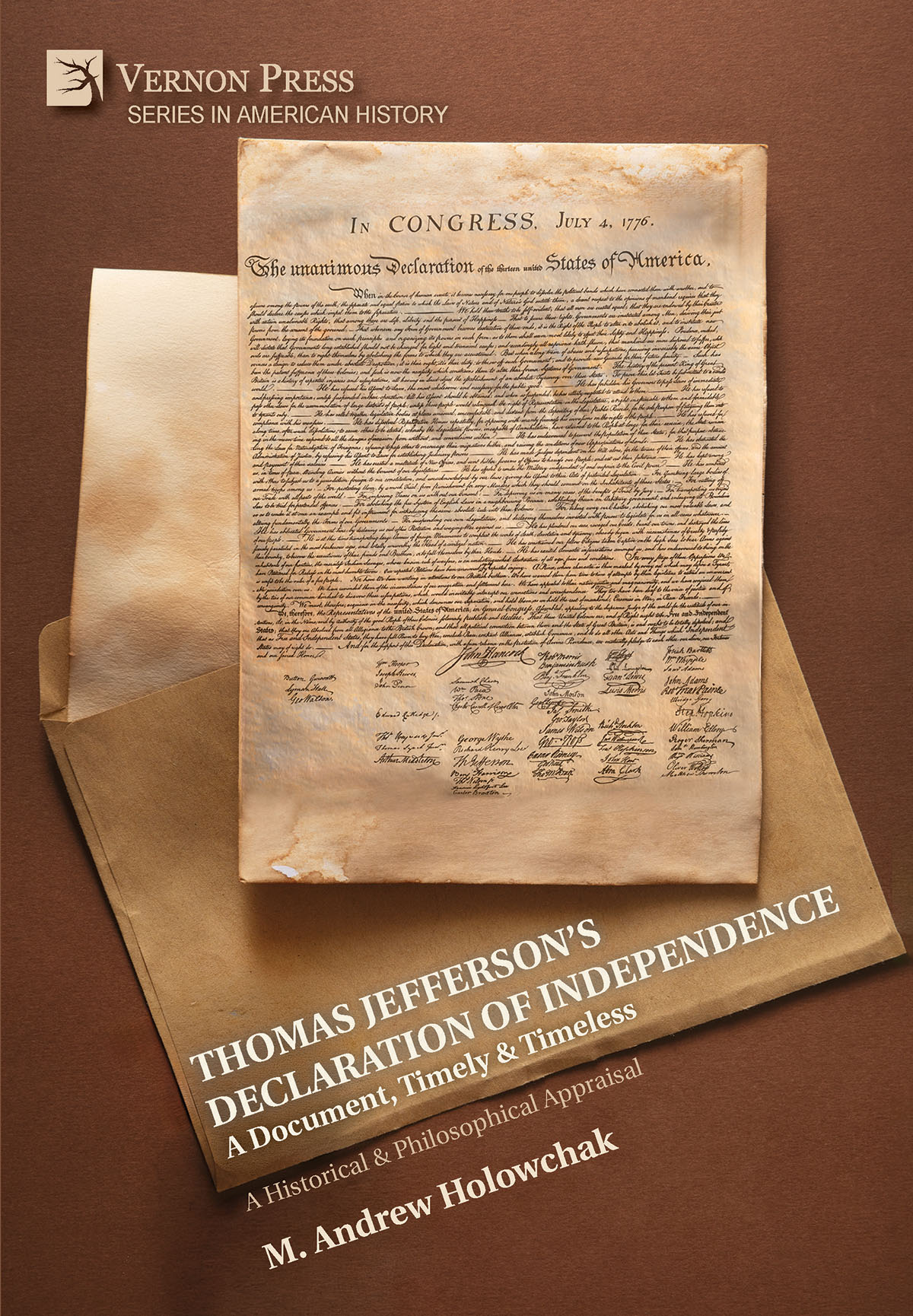
A Historical & Philosophical Appraisal
M. Andrew Holowchak
The Declaration of Independence is alive, because its sentences are crafted with elegance and concision—and the Congress much contributed to its concision—and because the author, not just the drafter, of the document captured things commonly known, yet profound, concerning human nature and human wellbeing. The Declaration of Independence, thus, is not just a proclamation to the world, of Americans’ independence and of the reasons for it, but it is also, and most singularly, a moral document that grounds a rich and robust liberal political philosophy. The bedrock of that political philosophy, argues Holowchak, is human equality, not human liberty.
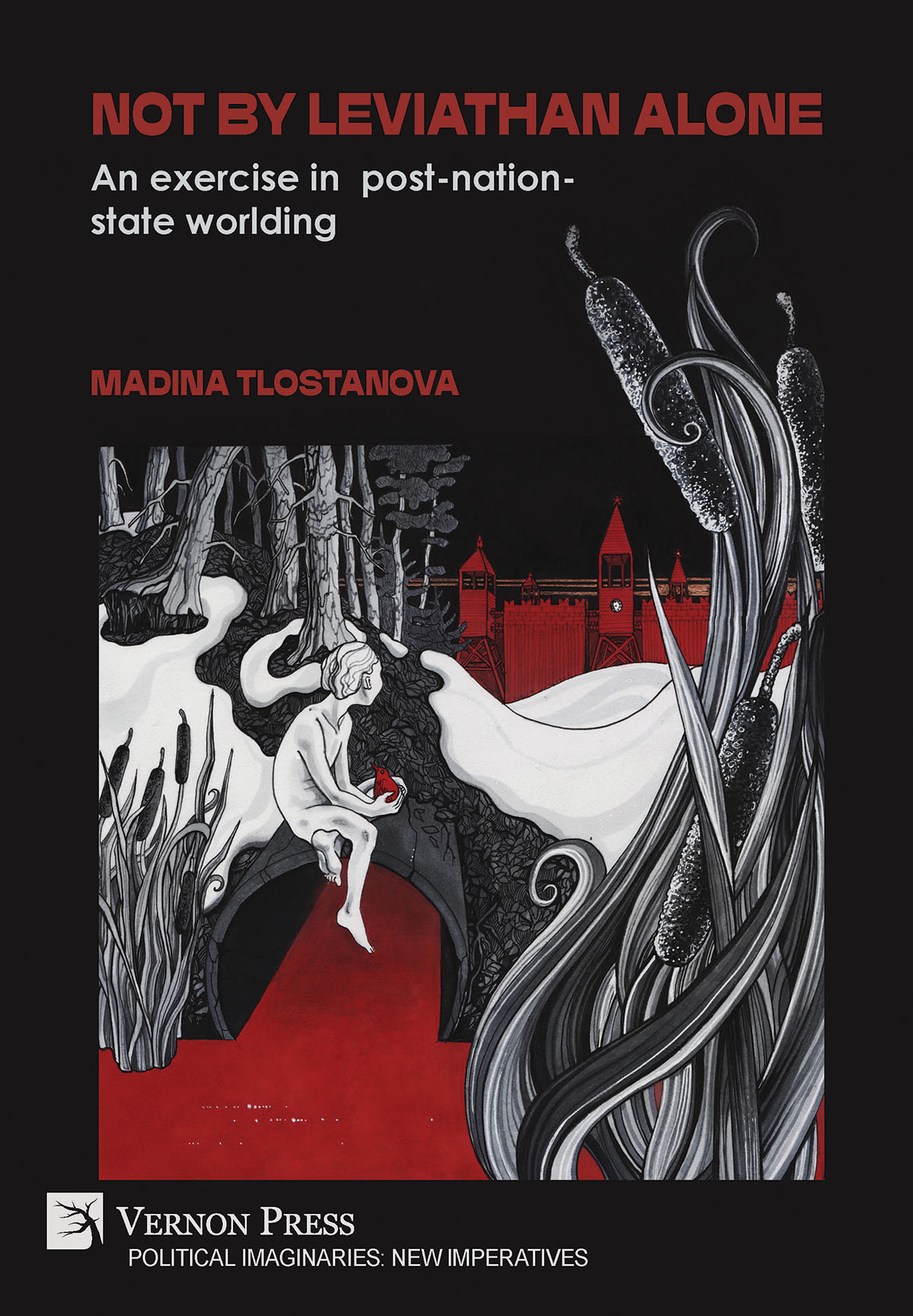
An exercise in post-nation-state worlding
Madina Tlostanova
The book is an open-ended, meta-critical reflection on the discrepancy between the nation-state as an institution and contemporary and future (geo)political, social, enviro-climatic, technological and onto-epistemic challenges, written primarily from the position of the systematically excluded from the identification frameworks of the nation-state. Epistemically, the work stems from the decolonial and indigenous critique of coloniality of knowledge and from feminist skepticism towards objectivist, rationalist thinking modes. The author invites the readers to imagine other possible ways of political organization that would contribute to extending life on Earth, and the paths to their implementation. Without aiming at an exhaustive overview of the existing opinions on this vast topic or offering a single correct recipe for the emerging post-state political development, the book experiments instead with various tools, stimulating the readers to relearn how to imagine politically. The established methods, such as thinking together and arguing with authors from different areas and disciplines - from postcolonial studies, decolonial feminist positions to indigenous and libertarian anarchist stances, from critical environmental humanities to techno-fix pseudo-solutions and neo-imperial geopolitical accounts, are intertwined with engaging conversations with political/social/cultural activists, artists and thinkers and with experimental speculative fiction using creative writing as a mode of inquiry. Through its co-creative interactive style, this trans- and post-disciplinary work invites the audience to engage in praxis beyond the actual reading of the book. The book can be used in undergraduate and graduate elective courses in migration studies, critical security studies, human geography, decolonial and postcolonial studies, environmental humanities. It will be of interest to social, political and cultural activists, artists and writers and to broader audiences concerned with the question of whether and how it is possible to live politically beyond the nation-state, without sliding into (neo)imperial, totalitarian or corporate specters.
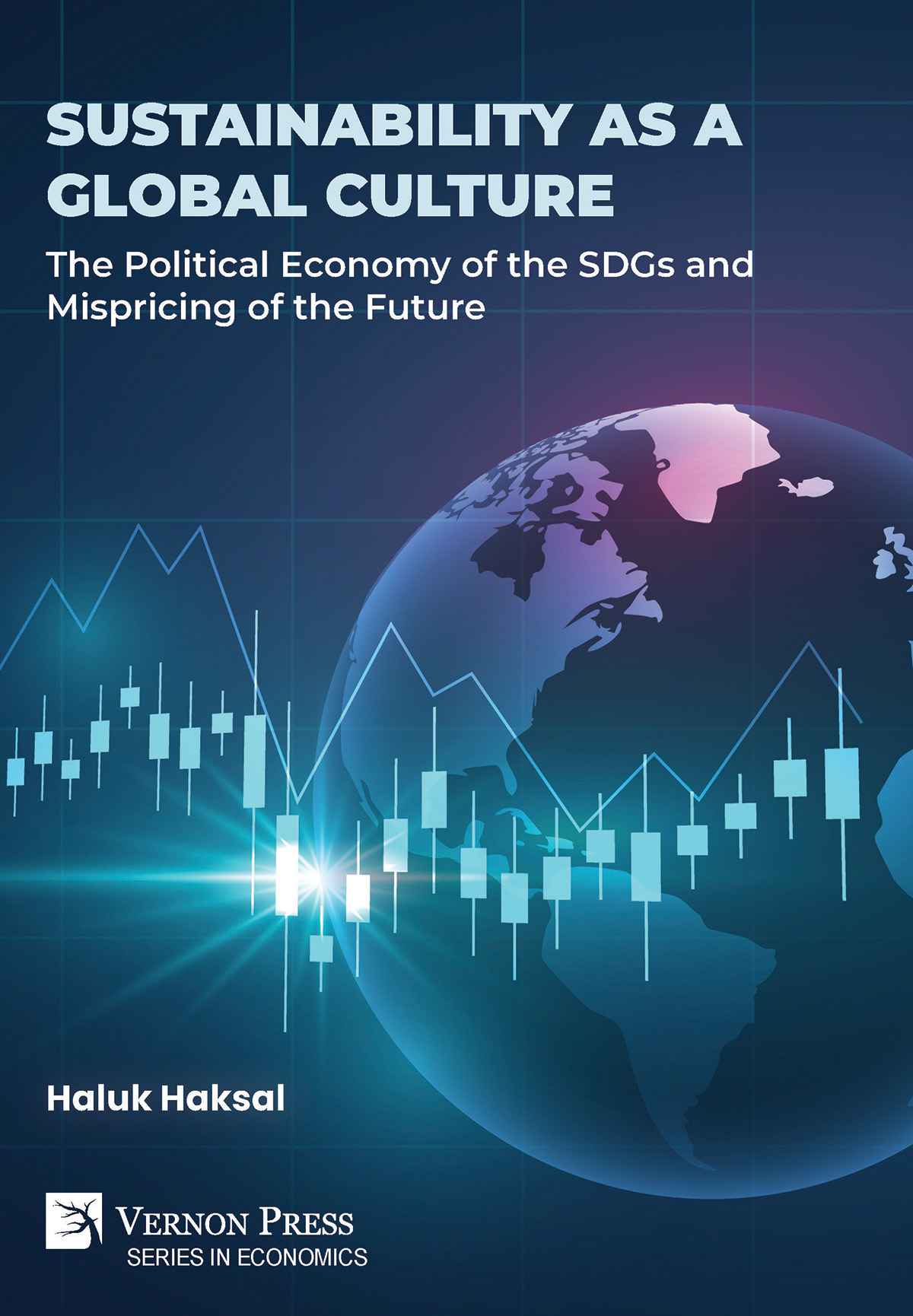
The Political Economy of the SDGs and Mispricing of the Future
Author information not available
The economics of sustainability begins with how the global economy assigns value. The global pricing system is structurally misaligned with sustainability imperatives. Sustainability is a macroeconomic coordination problem. Sustainable investment constitutes the primary economic transmission mechanism through which sustainability becomes operational. This study defines sustainability as a global culture, understood as the internalisation of sustainability in economic preferences. Sustainability transforms firms’ cost structures, with profound implications for cash-flow dynamics and risk exposure, thereby influencing the valuation of investment. Do we recognise sustainability not merely as a constraint, but as a meaningful and permanent way of life? Do we see ourselves as part of this global culture? The analysis integrates insights from political economy, behavioural economics, and corporate finance to develop a political-economic framework of sustainable investment, addressing topics such as carbon pricing, alternative measures to GDP, nudges, and real options. Designed for researchers, students, policymakers, practitioners, and general readers, the book combines analytical rigour with accessibility through dual chapter summaries that translate complex ideas into intuitive insights. It offers both a diagnostic framework and a pathway for aligning economic systems with planetary limits and human well-being.
Navigating Identity, Loyalty, and Resistance in Puerto Rico
Denise Zubizarreta
'Colonial Stockholm Syndrome: Navigating Identity, Loyalty, and Resistance in Puerto Rico” by Denise Zubizarreta offers a critical examination of Puerto Rico’s enduring colonial legacy under both Spanish and American rule. This book explores the profound psychological and sociopolitical effects of centuries of colonization on Puerto Rican identity, illuminating how the island’s people have been conditioned to navigate complex loyalties and resistances in the face of systemic oppression. Through the innovative framework of Colonial Stockholm Syndrome, Zubizarreta analyzes how Puerto Ricans have historically reconciled their dual loyalties—first to the Spanish Empire and later to the United States—while confronting the ongoing challenges of inequality and dependency. The narrative delves into pivotal moments in Puerto Rican history, from the Spanish colonial era and the struggle for autonomy, to the American occupation beginning in 1898, and the current debates surrounding statehood and independence. Positioned within the broader discourse on colonialism and postcolonial studies, this work stands out for its unique approach to understanding Puerto Rico’s complex colonial history. By integrating historical analysis, personal narratives, and critical theory, Zubizarreta provides a comprehensive and accessible exploration of how colonial power dynamics continue to shape Puerto Rico’s national identity and political future. This book is an invaluable resource for scholars, students, and professionals in Latin American and Caribbean studies, political science, history, and cultural studies. It serves as a key reference for understanding the psychological and cultural dimensions of colonization, making it suitable for classroom adoption, academic research, and broader discussions on decolonization, identity, and resistance. 'Colonial Stockholm Syndrome: Navigating Identity, Loyalty, and Resistance in Puerto Rico' is an essential contribution to the literature on colonialism and its enduring impacts, offering new insights into one of the oldest colonies in the modern world.
Within the Interstate Intersubjectivity
Yunus Emre Ozigci
Entities, events, phenomena and states of affairs of the sphere of international relations/ interstate interactions are purely intersubjective recognisances. Their “subjects”, in particular the States, are themselves pre-theoretically, intersubjectively co-constituted and temporalised, ascribed with subject qualities especially in their “interactions” and experienced as such through intentional acts of perceiving, defining, remembering, anticipating, judging and so on. The said ascription includes their own community-building dynamics within an also intersubjectively given environment of interstate interactions. NATO is one of the most prominent State-communities. It has not only been defined by but has also been a constituent of the environment in which it existed. It gained its meaning from its existential relationship with its constituent State-subjects, its interactional counterparts and the meaningful appearance of its “environment”, and also made part of their meaningful appearances. NATO existed through transformations of environment and counterpart(s), continuing to be valid and viable in different identities and temporalisations. It is currently being re-identified and re-temporalised face to a new transformation of the interstate environment. Studying NATO requires co-studying its constituents, counterparts and environment in their substances and temporal states as they are given pre-theoretically, immediately, intersubjectively, which form parts of an expanded, existential kind of reality lived and lived-within by true subjects, replacing the objectivity in its narrow sense with meaningfulness, appearing as objectivity itself on the ground of a universal, pre-theoretical, immediate familiarity and intelligibility ground. Studying NATO “as is” in its identities and temporalisations with its environment, constituents and counterparts requires access to that pre-theoretical ground of meaningful, intersubjective appearances. Here, phenomenology and the phenomenological ontology offer useful concepts and tools which, due to the particular nature of the IR field, complement each other for conducting such a study of the “being and time” of NATO.
Author information not available
Citizen participation stands as a pillar of democracy, embodying principles of popular sovereignty, government accountability, and public trust. This compiled volume expands our understanding of the many varied contemporary forms of political participation and unpacks the implications of contemporary civic engagement on civic culture. The motivating factors for and effects of political participation are complex. The ways in which humans use the varying avenues and opportunities to engage with the government have been complicated by the increasing ubiquity of social media. Under certain conditions, citizen participation may serve to increase trust in public institutions, with implications for civil service, courts, police, the military, and other public services. While at other times, modern political participation may create a countervailing influence on productive civic engagement and civic culture. Although technological advances of the twenty-first century have lowered some of the barriers to political engagement, they have also facilitated new ways of spreading disinformation and simplified messaging. This edited volume will be of interest to anyone who cares about political participation and the efficacy of civic engagement in the information age. In addition, this book would be of interest in many interdisciplinary courses from the social sciences and would facilitate discussions surrounding the varied ways that citizens can use political participation in democracies around the world to engage with democratic government and the impacts this has on social capital and civic culture.
Charles Quince
This comprehensive study provides an essential examination of customary international law, addressing one of the most fundamental yet frequently misunderstood sources of international legal norms. The work bridges critical gaps in contemporary understanding through rigorous doctrinal analysis, extensive jurisprudential discussion, and illuminating case illustrations that demonstrate how custom operates within the global legal framework. As an authoritative reference tool, this volume serves legal scholars, practitioners, and students seeking to understand the complex mechanisms through which customary international law develops and functions, providing clear frameworks for identifying and interpreting customary norms across diverse legal contexts through its systematic approach to analyzing state practice and opinio juris. Beyond its reference value, the book offers practical methodological guidance for researchers investigating customary law formation. By examining evidentiary challenges and providing analytical frameworks, it equips scholars with robust tools for conducting empirical research on state practice and assessing the legitimacy of emerging international norms. The work’s structured approach to jurisprudential analysis serves as a valuable template for systematic legal research, while international law professionals will find the study particularly valuable for its practical applications in legal practice and policy development. The comprehensive exploration of norm formation processes, combined with detailed case studies, provides practitioners with insights essential for advocacy, treaty negotiation, and dispute resolution. Researchers benefit from the work’s contribution to theoretical understanding while gaining access to methodologies that enhance the consistency and reliability of customary law interpretation. This study ultimately advances the field by clarifying persistent ambiguities in customary international law, offering a more coherent understanding of its evolving role in contemporary global governance and legal order.
The Ukraine and Gaza Wars in Context
Alexander R. Dawoody
The focus in this book is not on the various distinctions between classic liberalism and orientalism. Such traits are specific to normative values than hurt, suffering, and victimhood by one group at the expense of another. Rather, the focus is on the dichotomy between neoliberalism and orientalism as relates to the injuries caused by neoliberalism’s harmful practices to ordinary people both in the West and the Global South. The book is a qualitative study in phenomenology, seeking to explain the nature of neoliberal-oriental dichotomy through selected observations in international relations. It builds on the kernel understanding of the dichotomy through meanings as experienced by people, especially in the developing countries (the Global South). The observations are organized in 9 chapters (including an introduction and conclusion) involving descriptive analyses of applied utilities (tools) used by neoliberalism, the state of opposition and ethnic and religious minorities in the Global South, the misuse of energy resources and conflicts, uncovering the double-standards and hypocrisy applied in the observation of selected narratives in Iraq, Ukraine, and Gaza, and the emerging of new trajectories and models for inclusion, cooperation, and peace based on interpretations by complexity sciences. The book uses narrative observations to uncover meanings and experiences in the East-West dichotomy on issues of security, national interests, militarism, alliances, and conflict resolution. The chapters examine the utilities applied by neoliberalism in furthering the divide, understanding causality, and the recommended models for bridging the contradictions toward peace and inclusion based on the complexity sciences. The purpose of this book is not just to observe the gulf between neoliberalism and orientalism but to bridge between them for the sake of healing, minimizing divisions and atrocities, and promoting progress based on shared interests. The main themes in the book are the assessments of public policy orientation in international relations, the rule of the media and social networks, and the impact of global institutions on peace, conflicts, militarism, interventions, sanctions, and regime change scenarios on the East-West dichotomy.
Jawad Kadir
Despite using the metaphors of kin-states and blood-brothers for the India-Pakistan conflict, there is limited work exploring this phenomenon. India-Pakistan relations have mostly been theorized by situating them along with a bipolar ethnic and religious framework. This book presents a fresh conflict model to theorize their rivalry by positioning them as warring family branches with common ancient and cultural history. Therefore, this book not only competes with the existing literature but also claims to break new theoretical ground in the subject. This book will be of interest to researchers looking to theorize intergroup conflicts, academicians, students, social activists, politicians, practitioners, track-2 diplomats and above all, the policy makers in both countries. This book has theorized the tensions and dynamics of the India-Pakistan conflict as a process akin to a typical large South Asian family dispute after dividing its tangible assets. Categorizing and depicting India and Pakistan as two segments of such a large family, quarreling over gaining more prestige against the other after dividing ancestral land, this study does not remain unaware of other, larger pushes and pulls experienced in this intractable conflict, interfering in significant ways in the relationship between the partitioning members of the extended family. Arguing for the centrality of the concept of family relations in this context made increasing sense also as an explanation for the intensity of local emotions visible in this complex conflict. The core argument here is that the intractability, intensity, and intimacy associated with various dimensions of the India-Pakistan conflict can be better explained by analyzing it as a dispute between two warring branches of a huge joint family with an enormously rich and diverse ancient history.