Loading...
Please wait while we load the content...
Loading...
Please wait while we load the content...

Explore peer - reviewed titles across the humanities and social sciences - rigorous research, fresh perspectives, and scholarship that inspires dialogue across disciplines.
Stay informed about our latest publications, calls for proposals, and special announcements. As a subscriber, you'll also enjoy exclusive member discounts of 10%-20% on all orders. Join our community of scholars, librarians, and readers today.

From special discounts and global distribution partners to downloadable catalogs, flyers, and high-resolution covers, we make it easy to enrich your library’s collection. Access bibliographic data, explore subject-specific listings, and stay updated on forthcoming titles.
Become part of our librarian network and access dedicated tools, discounts, and resources to support collection development and promote new titles to your patrons.

Partner with Vernon Press to provide your customers with high-quality, peer-reviewed scholarship. We offer flexible ordering options, reseller agreements, and promotional materials to support your sales and outreach.

Vernon Press provides dedicated resources to help instructors adopt our books for courses and to support students with affordable access to high-quality scholarship. From desk and examination copies to tailored student editions, we aim to make our titles accessible in the classroom.
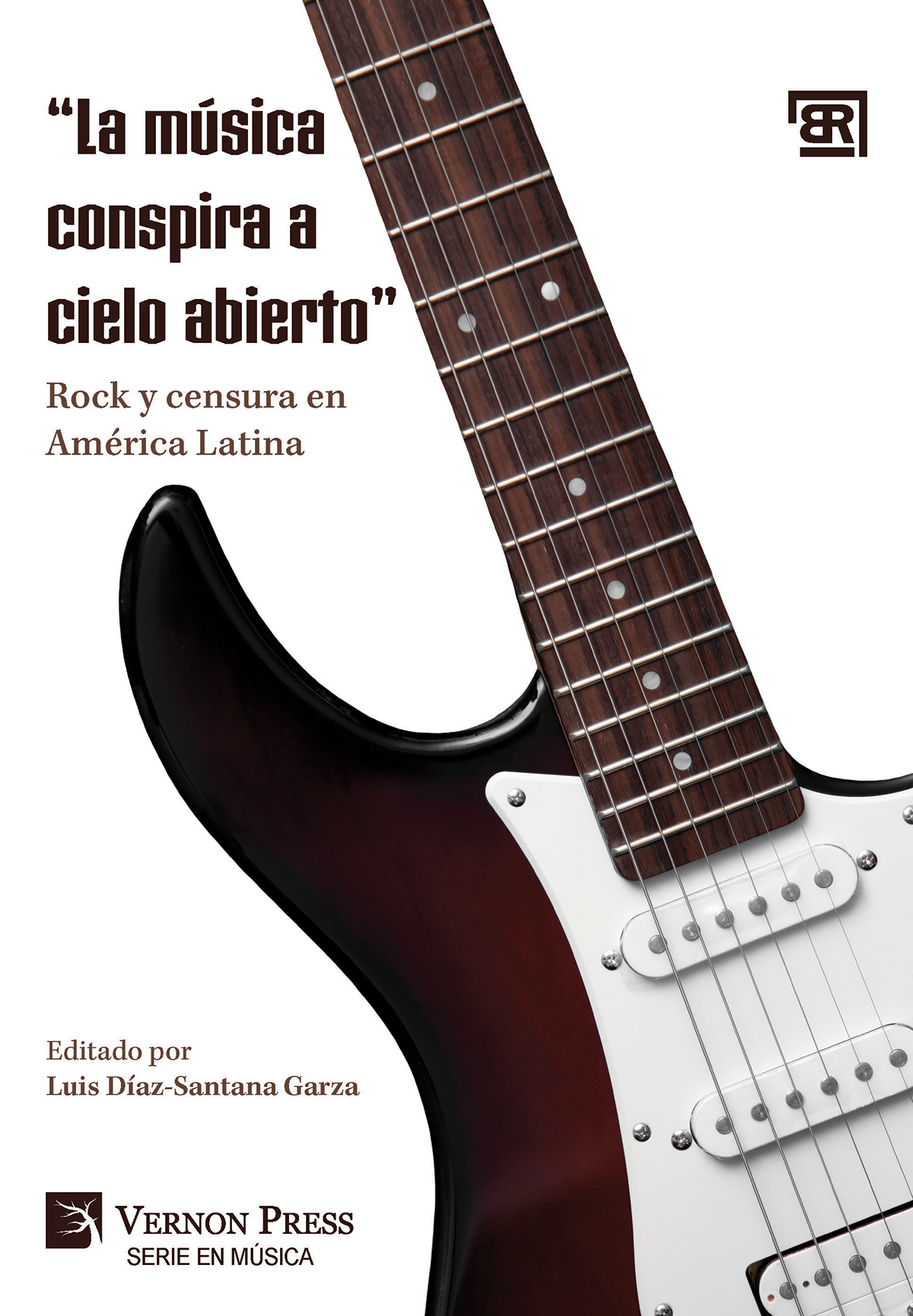
Alejandro Martínez de la Rosa, Lisa Di Cione, Sergio Miranda Bonilla, César Albornoz, J. Rodrigo Moreno Elizondo, Mario Luis Grangeia, Andrew Green, Diana Marcela Corredor Palacios, Junior Hernández Castro, Minerva Campion, Juan Pablo González, and Luis Diaz-Santana Garza
Este libro nos presenta un panorama muy amplio de la percepción del rock en América Latina desde la cultura dominante, y la forma en que esa percepción adulta, blanca, heteronormativa y prejuiciada desarrolló estrategias de persecución y censura contra el nuevo género. El paso del rock and roll de los años cincuenta al rock de los sesenta coincide con el tránsito de la adolescencia a la juventud de sus seguidores, por lo que ya no se trataba de diversiones adolescentes, sino de demandas de poder de un nuevo sector social. De esa manera, la censura, aunque errática, trató de contrarrestar la amenaza que el rock representaba para el statu quo dominante, en dictadura o democracia, con gobiernos de derecha o de izquierda. La apariencia física de los rockeros se transformó en asunto de Estado, como nos ilustran los autores del libro, donde la represión pasó del control de la música al control de los cuerpos. Frente a la escasa bibliografía existente sobre el rock y la censura en América Latina, este libro constituye un estímulo para ampliar el concepto de música y censura, como para profundizar en la historia del rock en la región.
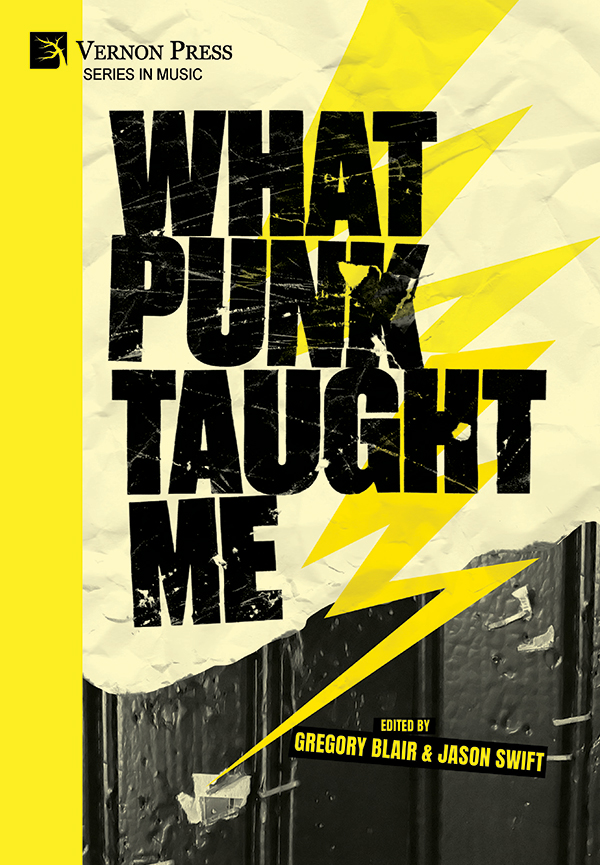
H.C. Arnold, Dixie Lyn Boswell, Clayton Funk, Valerie George, C. Scott Satterwhite, Erin Latham, Jaimes Mayhew, Stephen Morrow, Donald Renner, Jim Ruland, Samantha Russell, and Liz Worth
From personal anecdotes to philosophical inquiries, ‘What Punk Taught Me’ gathers essays from fifteen different contributors whose lives have all been touched upon by punk culture in some meaningful way. Many years after hearing their first blast of distorted punk guitar as a youth or teenagers, these individuals (like so many others) have come to realize later in life that their experience of punk has provided them with an incredibly valuable tutelage in becoming an artist, writer, educator, or overall human being. For these contributors, the experience of punk has been the source of community and ethics, philosophy and aesthetics, or even an attitude and identity. This anthology explores how various individuals have connected with punk in a variety of distinctive ways—through music, venues, fashion, art, writing, activism, collecting culture, rebellion, subversion, or DIY projects. These essays document the lessons of punk, bringing together people from a wide array of backgrounds. Each of them shares their own unique story of what punk has taught them – how those experiences have been formative in their lives and how punk has supported their personal and professional development. These narratives serve as a reflection on the myriad influences of punk – as a methodology, a philosophy, an ontology, an aesthetic, a strategy, a cultural phenomenon, or a worldview. The culmination of this collection provides a deeper understanding of the individualized and personal influences of punk but also the wider arch and overall legacy of punk culture. Through this analysis, an explicit correlation is drawn between the world of punk, the educations it provides, and the ripples of its wider socio-cultural impact.
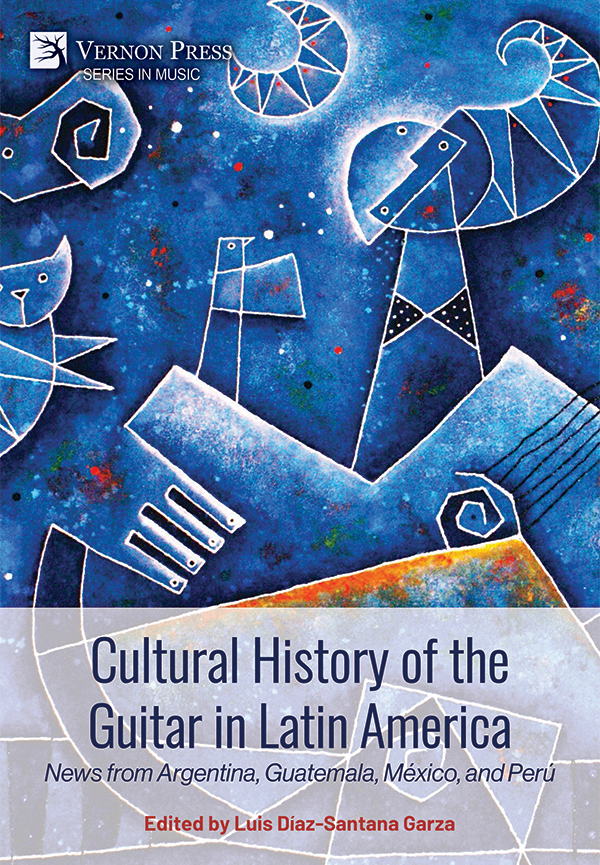
Alejandro Vera, Juan Frajoza, Juan Pablo Pira Martínez, Sonia Medrano Ruiz, Arturo Javier Ramírez Estrada, Ericka Beatriz Morales Trejo, Alejandro Martínez de la Rosa, Eric Johns, and Enrique Salmerón
The objective of this book is to disseminate the rich history of the guitar in Latin America, with special emphasis on Mexico, covering a period that goes from the viceregal age to the present day. The collaborators are some of the most outstanding guitarists and researchers of the instrument from Chile, Mexico, Guatemala and the United States. The chapters aim to explore the composers, performers, repertoire and construction of the guitar since the sixteenth century in Latin America and the US, but also to comprehend the social role and economic ecosystem of the instrument. Due to the long chronology proposed, the book not only deals with the modern guitar, but also with the baroque guitar, and there is even a chapter dedicated to the traditional instruments that have historically been heirs to the Spanish guitar. The originality of this work resides in the use of historical and humanistic tools. It is based on a current bibliography, and it is one of the first books published in English on the history of the guitar in Latin America.
Pablo Alejandro Suárez Marrero
La pluralidad discursiva manifiesta en la actual música popular se encuentra enmarcada en una realidad estético-musical cambiante, causada por una postmodernidad social cada vez más abierta a la globalización de las expresiones culturales de los pueblos. Es dentro de esta dinámica social que emerge la figura creativa de Alejandro García Villalón Virulo y sus grabaciones sonoras (1973-2021). En estas, el cantautor empleó disímiles recursos musicales, literarios, escénicos y visuales para ejercer la crítica sobre sus contextos germinales, como vía desacralizadora de culturas hegemónicas y paradigmas sociales construidos a lo largo del devenir histórico de los pueblos de la región. La casi nula existencia de estudios académicos sobre este artista y sus documentos sonoros constituye una oportunidad para construir su biografía sonora como contexto de performance (1955-2008), donde se imbricaron elementos históricos, políticos, sociales y culturales condicionados por marcos temporales y espacios geográficos. Para ello, se concatenaron herramientas teóricas, conceptuales y metodológicas provenientes de los estudios de performance, la historiografía crítica y la musicología popular. La presente investigación conduce a repensar las relaciones entre música y humor en culturas musicales de América Latina y el Caribe, la concepción de la biografía sonora de un cantautor como aproximación a su contexto germinal, así como el abordaje de los documentos de música grabada o programada como fuentes primarias de información para estudios sociales de prácticas sonoro-musicales situadas.
Jeeyeon Ryu
THAWZEN Moments: Autoethnographic Piano Teaching and Learning Stories is a collection of 46 vignettes, digitally edited photographs, poems, and reflective-reflexive narratives about children’s imaginative, creative, and magical lifeworlds of exploring music and piano playing. There are many ways of learning to play the piano, THAWZEN different ways of re/imagining music. There are many stories to share with you, never-ending questions to explore together. The stories included in this book are our happy piano play, our shared musical journeys in re/creating more meaningful and joyful piano teaching and learning experiences.
Yvonne Teo, Bozhidar Chapkanov, Antonio Grande Antonio Grande, Yosef Goldenberg, Robert Peck, Desirée Mayr, Recep Gül, Ozan Baysal, Edward Gollin, Stephen C. Brown, Jennifer Harding, Rich Pellegrin, Timothy Clarkson, and Hussein Boon
'Transformational analysis in practice' is a Must-Have for everyone working in the field or aspiring to develop their music-analytical and theoretical skills in transformational theory. This co-authored book puts together a plethora of analytical studies, diverse both in the repertoires covered and the methodologies employed. It is a much-needed anthology in this sub-field of music analysis, which has been developing and growing in recent years, reaching ever wider outlets in English-speaking countries and beyond, from dedicated conference panels to YouTube videos. The book is divided into four parts based on the repertoires under discussion. Part I encompasses four analytical studies on familiar composers from the European Romanticism of the nineteenth century. Part II analyzes the music of less familiar composers from Brazil and Turkey. Part III offers four contrasting ways to adapt the analytical capabilities of neo-Riemannian theory to the post-tonal music of the twentieth century. Catering to the interests of jazz performers and researchers, as well as those into popular music production, Part IV offers transformational analytical approaches to both notated and improvised jazz, emphasizing John Coltrane’s performance. Providing an invaluable synthesis of a wide range of analytical studies, this book will be an essential companion for many musicology students, as well as for performers and composers.
Pablo Alejandro Suárez Marrero, Nuria Blanco Álvarez, Daniela A. González, Alfredo Hernández Cadena, Maday Nicolás Domínguez, Eddie Eynar Ruíz-Trejo, Jesús Gutiérrez Guzmán, Luis Pérez Valero, Luciana Ferreira Moura Mendonça, Marusia Pola Mayorga, Laura Erazo Serrano, Marta Flores, Lorena Vargas Ampuero, and Renier Garnier García
A través de un recorrido sobre prácticas musicales gestadas en diversas localidades iberoamericanas, desde finales del siglo XIX hasta la actualidad, 'Escenas Diversas: Drama, Humor y Música' hace de la diversidad de las escenas musicales, una de sus mayores fortalezas. En esta obra, el concepto de “escena” se convierte en un ámbito discursivo oportuno para construir aproximaciones dinámicas y flexibles sobre el quehacer musical, ya sea del pasado histórico o del accionar reciente. Este volumen constituye un compendio de estudios de caso acontecidos en ciudades de España, Argentina, México, Cuba, Venezuela y Colombia, con el objetivo de contribuir a los debates actuales sobre escenas musicales desde su propia diversidad, asociada a elementos discursivos propios del drama social y el humor inteligente. Desde su individualidad, en cada capítulo se busca conciliar una mirada histórica a escenas pasadas y su pervivencia en documentos musicales de diversa índole. Además, se aborda la creciente virtualización y desterritorialización física de las escenas musicales de alcance glocal, a raíz de la actual situación pandémica. De gran interés para todo aquel atraído por los estudios culturales, la música y los estudios latinoamericanos, 'Escenas Diversas' contribuye a la creación de nuevas y múltiples instancias comunicativas para la socialización de conocimientos especializados sobre nuestras escenas musicales.
Alessandra Anastasi
Anastasi introduces an alternative vision about language development and music involvement to the current scientific discourse. Her view is based on a rigorous evolutionary perspective, through which she not only demonstrates the hypothesis of vocal continuity with other species via morphological data but, more importantly, also demonstrates how music is first and foremost a biological and cognitive trait. The bond between animal and human communication is here interpreted as an interspecific universal with a clear evolutionary impact on the speech’s natural history. Such continuity does not undermine the species-specificity of our linguistic system and, at the same time, supports the theory according to which music had a clear evolutionary role in the inception of the prosodic and musical components of speech. In leaning towards a bio-naturalistic approach, the most convincing view is that of a vocal and functional continuity of music. This appears to be demonstrable through the evolutionary past of vocality in other animal species, not constrained from having some form of cultural transmission. The book evidences that the current research scenario on non-human animal communication benefits from the support of semiotics and, specifically, zoosemiotics. The latter approach enables us to interpret music and chant not only as a simple formal and meaningless exercise, but rather as a communicative element perceived and processed by organisms equipped with cognitive abilities. Anastasi argues that vocal continuity, made possible by biological constraints that mark its anatomical and physiological aspects, places human beings in a relationship of semiotic continuity with non-human communication forms. In turn, this enables us to better describe the phylogenetic processes which determined the development of musical behaviours in the Sapiens, as well as the way in which such behaviours interwove with the expressive vocality of the animal world.
Yavuz Yildirim, Dorothy M. Bland, Marquita S. Smith, Ann White-Taylor, Kevin Barker, Dagim A. Mekonnen, Zenebe Beyene, Ngozi Akinro, Jenny J. Dean, Elena M. De Costa, Muhammad Farooq, Mehmet Atilla Guler, Wendy Wing Lam Chan, Faith Bahela, and Terna Paise Agba
'Political Messaging in Music and Entertainment Spaces across the Globe' uniquely expands the frontiers of political communication by simultaneously focusing on content (political messaging) and platform (music and entertainment). As a compendium of valuable research work, it provides rich insights into the construction of political messages and their dissemination outside of the traditional and mainstream structural, process and behavioral research focus in the discipline. Researchers, teachers, students and other interested parties in political communication, political science, journalism and mass communication, sociology, music, languages, linguistics and the performing arts, communication studies, law and history, will find this book refreshingly handy in their inquiry. Furthermore, this book was conceptualized from a globalist purview and offers readers practical insights into how political messaging through music and entertainment spaces actually work across nation-states, regions and continents. Its authenticity is also further enhanced by the fact that most chapter contributors are scholars who are natives of their areas of study, and who painstakingly situate their work in appropriate historical contexts.