Loading...
Please wait while we load the content...
Loading...
Please wait while we load the content...

Explore peer - reviewed titles across the humanities and social sciences - rigorous research, fresh perspectives, and scholarship that inspires dialogue across disciplines.
Stay informed about our latest publications, calls for proposals, and special announcements. As a subscriber, you'll also enjoy exclusive member discounts of 10%-20% on all orders. Join our community of scholars, librarians, and readers today.

From special discounts and global distribution partners to downloadable catalogs, flyers, and high-resolution covers, we make it easy to enrich your library’s collection. Access bibliographic data, explore subject-specific listings, and stay updated on forthcoming titles.
Become part of our librarian network and access dedicated tools, discounts, and resources to support collection development and promote new titles to your patrons.

Partner with Vernon Press to provide your customers with high-quality, peer-reviewed scholarship. We offer flexible ordering options, reseller agreements, and promotional materials to support your sales and outreach.

Vernon Press provides dedicated resources to help instructors adopt our books for courses and to support students with affordable access to high-quality scholarship. From desk and examination copies to tailored student editions, we aim to make our titles accessible in the classroom.
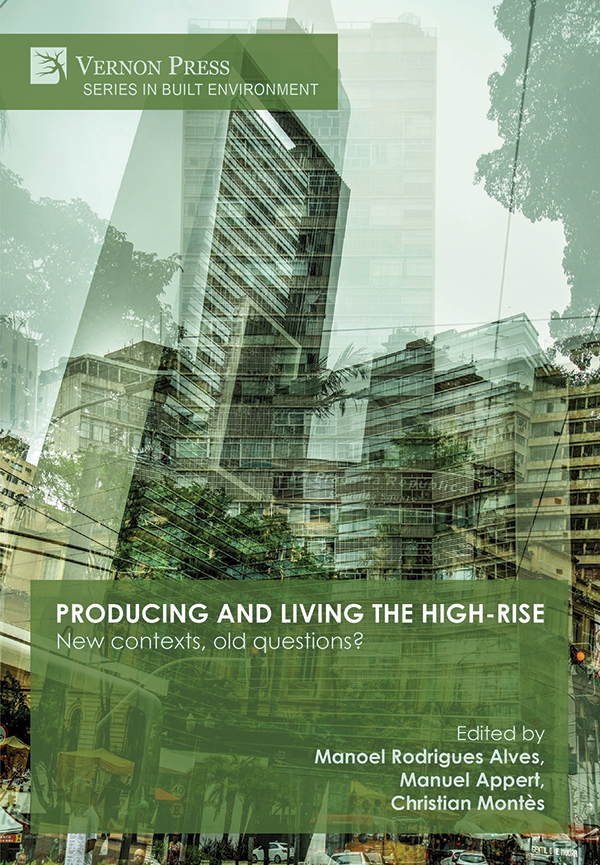
Julio Arroyo, Beatriz Rufino, César Simoni Santos, Huana Carvalho, Maíra Cristo Daitx, Carlos Tapia, Loïc Bonneval, Aurélien Gentil, Enora Acheritogaray, Geoffrey Mollé, Bianca Botea, Olivia Legrip, Luiana Cardozo, Pedro Falha Saraiva, Luciano Bernardino da Costa, Camila Moreno de Camargo, Sarah Helena Caetano Rolindo, Julio Cesar Pedrassoli, Marcel Fantin, and Claire Perret
The purpose of the book is to assess the process of urban verticalization in different contexts through time, to provide insight into the relationships between highrise design and the way inhabitants negotiate them in their everyday lives, to assess how planners, politicians, and designers negotiate residential highrises in the strategies they develop for building the city and to introduce urban narratives and cartographies. Verticalization, although not new, currently takes place in a very different context than post-1945. Today, highrise residential buildings are more than architectural solutions: they are commodities in a global market where capital flows are fixed by developers and municipalities. Our exploration of residential verticalization is anchored in case studies, revealing different types of local-global negotiations in the design of the city, and has been framed by three interrelated dynamics: first, the complex relationships within the financialization of real estate markets, revealing differences in the types of local-global negotiations in the construction of the neo-liberal city; secondly, the most developed, anchors residential verticalization in the processes of socio-spatial differentiation within cities (mostly identified as gentrification associated to processes of urban renewal and densification; the third, related to readings and interpretations of the urban landscape and social, spatial practices and its iconographic and cartographic representations. This book is of interest to academics, students, planners, architects, and urban studies professionals. It shows that the chosen research object is an increasingly relevant angle of analysis of the contemporary city. It also provides a better knowledge of the processes of residential verticalization, their impact on the privatization of the urban space, and on urban segregation or fragmentation.
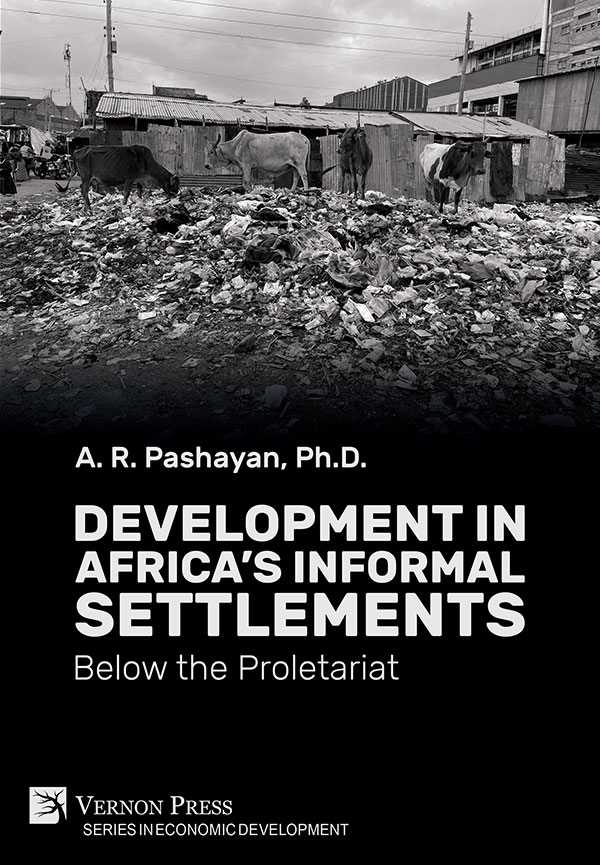
Angela R. Pashayan
This book discusses the effectiveness of international development programs in African informal settlements (slums). It also represents the voices of slum dwellers and how they view the programs offered. With over 60% of Africans living in slums, the book intends to foster dialogue among development professionals to determine how to improve service to their clients, people experiencing extreme poverty. This book examines the critical thinking disconnect between development professionals and slum dwellers. It enables practitioners, professors, and their students to investigate the gap between the types of development programs offered versus what is most beneficial to reduce extreme poverty in slum communities. With a sample of 500 residents from Mukuru Slum in Nairobi, Kenya, and 100 development professionals with expertise in poverty reduction in slums, this book sheds light on the similarities and differences between various programs. Most importantly, this book provides a theoretical way forward (The Theory of Extreme Poverty Reduction) based on Freirean pedagogy to stimulate discussion on how to program new strategies for authentic dialogue with slum dwellers that leads to the critical consciousness necessary for successful poverty reduction.
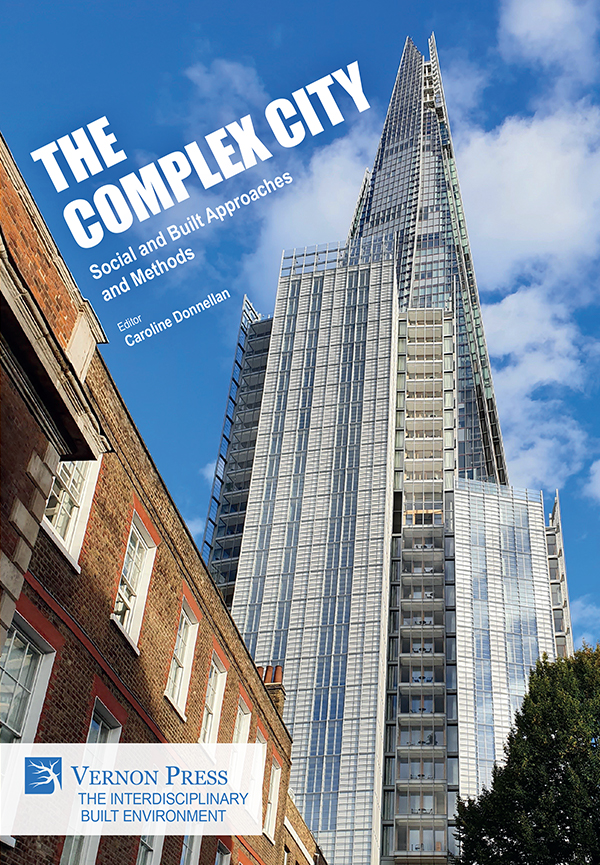
Caroline Donnellan, Alaa El-Habashi, Aliaa Khalil Zidan, Alia Alaa Sherif, Edna Langenthal, Shuang Fei, Hanna Rodewald, Jie Chen, Yiming Wang, Viktoria K. Holmik, Emil E. Jonescu, Abbey Jia Feng Wuu, Khoa Do, Jens Christian Pasgaard, Karen Olesen, Tom Nielsen, Morten Daugaard, and Angela Foster
'The Complex City: Social and Built Approaches and Methods' explores different ways of understanding the city. The social city approach proceeds from the ground-up, it focuses on human interactions shaped by economic and environmental processes. The built city method looks through a top-down lens, examining policy and planning for buildings and infrastructure, including utilities and energy networks. This volume is different from other city anthologies in that it explores them through their differences, by presenting each chapter in one of the two categories. While there is invariably an overlap between the two areas, they are distinct positions. In doing so the book identifies how, despite their often adversarial approaches, they both belong to the same city. As essential components of the city they should not necessarily be resolved, as it is in this friction where creativity and innovation happens. 'The Complex City: Social and Built Approaches and Methods' is concerned about the ideas and solutions that they both offer. The book’s originality stems from this duality, and from its recognition that cities are living, organic, protean places of opportunity, crisis, conflict and challenge. The chapters demonstrate the complexity of cities as a set of ideas concerning what they engender, how they function and why they continue to act as a catalyst for different kinds of human activity. They explore issues of socio-political import and questions of the city as a physically constructed space. The themes are diverse and include the inception of the city as a place of competition to centres of regeneration and urban withdrawal. They cover a range of city and urban regions from Athens to Wellington from site specific singular perspectives to comparative assessments. The questions they raise include how do we inhabit urban areas, how do we make plans for them, and how do we, at times, ignore them entirely.
Carole Salmon, Susan Keith, Elena Mazzoleni, Anne Quinney, William G. Allen, Marcelline Block, Cheryl A. Morgan, Eunice Rojas, Roderick J. Barman, Angélica Lozano-Alonso, John Sampson, and Gruia Badescu
Across centuries, France -and especially its capital city, Paris- established itself as a major source of influence across the Americas through colonization, diplomacy and political influence, but also through intellectualism and cultural productions of all sorts, either by imposition, exportation or as a trend of fashion via a bilateral transatlantic movement of people and ideas. In itself, the influence of Paris, the “capital of the world,” as Patrice Higonnet (2002) analyzes it, is similar to a phantasmagoria, which results in a transatlantic fascination for the city of lights and all the tangible or intangible elements that function as its embodiment. As Stuart Hall explains, understanding cultures and languages and their representations through various manifestations presupposes that we can identify, understand and interpret the signs that constitute their core identity. (Hall 2013). In an interdisciplinary approach, this multi-authored, edited volume examines the long-established relationships between Paris and cities across the American continent, in the past as well as in the present time. In order to explore all aspects of Paris’s influence(s) in the Americas, this volume is organized around two main axes of analysis: first, in a geographical progression from North to South, the reader is invited to reflect upon cultural productions that demonstrate the many influences of Paris in the Americas through theater, literature, philosophy, fashion and cinema (chapters 1 to 6). In the following chapters (7 to 11), the volume focuses particularly on a variety of urban connections that take the reader from South to North this time, analyzing tangible architectural and urban design influences of Paris in major cities such as Rio de Janeiro, Buenos Aires, Mexico City, New York, or Washington D.C. In today’s global world, this multifaceted study of Paris’ visible and invisible influences in the Americas clearly reveals the transnational intersections of spaces, languages, people and cultures.
Questions of Access, Engagement and Creative Experience
Kelly L. Anderson, Seyeon Lee, Adam Feld, Jody Nyboer, Kevin Bonnell, Renae Mantooth, Rebekah Radtke, Tom Coward, Katriina Heljakka, Annika Blomberg, Lisa Klautzer, Seo Yeon Hong, Rumy Narayan, Thomas-Bernard Kenniff, Edud Belferman, Shulamit Beimel, Shoham Shefy, Karim Musfy, Diane Foucar-Szocki, Donna Milani Luther, Thomas Peterman, Reg Foucar-Szocki, Taylor Kuhn, and Gyungju Chyon
'Participatory Practice in Space, Place, and Service Design' is premised on a belief in the importance of participatory practices in finding creative solutions to the plethora of problems we face today. It argues that engaging professions with the public in mutual exploration, analysis, and creative thinking is essential. It not only ensures better quality products, places, services, and a greater sense of civic agency but also facilitates fuller access to them and the life opportunities they can unleash. This book offers a uniquely varied perspective of the myriad ways in which participatory practices operate across disciplines and how they impact the worlds and communities we create and inhabit. This book suggests that participatory practices are multi-disciplinary and relevant in fields as diverse as design, architecture, education, health care, sustainability, and community activism, to name a few of those discussed here. How do designed objects and environments affect wellness, creativity, learning, and a sense of belonging? How do products and services affect everyday experience and attitudes towards issues such as sustainability? How does giving people a creative voice in their own education, services, and built environments open up their potential and strengthen identity and civic agency? Addressing these questions requires a rethinking of relations between people, objects, and environments; it demands attention to space, place, and services.
Theory, methods and implementations
Philippe Vaesken and Michel Felix
This book provides an analytical framework and toolkit for anyone involved — theoretically or practically — with the economic, social, ecological or cultural development of a territory. This work provides an overview of the various territorial development processes, inclusive of both individual and collective actions. In pursuance of its objectives, the book re-examines the classical concepts of governance and regulation in order to position them in an integrative model of the initiatives which contribute dynamically to territorial development. According to this model, the concepts of governance and regulation become two axes, revealing four main reference situations which differentiate between the local initiatives (ground-up) and public actions (top-down) that coexist in a territory. The model emphasizes the need to consider the place of territorial stakeholders in regulatory processes. The book enriches this concept, familiar in a legislative context, and describes it as an area of influence of and negotiation with stakeholders. It contributes to a territorial governance system which encourages development offers. It reveals the inseparable link between influence and development processes that lead to value creation. The logic of governance specifies the various sources of value creation, while the logic of regulation seeks to maximize the acceptability of such value creation by making it into an attractive proposition for stakeholders.
Milyung Son
There is a continuing academic and policy interest in the potential for culture-based urban regeneration across the world. Such regeneration is intended to attract investment, re-imagine spaces and create employment, business and urban planning opportunities. This book seeks to examine the use of culture and arts in the urban regeneration sphere of South Korea. Specifically, a one-year-long cultural event (Culture City of East Asia) is used as a case study for exploring wider debates around and understandings of the relationships between culture-led urban regeneration initiatives and the impacts on communities in South Korea. Despite the proliferation of culture-led initiatives aiming to tackle broad social issues, there is a lack of in-depth research into the efficacy of such urban regeneration. Previous researches have asked such questions as: What benefits can cultural elements (e.g. mega-events or signature buildings) bring into a city? What is the role of culture in economic development (e.g. tourism and internal investment)? What is the economic value of cultural goods and services? This is not to say that such questions should be the only concerns in assessing a culture-led urban regeneration strategy. However, the evaluation process of culture-led regeneration frequently fails to ask questions about the impact on human communities: Are cultural resources being used to spread culture, or just to focus on economic development? Are cultural initiatives like mega-events being used to benefit local citizens? How can residents shape a culture-led regeneration strategy? This book is intent on examining residents’ opinions and perspectives about culture-led urban regeneration. It recognizes how culture-led regeneration schemes interact with local communities, focusing on the actual views of local people rather than being coldly theoretical.
Swati Akshay Sachdeva and Yumnam Surjyajeevan
"Identity in Question: The Study of Tibetan Refugees in Indian Himalayas" focuses on the socio-economic profile and the question of identity among the diasporic Tibetan communities, particularly those settled in Indian Himalaya. Through incorporating the notion of integration, essential in the formation and formulation of an individual’s identity, this book explores Tibetan refugees’ feelings as to whether a shared consensus between themselves and others exists, or whether a sense of dislocation is experienced. This important and timely work also sheds light on the question of identity crisis among Tibetan youths as well as conflicting gender role identity of the Tibetan women refugees. Delving into such topics is essential for the increased understanding of the various situations encountered by the diasporic communities of Tibet. Therefore, individuals who are seeking to understand the issue by means of academic engagement and through a policy framework process will benefit from this work.
James P. Bruce
In 1847 and 1848 a little-known farmer named James Fintan Lalor wrote a series of newspaper articles in which he outlined his vision for Ireland after the Great Famine. Although they have been reprinted and republished many times since, until now there has been no systematic study of the principles and proposals that Lalor expounded. In this book, the author considers Lalor’s brief career as a writer and offers new insights into his treatment of the national and land questions. By elucidating Lalor’s ideas on these questions, exploring possible influences on his thinking, and assessing the impact of his writings on his contemporaries, the author seeks to address what he regards as two deficiencies in the historiography. The first of these is the tendency to assign only a minor, supporting role to Lalor during the brief heyday of Young Ireland. Academic studies typically portray him as little more than a catalyst in the radicalisation of figures like John Mitchel, rather than as a profoundly original thinker in his own right. The second issue is the commonly held perception of Lalor’s proposals on land tenure as foreshadowing the creation of a “peasant proprietary” later in the century. The author argues that Lalor advocated a much more radical plan that would link his two primary objectives: the creation of a sovereign Irish republic, and transfer of control over landholding from a small number of landlords to the entire Irish people. By comparing and contrasting Lalor’s theories with those of earlier figures such as Thomas Paine and James ‘Bronterre’ O’Brien, this ground-breaking book broadens the perspective on Lalor and his writings beyond the context of Irish nationalism. As the author concludes, Lalor’s unique contribution to Irish radical thought merits a more prominent place in nineteenth-century intellectual history than it has hitherto received. This book will be of great value to anyone interested in Irish history since 1800, especially in the areas of the Great Famine, the Young Ireland movement, and the Land War.