Loading...
Please wait while we load the content...
Loading...
Please wait while we load the content...

Explore peer - reviewed titles across the humanities and social sciences - rigorous research, fresh perspectives, and scholarship that inspires dialogue across disciplines.
Stay informed about our latest publications, calls for proposals, and special announcements. As a subscriber, you'll also enjoy exclusive member discounts of 10%-20% on all orders. Join our community of scholars, librarians, and readers today.

From special discounts and global distribution partners to downloadable catalogs, flyers, and high-resolution covers, we make it easy to enrich your library’s collection. Access bibliographic data, explore subject-specific listings, and stay updated on forthcoming titles.
Become part of our librarian network and access dedicated tools, discounts, and resources to support collection development and promote new titles to your patrons.

Partner with Vernon Press to provide your customers with high-quality, peer-reviewed scholarship. We offer flexible ordering options, reseller agreements, and promotional materials to support your sales and outreach.

Vernon Press provides dedicated resources to help instructors adopt our books for courses and to support students with affordable access to high-quality scholarship. From desk and examination copies to tailored student editions, we aim to make our titles accessible in the classroom.
Kamila Midor
How do people put into words the experience of losing someone they love? This book offers a systematic, cross-cultural linguistic analysis of how loss and grief are conceptualized in American and Polish contexts, revealing both shared human patterns and culturally specific ways of expressing and processing bereavement. Drawing on qualitative data from nearly eighty participants who had lost a loved one to five years before participating in the study, the study examines the metaphors and conceptual blends through which individuals articulate their experiences of grief. Using the frameworks of conceptual metaphor theory and conceptual integration theory, the book identifies recurrent conceptual structures—such as absence, emptiness, pain, inanimate physical object, and journey—that speakers draw on to make sense of profound emotional disruption. While many of these schemas appear across both cultural groups, the analysis reveals important differences in their subtypes, linguistic realizations, and cultural meanings. Notably, some patterns challenge the dominant view of grief as exclusively negative, including personifications such as grief as a guest in American narratives and grief as a teacher in the Polish data. The book fills a significant interdisciplinary gap between linguistic research on metaphor and psychological scholarship on grief. It is the first work to develop empirically grounded conceptual models of loss and grief for American and Polish speakers based on qualitative linguistic data, offering a novel, culturally sensitive perspective on bereavement. Accessible yet theoretically rigorous, the book will be valuable as a research reference, a methodological model for qualitative metaphor analysis, and a resource for classroom use. It will appeal to scholars and students in cognitive linguistics, cultural studies, psycholinguistics, and cross-cultural communication, as well as to psychologists, therapists, counselors, social workers, and others working professionally with grief and loss.
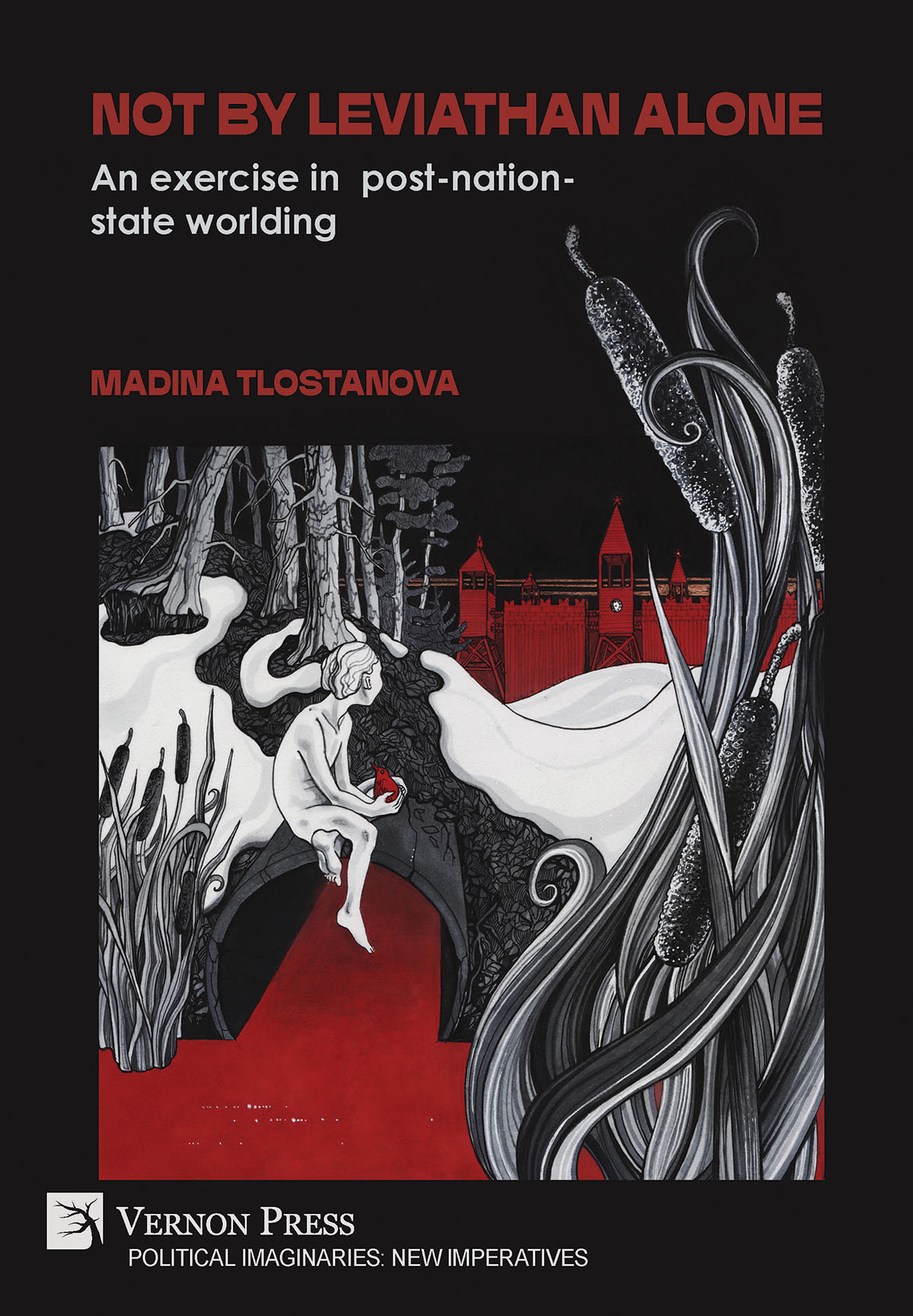
An exercise in post-nation-state worlding
Madina Tlostanova
The book is an open-ended, meta-critical reflection on the discrepancy between the nation-state as an institution and contemporary and future (geo)political, social, enviro-climatic, technological and onto-epistemic challenges, written primarily from the position of the systematically excluded from the identification frameworks of the nation-state. Epistemically, the work stems from the decolonial and indigenous critique of coloniality of knowledge and from feminist skepticism towards objectivist, rationalist thinking modes. The author invites the readers to imagine other possible ways of political organization that would contribute to extending life on Earth, and the paths to their implementation. Without aiming at an exhaustive overview of the existing opinions on this vast topic or offering a single correct recipe for the emerging post-state political development, the book experiments instead with various tools, stimulating the readers to relearn how to imagine politically. The established methods, such as thinking together and arguing with authors from different areas and disciplines - from postcolonial studies, decolonial feminist positions to indigenous and libertarian anarchist stances, from critical environmental humanities to techno-fix pseudo-solutions and neo-imperial geopolitical accounts, are intertwined with engaging conversations with political/social/cultural activists, artists and thinkers and with experimental speculative fiction using creative writing as a mode of inquiry. Through its co-creative interactive style, this trans- and post-disciplinary work invites the audience to engage in praxis beyond the actual reading of the book. The book can be used in undergraduate and graduate elective courses in migration studies, critical security studies, human geography, decolonial and postcolonial studies, environmental humanities. It will be of interest to social, political and cultural activists, artists and writers and to broader audiences concerned with the question of whether and how it is possible to live politically beyond the nation-state, without sliding into (neo)imperial, totalitarian or corporate specters.
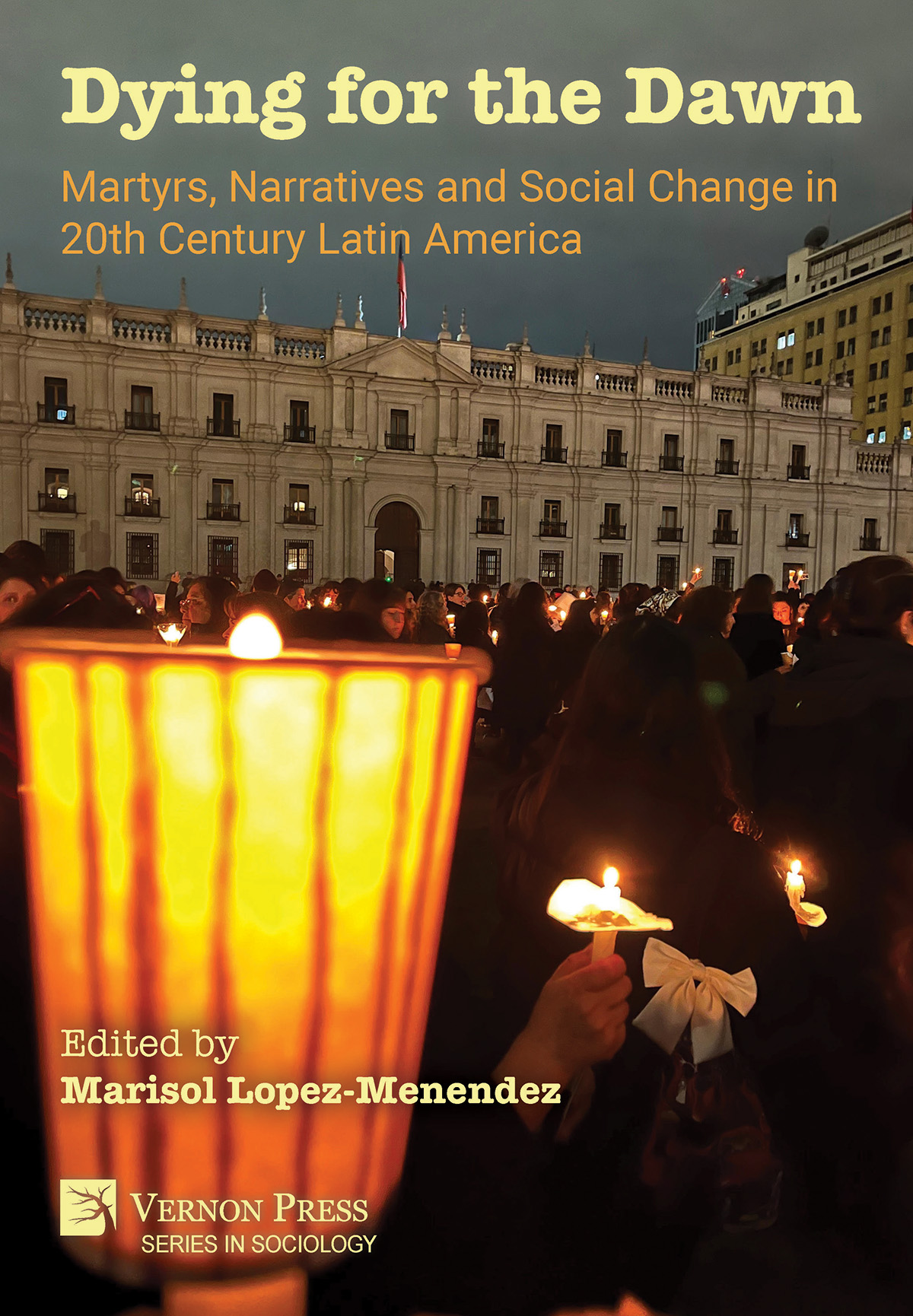
Martyrs, Narratives and Social Change in 20th Century Latin America
Marisol Lopez-Menendez, Fortunato Mallimaci, Oscar A. Castro Soto, Amilcar Carpio, Julia Young, Kristina Boylan, Andrew R. Murphy, María del Carmen Moreno-Cardenas, Paula Tesche, Yves Solis, Prepa Ibero, Boris Hau, Iliana Moreno Téllez, Gregory Swedberg, Paula Tesche Roa, Loreto Chandia Jara, Gabriel Figueroa Montero, and Eduardo Gusmao de Quadros
In a century stained by revolution, dictatorship, and neoliberal violence, ordinary men and women became extraordinary witnesses—dying so that others might live free. From the bullet-riddled Cristero battlefields of Mexico to the bloodied streets where Óscar Romero fell, from Chico Mendes’s Amazonian stand to the unmarked graves of Chile’s forgotten priests and the deadly migrant trails of today’s Via Crucis—this collection rewrites the meaning of martyrdom for our time. Edited by Marisol Lopez-Menendez, 'Dying for the Dawn' brings together leading scholars to reveal how martyrial stories are not relics of the past but living weapons: shaping politics, igniting social movements, redefining gender and memory, and challenging the very border between faith and resistance. Here you’ll meet worker-martyrs, children saints, environmental prophets, disappeared priests, and the “neo-liberal martyrs” dying at the hands of borders and cartels—figures whose deaths still fuel protests, pilgrimages, and demands for justice across Latin America and its diaspora. Blending riveting history, sharp sociology, and unflinching cultural analysis, this is the book that finally connects the dots between ancient sacrifice and today’s struggles for human rights, migration justice, and democratic dignity. Perfect for readers of liberation theology, Latin American history, religious studies, and anyone who believes that courage can outlast bullets.
Expressions of Afrikan Indigenous Self-Determination
Author information not available
'The Spirit of Marronage: Expressions of Afrikan Indigenous Self-Determination' chronicles the rise of the United Maroon Indigenous Peoples (UMIP), a global movement rooted in the spiritual and political legacies of Afrikan-descended Indigenous communities. Interweaving scholarly discussions, critical personal narrative, poetry, visual art, and Indigenous curricula, the book explores sovereignty through land-based relations, communal governance, and sacred practices. It documents pivotal Maroon gatherings and outlines UMIP’s six founding pillars: Kpaale (Diasporic Citizenship and Spirituality), Mbongi (Learning Together), Uhuru (Freedom and Reparations), Gayap (Sovereignty through Food, Land, and Water), Ujima (Collective Responsibility), and Livity (Living Maroon Values). Serving as both an archive for Maroons and a guide for Indigenous Peoples reclaiming culture, it calls for shifts in academic engagement toward authentic allyship—centering Indigenous knowledges to transform relationships from transactional to reciprocal, and analyses from removed to restorative. A vital resource for educators, researchers, and activists pursuing ecological and social justice.
Navigating Identity, Loyalty, and Resistance in Puerto Rico
Denise Zubizarreta
'Colonial Stockholm Syndrome: Navigating Identity, Loyalty, and Resistance in Puerto Rico” by Denise Zubizarreta offers a critical examination of Puerto Rico’s enduring colonial legacy under both Spanish and American rule. This book explores the profound psychological and sociopolitical effects of centuries of colonization on Puerto Rican identity, illuminating how the island’s people have been conditioned to navigate complex loyalties and resistances in the face of systemic oppression. Through the innovative framework of Colonial Stockholm Syndrome, Zubizarreta analyzes how Puerto Ricans have historically reconciled their dual loyalties—first to the Spanish Empire and later to the United States—while confronting the ongoing challenges of inequality and dependency. The narrative delves into pivotal moments in Puerto Rican history, from the Spanish colonial era and the struggle for autonomy, to the American occupation beginning in 1898, and the current debates surrounding statehood and independence. Positioned within the broader discourse on colonialism and postcolonial studies, this work stands out for its unique approach to understanding Puerto Rico’s complex colonial history. By integrating historical analysis, personal narratives, and critical theory, Zubizarreta provides a comprehensive and accessible exploration of how colonial power dynamics continue to shape Puerto Rico’s national identity and political future. This book is an invaluable resource for scholars, students, and professionals in Latin American and Caribbean studies, political science, history, and cultural studies. It serves as a key reference for understanding the psychological and cultural dimensions of colonization, making it suitable for classroom adoption, academic research, and broader discussions on decolonization, identity, and resistance. 'Colonial Stockholm Syndrome: Navigating Identity, Loyalty, and Resistance in Puerto Rico' is an essential contribution to the literature on colonialism and its enduring impacts, offering new insights into one of the oldest colonies in the modern world.
Femicide and migration in early 20th century Barbados - Brazil
Elaine P. Rocha
'Millie Gone to Brazil' is the title of one of the most popular folk songs in Barbados. Written in the early 20th century by an unknown author, the song has travelled with Barbadian migrants to Cuba, the United States of America, Canada and England. It tells the story of a young woman – Millie – killed by her lover, who claimed that she had left Barbados to go to Brazil. This book focuses on the killings of Millicent Gittens, murdered in Barbados in 1916 and of Christine Minggs, a Barbadian immigrant murdered in Brazil in 1924. As a backdrop to those crimes, it depicts the poverty and marginality among Black populations during the post-abolition period in Barbados and Brazil, emphasizing the low status of black women and their vulnerabilities. To understand the vulnerability of Black Barbadian women. At the turn of the 20th century, economic, social and political exclusion drove thousands of people to emigrate from the small islands of the Caribbean in search of a better life. Black immigrants, although much necessary labor force, faced discrimination and limited opportunities to improve their lives, for women, life was harder. Who speaks on behalf of the dead women? In criminal processes, they are the victim, the corpse, not a person. 'Millie Gone to Brazil' sheds some light on the anonymous lives of Black people from lower classes in Barbados and examines a not well-known migration path of West Indians to the rainforest region of Brazil. Women and men struggled to make a life in Barbados and in Brazil, working, loving, building families, facing conflicts. Some survived, some perished. Scraps of their stories were registered in the pages of newspapers, in police reports, in criminal processes, and in popular songs. Some of those stories are narrated in this book.
Global Perspectives
Lefranc Joseph, Mariam John Meynert, Piyali Mitra, Moutan Roy, Ananya Chatterjee, Suchismita Das, Anusuya Moitra, Arpita Mukherjee, Sandy Larose, Pranav Piyush Sharma, Debolina Banerjee, and Ghislain Leroy
This work offers a comprehensive exploration of how childhood and youth are understood within contemporary social theory, emphasizing the major intellectual shifts that have transformed these fields over the past three decades. Moving beyond traditional developmental perspectives that portrayed children as passive recipients of socialization and youth as a brief transition to adulthood, the text draws on the “new social studies of childhood” and critical youth studies to argue that both childhood and youth are socially constructed categories. Rather than universal or biologically fixed stages, they are shaped by historical contexts, institutional arrangements, and unequal power relations. Central to the analysis is the concept of cultural politics, which highlights how meanings, identities, and representations of children and young people are produced, circulated, and contested. The work demonstrates how media narratives, state policies, educational systems, and global market forces frame childhood and youth in contradictory ways—at times idealizing them as innocent and hopeful, and at other times depicting them as deviant, risky, or problematic. Such representations are shown to reflect broader ideologies of nationhood, gender, modernity, and economic productivity. The text further underscores the importance of intersectionality, explaining how class, caste, race, gender, sexuality, disability, language, and nationality intersect to shape diverse and unequal experiences of growing up. It also examines the impact of globalization, neoliberal economic restructuring, migration, and digital technologies in reshaping young lives, generating both new opportunities and new vulnerabilities. Importantly, the work foregrounds agency, emphasizing that children and youth actively negotiate, reinterpret, and sometimes resist structural constraints in everyday contexts. By integrating insights from sociology, education, psychology, and cultural studies, the volume advances an interdisciplinary, decolonial, and context-sensitive framework for understanding the complex realities of childhood and youth in contemporary societies.
A tender revolt
Guido Cuyvers
In a world where people are living longer and healthier lives, 'Passionate Aging' offers a fresh, empowering perspective on what it means to grow older. This engaging and insightful book explores the opportunities, challenges, and responsibilities of aging, aiming to dispel stereotypes and inspire both individuals and society to reimagine the later stages of life. Through a mix of research, practical advice, and personal narratives, the book serves as a guide for making the most of our extended years.
The Church on Mission through Hospitality
Kathy Hulin
People who are faithful and committed to their church often have a longing for others to feel the same way. They have a palpable hope for the church to be full and a desire for others to be spiritually enriched by God. 'Send Us Out: The Church on Mission through Hospitality' connects the reader with that desire for the church to be a vibrant, hospitable, and growing body of believers in Christ. The reader will be taken on a journey to consider those who have not fallen in love with the church and to grow awareness and compassion for connecting with them as God does with humankind. Inspired by texts such as 'Incarnational Ministry' by Samuel Wells and 'Surprise the World' by Michael Frost, 'Send Us Out' stirs passions for mission and evangelism through presence and intentionality, learning how to be with strangers. The journey includes a practical theology that clergy and laity alike can incorporate into daily living. The practical nature of 'Send Us Out' teaches a spiritual understanding of Christian hospitality through language, biblical study, ministry examples and models, reflection, and action. Readers may wish to form study groups for sharing in the end-of-chapter activities and discussions. The church will be strengthened in a call for each member to be sent out, revealing God as Host to a world learning to be reconciled as guests.