Loading...
Please wait while we load the content...
Loading...
Please wait while we load the content...

Explore peer - reviewed titles across the humanities and social sciences - rigorous research, fresh perspectives, and scholarship that inspires dialogue across disciplines.
Stay informed about our latest publications, calls for proposals, and special announcements. As a subscriber, you'll also enjoy exclusive member discounts of 10%-20% on all orders. Join our community of scholars, librarians, and readers today.

From special discounts and global distribution partners to downloadable catalogs, flyers, and high-resolution covers, we make it easy to enrich your library’s collection. Access bibliographic data, explore subject-specific listings, and stay updated on forthcoming titles.
Become part of our librarian network and access dedicated tools, discounts, and resources to support collection development and promote new titles to your patrons.

Partner with Vernon Press to provide your customers with high-quality, peer-reviewed scholarship. We offer flexible ordering options, reseller agreements, and promotional materials to support your sales and outreach.

Vernon Press provides dedicated resources to help instructors adopt our books for courses and to support students with affordable access to high-quality scholarship. From desk and examination copies to tailored student editions, we aim to make our titles accessible in the classroom.
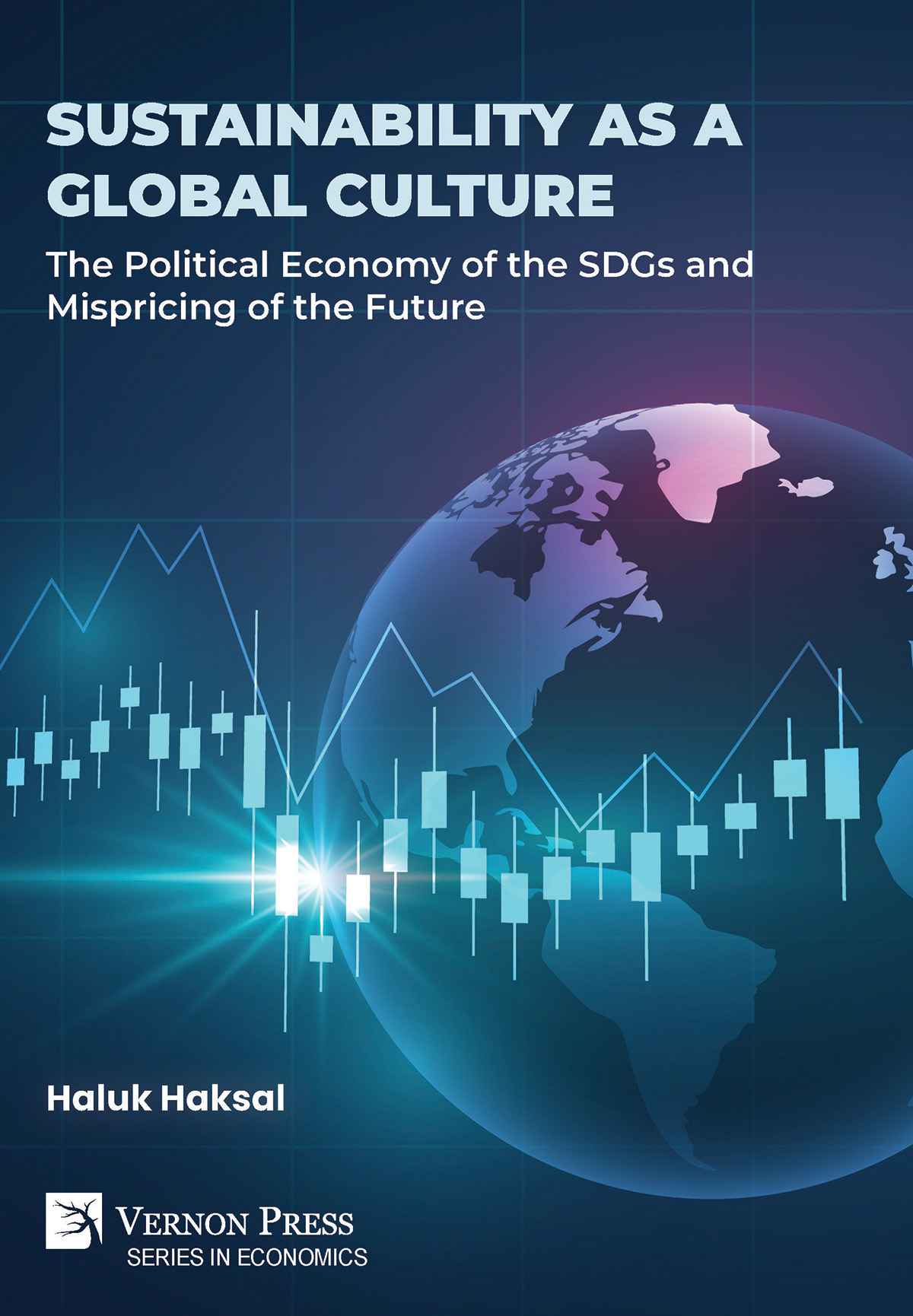
The Political Economy of the SDGs and Mispricing of the Future
Author information not available
The economics of sustainability begins with how the global economy assigns value. The global pricing system is structurally misaligned with sustainability imperatives. Sustainability is a macroeconomic coordination problem. Sustainable investment constitutes the primary economic transmission mechanism through which sustainability becomes operational. This study defines sustainability as a global culture, understood as the internalisation of sustainability in economic preferences. Sustainability transforms firms’ cost structures, with profound implications for cash-flow dynamics and risk exposure, thereby influencing the valuation of investment. Do we recognise sustainability not merely as a constraint, but as a meaningful and permanent way of life? Do we see ourselves as part of this global culture? The analysis integrates insights from political economy, behavioural economics, and corporate finance to develop a political-economic framework of sustainable investment, addressing topics such as carbon pricing, alternative measures to GDP, nudges, and real options. Designed for researchers, students, policymakers, practitioners, and general readers, the book combines analytical rigour with accessibility through dual chapter summaries that translate complex ideas into intuitive insights. It offers both a diagnostic framework and a pathway for aligning economic systems with planetary limits and human well-being.
Javier García-Clemente, David Troncoso-Ponce, Ana María Rodríguez-Santiago, Nicola Rubino, and María Inmaculada Vílchez
Este manual de macroeconomía ha sido diseñado para facilitar el aprendizaje de los modelos macroeconómicos básicos a través de un enfoque pedagógico que combina la modelización económica, la aplicación práctica, la calibración y la simulación. Dirigido a estudiantes de grado, este recurso busca que el alumno entienda el interés de los modelos, cuál es el sentido de su calibración y el papel que tienen los datos y el uso de la estadística y la econometría para evaluar y simular escenarios económicos. Basado en un álgebra sencilla y apoyado en Excel, su objetivo es desarrollar habilidades para el análisis técnico y la interpretación de fenómenos macroeconómicos. Además, fomenta la comprensión del trabajo del economista y la importancia de las herramientas cuantitativas para evaluar políticas y shocks. Este manual pretende sentar las bases para que, en cursos posteriores, el estudiante pueda abordar modelos más complejos, microfundamentados y con elementos estocásticos, cuando se potencien sus competencias en modelización, calibración y simulación.
Ooi Kok Loang
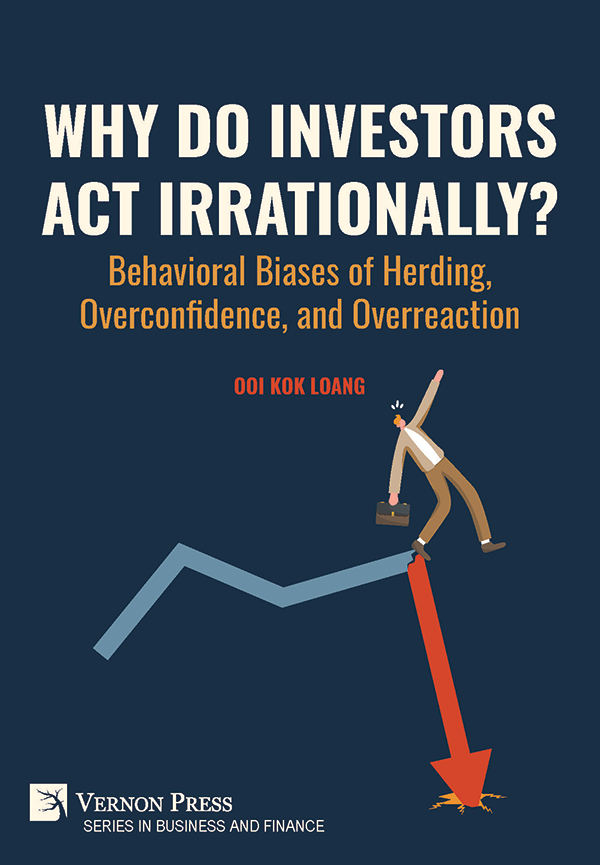
'Why Do Investors Act Irrationally? Behavioral Biases of Herding, Overconfidence, and Overreaction' explores the powerful psychological forces that drive investor decisions, often leading to irrational behavior and market turbulence. This book provides an in-depth analysis of three critical behavioral biases—herding, overconfidence, and overreaction—that influence investors across various financial markets. Drawing on cutting-edge research and real-world examples, it delves into why even experienced investors sometimes fall prey to these biases, challenging conventional financial theories that assume rational behavior. Designed for scholars, finance professionals, and advanced students, this book fills a gap in behavioral finance literature by examining not just the existence of these biases, but their consequences and the conditions that amplify or mitigate them. Unlike traditional finance texts, which focus primarily on quantitative models, this work bridges psychology and finance, making it uniquely suited for those interested in understanding the ‘why’ behind investor actions. It positions itself alongside essential readings in behavioral finance, offering original insights and a fresh perspective that will be invaluable to researchers, policy advisors, and practitioners alike. Its accessible yet academically rigorous content also makes it ideal for classroom adoption in advanced finance and behavioral economics courses, offering thought-provoking discussion points and practical implications. 'Why Do Investors Act Irrationally?' invites readers to rethink traditional assumptions about financial markets and provides actionable strategies to address the influence of irrational biases in investment decisions, making it an indispensable resource in the evolving field of behavioral finance.
Manosh Chowdhury
This book aims to illustrate how the 'popular' is not an arbitrary outcome as it is claimed to be, and how the project of constructing the popular functions as a web composed of different agents - governmental and state agencies, the media, corporate groups, development agencies, and the military with subtle nuances. Different agencies overlap in many aspects but work as a pact for making a national-popular. With specific references to Bangladesh, this book tends to illuminate how these agencies share similar missions and objectives, create spaces to collaborate with each other, and, regardless of specific disputes among them, maintain and manifest an oligarchic relationship. This is the flexible, yet definitive, location of the popularizing project - a 'cultural mission' of the ruling systems. It would deny a simplistic understanding of popular culture and posit the question of the popular within a complex web of social agencies in a particular space, at a specific historical juncture. Making popular here is integral to claiming populist credibility both as a cultural and political mission. It is cultural in the way the projects are launched and manifested and seek to reveal certain meanings. It is political in terms of configuring indoctrination over its subjects, mostly in the form of nationalist exhibitions. The project is becoming even more important for the corporate groups as it does not necessarily contest the state machinery but rather takes it as a 'de facto' ally.
Mehmet Kaya, Jeremy Kwok, Irfan Kalayci, İlhan Eroğlu, Nalan Kangal, Fatih Yeter, Necati Çoban, John Marangos, Nikos Astroulakis, Themis Anthrakidis, Angeliki Nestoroudi, Paraskevi Kyrilla, Sevgi İneci, Aukje van Loon, Hazik Mohamed, Esra Güler, Halil Seyidoğlu, Aatos Hallipelto, Cumhur C. Küçüközmen, Mahir Fisunoğlu, Metin Akyüz, Gökhan Karhan, Mücahit Çayın, M. Ali Seyidoğlu, M. Uzair Zulkifly, İsmail Özsoy, Birol Görmez, and Hatice Özkurt Çokgüngör
Behind productive and prosperous economies are independent central banks that implement effective monetary policies. This observation is especially valid for the G20, which comprises the world’s top twenty economies in terms of gross domestic product and the largest stakeholders of the global economic system. These economies include Argentina, Australia, Brazil, Canada, China, France, Germany, India, Indonesia, Italy, Japan, Mexico, Russia, Saudi Arabia, South Africa, South Korea, Turkey, the United Kingdom, the United States, and the European Union. Three features of this book, which focuses on central banking and monetary policy in the G20, an intergovernmental platform, stand out: Firstly, as contemporary theories and global practices confirm, the main purpose of central banks is to ensure monetary and price stability, not despite the government but in cooperation with it. This principle is strongly emphasized here. Governments, which must maintain fiscal discipline, are key to the success of central banks in combating inflation and deflation. Secondly, since the authors of the book chapters come from various countries and academic institutions, the book offers a range of perspectives and intellectual richness. Without deviating from the book's main axis, the authors examine the changing paradigms in central banking and the increasing challenges of monetary policy. This examination is based on developed and emerging economies, integrations, financial organizations, and economic crises within the G20, informed by significant sources. Thirdly, this book offers university researchers, professional business practitioners, and curious readers the opportunity to explore and reflect on new concepts such as green central banking, digital money, and interest-free monetary policies, which have gained prominence in the wake of the global COVID-19 pandemic, alongside mainstream topics. It is hoped that this book, consisting of 14 chapters, will inspire those who wish to conduct new and renewed academic studies on global central banks and monetary policies and will fill a gap in the literature.
Duong Hoai An
'Blockchain applications in agriculture: Revolutionizing the food supply chain' is your definitive guide to the transformative impact of blockchain technology on agriculture and the modern food supply chain. In this comprehensive volume, we begin with “Introduction to blockchain technology,” laying the groundwork for readers of all backgrounds. From there, we delve into the intricate relationship between blockchain and the agriculture industry in “Overview of the agriculture industry”. The heart of the book explores practical applications in agriculture and the supply chain, including “Blockchain-based supply chain management,” “Farming and crop management,” “Livestock management and animal welfare,” and “Food safety and quality assurance.” We also explore how blockchain revolutionizes “Agricultural finance and insurance” and fosters “Sustainable agriculture and supply chain sustainability”. Drawing on “Case studies and real-world examples,” you’ll see blockchain in action, offering invaluable insights for farmers, supply chain professionals, academics, and policymakers. Our forward-looking chapter, “Future Trends and Challenges of Blockchain,” anticipates the evolving landscape of this groundbreaking technology. This book stands out for its depth, practicality, and relevance. It is equally suitable for reference, as a methodological guide, for classroom adoption, or as essential reading for researchers and practitioners in the fields of agriculture, technology, supply chain management, and policy. Whether you’re seeking to optimize farming practices, enhance supply chain transparency, or understand the regulatory implications, 'Blockchain applications in agriculture' equips you with the knowledge and inspiration needed to navigate the future of food production and distribution. Join the agricultural revolution today.
M. Andrew Holowchak
Once Joseph Stalin took the lead of the Soviet Bolshevists after the death of Vladimir Lenin, he quickly turned away from Lenin’s New Economic Policy, with its many concessions to capitalism, to a policy of one-country socialism, driven by his first Five Year Plan (1928) and a plan that other Bolsheviks like Lenin and Trotsky thought impossible. That shift, radical, forced Stalin to “urbanize” the USSR’s vast rural areas—that is, to impose a factory-like model on the Soviet countryside to maximize its efficiency. That required collectivizing the numerous Soviet farms—making large farms of the numerous small farms. Ukraine was to be the model republic due to its vastness and black, fertile lands. Not only were the republics to be collectivized, they were also to be Russified for the sake of model efficiency and centralization of control. And so, while Stalin, early in his political life, preached respect for the cultural diversity of its many republics and the right of secession of any republic, the need to collectivize the Soviet farms for the sake of one-country socialism demanded compliance. Ukrainian peasant-farmers were non-compliant, for they readily saw that the State was asking them for everything and giving back nothing but the pledge of efficient farms to benefit the State, and non-compliance forced Stalin’s authoritarian hand. He imposed laws that brutally punished non-compliant peasants, called “kulaks.” The plan was dekulakization. The intransigents were dispossessed of their property, alienated from other villagers, exiled, and exterminated. The result in Ukraine was the gross inefficiency of both collective and individual farms. That led to intolerance of Ukrainian culture and theft of Ukrainian grain, and even all other findable foodstuffs, to punish Ukrainians. The end was a great famine in 1932 and 1933 in which some four million Ukrainians died. Did Stalin believe that he could urbanize the Soviet countryside? Did Stalin think that socialism could take root in the backwater Soviet Union without the aid of Western succor? Did Stalin hate Ukrainians because many pressed for a cultural identity separate from that of Russia? Had Stalin’s plan of dekulakization from the beginning been a policy of political genocide? Those are some of the many questions I aim to answer in this book. I focus much on Stalin’s writings in the efforts to ascertain his mindset as a dictator.
Andrew Root
This original monograph presents a comprehensive theory regarding the economy of the kingdom of God. The theory and associated model will help individuals make better choices. The research integrates fundamentals of the temporal real economy, and the permanent economy of the kingdom of God, to present a unified model of human agency. According to the model, effective agents are salt and light in the real economy, arresting corruption and revealing the truth. Effective agency produces life, peace, and growth. Individual and organizational practices that arrest corruption and reveal truth can resolve longstanding economic grievances. The list of spiritual credence goods is extensive and includes commonly known virtues such as humility, patience, and hope. Spiritual goods are allocated based on the owner-agent relationship. The quantity of goods the owner supplies is in proportion to an individual’s sacrificial offering of time and money. Spiritual goods are stored as heart capital. In a process analogous to the real economy, heart labor applied to heart capital produces desirable outputs. The owner relates to his agents through a heart-inscribed behavioral contract. The owner generally intervenes in the real economy by communicating with agents rather than by restricting choice. Prior studies across economics, finance, and sociology prove the efficiency of behavioral contracts and communication over restricted choice. Herein researchers will find new testable propositions, and practitioners will find new ideas and practices to live better, more consequential lives. Examples of practical applications include methods of resolving group-level bias and understanding the purpose of life’s difficulties.
Angela R. Pashayan
This book discusses the effectiveness of international development programs in African informal settlements (slums). It also represents the voices of slum dwellers and how they view the programs offered. With over 60% of Africans living in slums, the book intends to foster dialogue among development professionals to determine how to improve service to their clients, people experiencing extreme poverty. This book examines the critical thinking disconnect between development professionals and slum dwellers. It enables practitioners, professors, and their students to investigate the gap between the types of development programs offered versus what is most beneficial to reduce extreme poverty in slum communities. With a sample of 500 residents from Mukuru Slum in Nairobi, Kenya, and 100 development professionals with expertise in poverty reduction in slums, this book sheds light on the similarities and differences between various programs. Most importantly, this book provides a theoretical way forward (The Theory of Extreme Poverty Reduction) based on Freirean pedagogy to stimulate discussion on how to program new strategies for authentic dialogue with slum dwellers that leads to the critical consciousness necessary for successful poverty reduction.