Loading...
Please wait while we load the content...
Loading...
Please wait while we load the content...

Explore peer - reviewed titles across the humanities and social sciences - rigorous research, fresh perspectives, and scholarship that inspires dialogue across disciplines.
Stay informed about our latest publications, calls for proposals, and special announcements. As a subscriber, you'll also enjoy exclusive member discounts of 10%-20% on all orders. Join our community of scholars, librarians, and readers today.

From special discounts and global distribution partners to downloadable catalogs, flyers, and high-resolution covers, we make it easy to enrich your library’s collection. Access bibliographic data, explore subject-specific listings, and stay updated on forthcoming titles.
Become part of our librarian network and access dedicated tools, discounts, and resources to support collection development and promote new titles to your patrons.

Partner with Vernon Press to provide your customers with high-quality, peer-reviewed scholarship. We offer flexible ordering options, reseller agreements, and promotional materials to support your sales and outreach.

Vernon Press provides dedicated resources to help instructors adopt our books for courses and to support students with affordable access to high-quality scholarship. From desk and examination copies to tailored student editions, we aim to make our titles accessible in the classroom.

Frank Pagano and Mara Cassinari
Exponential technologies are giving superpowers to humans and data, unlocking tremendous value, with major efficiencies to be gained while running the planet. In today’s digital age, to use the marketing jargon, creating connections that are seamless, efficient, and technology-driven is not just an advantage; it’s a necessity for businesses of all sizes, public and private. Welcome to the world of Total Marketing, namely a comprehensive and holistic approach that brings together all stakeholders into a cohesive and interconnected ecosystem, powered by tech. A new marketing needs experiences that are heavily imbued with technology. To use Gartner’s terminology, it needs a Total Experience as its foundation. Total Marketing is created by an ever-changing layer of exponential technologies, among which AI, of course, and blockchains, and by the need for a culture change across the whole web of consumers, employees and suppliers. The truth is, we are all linked, and our goal should be to increase social capital for everyone and reach service excellence, with minimum impact on the outer community, and zero noise and negative externalities. Total Marketing means that our input, whoever we are in the food chain, is captured via a hybrid net of phygital interfaces and devices, and processed instantly and intelligently, with the final output being the result of the perfect allocation and use of available resources, served to anyone in a fair and ultra-personalized fashion, measured exactly against their needs and desires, present and future. There will be no other way to do business in the future.
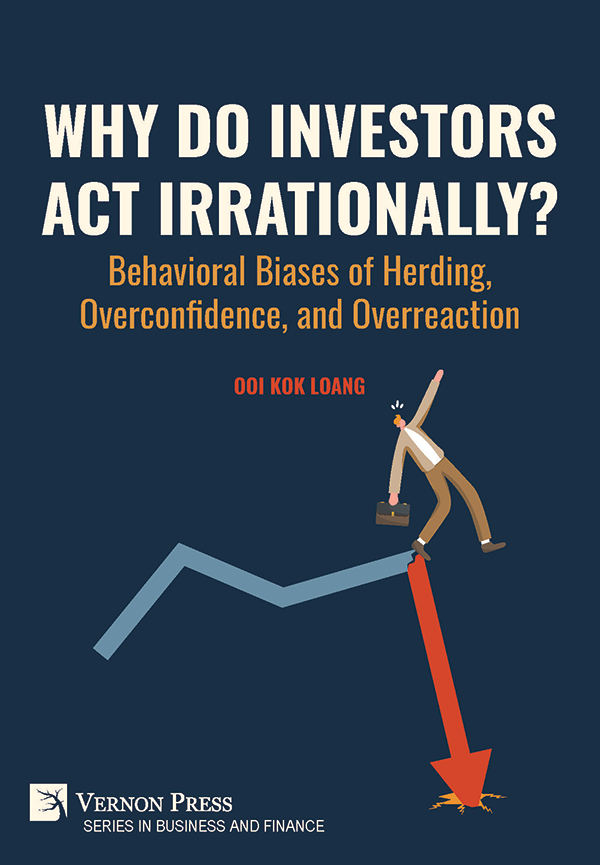
Ooi Kok Loang
'Why Do Investors Act Irrationally? Behavioral Biases of Herding, Overconfidence, and Overreaction' explores the powerful psychological forces that drive investor decisions, often leading to irrational behavior and market turbulence. This book provides an in-depth analysis of three critical behavioral biases—herding, overconfidence, and overreaction—that influence investors across various financial markets. Drawing on cutting-edge research and real-world examples, it delves into why even experienced investors sometimes fall prey to these biases, challenging conventional financial theories that assume rational behavior. Designed for scholars, finance professionals, and advanced students, this book fills a gap in behavioral finance literature by examining not just the existence of these biases, but their consequences and the conditions that amplify or mitigate them. Unlike traditional finance texts, which focus primarily on quantitative models, this work bridges psychology and finance, making it uniquely suited for those interested in understanding the ‘why’ behind investor actions. It positions itself alongside essential readings in behavioral finance, offering original insights and a fresh perspective that will be invaluable to researchers, policy advisors, and practitioners alike. Its accessible yet academically rigorous content also makes it ideal for classroom adoption in advanced finance and behavioral economics courses, offering thought-provoking discussion points and practical implications. 'Why Do Investors Act Irrationally?' invites readers to rethink traditional assumptions about financial markets and provides actionable strategies to address the influence of irrational biases in investment decisions, making it an indispensable resource in the evolving field of behavioral finance.
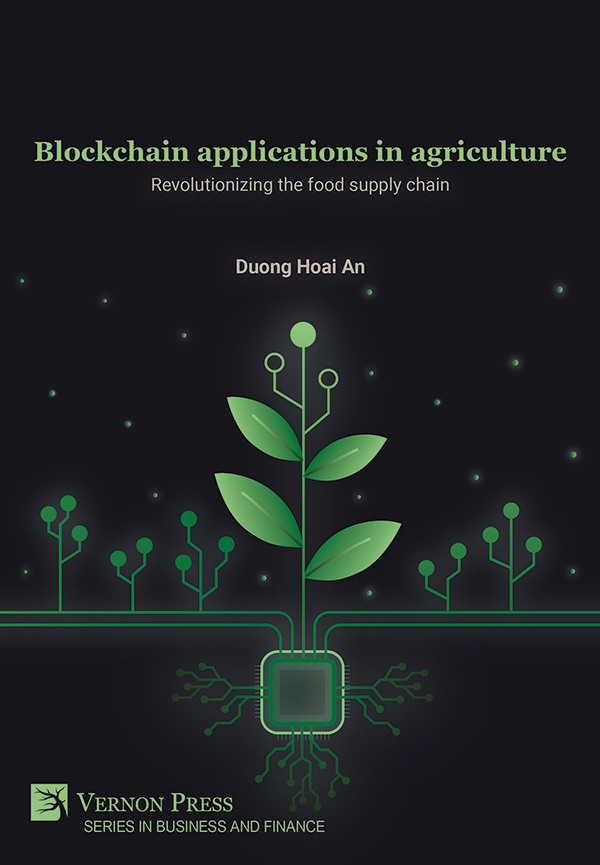
Duong Hoai An
'Blockchain applications in agriculture: Revolutionizing the food supply chain' is your definitive guide to the transformative impact of blockchain technology on agriculture and the modern food supply chain. In this comprehensive volume, we begin with “Introduction to blockchain technology,” laying the groundwork for readers of all backgrounds. From there, we delve into the intricate relationship between blockchain and the agriculture industry in “Overview of the agriculture industry”. The heart of the book explores practical applications in agriculture and the supply chain, including “Blockchain-based supply chain management,” “Farming and crop management,” “Livestock management and animal welfare,” and “Food safety and quality assurance.” We also explore how blockchain revolutionizes “Agricultural finance and insurance” and fosters “Sustainable agriculture and supply chain sustainability”. Drawing on “Case studies and real-world examples,” you’ll see blockchain in action, offering invaluable insights for farmers, supply chain professionals, academics, and policymakers. Our forward-looking chapter, “Future Trends and Challenges of Blockchain,” anticipates the evolving landscape of this groundbreaking technology. This book stands out for its depth, practicality, and relevance. It is equally suitable for reference, as a methodological guide, for classroom adoption, or as essential reading for researchers and practitioners in the fields of agriculture, technology, supply chain management, and policy. Whether you’re seeking to optimize farming practices, enhance supply chain transparency, or understand the regulatory implications, 'Blockchain applications in agriculture' equips you with the knowledge and inspiration needed to navigate the future of food production and distribution. Join the agricultural revolution today.
Guido Cuyvers
For a long time, quality has been the center of attention in the nonprofit sector, influenced by all kinds of developments in society. Due to, among other things, the interference of the government and the increasing competition, all divisions in the nonprofit sector are obliged to work systematically with their quality. Quality has become necessary. However, as more people gain experience with quality assessments, visitations, and accreditations, so does the criticism. This has to do with how quality is assessed and with the criteria that are used. We will examine this critically in this book. Many questions remain unanswered, and contradictions have not been resolved. Moreover, it is no easy task to have all noses pointing in the same direction. In short, there is still work to be done. This book broadens the traditional vision of quality and quality assurance to a vision and approach that is compatible with the support of the organization’s missions in the nonprofit sector. Incidentally, we will speak of quality development rather than quality assurance. The use of the term ‘quality development’ hopes to inspire people to look differently at quality and how their organization deals with it. Furthermore, this book provides nonprofit organizations with methodologies and tools that can help in the process of permanent quality development. The pursuit of quality for nonprofit organizations is approached from a development perspective and a broader social context. This distinguishes it from the traditional quality management manuals. It offers a constructive and appreciative approach that is compatible with the specific mission of various nonprofit organizations (such as education, health care, social work, and government). The approach is also integral because everyone in the organization, as well as the external partners, is involved.
M. C. Omar C. Vargas-González, Jérôme Dumetz, Mladen Adamovic, Raghavan Srinivasan, Etayankara Muralidharan, Priyanka Chadha, Anuj Kumar, Nicole S. Knight, Lisa Gibson, Levent Arslan, Barıs Ülker, Hasan Koç, Wenxia Guo, José G. Vargas-Hernández, Vinod Sharma, Suvro Parui, and Chandan Maheshkar
Culture is a 'cumulative custom of beliefs, values, rituals, and sanctions practiced by a group of people, province or country'. It is a more sensitive dimension of internationalization of any business and making it perform in a culturally diverse environment. Sometimes, nations/states lose their normative significance in a cross-cultural setting (e.g., India, South America). It is because they undermine their earlier philosophies of norms, values, and beliefs or neglect the cultural significance of other nations. In the current business and workplace dynamics, cultural components introduced significant changes in the core assumptions of business practices and skill expectations. This paradigm shift has forced business executives and managers to know how cultural differences affect inter- and intra-organizational functioning. It has made gaining cross-cultural compatibility a serious concern for business and academic communities worldwide. Therefore, this book facilitates business leaders, expatriate managers, business executives, academicians and scholars to explore different cross-cultural business perspectives and practices.
Deepti Sinha, Sachin Sinha, Xiaodan Zhang, Arti Sharma, Sushant Bhargava, Chandra Sekhar Patro, Rifat Kamasak, Mustafa F. Özbilgin, Kurt April, Meltem Yavuz Sercekman, Joana Vassilopoulou, José G. Vargas-Hernández, Ernesto Guerra García, James Phelan, Rachna Bansal, Rauno Rusko, Jeremy Kwok, Chandan Maheshkar, Vinod Sharma, Yvonne Kamegne, Joyram Chakraborty, Rupa Rathee, Madhvi Lamba, Tarika Nandedkar, Amit Kumar, Rachna Bajaj, and Gaurav Gupta
As organizations and businesses continue to expand in the cross-border and multicultural markets, culture needs to be taken into consideration. At present, culture introduces significant changes in the core assumptions of business practices and skill expectations. Gaining cross-cultural compatibility is now a serious concern for businesses and organizations. Appreciating the overall view of cross-cultural business environment, 'Handbook of Research on Cross-culture Business and Management' is a significant attempt to contribute a piece of knowledge on different aspects of cross-cultural business and management, facilitating practitioners and academicians to explore different cross-cultural business practices and develop competencies. This book will be a unique source for cross-cultural business and management practices, helping people of both industry and academia to understand the cross-cultural business environment and improve management practices.
Kirimi Barine and David Minja
Corporate governance has attracted considerable attention worldwide, especially in light of the widely publicized, high-profile global corporate failures and scandals. Since Corporate Governance contributes to the success of any institution, it must therefore be prioritized. In this very practical book, 'Effective Corporate Governance' explores the theories and models of corporate governance as well as the regulatory framework in which corporate governance operates. The authors have also talked about the pillars and best practices for good governance, including what a good board looks like and, at the same time, giving practical ideas on how to measure corporate governance health and what to do to get back on track. In addition, it includes case studies from the African context where the authors have extensively consulted with both for profit, not for profit and government institutions. This book will keep you relevant and ahead of the game whether you are a leader or student of leadership in the public or private sector, a religious institution or even a small and medium enterprise.
Joshua Schulze, Pascale Ezan, Marina Ferreira Da Silva, Veronika Cserényi, Pauline Ziserman, Laurent Salters, Gergő Novodonszki, Julie Assouly, Delphine Le Nozach, Boris Chapoton, Árpád Papp-Vary, Sandrine Villers, and Sébastien Lefait
With traditional forms of advertisement facing increasing challenges, brand placement - the integration of a product or brand in a work of art - has exploded. It has become a lucrative phenomenon whose goal is to produce a reaction of purchase in the mind of the receiver (reader, viewer or listener). This volume seeks to complement extant studies of product placement strategies by introducing a methodology more systematically related to the field of cultural studies, especially where the reception and impact of product placement are concerned. It explores the many iterations of brand placement in popular culture, with a consideration of the crossover between advertisement and art in everything from Wes Anderson, "Blade Runner" and the "Fast and Furious" franchise, to music videos, late night shows and plastic art. The book considers the impact of brand placement in TV series on teenagers, as well as the evolution of such placement in literature. The originality of this volume is that, when the impact of the placement is mentioned, it is to be understood as an intended aesthetic impact at least as much as a prompt to buy a product. Consequently, the placement of consumer goods in a cultural production, the book suggests, may both increase the sales of specific products and positively impact the production’s ratings. This book is perfect for researchers and students interested in marketing, brand placement, mass media, art, film, and cultural studies.
Mary Joseph T. and Renjini D.
This book is an insightful account on market orientation and how it enhances the performance of non-profit organizations in India. The book provides the readers with a succinct, yet comprehensive view of scholarly research on the concepts of market orientation, non-profit marketing, and organizational performance of non-profit organizations and demonstrates why and how market orientation can be an effective organizational orientation for Indian non-profit organizations. Despite the growing importance of non-profit sector in socio-economic well-being of societies, academic debate and research in developing economy context in this field is glaringly sparse. This book attempts to addresses this gap in literature by analyzing market orientation and related concepts against the background of environmental conditions in a typical emerging economy context. Therefore, it will be especially beneficial to academics, researchers, students and practitioners in the fields of non-profit management, strategic marketing and social work, desirous of advancing their knowledge in nonprofit market orientation in these settings.