Loading...
Please wait while we load the content...
Loading...
Please wait while we load the content...

Explore peer - reviewed titles across the humanities and social sciences - rigorous research, fresh perspectives, and scholarship that inspires dialogue across disciplines.
Stay informed about our latest publications, calls for proposals, and special announcements. As a subscriber, you'll also enjoy exclusive member discounts of 10%-20% on all orders. Join our community of scholars, librarians, and readers today.

From special discounts and global distribution partners to downloadable catalogs, flyers, and high-resolution covers, we make it easy to enrich your library’s collection. Access bibliographic data, explore subject-specific listings, and stay updated on forthcoming titles.
Become part of our librarian network and access dedicated tools, discounts, and resources to support collection development and promote new titles to your patrons.

Partner with Vernon Press to provide your customers with high-quality, peer-reviewed scholarship. We offer flexible ordering options, reseller agreements, and promotional materials to support your sales and outreach.

Vernon Press provides dedicated resources to help instructors adopt our books for courses and to support students with affordable access to high-quality scholarship. From desk and examination copies to tailored student editions, we aim to make our titles accessible in the classroom.
Ace Lehner, Laura Phillips, Francesca Liuni, Malka Simon, Anna Jozefacka, Ila Sheren, Yan Yang, Kelsey Frady Malone, Nancy Eder, Kyunghee Pyun, Sooran Choi, Gillian Greenhill Hannum, Bokyung Kim, and Victor Pitsoe
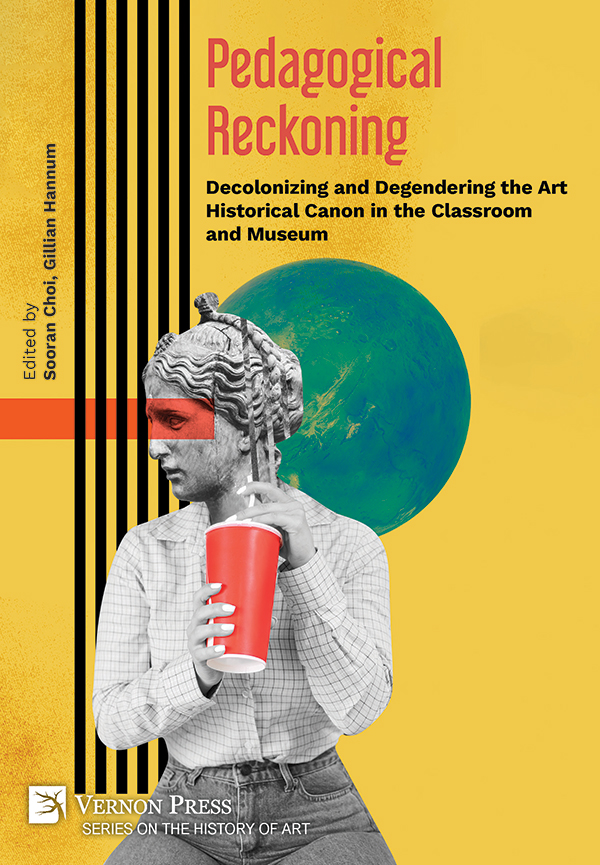
'Pedagogical Reckoning: Decolonizing and Degendering the Art Historical Canon in the Classroom and Museum' brings together leading voices in art history, museum studies, and pedagogy to confront the Eurocentric and patriarchal foundations of traditional art historical education. This timely anthology provides a range of actionable strategies for reshaping curricula, exhibitions, and research through the lenses of decoloniality, gender justice, and global inclusion. Edited by Sooran Choi and Gillian Greenhill Hannum, the volume includes contributions from scholars, artists, and educators across institutional contexts—from large research universities to community colleges and art schools. Its chapters span three key areas: inclusive classroom pedagogy, critical museum and curatorial practice, and decolonial research methodologies. Essays explore intersectional frameworks informed by postcolonial theory, feminist critique, queer studies, and ethnic studies, while also providing practical tools such as sample assignments, case studies, and curatorial models. Uniquely, this anthology integrates scholarly analysis with pedagogical reflection, offering readers both conceptual frameworks and concrete applications. It builds on recent literature such as 'Teaching South and Southeast Asian Art' and 'Expanding the Parameters of Feminist Artivism', while extending the conversation through its focus on classroom agency, community-responsive teaching, and institutional reckoning. Ideal for art history instructors; museum professionals; and students in anthropology, cultural studies, and education, 'Pedagogical Reckoning' serves as both a critical resource and a methodological guide. It is suitable for classroom adoption, professional development, and curriculum planning, and will appeal to anyone committed to transforming the way we teach, curate, and write about art.
Rubén Darío Yepes Muñoz
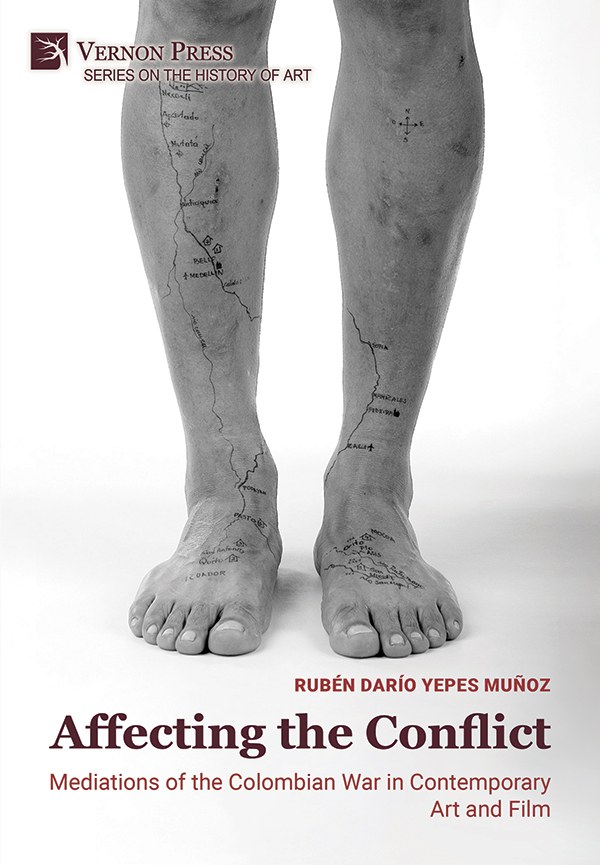
This book focuses on the art and films produced between the years 2002 and 2017 in relation to the Colombian armed conflict. It asks the following questions: How have contemporary art and film addressed the Colombian conflict? What are the contributions of these forms of visual culture to the memorialization of the armed conflict and the overcoming of its negative legacies? The main goal is to understand the ways in which contemporary art and film contribute to the historical and social transformations that Colombian society needs to undertake if it is to move beyond the violence and trauma of an internal war that has gone on for over fifty years and produced at least six million victims. The main claim is that the artworks and films in question mediate the conflict rather than represent it. In other words, they bridge the distance between their urban audiences and the predominantly rural conflict. Paying heed to the “affective turn” of the humanities and social sciences, the book also claims that this mediation consists, first and foremost, an affective engagement with the conflict’s history, events, and victims. This affective engagement counters the apathy toward and removal from the conflict that has predominated in Colombian urban sectors. Thus, the singularity of this book lies in the fact that it studies a topic that has not been adequately addressed within English-speaking academia, as well as in its cross-media and interdisciplinary scope. Moreover, it is noteworthy for the originality of its approach and, especially, its attention to affect.
Rubén Darío Yepes Muñoz
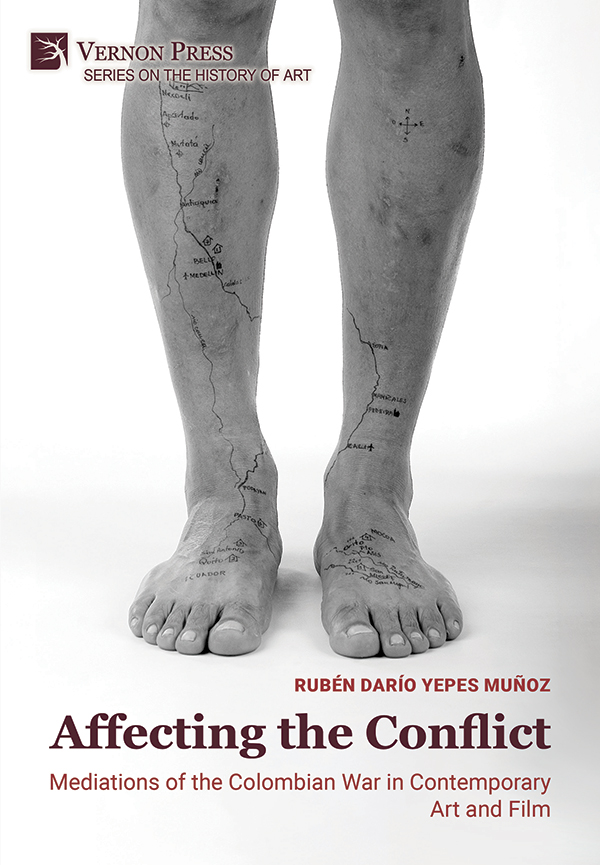
This book focuses on the art and films produced between the years 2002 and 2017 in relation to the Colombian armed conflict. It asks the following questions: How have contemporary art and film addressed the Colombian conflict? What are the contributions of these forms of visual culture to the memorialization of the armed conflict and the overcoming of its negative legacies? The main goal is to understand the ways in which contemporary art and film contribute to the historical and social transformations that Colombian society needs to undertake if it is to move beyond the violence and trauma of an internal war that has gone on for over fifty years and produced at least six million victims. The main claim is that the artworks and films in question mediate the conflict rather than represent it. In other words, they bridge the distance between their urban audiences and the predominantly rural conflict. Paying heed to the “affective turn” of the humanities and social sciences, the book also claims that this mediation consists, first and foremost, an affective engagement with the conflict’s history, events, and victims. This affective engagement counters the apathy toward and removal from the conflict that has predominated in Colombian urban sectors. Thus, the singularity of this book lies in the fact that it studies a topic that has not been adequately addressed within English-speaking academia, as well as in its cross-media and interdisciplinary scope. Moreover, it is noteworthy for the originality of its approach and, especially, its attention to affect.
Erin Harvey Moody, Linda Florence Mathison, Christy Gordon Baty, Damayanthie Eluwawalage, and Jeremiah Snyder
This publication explores the integrative narratives of historical costume in the novel universal perspective of literature, leisure, ornamentation, customs/traditions, and theoretical contexts. The adaptation, mutation, and transformation of attire are the result of complex interactions between many factors, such as economic conditions, political conditions, social conditions, psychological conditions, and technology. The meanings encoded in the costume are one of the noticeable hallmarks of any society. This proposed book investigates multidisciplinary topics, for instance, embellishments such as needlework and embroidery; the historical concept of fight, physical encounter, combat, or bout and its connection with related-attire; the contribution of dress to the narrative process of Virgil’s 'Aeneid'; and the theory and philosophy of fashion.
Visual Arts Series
Christina Corfield, Nicholas Pacula, Delanie Joy Linden, Kathryn McFadden, Rob Anderson, Paige Lunde, Kate Farrington, and Kathe Albrecht
'The Aestheticization of History and the Butterfly Effect: Visual Arts Series' introduces the audience to philosophical concepts that broach the beginning of the history of Western thought in Plato and Aristotle to that of more modern thought in the theoretician Jacques Rancière in which the main conceptual framework of this anthology is predicated. The introduction is mainly concerned with Rancière’s concept of the distribution of the sensible, which is the arrangement of things accessible to our senses, what we experience in real-time and space— compartmentalization and categorization of all things. These things do not just involve tangible items, but audible speech, written language, and visibilities. Rancière’s theory of the regimes of art is undertaken as the unfolding of the distribution. Such is evoked in the various genres of visual art forms, from two-dimensional paintings to three-dimensional sculptures and architectures. Understanding the aesthetic regime of art is crucial for grasping how art performs time travel. One way of understanding this phenomenon is in terms of embodied philosophy imbued vis-à-vis art forms, which are subsequently challenged by contemporary artists. The contributing essays examine these reiterations, reevaluations—performances. Aesthetics is a term deriving from the 18th-century European Enlightenment. It is here that aesthetics as the study of beauty is probed for its political potential after the failure of the French Revolution. Many major thinkers during this period signed on to the aesthetic moment, recognizing that Reason in its present state failed to develop humankind beyond barbarism. J.E.B. Stuart's statue is part of an equestrian theme that approximates the Western canon of power and class in the pursuit of domination. But such power and domination will be dethroned in the restaging of history and the redistribution of said canon. This reimagining of the form not only alters perception but constitutes a new narrative.
Dorothy C. Wong, Tamami Hamada, Suijun Ra, Sakiko Takahashi, Imann Lai, Hong Wu, Jinchao Zhao, Clara Ma, and Li-kuei Chien
This volume examines the various patterns of trans-regional exchanges in Buddhist art within East Asia (China, Korea, and Japan) in the medieval period, from the fifth to the thirteenth centuries. A traditional approach to the study of East Asian Buddhist art revolves around the notion of an artistic relay: India was regarded as the source of inspiration for China, and China in turn influenced artistic production in the Korean peninsula and Japan. While this narrative holds some truth, it has the implicit baggage of assuming that art in the host country is only derivative and obscures a deep understanding of the complexity of transnational exchanges. The essays in this volume aim to go beyond the conventional query of tracing origins and mapping exchanges in order to investigate the agency of the “receivers” with contextual case studies that can expand our understanding of artistic dialogues across cultures. The volume is divided into three sections. In Section I, “Transmission and Local Interpretations,” the three chapters by Jinchao Zhao, Li-kuei Chien, and Hong Wu all address topics of transnational transmission of Buddhist imagery, their figural styles, and subsequent alterations or adaptations based on local preferences and interpretations. Buddhism had important impacts on East Asian countries in the political dimension, especially when the religion and certain Buddhist sutras and deities were believed to have state-protecting properties. The chapters by Dorothy C. Wong, Imann Lai, and Clara Ma in Section II, “Buddhism and the State,” attend to the political aspect of Buddhism in visual representation. Section III, “Iconography and Traditions,” includes chapters by Sakiko Takahashi, Suijun Ra, and Tamami Hamada that closely study the cross-border transmission of and subtle variations in iconography and style of specific Buddhist deities, notably deities of esoteric strands that include the Thousand-Armed Avalokiteśvara (Bodhisattva of Compassion).
Rachel Harmeyer, Franny Brock, Amanda Strasik, Brigitte Weltman-Aron, Karissa Bushman, Dorothy Johnson, and Madeline Sutherland-Meier
The rise of Enlightenment philosophical and scientific thought during the long eighteenth century in Europe and North America (c. 1688-1815) sparked artistic and political revolutions, reframed social, gender, and race relations, reshaped attitudes toward children and animals, and reconceptualized womanhood, marriage, and family life. The meaning of “education” at this time was wide-ranging and access to it was divided along lines of gender, class, and race. Learning happened in diverse environments under the tutelage of various teachers, ranging from bourgeois mothers at home, to Spanish clergy, to nature itself. The contributors to this cross-disciplinary volume weave together methods in art history, gender studies, and literary analysis to reexamine “education” in different contexts during the Enlightenment era. They explore the implications of redesigned curricula, educational categorizations and spaces, pedagogical aids and games, the role of religion, and new prospects for visual artists, parents, children, and society at large. Collectively, the authors demonstrate how new learning opportunities transformed familial structures and the socio-political conditions of urban centers in France, Britain, the United States, and Spain. Expanded approaches to education also established new artistic practices and redefined women’s roles in the arts. This volume offers groundbreaking perspectives on education that will appeal to beginning and seasoned humanities scholars alike.
Andrea Hurst, Diana Heise, Ian Buchanan, Jakub Zdebik, Sherena Razek, Belinda Du Plooy, Catherine Bonier, Celina Jeffery, and Anna Paluch
'Ephemeral Coast: Visualizing Coastal Climate Change' considers the ways that art can offer a means through which to discover, analyze, re-imagine and re-frame emotive discourses about the ecological and cultural transformations of the coastline. This edited anthology takes ephemerality as its central conceptual and methodological framework and presents a series of essays that create interconnections between environmental and social considerations of the coast, a succession of embodied creative practices, and shifting regional geographic identities. The book presents a series of specific case studies of artistic practices and strategies that seek to capture the rewriting of cartographic maps that are being reshaped by rising seas, coastal flooding and catastrophic weather. The essays in this edited volume engender creative strategies for understanding new and uncertain coastal ecologies and the loss, expulsion or destruction of their associated cultures, habitats, species and ecosystems. The anthology also looks at the historical, mnemonic and contemporary transitional conditions of ‘conflicted’ coastal spaces in which empire, modernity and globalization press on coastal erosion and incursions, proliferate it with trivial plastics, pollution and disposable attitudes, and bring vulnerable communities into uncertain futures.
Anna Paluch, Andrea Hurst, Ian Buchanan, Jakub Zdebik, Sherena Razek, Belinda Du Plooy, Catherine Bonier, Diana Heise, and Celina Jeffery
'Ephemeral Coast: Visualizing Coastal Climate Change' considers the ways that art can offer a means through which to discover, analyze, re-imagine and re-frame emotive discourses about the ecological and cultural transformations of the coastline. This edited anthology takes ephemerality as its central conceptual and methodological framework and presents a series of essays that create interconnections between environmental and social considerations of the coast, a succession of embodied creative practices, and shifting regional geographic identities. The book presents a series of specific case studies of artistic practices and strategies that seek to capture the rewriting of cartographic maps that are being reshaped by rising seas, coastal flooding and catastrophic weather. The essays in this edited volume engender creative strategies for understanding new and uncertain coastal ecologies and the loss, expulsion or destruction of their associated cultures, habitats, species and ecosystems. The anthology also looks at the historical, mnemonic and contemporary transitional conditions of ‘conflicted’ coastal spaces in which empire, modernity and globalization press on coastal erosion and incursions, proliferate it with trivial plastics, pollution and disposable attitudes, and bring vulnerable communities into uncertain futures.