Loading...
Please wait while we load the content...
Loading...
Please wait while we load the content...

Explore peer - reviewed titles across the humanities and social sciences - rigorous research, fresh perspectives, and scholarship that inspires dialogue across disciplines.
Stay informed about our latest publications, calls for proposals, and special announcements. As a subscriber, you'll also enjoy exclusive member discounts of 10%-20% on all orders. Join our community of scholars, librarians, and readers today.
From special discounts and global distribution partners to downloadable catalogs, flyers, and high-resolution covers, we make it easy to enrich your library’s collection. Access bibliographic data, explore subject-specific listings, and stay updated on forthcoming titles.
Become part of our librarian network and access dedicated tools, discounts, and resources to support collection development and promote new titles to your patrons.

Partner with Vernon Press to provide your customers with high-quality, peer-reviewed scholarship. We offer flexible ordering options, reseller agreements, and promotional materials to support your sales and outreach.

Vernon Press provides dedicated resources to help instructors adopt our books for courses and to support students with affordable access to high-quality scholarship. From desk and examination copies to tailored student editions, we aim to make our titles accessible in the classroom.
Samantha Trzinski, Ruth Gehrmann, Hayley Smith, Maria Serena Marchesi, Charles Reeve, Marie Kluge, Sophie-Constanze Bantle, Madison Marshall, Sharmila Jayasinghe, Tom Bragg, Drew Banghart, and Lesley Goodman
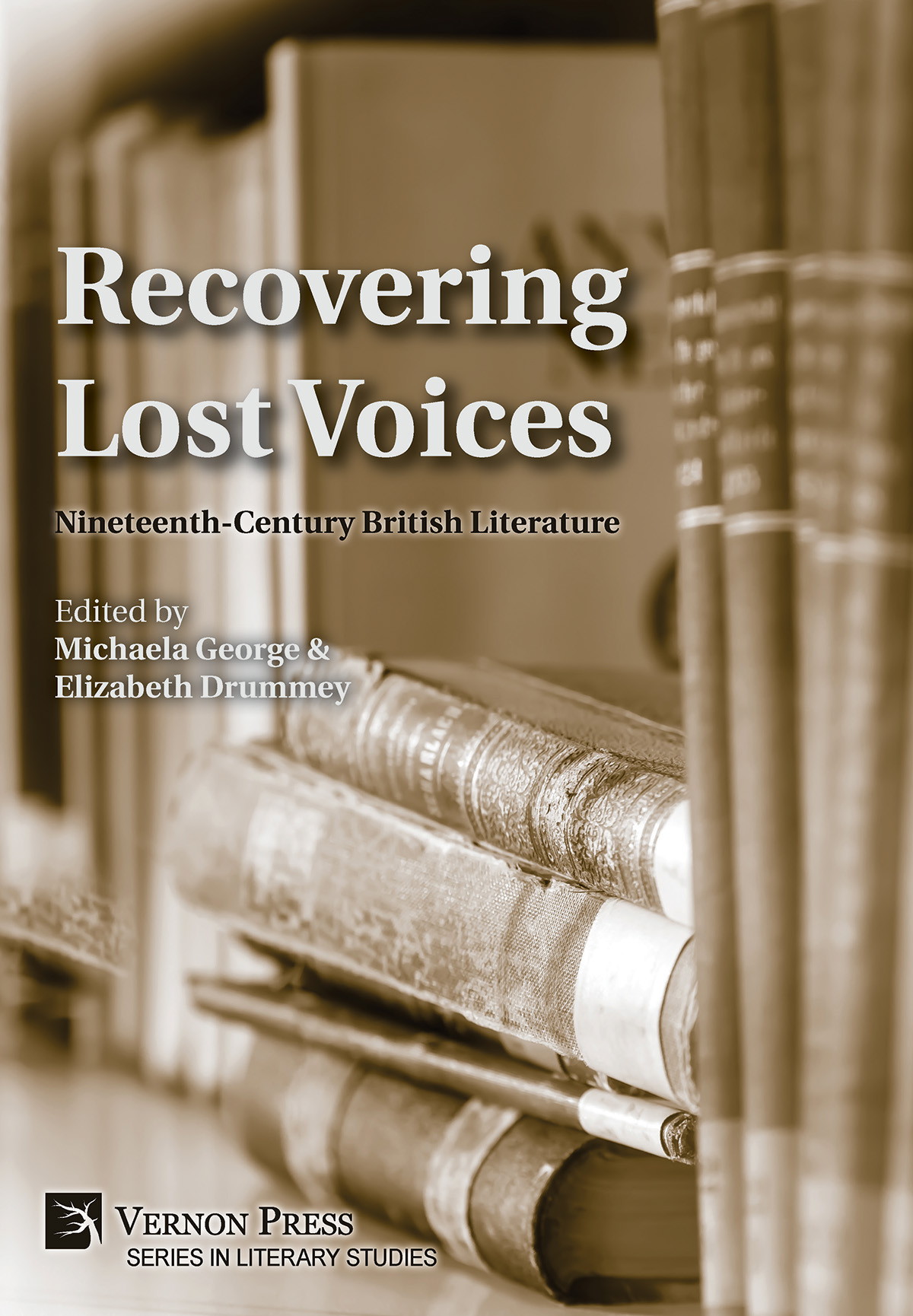
'Recovering Lost Voices' explores what recovery work looks like in the twenty-first century and why its continued practice is necessary. This collection is concerned with the volume of lost British texts and authors of the nineteenth century and offers a practical and personal approach to the act of recovery and the continued practice of re-recovery. Spanning the course of the nineteenth century, the included recovered works provide glimpses into the forgotten lives of poets, playwrights, and authors, enriching the working understanding we hold of this period. Our contributors explain their unique and original personal methods and experiences of discovering their lost work and detail the process of re-recovery. This volume ultimately functions as guidance for university students and early career scholars interested in uncovering what recovery and re-recovery work entails through personal accounts. The included contributions approach recovery in archives, street markets, digital access, and manual transcribing. Re-recovery takes the form of applied lenses of analysis, such as queer, post-colonial, gender, disability, and trauma studies.
Maria Soresina
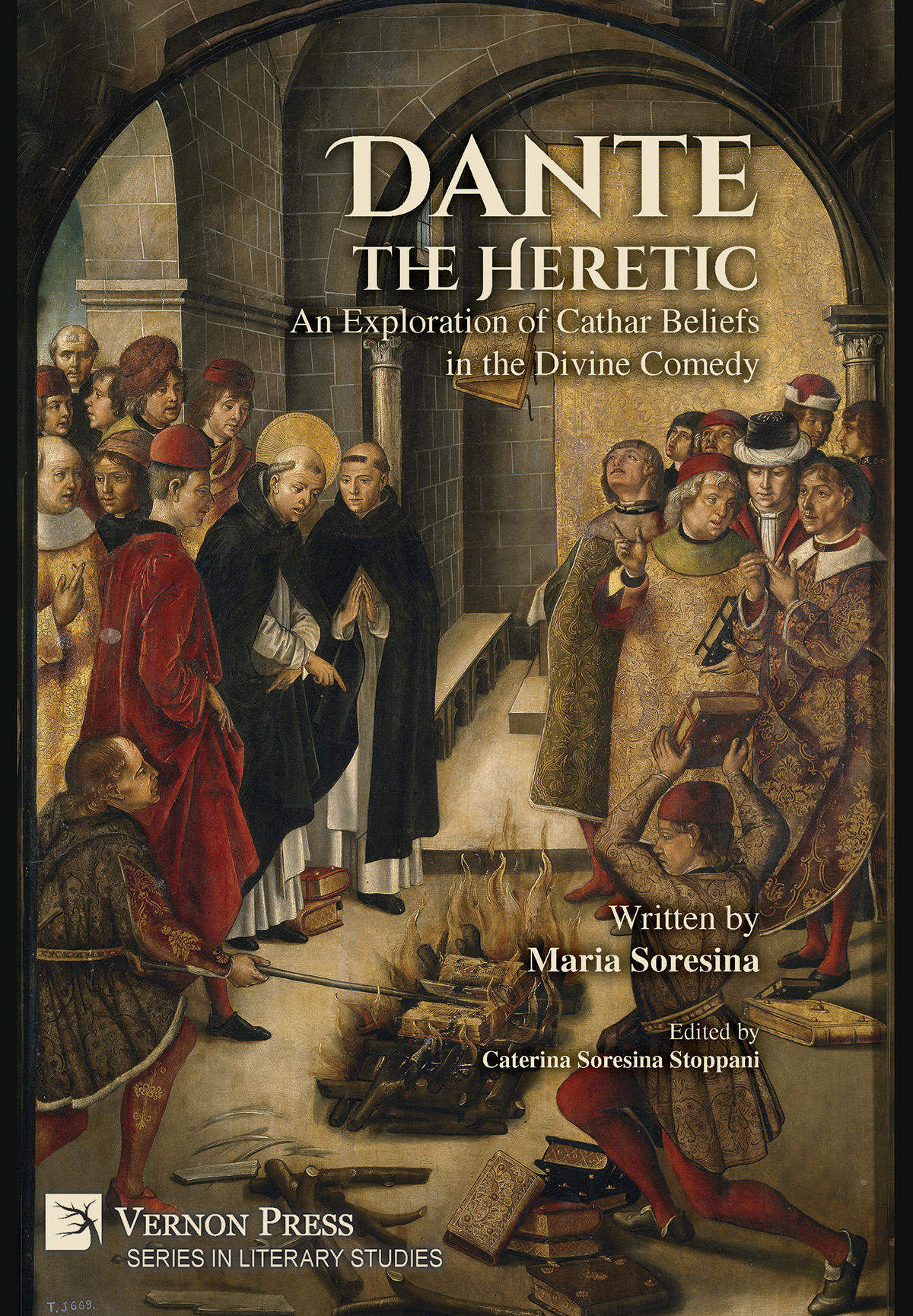
The purpose of this book is to demonstrate that Cathar doctrine is the main source of Dante's poem and to encourage readers to approach this work with fresh eyes, beyond the interpretative frameworks that are often worn. With detailed references to Dante's text, persuasive arguments, lucid and concrete exposition, and a direct and easy-to-follow style, Maria Soresina progressively presents the links between the ‘Divine Comedy’ and Catharism, which she has been investigating since the end of the last century. The text analyzes Cathar characters with respect to the doctrine. The Cathars were Christians, but their beliefs were very different from those of the Catholic Church. The author analyzes their philosophy, followed by verses of Dante that demonstrate agreement with it and distance from the Catholic Church. In addition to the great doctrinal questions, there are many Cathar beliefs and customs, all of which, such as their being vegetarians, find precise confirmation in the verses of the ‘Divine Comedy’. The Cathars had only one sacrament, the ‘consolamentum’. A long chapter is dedicated to demonstrating that Dante's journey through Purgatory corresponds to the various phases of this sacrament, within which the figure of Beatrice has a particular meaning, a woman whom Dante probably never met and never loved. This text offers non-Italian-speaking readers the chance to engage with these interpretive theories, destabilizing the canonical criticism and forcing a re-examination of sources and historical context.
Steven Minas, Susan McCabe, Catherine Theis, Steven Nathaniel, Demetres Tryphonopoulos, Anna Fyta, Graham Borland, Kevin Tunnicliffe, and Jonathan Najarian
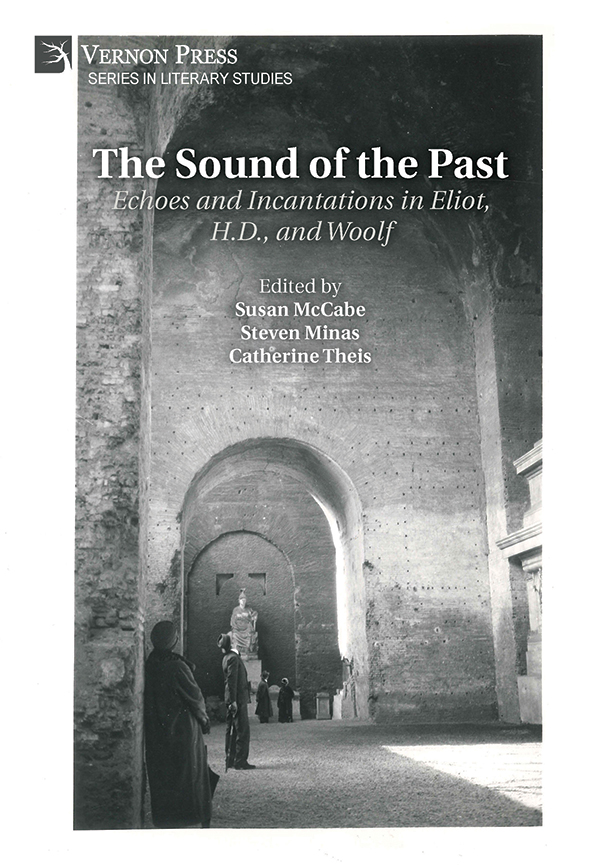
'The Sound of the Past' collects nine essays on the topic of Modernism and its relationship to past histories, literatures, artworks, environments, and cultural moments. The collection specifically explores the way sound informs the work of T. S. Eliot, H.D. (Hilda Doolittle), and Virginia Woolf. Some chapters address sound through allusion and prosody, while others do so through travel and “anaesthetics.” Sound allows echoing, seeming, voicing, announcing, scaling, plunging, and hearing. These allowances offer a wide approach to both literary and sound studies. This collection addresses various genres, including the long poem, the novel, the travelogue, and the “it-narrative.” As such, it will be a useful collection for anyone interested in the multiform way Modernist writers echo or channel their precursors.
Caroline Hensley, Yasuko Kase, Eliko Kosaka, Jun Okada, Yana Ya-chu Chang, Gayle Sato, Satarupa Sengupta, Jennie Snow, James Sun, and Ningning Huang
With a focus on the transpacific and transnational relationship between North America and Asia, 'Emerging from the Rubble: Asian/American Writings on Disasters' explores Asian/Americans’ complex and nuanced involvement in disastrous events. Included in this purview of disaster are not only the damages and threats of current ongoing climate change but also the long-lasting ruining effects inflicted by imperialism, neo/colonialism, wars, and these historical components’ entanglement with global capitalism that have generated both spontaneous and slow and/or prolonged violent effects. Moreover, disasters can be acknowledged as manifestations of the Anthropocene — an epoch shaped by human activity — or what scholars like Jason W. Moore and Donna J. Harraway term the ‘Capitalocene,’ a paradigm where nature and capitalist society are deeply intertwined, co-creating an intricate web of life. Asian/American involvement in such a web has never been simple but convoluted: some of them have experienced tremendous losses, whereas others have perpetuated obfuscation of the truth and/or induced violence, often contingently with or without acknowledging the facts. When considering Asian migrants including refugees from Southeast Asia who had little option but to seek asylum in the U.S., and Asian Americans who have pursued their “happiness” under the U.S.’s capitalist premise of constant progress, protection of “human rights,” and freedom of “choice,” it is important to note that Asian migrants and Asian ‘Americans’ have become simultaneously active players and exploited individuals within the context of U.S. racial capitalism. Acknowledging the impossibility of clearly differentiating natural and human-made disasters, scholars who contribute to this volume note the reciprocal influences between nature and civilization. They examine how the entanglements of natural and human-made disasters lead to the acceleration and expansion of damage. This volume explores how Asian Americans’ connections with their ancestral origins along with their particular racial positions, social classes, and socio-historical backgrounds in North American societies force them to experience and witness disastrous events differently from the mainstream discourse on eco-crises.
Joel Wendland-Liu
| Recommended by CHOICE, June 2026 Vol. 63 No. 10 | 'Simply to Be Americans?' delves into the transformative power of radical U.S. literature from the late nineteenth to early twentieth centuries, uncovering how writers boldly confronted the intertwined forces of Americanism, capitalism, racism, imperialism, and patriarchy. Through the works of visionaries like Lucy Parsons, Albert Parsons, and Sutton Griggs, this book reveals how early literary radicals challenged the foundations of monopoly capitalism and white supremacy, planting the seeds for a culture of resistance that would flourish in the decades to come. Exploring the speculative genius of Mark Twain, Jack London, Gertrude Nafe, and W.E.B. Du Bois, 'Simply to Be Americans?' showcases how allegory and satire became powerful tools to dismantle nationalism, imperialism, and racial hierarchies. While these pioneers often grappled with the complexity of these systems, a study of their work illuminated both the possibilities and limitations of early radical thought. As the twentieth century unfolded, U.S. writers embraced revolutionary internationalism, forging connections between domestic struggles and global anti-imperialist movements. Figures like John Reed and Hubert Harrison championed solidarity across borders, while the Russian Revolution and worldwide labor uprisings inspired a new wave of politically charged art. Writers like Genevieve Taggard and W.E.B. Du Bois called for literature that expresses urgent struggles against systemic oppression. In the 1920s and 1930s, luminaries like Mary Burrill, Jean Toomer, Langston Hughes, H.T. Tsiang, Josefina Niggli, Lola Ridge, and Dorothy West rejected assimilation, exposing American society’s capitalist and imperialist core. Their works vividly exposed the intersections of race, class, and gender, advocating for unity among the oppressed. 'Simply to Be Americans?' redefines the legacy of U.S. radical literature, tracing its evolution and celebrating its enduring impact. This groundbreaking study reveals how these writers critiqued their world and laid the foundation for future movements against exploitation and injustice, offering timeless insights into today’s struggles.
Olivia Holloway, Jorge Sánchez Rivera, Lina Angulo Amaya, Lisa Viviani, Fabio Andrade, Andrea Garza Erdmann, Andrea Tinnemeyer, Elisabetta Rodio, Velebita Koričančić, and Elzbieta Sklodowski
'Casas Tomadas: Monsters and Metaphors on the Periphery of Latin American Literature and Media' examines how Latin American writers, filmmakers, and artists use monstrosity to reflect on marginalization, identity, and social trauma. This volume brings together close analyses of literature, film, and visual art from across Latin America, exploring how the monstrous symbolizes resistance to cultural, political, and historical oppression. Organized into four sections—Night Lights, In the Grip of Monsters, Echoes in the Darkness, and Sinister Spaces—the book offers case studies on works by Mariana Enríquez, Samanta Schweblin, Issa López, and others. Each chapter reveals how monsters, from mythic figures to supernatural landscapes, serve as potent metaphors for issues like queer and feminist activism, postcolonial haunting, and socio-political violence. Contributors engage with genres from horror and the Gothic to speculative fiction, situating monstrosity within Latin American experiences of violence, trauma, and resilience. Distinct for its interdisciplinary approach, 'Casas Tomadas' will serve as a key resource for students and researchers in Latin American Studies, Cultural Studies, and Gothic and Horror Studies. Its focused structure makes it ideal for classroom adoption, while its fresh perspectives on Latin American Gothic and the politics of monstrosity offer new insights for scholars in queer and postcolonial theory.
From fantastic creatures to marginalized social groups / De criaturas fantásticas a grupos sociales marginados
Gabriela Schiappacasse, Ofelia Montelongo Valencia, César Ruiz Ledesma, Elizabeth Laughlin, Nidia Mariana Reyes Payán, and Briseyda Barrientos Ariza
In the literature of Spain, Latin America, and the Caribbean, countless acts of redefinition emerge through destruction, a powerful symbol of breaking free from oppressive forces and embracing independence. Within these narratives, characters undergo a process of redefinition, enabling them to assert themselves and advocate for their own rights, ultimately generating a sense of empowerment. But this transformation isn’t confined to human beings alone, it also extends to magical creatures, demonstrating that all entities, human or otherwise, have the power to reshape their destinies through the redefinition of their identities. 'Liberation through destruction: From fantastic creatures to marginalized social groups' portrays literary worlds in which a rich tapestry unfolds, where witches, sorcerers, demons, and other fantastical beings coexist within contemporary, modern, and even colonial settings. These characters breathe life into these narratives, giving voice to those marginalized, alienated, or rejected by society. However, the presence of these diverse and extraordinary characters challenges the established hierarchies. When women are seen as witches or portrayed as autonomous figures, fear often follows. The dissident woman becomes a target simply for refusing to conform. Her defiance against masculine subjugation, and her pursuit of feminine liberation and economic autonomy, forces her into a liminal space between what is accepted and what is repudiated, between what is considered “normal” and what is “terrifying.” This “woman,” who breaks the rules and challenges societal norms, who evokes the heroines who took action, like Antigone and La Llorona, heroines who act decisively to navigate the blurred line between what is “fair” and what is “unfair,” between what is “right” and what is “wrong.” In doing so, they enter a space where they are both feared and revered, they embody a liminality that gives them the ability to rewrite the stories they occupy and enter a realm where they are both feared and revered. En la literatura española, latinoamericana y caribeña, son frecuentes los actos de redefinición que, a través de la destrucción, se presentan como un poderoso símbolo de liberación de las fuerzas opresivas y de la adopción de la independencia. Dentro de estas narrativas, los personajes a menudo atraviesan un proceso de redefinición que les permite afirmarse y abogar por sus propios derechos, acompañado de un proceso de empoderamiento. Sin embargo, esta transformación no se limita solo a los seres humanos, sino que también se extiende a criaturas mágicas, demostrando que todas las entidades, sean humanas o no, tienen el poder de redefinir su identidad y, por tanto, transformar su destino. 'Liberación a través de la destrucción: De criaturas fantásticas a grupos sociales marginados', despliega un rico tapiz de mundos literarios donde brujas, hechiceros, demonios y otros seres fantásticos coexisten en escenarios contemporáneos, modernos y coloniales. A través de estos personajes, se consigue dar voz a aquellos que han sido marginados, alienados o rechazados por la sociedad. Sin embargo, la presencia de estos personajes no pasa de largo, sino que desafía el status quo. La aparición en estas obras de mujeres que son (o son vistas) como brujas o figuras autónomas suele causar miedo a su paso. La mujer disidente no pasa de largo, sino que se convierte en objetivo simplemente por no conformarse con lo que le viene impuesto. Su búsqueda de la liberación femenina y la autonomía económica la obliga a ocupar un espacio ambiguo entre lo aceptado y lo repudiado, entre lo que se considera “normal” y lo que se considera “terrorífico”. Esta “mujer” que rompe las reglas y desafía las normas sociales, evoca a heroínas como Antígona y La Llorona; heroínas que actúan de manera autónoma, fijando sus propias normas y situándose en una línea difusa entre lo “justo” y lo “injusto”, entre lo “correcto” y lo “incorrecto”. Al hacerlo, entran en un espacio donde son tanto temidas como veneradas, un espacio donde tienen la capacidad de reescribir sus propias historias.
Nicole Paronzini, Giulia Po DeLisle, Susan Briziarelli, Mirna Cicioni, Giovanna Miceli Jeffries, Simonetta Milli Konewko, Scott Lerner, Margherita Losacco, and Puma Valentina Scricciolo
Clara Sereni lived an extraordinary life in extraordinary times. Born in Rome in 1946, she grew up in a prominent family of Jewish intellectuals whose influential role in Italian politics and in the anti-fascist resistance could not but inform Sereni’s own future social and political engagement. Coming of age during the turbulent Sixties, Sereni embraced the struggle for women’s rights, social justice, and political reform, championing Eduardo Galeano’s notion that utopia always stands at the horizon, and one must keep walking to reach it. Activist, journalist, writer, translator, but also musician, disability rights champion, home-maker, and wife; her multiple and often conflicting roles emerge in a rich and multifaceted writing, increasingly balanced between the public and the private, history with a capital “H”, and personal memoir. Her first major success, ‘Casalinghitudine (Keeping House)’, explores the juncture of the public and the personal as important historical moments merge with her workaday memories of cooking. Her remarkable historical novel ‘Il Gioco dei Regni (The Game of Kingdoms)’ traces her family history from the early 20th century through the post-war period, chronicling their personal lives and their involvement in Italian politics and Jewish intellectual life. Subsequent works such as ‘Taccuino di un’ultimista’ (‘Notebook of a Meek Woman’) and ‘Passami il sale’ (‘Pass me the Salt’) tackle the difficulties of negotiating life as a political figure, wife, and mother of a disabled son. In works such as ‘Eppure’ (‘And Yet’), ‘Le Merendanze’ (‘Afternoon Snacks’) and ‘Una storia chiusa’ (‘A Closed Story’), as well as ‘Il lupo mercante’ (‘The Mongering Wolf’) and ‘Via Ripetta 155’ (‘155 Ripetta Street’), she again intertwines private experiences and public circumstances, raising questions related to gender, class, disability, the elderly, and sustainability. This is the first volume that brings together the critical aspects of Clara Sereni’s work, providing a comprehensive view of the writer, the intellectual, the politician, and the woman. As we reflect on the 20th century, Sereni’s long-spanning writing career stands as an important document of its struggles, its conflicts, and, like Sereni herself, its enduring idealism.
Nadia Boudidah Falfoul, Enna Sukutai Gudhlanga, Angeline Mavis Madongonda, Janell Hobson, Faye V. Harrison, Florica Bodiştean, Dokubo Melford Goodhead, Rafseena M., Marinela Nicoara, Bhawana Pokharel, Nodhar Hammami Ben Fradj, Parinita Sinha, Amrita Basu Roy Chowdhury, and Baliram N. Gaikwad
African-American scholars in the United States and Western Europe continue to concentrate on African-American literary studies. The expanding interest in Caribbean publishing, which focuses on the intersection of Afro-Caribbean and African-American communities, indicates that there is an expanding academic readership for African-American narrative studies and other intellectual outputs from other countries. This collection features writers from underrepresented countries, including India, Tunisia, Romania, Morocco, Zimbabwe, Nigeria, and South Africa, discussing their perspectives on African-American narratives. The collection is rich in pedagogical vibrancy, as many academics teach African-American literature to national students. It explores how non-American contributors teach African-American narratives to a global audience, aiming to help academics envision teaching narratives outside their comfortability and understanding a culture they may not have contact with. This collection aims to provide meaningful re-readings of these works, recognizing the potential for change and promoting inclusivity in Women's Writings and Marginal Literature.