Loading...
Please wait while we load the content...

Loading...
Please wait while we load the content...
Stay informed about our latest publications, calls for proposals, and special announcements. As a subscriber, you'll also enjoy exclusive member discounts of 10%-20% on all orders. Join our community of scholars, librarians, and readers today.

Availability
In stock
ISBN
9798881900953
Edition
1
Publication Date
February 4, 2025
Physical Size
236mm x 160mm
Number of Pages
262
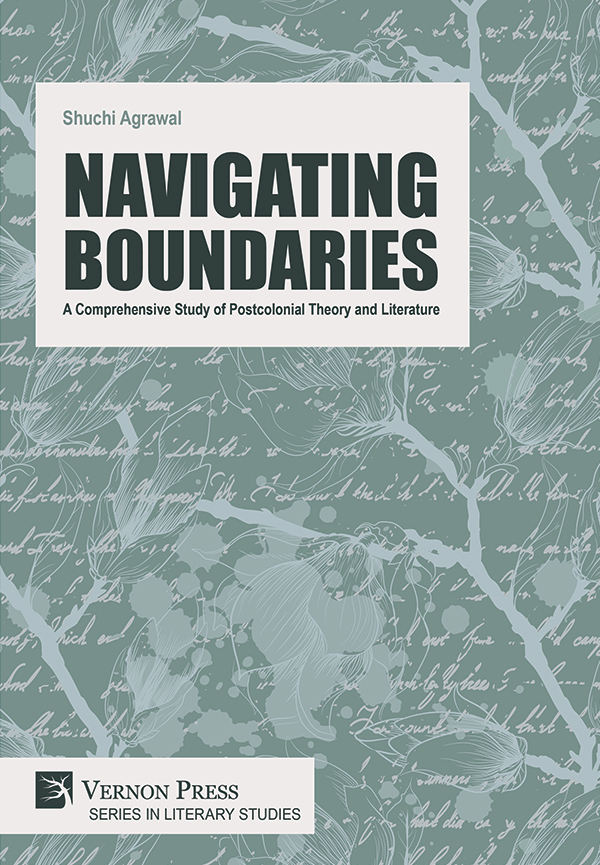
The present book explores postcolonial landscapes through an intricate web of theory and literature, aiming to untangle the complexity inherent in the aftermath of colonial histories. This intellectual odyssey is a testament to the numerous voices that have emerged from the periphery, questioning dominant narratives and creating a greater knowledge of identity, power, and resistance. Amalgamating critical ideas, important concepts, and discussions of gender, race, nationalism and language, along with a close reading of literary masterpieces from postcolonial regions such as South Asia, the Caribbean, and Africa, this book stands as a comprehensive and indispensable resource in postcolonial studies.
Rekha Pande
Professor Emeritus, Henry Martin Institute, International Centre for Research, Interfaith Relations and Reconciliation, Hyderabad;
Former Head, Department of History;
Former Head, Centre for Women’s Studies, University of Hyderabad, India
A valuable addition to the field of postcolonial studies, this work is a rich exploration of key postcolonial theorists, alongside the analysis of literary works from diverse regions, including Africa, the Caribbean, and India. The author provides a structured framework for an understanding of complex postcolonial concepts in literature. The detailed exploration of African literary forms and traditions showcases the richness of African storytelling and the ways in which it challenges colonial narratives. Its engagement with issues like identity, resistance, hybridity, and the politics of language makes it a relevant and timely contribution to postcolonial studies. Whether you are delving into postcolonial theory for the first time or seeking a deeper understanding of literary responses to colonialism, this book offers a rich and thought-provoking journey through the complexities of postcolonial discourse. This book is highly recommended for readers in the fields of literature, cultural studies and literary theory.
Dr. Vinita Gupta Chaturvedi
Professor, Department of English
Delhi College of Arts & Commerce
University of Delhi, India
[…] an insightful contribution to the field of postcolonial studies, analysing literary works from a variety of geographical regions. The book broadly covers the intersections of cultures, history, and societies and vividly talks about the theoretical frameworks that have risen as the outcome of colonialism. It includes Africa, the Caribbean, and India, and provides in-depth research on key postcolonial theories. The book is rich in its use of vernacular languages practiced by postcolonial critics and theorists representing a new wave of authenticity and originality in writing. […] The book covers a vast range of key concepts useful in the study of postcolonial theory and presents an amalgamation of Intersectionality of Globalization, Transnationalism, and Postcolonial Studies. […]
Overall, all concepts are beautifully curated and explained and the transition of the chapters discussing evolution of postcolonial theory, flows smoothly in a well-structured manner throughout the book.
[Extract from book review on the 'Journal of English Language and Literature' (JOELL), Vol.12, No. 1 (January-March) 2025. Reviewer: Aanchal Mishra (Amity University, Noida) DOI: 10.54513/JOELL.2025.121103]
[...] By tying together key academic debates on identity, resistance, language, gender and nationalism the book under review provides a comprehensive examination of postcolonial theory and literature. Its structured approach and inclusion of literary studies from South Asian and the Caribbean alongside engagements with seminal postcolonial theorists make it an indispensable resource for scholars, students and researchers in post-colonial studies, literary criticism and cultural theory. The book’s interdisciplinary character and emphasis on current viewpoints assure its continuing relevance in postcolonial discourse making it an essential text for those seeking deeper understanding of the complexities of power, resistance and identity in a post-colonial world. [...]
[Extract from book review on 'SABITA: A Journal of Humaties', Vol II, Issue I (2025), ISSN: 3107-376X (Online), pp. 74-78. Reviewer: Shivani Singh (Amity University). https://sabitajournal.com/index.php/sabita/article/view/44/49 ]
Discover books that expand on the themes explored in this work—titles that engage with similar questions, intersecting disciplines, and complementary perspectives to deepen understanding and broaden the conversation.
Browse all titles
Adam Bednarczyk and Magdalena Kubarek (Eds.)
View more
Eulalia Piñero Gil and María Laura Arce Álvarez (Eds.)
View more
Oliver Bock and Isabel Vila-Cabanes (Eds.)
View more
William G. Welty (Ed.)
View more