Loading...
Please wait while we load the content...
Loading...
Please wait while we load the content...
Stay informed about our latest publications, calls for proposals, and special announcements. As a subscriber, you'll also enjoy exclusive member discounts of 10%-20% on all orders. Join our community of scholars, librarians, and readers today.

From special discounts and global distribution partners to downloadable catalogs, flyers, and high-resolution covers, we make it easy to enrich your library’s collection. Access bibliographic data, explore subject-specific listings, and stay updated on forthcoming titles.
Become part of our librarian network and access dedicated tools, discounts, and resources to support collection development and promote new titles to your patrons.

Partner with Vernon Press to provide your customers with high-quality, peer-reviewed scholarship. We offer flexible ordering options, reseller agreements, and promotional materials to support your sales and outreach.

Vernon Press provides dedicated resources to help instructors adopt our books for courses and to support students with affordable access to high-quality scholarship. From desk and examination copies to tailored student editions, we aim to make our titles accessible in the classroom.
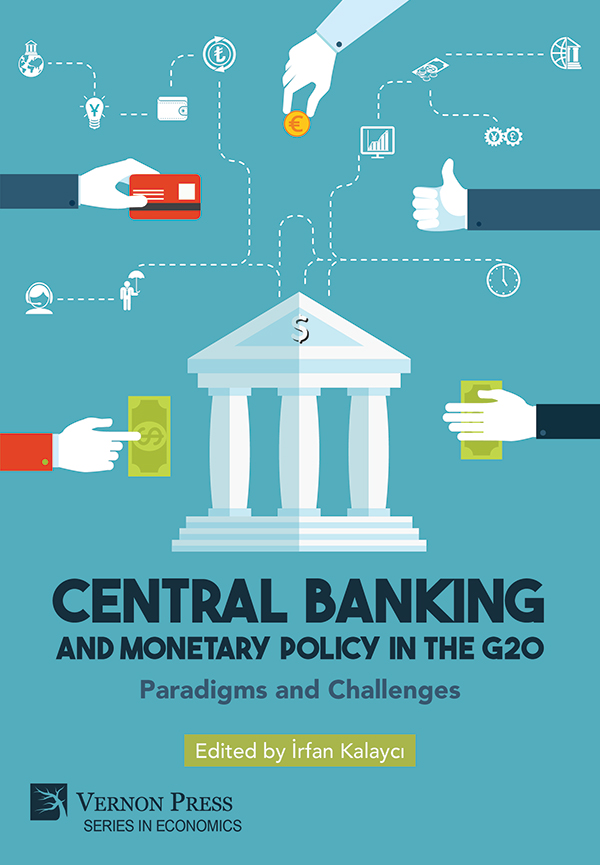
Mehmet Kaya, Jeremy Kwok, Irfan Kalayci, İlhan Eroğlu, Nalan Kangal, Fatih Yeter, Necati Çoban, John Marangos, Nikos Astroulakis, Themis Anthrakidis, Angeliki Nestoroudi, Paraskevi Kyrilla, Sevgi İneci, Aukje van Loon, Hazik Mohamed, Esra Güler, Halil Seyidoğlu, Aatos Hallipelto, Cumhur C. Küçüközmen, Mahir Fisunoğlu, Metin Akyüz, Gökhan Karhan, Mücahit Çayın, M. Ali Seyidoğlu, M. Uzair Zulkifly, İsmail Özsoy, Birol Görmez, and Hatice Özkurt Çokgüngör
Behind productive and prosperous economies are independent central banks that implement effective monetary policies. This observation is especially valid for the G20, which comprises the world’s top twenty economies in terms of gross domestic product and the largest stakeholders of the global economic system. These economies include Argentina, Australia, Brazil, Canada, China, France, Germany, India, Indonesia, Italy, Japan, Mexico, Russia, Saudi Arabia, South Africa, South Korea, Turkey, the United Kingdom, the United States, and the European Union. Three features of this book, which focuses on central banking and monetary policy in the G20, an intergovernmental platform, stand out: Firstly, as contemporary theories and global practices confirm, the main purpose of central banks is to ensure monetary and price stability, not despite the government but in cooperation with it. This principle is strongly emphasized here. Governments, which must maintain fiscal discipline, are key to the success of central banks in combating inflation and deflation. Secondly, since the authors of the book chapters come from various countries and academic institutions, the book offers a range of perspectives and intellectual richness. Without deviating from the book's main axis, the authors examine the changing paradigms in central banking and the increasing challenges of monetary policy. This examination is based on developed and emerging economies, integrations, financial organizations, and economic crises within the G20, informed by significant sources. Thirdly, this book offers university researchers, professional business practitioners, and curious readers the opportunity to explore and reflect on new concepts such as green central banking, digital money, and interest-free monetary policies, which have gained prominence in the wake of the global COVID-19 pandemic, alongside mainstream topics. It is hoped that this book, consisting of 14 chapters, will inspire those who wish to conduct new and renewed academic studies on global central banks and monetary policies and will fill a gap in the literature.

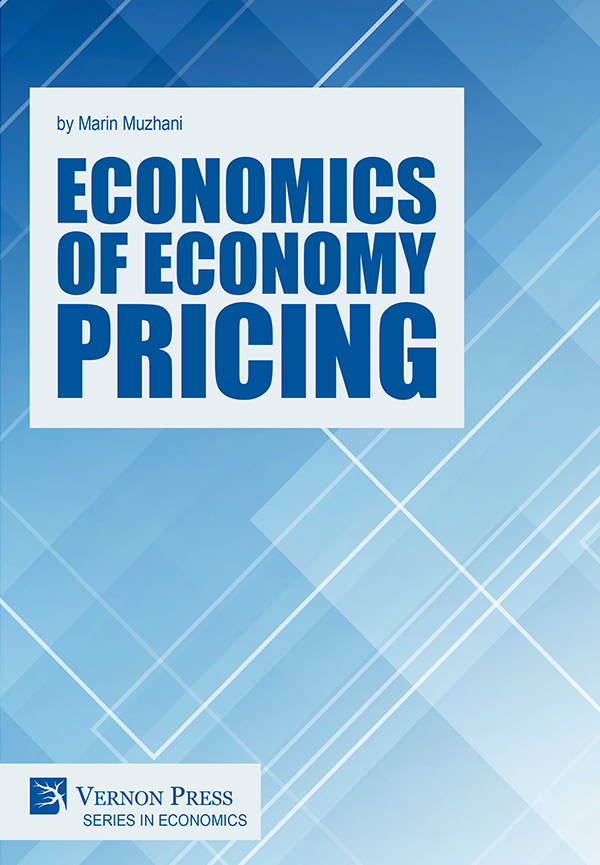
Marin Muzhani
The economy of the industrialized countries in the 21st century has already moved to a new level of mass production and technology never seen before, thanks in part to globalization, advanced technologies, new organization management methods, and innovative supply chain. A relatively large number of mass-produced commodities (characterized as non-premium) and services in Western economies are somehow sold at discounts rather than regular prices at a much higher frequency that was never seen before. This phenomenon has completely changed how we look at the theory of the firm in microeconomics. This book is indented to introduce new ideas and theories by challenging the current modern micro-and-macro economic theories. In a globalized world, the economies of advanced countries have entered a new phase called “economy pricing,” where most of the mass commodities are sold at a low price during certain periods of the year, called ‘sales events’. In addition to low prices, most industrialized countries have had record low inflation, low-interest rates, low growth, and low unemployment rates. This book will contend how the “Economy Pricing System” is about to revolutionize how people look at a real economy’s micro and macro effects.

David M. Atkinson
The Covid-19 pandemic reinforced the perception that capitalism is in crisis, that the future is volatile, uncertain, complex and ambiguous, and that, increasingly, our thinking about it and ability to manage and organize ourselves within it, are challenges we are ill-equipped for. Despite the efforts of many writers, and a surfeit of manuscripts concerning the need to rethink capitalism, questions concerning the struggle for social and economic justice remain unanswered. While some suggest that with corrective action, businesses can save the world, there is an acceptance that they cannot do so alone. However, while governments might strengthen their institutions, enacting more effective policies, the challenge is simply laid bare at the feet of industry and commerce. Is the challenge to confront the establishment just too big to face? Government institutions and the barons of industry and commerce are but interrelated, interconnected, interplaying components in one socio-economic system. This book offers readers a progressive, radical and academic provocation of that system; it also proposes a field of Applied Negative Dialectics. In 'Reimagining Capitalism', Atkinson confronts the need to rethink capitalism and presents an integrated range of thinking through a lens of applied negative dialectics, questioning how and why things might have occurred, and where and how we might begin to improve them.
Gopi Krishna Suvanam
‘Liberty & Prosperity: Liberal Economics for Achieving Universal Prosperity’ aims to illuminate alternative policy framework using liberal economic policies. The evolution of this book is grounded in the author’s personal and professional experience investigating economies around the world and therefore takes a global view. The ideas discussed are intended for countries currently under different stages of development and are not restricted to only developed countries or emerging economies. This book examines what we as a society can do to achieve universal prosperity with the recurring topic of the intertwining nature of liberty and prosperity; without prosperity, man cannot have true liberty, and the best way to achieve universal prosperity is by providing liberty to all. It identifies the appropriate measures from existing liberal theories that could help achieve this long-term goal, while also introducing contrarian ideas, including the elimination of income tax, denationalization of money, and the reduction in the role of central banks. The central theme is that liberty in all aspects of economic activity, coupled with universal basic income, could create universal prosperity. This book will particularly appeal to those with a general interest in the economy and business, as well as students who seek an overview of classical macroeconomic principles; however, the book’s innovative ideas may also be of interest to professional economists.
Jeremy Kwok
‘Macroeconometric Models for Portfolio Management’ begins by outlining a portfolio management framework into which macroeconometric models and backtesting investment strategies are integrated. It is followed by a discussion on the theoretical backgrounds of both small and global large macroeconometric models, including data selection, estimation, and applications. Other practical concerns essential to managing a portfolio with decisions driven by macro models are also covered: model validation, forecast combination, and evaluation. The author then focuses on applying these models and their results on managing the portfolio, including making trading rules and asset allocation across different assets and risk management. The book finishes by showing portfolio examples where different investment strategies are used and illustrate how the framework can be applied from the beginning of collecting data, model estimation, and generating forecasts to how to manage portfolios accordingly. This book aims to bridge the gap between academia and practising professionals. Readers will attain a rigorous understanding of the theory and how to apply these models to their portfolios. Therefore, ‘Macroeconometric Models for Portfolio Management’ will be of interest to academics and scholars working in macroeconomics and finance; to industry professionals working in financial economics and asset management; to asset managers and investors who prefer systematic investing over discretionary investing; and to investors who have a strong interest in macroeconomic influences on their portfolio.
Uday Racherla, Ramanand Mundkur, Neha Jaiswal, Indrajit Dube, Navya Jain, Meena Osmany, Syed Hameedur Rahman Zaini, Asif Akhtar Asif Akhtar, Ravindra Tripathi, Mohana Raje, Kavita Kalyandurgmath, Jagdish Raje, Hardik H. Parikh, Julian Schenten Julian Schenten, Supruet Thavornyutikarn, Upendra Baxi, Priyanka Tandon, and Nikhil Yadav
It is well known that sustainable development practices, technological innovation and good governance play a major role in the accumulation of wealth in a knowledge economy. Hence, the state promotes competition, provides incentives to conserve resources and creates opportunities for citizens to push for innovation and invention. As a result, the formulation of efficient legal rules is essential for protecting intellectual property rights, fully specified contracts and effective ex-ante and ex-post systems. However, can efficient legal rules improve societal well-being by changing the behaviour of individuals and basic social structures and trends? And if so, how can these legal rules be formulated? In their Second International Conference on Law and Economics, the Indian Institute of Technology Kanpur aimed to address the formulation and implementation of efficient legal rules while at the same time working towards a greater dissemination of law and economics-based research. This book is the final outcome of this conference that saw over thirty presentations take place. The twelve carefully selected contributions to this volume cover a broad range of topics within law and economics from engaging with decisions makers to create a process for the routine collection of empirical evidence to perceived gender discrimination and stress among working professionals. This book is not only an important contribution to law and economics scholarship but will also be of great interest to both universities and research institutions working within the field.
Understanding globalisation through the lens of network analysis
Sara Gorgoni, Alessia Amighini, Matthew Smith, Antoine Allard, Marián Boguñá Espinal, Bruce Cronin, Luca De Benedictis, Giulia De Masi, Guillermo García-Pérez, Raja Kali, Massimo Riccaboni, Giorgio Ricchiuti, Stijn Ronsse, Valerio Leone Sciabolazza, M. Ángeles Serrano, Silvia Sopranzetti, Samuel Standaert, Lucia Tajoli, Ekaterina Turkina, Ari Van Assche, Benjamin Vandermarliere, and Zhen Zhu
In recent decades, the international economy has witnessed fundamental changes in the way manufacturing is organised: products are no longer manufactured in their entirety in a single location. Instead, the production process is often split across a number of stages located in countries that are frequently far apart from each other. By spreading out their manufacturing and supply chain activities globally through international investment and intra-firm trade, Multinational enterprises (MNEs) play a focal role in this reorganisation of production. Our ability to understand the global economy, therefore, requires an understanding of the interdependencies between the entities involved in such fragmented production. Traditional methods and statistical approaches are insufficient to address this challenge. Instead, an approach is required that allows us to account for these interdependencies. The most promising approach so far is network analysis. ‘Networks of International Trade and Investment’ makes a case for the use of network analysis alongside existing techniques in order to investigate pressing issues in international business and economics. The authors put forward a range of well-informed studies that examine compelling topics such as the role of emerging economies in global trade and the evolution of world trade patterns. They look at how network analysis, as both an approach and a methodology, can explain international business and economics phenomena, in particular, in relation to international trade and investment. Providing a comprehensive but accessible explanation of the applications of network analysis and some of the most recent methodological advances in its field, this edited volume is an important contribution to research in international trade and investment.
Marin Muzhani
The economy of the industrialized countries in the 21st century has already moved to a new level of mass production and technology never seen before, thanks in part to globalization, advanced technologies, new organization management methods, and innovative supply chain. A relatively large number of mass-produced commodities (characterized as non-premium) and services in Western economies are somehow sold at discounts rather than regular prices at a much higher frequency that was never seen before. This phenomenon has completely changed how we look at the theory of the firm in microeconomics. This book is indented to introduce new ideas and theories by challenging the current modern micro-and-macro economic theories. In a globalized world, the economies of advanced countries have entered a new phase called “economy pricing,” where most of the mass commodities are sold at a low price during certain periods of the year, called ‘sales events’. In addition to low prices, most industrialized countries have had record low inflation, low-interest rates, low growth, and low unemployment rates. This book will contend how the “Economy Pricing System” is about to revolutionize how people look at a real economy’s micro and macro effects.
Antonin Rusek, Lubor Lacina, István Benczes, Carsten Colombier, Zděněk Kudrna, Gabor Kutasi, Stanisław Kasiewicz, Lech Kurkliński, Jarosław Kundera, Rajmund Mirdala, Roman Stöllinger, Václav Šmejkal, and Stanislav Šaroch,
European economic recovery appears to be taking hold. So is the European crisis over? The acute phase of the crisis passed, however a number of medium and long term issues remain. The policies of “internal devaluations” are working, albeit slowly, to restore competitiveness in the countries most affected by the crisis. However, growth remains at best sluggish. The medium and long term outlook remains highly uncertain, fomenting social tensions and endangering political stability. The restoration of economic dynamism is increasingly perceived as the answer to the question of the “European” future – economically, politically and socially. There is a broad consensus that dynamic structural reforms and the restoration of competitiveness at the level of the global economy are key answers to current European challenges. However, whatever the form these may take, the transfer of resources is implicit (and seemingly necessary), to underpin the current structure of eurozone. This indeed raises the question of governance – both fiscal and monetary. After all, the provision of resources implies an allocation – and it is hard to imagine that resources will be provided to the common pool unless the providers have some say with respect to allocation. And that requires some form of common (i.e. centralized) decision-making procedures, in all likelihood exceeding the common understanding of the acquis communautaire as it exists today – i.e. some form of the effective political arrangement. In this context, the basic idea which connects all contributions in this volume is the analysis of the problems which affected the Eurozone in the past decade and the challenges and dilemmas the Eurozone will face in the coming years.