Loading...
Please wait while we load the content...

Loading...
Please wait while we load the content...
Stay informed about our latest publications, calls for proposals, and special announcements. As a subscriber, you'll also enjoy exclusive member discounts of 10%-20% on all orders. Join our community of scholars, librarians, and readers today.


Availability
In stock
ISBN
9781622730575
Edition
1
Publication Date
April 11, 2016
Physical Size
236mm x 160mm
Number of Pages
211
Currency
Quantity
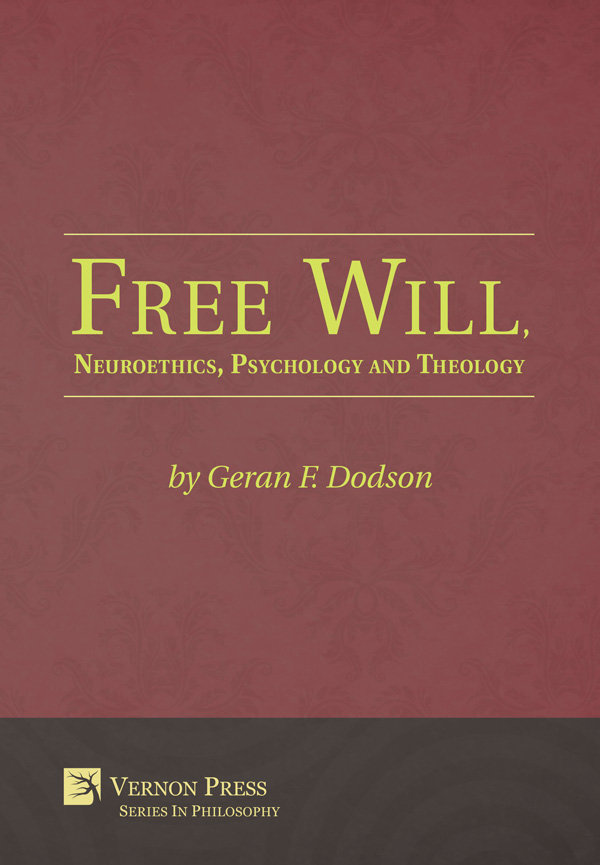
<i>"The relationship of philosophy and theology is a perennial conundrum. Professor Dodson ventures boldly into the dialogue by examining it from a number of different though inter-related viewpoints: Biblical covenants, faith and belief, philosophical and theological ethics, the particular logic of theology, and a number of views of the identity of God. In addition to religious and philosophical ideas, he effectively brings psychology and sociology into the conversation. This sounds complex, and it is. But Dodson also manages to make this discussion accessible to laypersons interested in these issues, especially those who want to think more seriously and reflectively about religious faith and are dissatisfied with Biblical literalism and uncritical theological pronouncements. The book gives such readers tools to assist in that struggle by synthesizing many important perspectives and exploring practical illustrations."</i>
Joseph T. Reiff, Floyd Bunyan Shelton Professor of Religion
Emory & Henry College
<i>"The author has an incredible command of language and uses his understanding of logic and theology to guide the reader on a journey through the biblical covenants with God. There is a critical description of the legal, spiritual, and physical aspects of a covenant that helps to contextualize the analysis of God’s promises and the interpretations of God’s relationships with notable figures such as Abraham, Moses and Jesus.
"A clear methodological lens is employed to examine scripture.
"Hermeneutical method in fact is a great choice for this exploration because it traditionally has been associated with the analysis and interpretation of spiritual texts. The author employs the use of logic as a way to understand and interpret the relationship between God and humanity. Each covenant represented a promise, yet there were inconsistencies within the promises. The inconsistencies represent the places where logic ends and religious faith ensues. It was particularly interesting to review the differences between individual covenants and generational covenants. This helped to explain the legacy of Israel and the assumed divine rights that stem from their generational covenant with God. In the end, the reader is cast into an open sea of possibilities to dissect the nature of belief and the human desire to have a connection with God.
"The text would appeal to an intellectual audience, scholarly as well as religious community; along with an average person who enjoys philosophical debate. The analysis is intriguing and could spark great philosophical debate that could serve to influence religious research and enhance biblical understanding for theologians."</i>
Stephanie J. Hawkins, PhD
Director of Teaching & Learning MAT
<i>"[...]The work is helpful for those who want to begin their own reconciliation of reason and Christianity, or religions in general, by challenging conventions people take for granted with either."</i>
Charles Rozier
Philosophy Instructor University of North Georgia
<i>"Dodson’s approach to the relationship between philosophy and theology emphasizes ethics and reason. He challenges the reader to think objectively about traditional theological claims and to apply ethical reasoning in examining such claims. The clash between philosophy and theology is most evident when theological assumptions of divine insight are assessed from this philosophical perspective. With wide-ranging research and sound exegetical methodology, he begins with the covenants of the Old Testament, weaves his way through the gospels and writings of Paul, and argues for the establishment of the Jesus Covenant as the final covenant in the relationship between God and humanity.
"In the process, he treats us to a detailed analysis of the use of logic in scripture and the challenges deductive reasoning provide for proof of the existence of God. The sections dealing with the origin and identity of God are backed up with sound scholarship and firmly establish his perspective as to the origin, nature, and identity of the Biblical God. His writing, although technical at times, is clear; the text flows smoothly from one subject to another, and the stated purpose is achieved in all respects.
"This is a must read for anyone seeking a deeper understanding of a philosophical approach to understanding theology."</i>
Mary Rose Kasraie, PhD
Cobb County Campus Strayer University
Discover books that expand on the themes explored in this work—titles that engage with similar questions, intersecting disciplines, and complementary perspectives to deepen understanding and broaden the conversation.
Browse all titles