Loading...
Please wait while we load the content...

Loading...
Please wait while we load the content...
Stay informed about our latest publications, calls for proposals, and special announcements. As a subscriber, you'll also enjoy exclusive member discounts of 10%-20% on all orders. Join our community of scholars, librarians, and readers today.


Availability
In stock
ISBN
9781622736188
Edition
1
Publication Date
December 4, 2019
Physical Size
236mm x 160mm
Illustrations
38 Color
Number of Pages
316
Currency
Quantity
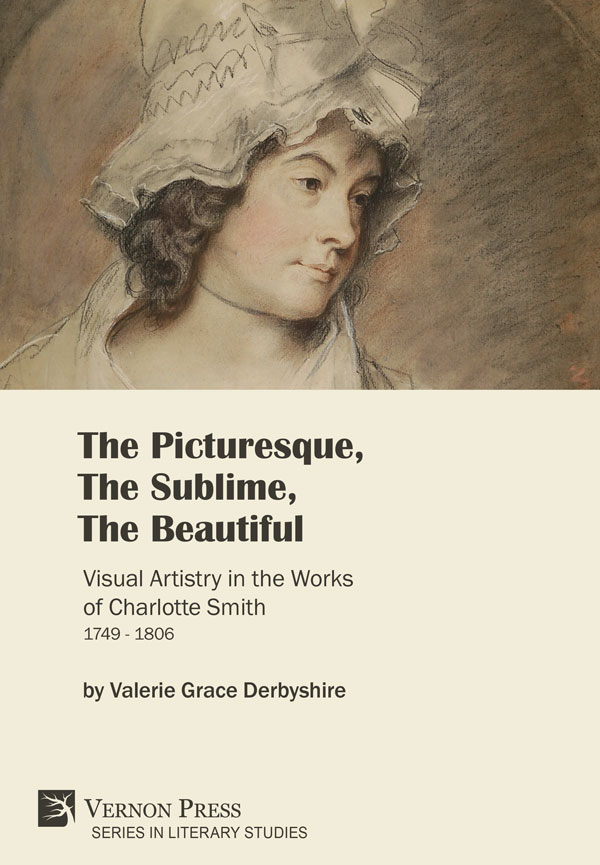
An informative and entertaining research study which provides innovative readings of eighteenth-century artistry. The scholarship is robust and rigorous with detailed interpretations of the art of George Romney and James Northcote amongst others.
Stephen Ward
Stephen Ward Art
Valerie Derbyshire’s book takes a relatively rare critical approach: she charts the links between Charlotte Smith’s novels, poems and children’s books and the work of contemporary painters and designers. Her close readings elicit a rich, detailed interchange between Smith’s peopled landscape descriptions, new to the novel, and the picturesque landscapes of painters she knew, often personally. They delineate like her the cruelty and injustice inherent in pretty or sublime English scenes.
The novelist and the artists share a social and political sensibility. The many significant paintings Derbyshire identifies carry an important commentary on poverty, on women or family in codes well understood throughout Smith’s society. One of the best landscape artists of her time, forgotten now, taught her drawing as a child and so helped to form the way she saw the world around her.
Botanical drawing and colouring, then an important genre, is the subject of some of Smith’s elegiac sonnets, especially those on the death of her daughter. In these sonnets, the fleshiness and downiness of plants, the bloom on the young female face, escape the usual women-and-flowers banalities and testify to the Darwinian likeness of all living species. One of the most incisive parts of the book is its discussion of heraldry, a much more familiar index of identity in Smith’s time than it is today. Derbyshire enjoys Smith’s talent for radical debunking, for showing heraldic design with its cartoon wyverns and griffins as an entirely fictional narrative about the origins and importance of noble families.
The more deeply Derbyshire reads the paintings and designs in relation to Smith’s writing, the more clearly Smith emerges as one of the most powerful and erudite thinkers of her time. Visual Artistry is lavishly illustrated, so the reader is able to join in the pleasures of comparison. For all scholars and general readers interested in Charlotte Smith, in British Romanticism or in the aesthetics and politics of the later eighteenth century, this book is indispensable.
Loraine Fletcher
Author of the book "Charlotte Smith: A Critical Biography"
With such insightful pairings and analyses, Derbyshire’s book is a valuable resource for students and scholars of Charlotte Smith, as well as those interested in the confluences of visual art and fiction during the Romantic age. By drawing the critical eye to Smith’s personal artistic networks, Derbyshire shows how novelistic artistry allows Smith to question dominant narratives, redefine women’s roles, and expose the artificial inequities of eighteenth-century British society. Most importantly, this book demonstrates Smith’s deep and lasting effect on the way women’s stories are told during the Romantic age and beyond.
[Extract from book review appearing on the journal 'Tulsa Studies in Women’s Literature' (41.2), Fall 2022 issue. Reviewer: Rachael Isom (Arkansas State University)]
Discover books that expand on the themes explored in this work—titles that engage with similar questions, intersecting disciplines, and complementary perspectives to deepen understanding and broaden the conversation.
Browse all titles
Adam Bednarczyk and Magdalena Kubarek (Eds.)
View more