Loading...
Please wait while we load the content...

Loading...
Please wait while we load the content...
Stay informed about our latest publications, calls for proposals, and special announcements. As a subscriber, you'll also enjoy exclusive member discounts of 10%-20% on all orders. Join our community of scholars, librarians, and readers today.
Availability
In stock
ISBN
9798261600572
Edition
1
Publication Date
June 16, 2026
Physical Size
236mm x 160mm
Illustrations
3 Color
Number of Pages
280
Currency
Quantity
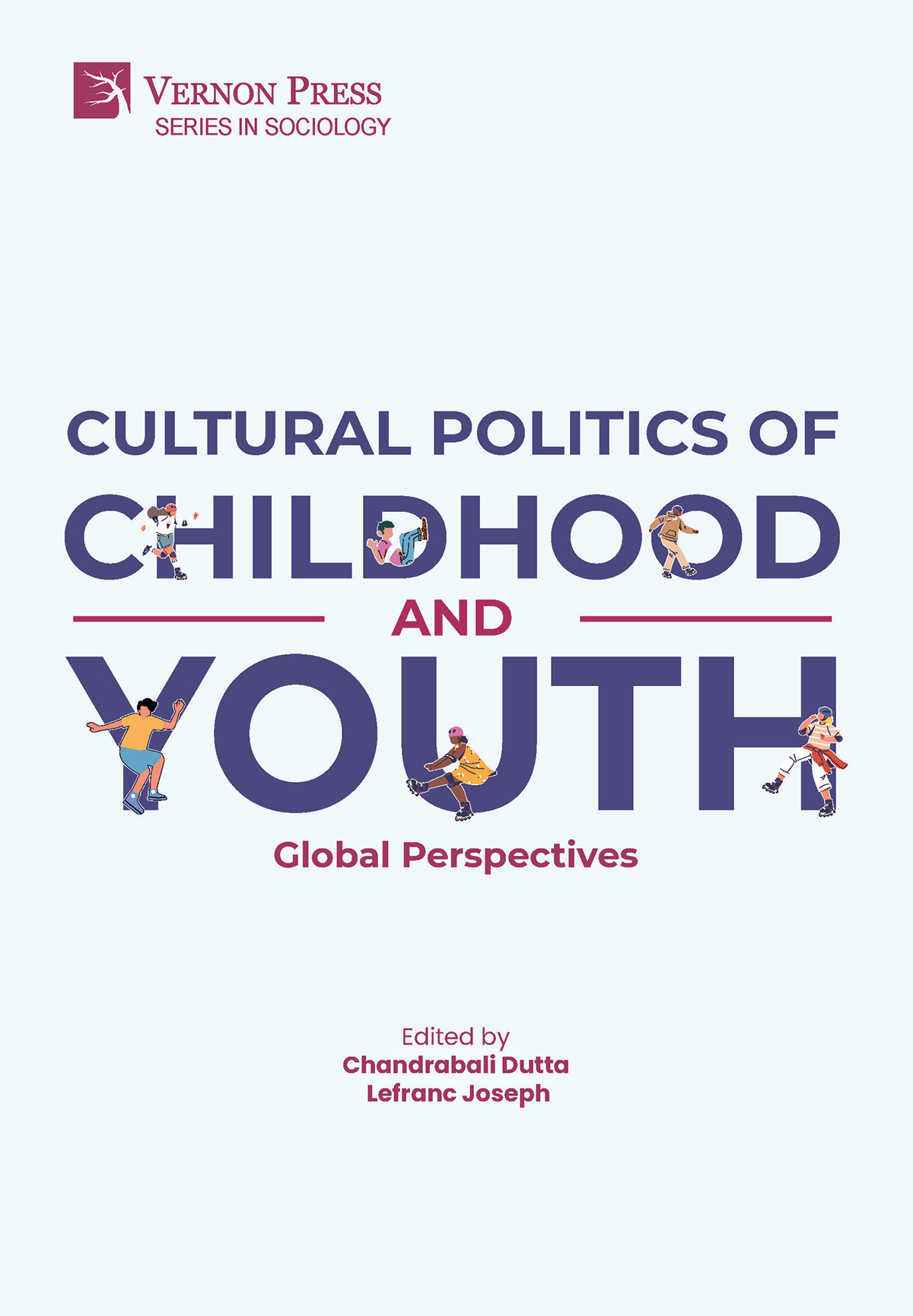
This work offers a comprehensive exploration of how childhood and youth are understood within contemporary social theory, emphasizing the major intellectual shifts that have transformed these fields over the past three decades. Moving beyond traditional developmental perspectives that portrayed children as passive recipients of socialization and youth as a brief transition to adulthood, the text draws on the “new social studies of childhood” and critical youth studies to argue that both childhood and youth are socially constructed categories. Rather than universal or biologically fixed stages, they are shaped by historical contexts, institutional arrangements, and unequal power relations. Central to the analysis is the concept of cultural politics, which highlights how meanings, identities, and representations of children and young people are produced, circulated, and contested. The work demonstrates how media narratives, state policies, educational systems, and global market forces frame childhood and youth in contradictory ways—at times idealizing them as innocent and hopeful, and at other times depicting them as deviant, risky, or problematic. Such representations are shown to reflect broader ideologies of nationhood, gender, modernity, and economic productivity. The text further underscores the importance of intersectionality, explaining how class, caste, race, gender, sexuality, disability, language, and nationality intersect to shape diverse and unequal experiences of growing up. It also examines the impact of globalization, neoliberal economic restructuring, migration, and digital technologies in reshaping young lives, generating both new opportunities and new vulnerabilities. Importantly, the work foregrounds agency, emphasizing that children and youth actively negotiate, reinterpret, and sometimes resist structural constraints in everyday contexts. By integrating insights from sociology, education, psychology, and cultural studies, the volume advances an interdisciplinary, decolonial, and context-sensitive framework for understanding the complex realities of childhood and youth in contemporary societies.
Discover books that expand on the themes explored in this work—titles that engage with similar questions, intersecting disciplines, and complementary perspectives to deepen understanding and broaden the conversation.
Browse all titles
Frank Jacob and Verena Bernardi (Eds.)
View more
Steve Gennaro and Blair Miller (Eds.)
View more