Loading...
Please wait while we load the content...

Loading...
Please wait while we load the content...
Stay informed about our latest publications, calls for proposals, and special announcements. As a subscriber, you'll also enjoy exclusive member discounts of 10%-20% on all orders. Join our community of scholars, librarians, and readers today.


Availability
In stock
ISBN
9781648898440
Edition
1
Publication Date
March 19, 2024
Physical Size
236mm x 160mm
Illustrations
20 Color
Number of Pages
242
Currency
Quantity
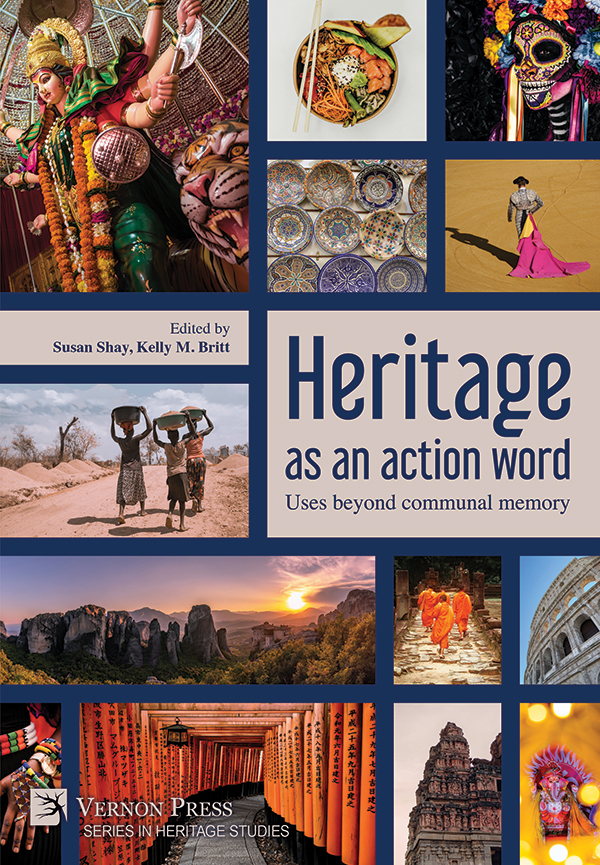
There is no limit to what constitutes heritage. By definition, heritage is the use of the past for present purposes. Yet, to any given group or population, heritage can be a multitude of things and can serve a variety of purposes. Based on shared memory, heritage can be tangible or intangible, boundless in variety and scope: it can be, for example, objects, landscapes, food or clothing, music or dance, sites or statues, monuments or buildings. Importantly, however, heritage also has many and varied uses and powers. It can be used to control, to unite, to engage, and to empower people, communities, and nations. In this interdisciplinary volume, authors from around the world explore how different communities, nations, and groups intentionally and creatively use heritage, both tangible and intangible, in a wide variety of ways to positively address social and environmental issues. Significantly, these studies demonstrate how heritage can be an exceptionally valuable tool for political, economic, and social change. Insightful studies are presented pertaining to heritage as social memory, including the nationalistic political use of heritage, heritage as resistance to political powers, traditional knowledge as environmental science, heritage for legal and community action, heritage for building peace, heritage for Indigenous and minority empowerment, and heritage for exploring the past through phenomenological methods. The goal of this volume is to move beyond seeing heritage as only social memory, a mere interpretation of static past events, people or places, and instead explores critically the variety of ways heritage is engaged in the present and can be in the future.
Discover books that expand on the themes explored in this work—titles that engage with similar questions, intersecting disciplines, and complementary perspectives to deepen understanding and broaden the conversation.
Browse all titles
Lee Davidson and Leticia Pérez-Castellanos
View more