Loading...
Please wait while we load the content...

Loading...
Please wait while we load the content...
Stay informed about our latest publications, calls for proposals, and special announcements. As a subscriber, you'll also enjoy exclusive member discounts of 10%-20% on all orders. Join our community of scholars, librarians, and readers today.


Availability
In stock
ISBN
9781648897900
Edition
1
Publication Date
January 2, 2024
Physical Size
236mm x 160mm
Number of Pages
138
Currency
Quantity
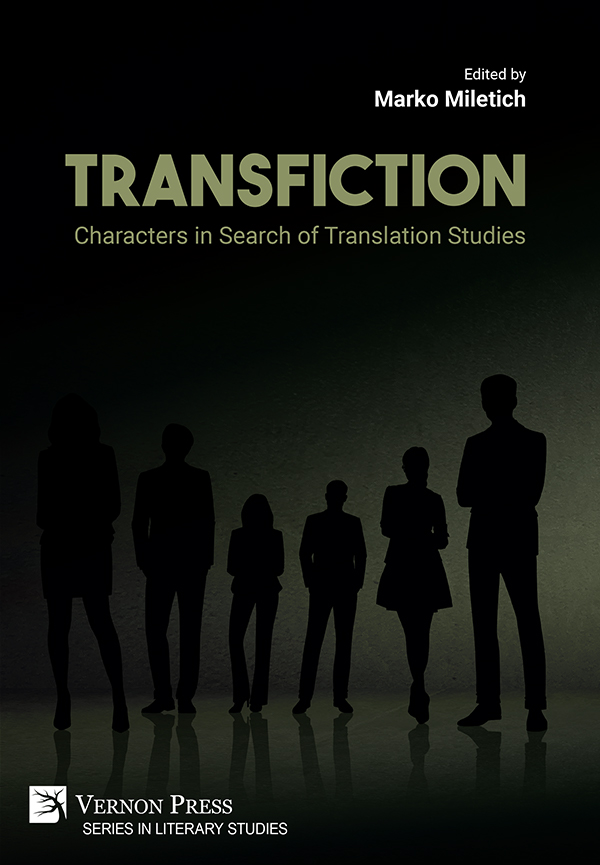
Miletich and colleagues have provided translation studies with a unique and canonical contribution, particularly in matters of interpreter and translator (in)visibility as well in its valuable insights into the elusive nature of language and subjectivities. It is in the latter distinction that we discern an emergent transglobal and transdisciplinary strand that is of paramount importance to humanities scholarship.
Reading these well-crafted investigations of authors’ aestheticized accounts of translators and interpreters, one is transfixed by the possibility that all that we are and say ultimately owes a debt to translated and interpreted language that precedes and follows us.
Dr. Mark K. Warford
Associate Professor, Spanish
Modern and Classical Languages
Open SUNY Fellow, Research and Innovation
Buffalo State University (SUNY)
This carefully assembled collection of articles explores the intricacies of transfiction and its reach both as a literary genre and translation theory. The six chapters comprising the series, masterfully selected by Marko Miletich from a NeMLA conference panel he organized in 2022, serve as useful reference points to start a fruitful critical conversation spanning multiple disciplines in the Humanities, all bound together by an intrinsic awareness of the levels of intersectionality present in translation, fiction, and beyond. By expanding the geographical scope of the source materials, the book offers an inclusive cultural spectrum not often found in similar publications. Tensions such as north and south of the border, Eastern and Western representations, self and otherness are explored from multiple perspectives. Scholars and students interested in transfiction as a subdiscipline in translation studies will find here an important contribution to the field.
Dr. Raúl A. Galoppe
Professor, Spanish and Latino Studies
Montclaire State University
This volume makes stimulating inroads into the largely unexplored territory of ‘transfiction,’ an area within the discipline of translation studies that investigates the presence of translations and translators as characters in literary works. Translations have been used throughout literary history as devices to introduce texts of unknown origin into the fictional plot or even as a justification for the existence of the literary work itself. Also, the presence of translators and interpreters in literary works often lends itself to considerations that stretch beyond the mechanics of narration, of characters “doing things for the plot,” posing themselves instead as epistemological steppingstones for reflections about meaning, communication, information manipulation, cultural identities, in-betweenness, and the reading of human endeavors from the liminal spaces of text and text production. From Don Quixote’s fictional textual origin in the translations of an old manuscript, to more contemporary works by authors like Borges or Italo Calvino, translations and translators as fictional objects and characters in literary works have long needed a systematized, cross-sectional study that transcends the boundaries of the individual author, short story, novel, or the national literary tradition where they appear. The multifaceted array of case studies presented in Miletich’s edited monograph is proof that the seminal works of Rosemary Arrojo (“Fictional Translators”: 2018), which arguably was the first attempt to systematize such study, has quickly gained traction and attention among translation studies and literary scholars alike.
Dr. José Dávila-Montes
Professor of Translation and Interpreting
College of Liberal Arts
The University of Texas Rio Grande Valley
It provides ample demonstration that the translator/interpreter is not a secondary and invisible being, but a "social being" who can and should intervene in the translation/interpreting as modern scholarship (also amply documented here) requires that they do.
This book shows that, partly as a result of this recognition, there has been a remarkable increase in translators and interpreters as protagonists in literature and film. Such literary representation is evidence of this volume's strong and convincing claim that translators and interpreters are productive (in fact, indispensable on a universal level) contributors to literature, film, and translation studies.
This volume summarizes and complements previous work in transfiction and translation studies and could be used as a valuable textbook in those areas.
It provides a framework for inquiry into issues, concepts, and themes related to translation studies.
It includes representative studies of translatorial acts written by language professionals searching and researching approaches to translation studies.
It highlights the interpretive and creative processes which are outcomes of translation.
It helps to define translators and interpreters as characters with traits that define them socially, emotionally, and psychologically as complex individuals.
All the essays in this volume provide evidence the translators/interpreters' "invisibility" or "visibility" in the act of translation or interpreting must be evaluated in accordance with their individual agency as they wrestle with issues of editing, ethics, (in)fidelity, gender, impartiality, manipulation, power struggles, translatability and writing.
As the translation theorist G. Toury advocated, this volume is "solution-oriented" rather than "problem-oriented" as it showcases successful performances by "visible" translators and interpreters.
This volume thus questions and upends "Norms of invisibility and neutrality" still unquestioningly imposed at times and advocates for activism to redress wrongs.
It includes calls for accountability in the ways that translators and interpreters are often used and abused.
There is no doubt in my mind that this volume will positively impact this field of studies and appeal to the various and numerous audiences associated with it. It is highly original and superbly researched. I have only the highest praise for this volume.
Prof. Dr. Rafika Merini
Department of Modern and Classical Languages
Buffalo State University
[...] through furnishing the reader with six insightful and detailed analyses of fictional depictions of translators and interpreters in contemporary literature, this succinct and accessible edited collection will certainly be of broad appeal to scholars with research interests in literary and translation studies.
[Extract from book review on on the 'Transylvanian Journal of Multidisciplinary Research in Humanities', Volume XXX (2025), no. 1. Reviewer: Antony Hoyte-West. DOI: https://doi.org/10.26424/philobib.2025.30.2.21]
Discover books that expand on the themes explored in this work—titles that engage with similar questions, intersecting disciplines, and complementary perspectives to deepen understanding and broaden the conversation.
Browse all titles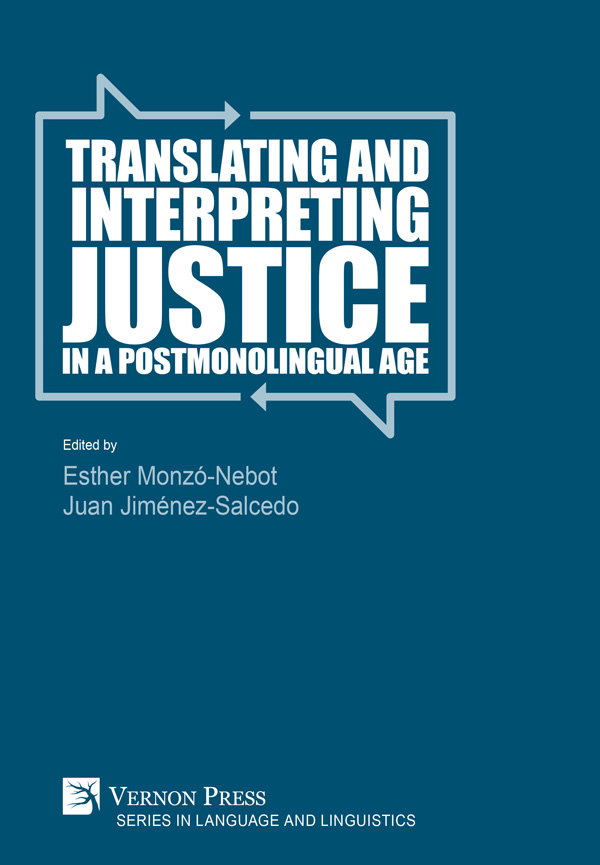
Esther Monzó-Nebot and Juan Jiménez Salcedo (Eds.)
View more
Csilla Szabó, Rita Besznyák, and Márta Fischer (Eds.)
View more
Frank Jacob and Bruno Surace (Eds.)
View more