Loading...
Please wait while we load the content...

Loading...
Please wait while we load the content...
Stay informed about our latest publications, calls for proposals, and special announcements. As a subscriber, you'll also enjoy exclusive member discounts of 10%-20% on all orders. Join our community of scholars, librarians, and readers today.


Availability
In stock
ISBN
9781622730711
Edition
1
Publication Date
February 28, 2018
Physical Size
236mm x 160mm
Number of Pages
214
Currency
Quantity
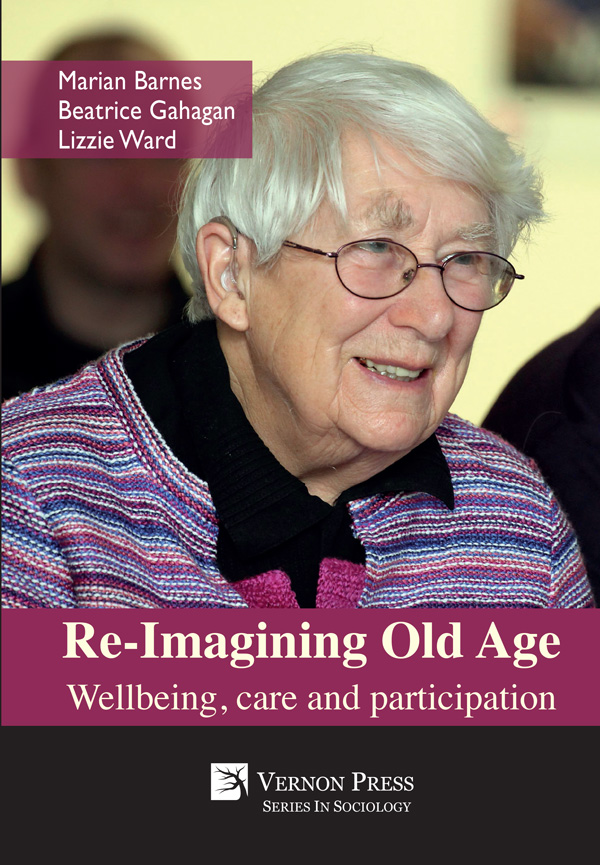
‘Re-imagining Old Age’ is an engaging account of a research project aimed at discerning what wellbeing means to older people. The subjects are re-imagined not as passive vessels of answers, but as capable of giving voice to the complex sensibility and shifting circumstances of their lives. The significance of this stems from the glaring contrast with an assessment industry that puts in place individualized subjects who communicate the dimensions of wellbeing at a considerable distance from lived experience.
The project is enriched by an ethic of care perspective and by what is called a “relational ontology,” that challenges the neo-liberal construct of autonomous individuals. Taking on board “the participatory turn” in social science, the relational is extended to research practice, moving beyond the philosophical by bringing older people into the project as working partners. Additional significance derives from further contrast with the assessment industry’s cultivated distance between researchers and their subjects, which in my view is methodologically misguided. It unwittingly valorizes scientistic over scientific reasoning.
‘Re-imagining Old Age’ welcomes the reader to a remarkably more complex world. Its older subjects are a lived mélange of the simultaneously material and immaterial, the coherent and fractured, the independent and dependent, the active and inactive, the hopeful and desperate, and being well enough as much as being well. These and more are the ingredients of an exhilarating and informative book.
Jaber F. Gubrium
Department of Sociology, University of Missouri
This book is an excellent account of the theoretical development and practical application of the ethics of care, which is of emerging interest across disciplines. Reporting on ageing and wellbeing research between the authors over a number of years, in-depth issues are identified in empirical work with older people about care.
This significant scholarship provides new knowledge about wellbeing as told by older people and interpreted through a care ethics lens. There is a new contextualised understanding of wellbeing that includes a relational element to challenge standardised definitions, and recommendations for policy and practice changes to improve the wellbeing of older people.
This book is innovative yet grounded, able to reach both practitioners and researchers, and comprehensive in its novel yet situated approach to developing and renewing the understanding of wellbeing in old age. Its strength is that the voices of older people are consistently drawn upon to inform the younger generation of how to think about the issues of wellbeing in older age.
Dr. Tula Brannelly,
Faculty of Health and Social Sciences, Bournemouth University, UK
Discover books that expand on the themes explored in this work—titles that engage with similar questions, intersecting disciplines, and complementary perspectives to deepen understanding and broaden the conversation.
Browse all titles
Beverley A. Searle (Ed.)
View more