Loading...
Please wait while we load the content...

Loading...
Please wait while we load the content...
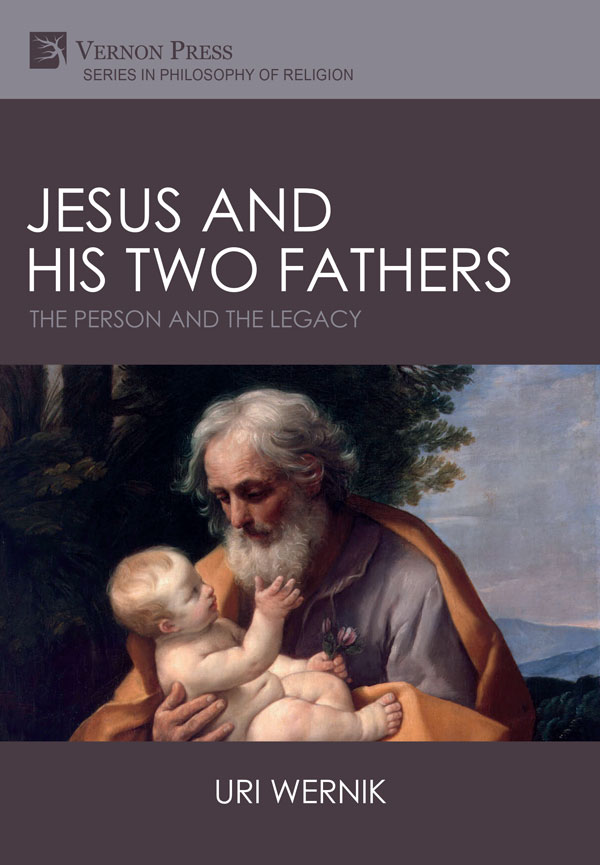
Uri Wernik
Who was Jesus in real life? What inspired his ideas? What did he aim to achieve? What drew his disciples to him? How was he influenced by them? Unlike the many “quests for the historical Jesus”, as a psychologist, Wernik answers these questions from the perspectives of psychology and the social sciences. This book’s central axis is the theme of the father. It looks at the family constellation into which Jesus was born, where he was raised by a stepfather. It also investigates the relationship he develops with God, his father in heaven; and examines how he became a father figure to his disciples and followers. It is hoped that readers will also think about their own father when reading, the one usually called “dad”. Jesus and His Two Fathers sees Jesus’ love of peace and appeasement doctrine, as well as his difficulty with anger control, in the context of his upbringing and family constellation. Wernik offers a solution to the problem of the “missing years” which were unaccounted in the New Testament. He examines the internal conflicts in Jesus’ movement, and the tensions with the religious establishment, which led to his death. Jesus did not see himself as the Messiah, and Wernik shows him in fact as a great reformer of Judaism, who changed the notions of righteousness, the relation of the believers to God, and the status of the commandments. This book will be of interest to scholars, teachers and students in the humanities and social sciences, among others in the fields of religion, especially Christianity and Judaism. It is aimed at interested discerning readers of non-fiction in these areas.
The Psychology of the Psychologist
Uri Wernik
"Nietzsche Trauma and Overcoming " shows that Nietzsche suffered from Post-Traumatic Stress Disorder, and most probably was a victim of childhood sex abuse. I bring convincing evidence from his texts to support these claims, along with a discussion of corroborating psychological findings on these issues. I show that he teaches coping with pain and suffering, based on his life experience, with lessons from the school of war, the wisdom of reinterpretation, and artistic activity. His three themes of the Superman, Eternal Recurrence, and the Will to Power, the heart of his philosophy and psychology, are understood in a new light, in relation to his personal suffering and overcoming. The book criticizes the attempts to diagnose Nietzsche as suffering from various psychiatric disorders, psychoanalyze him as a fatherless child grown old, and outing him as a closet homosexual. These approaches lead to a dead-end. Firstly, it is impossible to prove that someone is a paragon of mental health, not a covert homosexual, and unmoved by a parent’s death. Secondly, these speculations explain only a small part of Nietzsche’s personal statements, found in his writings. Thirdly, and most importantly, they do not change our understanding of his ideas and how they were arrived at; they do not increase our appreciation of him; and do not leave us with any lessons for life (the goal of any good writing according to Nietzsche).