Loading...
Please wait while we load the content...

Loading...
Please wait while we load the content...
Bethel University

Amar Ramesh Wayal, D. Y. Turner, Issei Takehara, Drew Richardson, Alberto Oya, Devon P. Levesque, Martin Lepage, Graham Lee, Tara Etherington, Michelle Chan, Christopher Smith, Barışkan Ünal, Anupama A. P., Steven Foertsch, Kaz Hayashi, Anik Sarkar, and William H. U. Anderson
Anime is exploding on the worldwide stage! Anime has been a staple in Japan for decades, strongly connected to manga. So why has anime become a worldwide sensation? A cursory explanation is the explosion of online streaming services specializing in anime, like Funimation and Crunchyroll. Even more general streaming services like Netflix and Amazon have gotten in on the game. Anime is exotic to Western eyes and culture. That is one of the reasons anime has gained worldwide popularity. This strange aesthetic draws the audience in only to find it is deeper and more sophisticated than its surface appearance. Japan is an honor and shame culture. Anime provides a platform to discuss “universal” problems facing human beings. It does so in an amazing variety of ways and subgenres, and often with a sense of humor. The themes, characters, stories, plotlines, and development are often complex. This makes anime a deep well of philosophical, metaphysical, and religious ideas for analysis. International scholars are represented in this book. There is a diversity of perspectives on a diversity of anime, themes, content, and analysis. It hopes to delve deeper into the complex world of anime and demonstrate why it deserves the respect of scholars and the public alike.
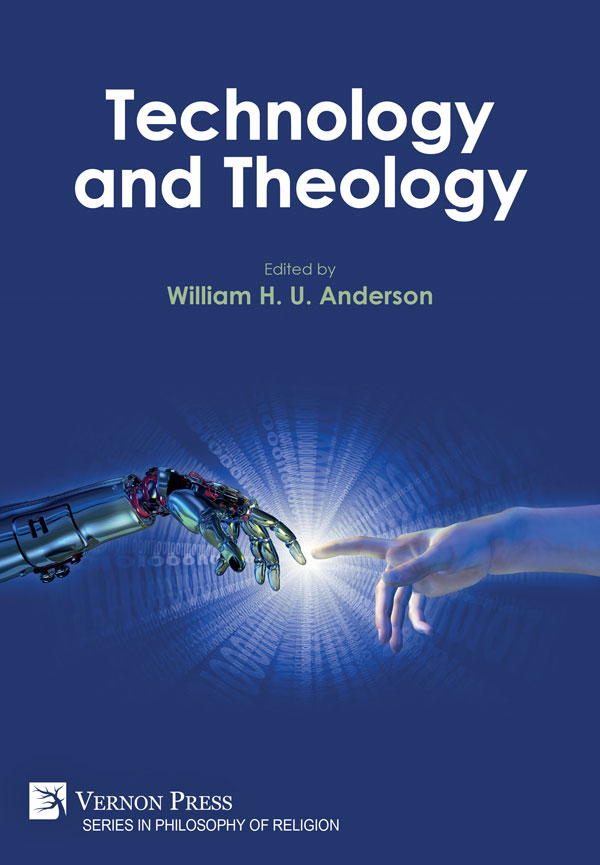
Daniel Nii Aboagye Aryeh, Jonathan Strand, Robb Torseth, John Swann, Grant Poettcker, Aaron Piel, Hazik Mohamed, Justin McLendon, Lucky Mutanga, Robert Matikiti, Adam Lloyd Johnson, Kaz Hayashi, Peter Bush, Cagdas Dedeoglu, John Paul Arceno, and Erin Archer
Technology is growing at an exponential rate vis-à-vis humanity’s ability to control it. Moreover, the numerous ethical issues that technology raises are also troubling. These statements, however, may be alarmist—since Telus would tell us “The Future is Friendly”. The Modernist vision of the future was utopic, for instance Star Trek of the 1960s. But postmodern views, such as are found in Blade Runner 2049, are dystopic. Theology is in a unique interdisciplinary position to deal with the many issues, pro and con, that technology raises. Even theologians like Origen in the third century and Aquinas in the thirteenth century made forays into Artificial Intelligence and surrounding issues (they just didn’t know it at the time). Artificial Intelligence (AI) and Transhumanism raise questions about what it means to be human. What is consciousness? What is soul? What are life and death? Can technology really save us and give us eternal life? Theology is in a unique position to handle these questions and issues. This book also has practical applications in terms of ecclesiology (church) in the context of the COVID-19 pandemic—both in terms of what it means to be a church and in terms of the sacraments or ordinances. Is there such a thing as a “Virtual Church” or must we gather physically to constitute one? Are Baptism and Communion legitimate if one is not physically in a church building but are “online”? This book struggles with these and many other questions which will help the scholar or reader make up their own minds, however tentatively.