Loading...
Please wait while we load the content...

Loading...
Please wait while we load the content...
Uniwersytet Marii Curie-Skłodowskiej w Lublinie, Poland
Jacob Y. Stein, Rivka Tuval-Mashiach, Emma McKenzie, Ssanyu Birigwa, Molly Lindberg, T. S. Kavitha, Preeti Puri, Shefali, Mona Baie, Brooke Covington, Victoria Simpson, Margaux Danby, Nora Simonhjell, Hannah Ming Yit Ho, Arthur W. Frank, Hilde Bondevik, Mark Celinscak, Aaron Smith, Colleen McMillan, John Launer, Astrid Joutseno, Lillian Wilde, Georgia Fagan, Sue Joseph, Annmaree Watharow, Mahesh Sharma, Oddgeir Synnes, Ricardo Rato Rodrigues, Sarah Pini, and Elizabeth Lanphier
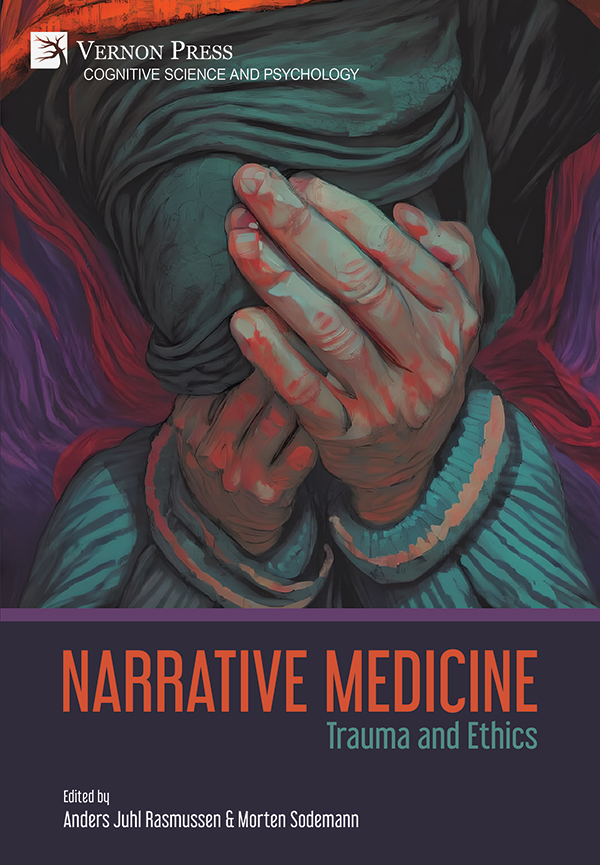
This new volume repositions narrative medicine and trauma studies in a global context with a particular focus on ethics. Trauma is a rapidly growing field of especially literary and cultural studies, and the ways in which trauma has asserted its relevance across disciplines, which intersect with narrative medicine, and how it has come to widen the scope of narrative research and medical practice constitute the principal concerns of this volume. This collection brings together contributions from established and emerging scholars coming from a wide range of academic fields within the faculty of humanities that include literary and media studies, psychology, philosophy, history, anthropology as well as medical education and health care studies. This crossing of disciplines is also represented by the collaboration between the two editors. Most of the authors in the volume use narrative medicine to refer to the methodology pioneered by Rita Charon and her colleagues at Columbia University, but in some chapters, the authors use it to refer to other methodologies and pedagogies utilizing that descriptor. Trauma is today understood both in the restricted sense in which it is used in the mental health field and in its more widespread, popular usage in literature. This collection aspires to prolong, deepen, and advance the field of narrative medicine in two important aspects: by bringing together both the cultural and the clinical side of trauma and by opening the investigation to a truly global horizon.
Ayub Sheik, Tatiana Prorokova, Mohona Banerjee, Ricardo Rato Rodrigues, Anik Sarkar, Ronja Tripp-Bodola, Edward Grimble, Sindiso Zhou, Nhlanhla Landa, Victoria Lupascu, Chloe Leung, Anda Pleniceanu, Jamil Ahmed, Amy W S Lee, Gabriel Quigley, Nadia Boudidah Falfoul, Seunghyun Shin, Meltem Gürle, and Nina Muždeka
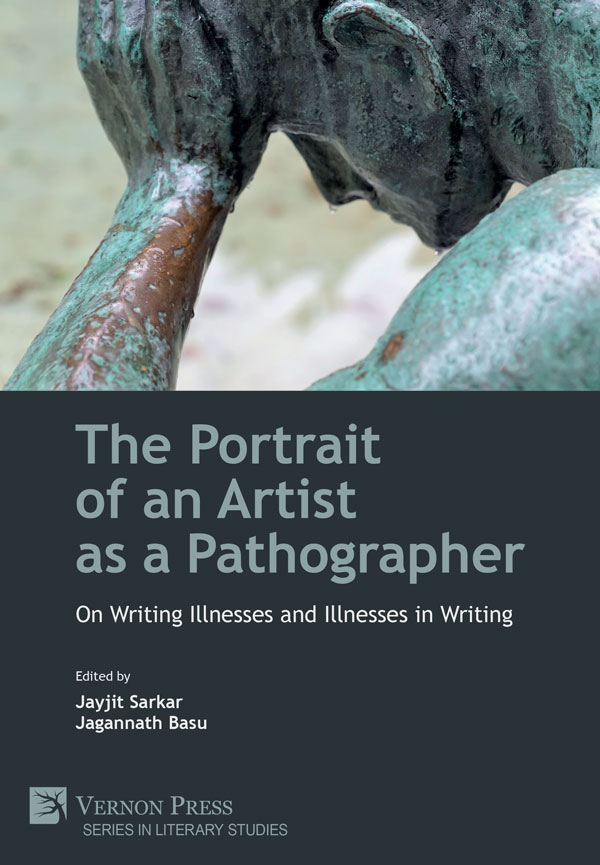
Focusing on the various intersections between illness and literature across time and space, The Portrait of an Artist as a Pathographer seeks to understand how ontological, phenomenological and epistemological experiences of illness have been dealt with and represented in literary writings and literary studies. In this volume, scholars from across the world have come together to understand how the pathological condition of being ill (the sufferers), as well as the pathologists dealing with the ill (the healers and caregivers), have shaped literary works. The language of medical science, with its jargon, and the language of the every day, with its emphasis on utility, prove equally insufficient and futile in capturing the pain and suffering of illness. It is this insufficiency and futility that makes us turn towards the canonical works of Joseph Conrad, Samuel Beckett, William Carlos Williams, Virginia Woolf, Kazuo Ishiguro, Miroslav Holub as well as the non-canonical António Lobo Antunes, Yumemakura Baku, Wopko Jensma and Vaslav Nijinsky. This volume helps in understanding and capturing the metalanguage of illness while presenting us with the tradition of ‘writing pain’. In an effort to expand the definition of pathography to include those who are on the other side of pain, the essays in this collection aim to portray the above-mentioned pathographers as artists, turning the anxiety and suffering of illness into an art form. Looking deeply into such creative aspects of illness, this book also seeks to evoke the possibility of pathography as world literature. This book will be of particular interest to undergraduate, postgraduate and research students, as well as scholars of literature and medical humanities who are interested in the intersections between literary studies and medical science.