Loading...
Please wait while we load the content...

Loading...
Please wait while we load the content...
Salesian College, India

Amar Ramesh Wayal, D. Y. Turner, Issei Takehara, Drew Richardson, Alberto Oya, Devon P. Levesque, Martin Lepage, Graham Lee, Tara Etherington, Michelle Chan, Christopher Smith, Barışkan Ünal, Anupama A. P., Steven Foertsch, Kaz Hayashi, Anik Sarkar, and William H. U. Anderson
Anime is exploding on the worldwide stage! Anime has been a staple in Japan for decades, strongly connected to manga. So why has anime become a worldwide sensation? A cursory explanation is the explosion of online streaming services specializing in anime, like Funimation and Crunchyroll. Even more general streaming services like Netflix and Amazon have gotten in on the game. Anime is exotic to Western eyes and culture. That is one of the reasons anime has gained worldwide popularity. This strange aesthetic draws the audience in only to find it is deeper and more sophisticated than its surface appearance. Japan is an honor and shame culture. Anime provides a platform to discuss “universal” problems facing human beings. It does so in an amazing variety of ways and subgenres, and often with a sense of humor. The themes, characters, stories, plotlines, and development are often complex. This makes anime a deep well of philosophical, metaphysical, and religious ideas for analysis. International scholars are represented in this book. There is a diversity of perspectives on a diversity of anime, themes, content, and analysis. It hopes to delve deeper into the complex world of anime and demonstrate why it deserves the respect of scholars and the public alike.
Ayub Sheik, Mohona Banerjee, Ricardo Rato Rodrigues, Anik Sarkar, Ronja Tripp-Bodola, Edward Grimble, Sindiso Zhou, Nhlanhla Landa, Victoria Lupascu, Nina Muždeka, Anda Pleniceanu, Chloe Leung, Tatiana Prorokova, Meltem Gürle, Seunghyun Shin, Nadia Boudidah Falfoul, Gabriel Quigley, Amy W S Lee, and Jamil Ahmed
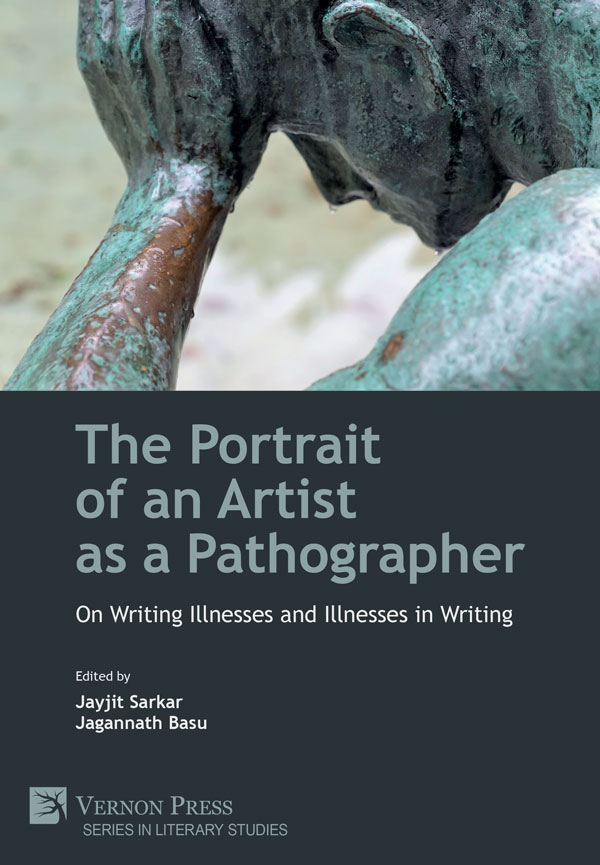
Focusing on the various intersections between illness and literature across time and space, The Portrait of an Artist as a Pathographer seeks to understand how ontological, phenomenological and epistemological experiences of illness have been dealt with and represented in literary writings and literary studies. In this volume, scholars from across the world have come together to understand how the pathological condition of being ill (the sufferers), as well as the pathologists dealing with the ill (the healers and caregivers), have shaped literary works. The language of medical science, with its jargon, and the language of the every day, with its emphasis on utility, prove equally insufficient and futile in capturing the pain and suffering of illness. It is this insufficiency and futility that makes us turn towards the canonical works of Joseph Conrad, Samuel Beckett, William Carlos Williams, Virginia Woolf, Kazuo Ishiguro, Miroslav Holub as well as the non-canonical António Lobo Antunes, Yumemakura Baku, Wopko Jensma and Vaslav Nijinsky. This volume helps in understanding and capturing the metalanguage of illness while presenting us with the tradition of ‘writing pain’. In an effort to expand the definition of pathography to include those who are on the other side of pain, the essays in this collection aim to portray the above-mentioned pathographers as artists, turning the anxiety and suffering of illness into an art form. Looking deeply into such creative aspects of illness, this book also seeks to evoke the possibility of pathography as world literature. This book will be of particular interest to undergraduate, postgraduate and research students, as well as scholars of literature and medical humanities who are interested in the intersections between literary studies and medical science.