Loading...
Please wait while we load the content...

Loading...
Please wait while we load the content...
University of Edinburgh, UK
Brittani Smit, Erin Soros, J. M. Gagnon, Janna Brown, Sonakshi Srivastava, Kritika Sharma, Nicole Turner, Nicole Rizzo, Stevie Scheurich, Kyéra Sterling, Nadia Steven Rysing, Maria Rovito, Riley Clare Valentine, Chloe Leung, Jessica Lowell Mason, and Christina Foisy
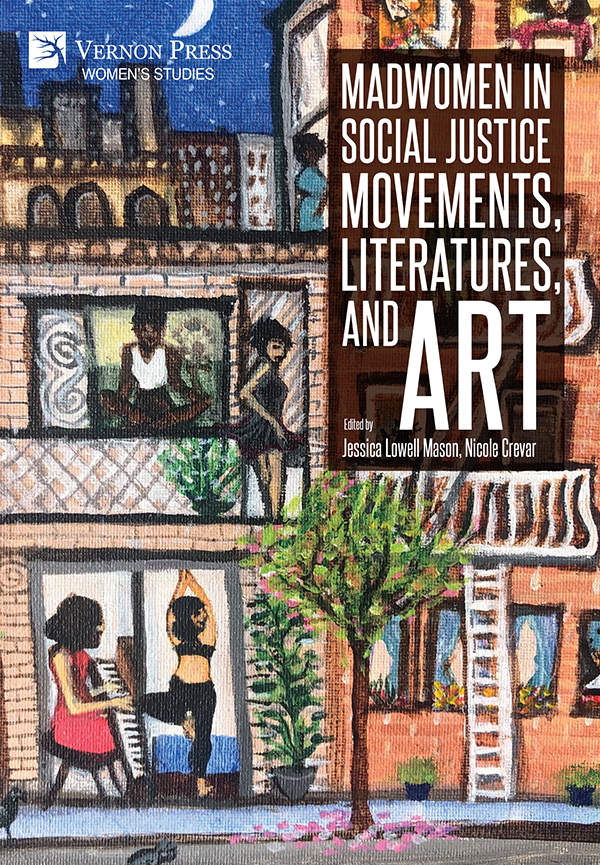
'Madwomen in Social Justice Movements, Literatures, and Art' boldly reasserts the importance of the Madwoman more than four decades after the publication of Sandra Gilbert and Susan Gubar’s seminal work in feminist literary criticism, 'The Madwoman in the Attic'. Since Gilbert and Gubar’s work was published, the Madwoman has reemerged to do important work, rock the academic boat, and ignite social justice agency inside and outside of academic spaces, moving beyond the literary context that defined the Madwoman in the late 20th century. In this dynamic collection of essays, scholars, creative writers, and Mad activists come together to (re)define the Madwoman in pluralistic and expansive ways and to realize new potential in Mad agency. This collection blazes new directions of thinking through Madness as a gendered category, comprised of a combination of creative works that (re)imagine the figure of the Madwoman, speeches in which Mad-identifying artists and writers reclaim the label of “Madwoman,” and scholarly essays that articulate ambitious theories of the Madwoman. The collection is an interdisciplinary scholarly resource that will appeal to multiple academic fields, including literary studies, disability studies, feminist studies, and Mad studies. Additionally, the work contributes to the countermovement against colonial, sanist, patriarchal, and institutional social practices that continue to silence women and confine them to the metaphorical attic. Appealing to a broad audience of readers, 'Madwomen in Social Justice Movements, Literatures, and Art' is a cutting-edge inquiry into the implications of Madness as a theoretical tool in which dissenting, deviant, and abnormal women and gender non-conforming writers, artists, and activists open the door to Mad futurities.
Ayub Sheik, Mohona Banerjee, Ricardo Rato Rodrigues, Anik Sarkar, Ronja Tripp-Bodola, Edward Grimble, Sindiso Zhou, Nhlanhla Landa, Victoria Lupascu, Nina Muždeka, Anda Pleniceanu, Chloe Leung, Tatiana Prorokova, Meltem Gürle, Seunghyun Shin, Nadia Boudidah Falfoul, Gabriel Quigley, Amy W S Lee, and Jamil Ahmed
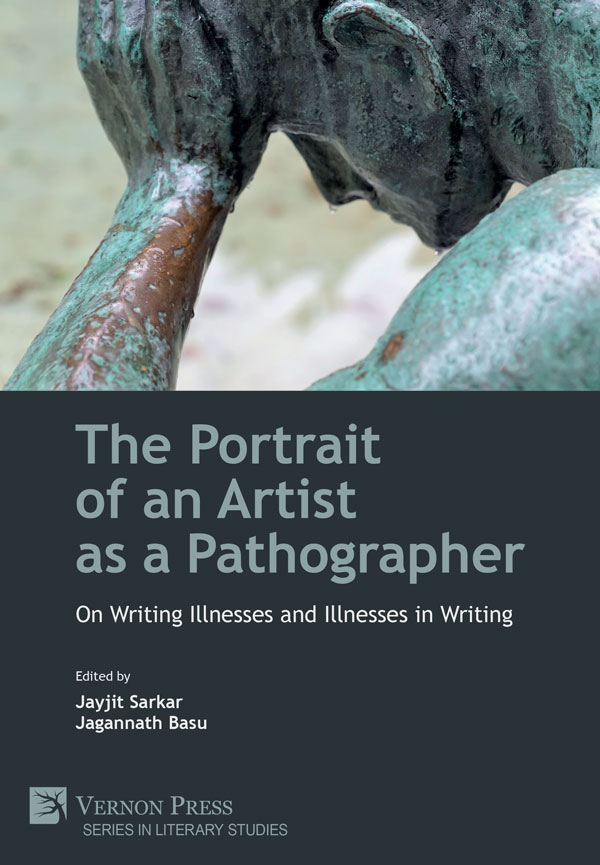
Focusing on the various intersections between illness and literature across time and space, The Portrait of an Artist as a Pathographer seeks to understand how ontological, phenomenological and epistemological experiences of illness have been dealt with and represented in literary writings and literary studies. In this volume, scholars from across the world have come together to understand how the pathological condition of being ill (the sufferers), as well as the pathologists dealing with the ill (the healers and caregivers), have shaped literary works. The language of medical science, with its jargon, and the language of the every day, with its emphasis on utility, prove equally insufficient and futile in capturing the pain and suffering of illness. It is this insufficiency and futility that makes us turn towards the canonical works of Joseph Conrad, Samuel Beckett, William Carlos Williams, Virginia Woolf, Kazuo Ishiguro, Miroslav Holub as well as the non-canonical António Lobo Antunes, Yumemakura Baku, Wopko Jensma and Vaslav Nijinsky. This volume helps in understanding and capturing the metalanguage of illness while presenting us with the tradition of ‘writing pain’. In an effort to expand the definition of pathography to include those who are on the other side of pain, the essays in this collection aim to portray the above-mentioned pathographers as artists, turning the anxiety and suffering of illness into an art form. Looking deeply into such creative aspects of illness, this book also seeks to evoke the possibility of pathography as world literature. This book will be of particular interest to undergraduate, postgraduate and research students, as well as scholars of literature and medical humanities who are interested in the intersections between literary studies and medical science.