Loading...
Please wait while we load the content...

Loading...
Please wait while we load the content...
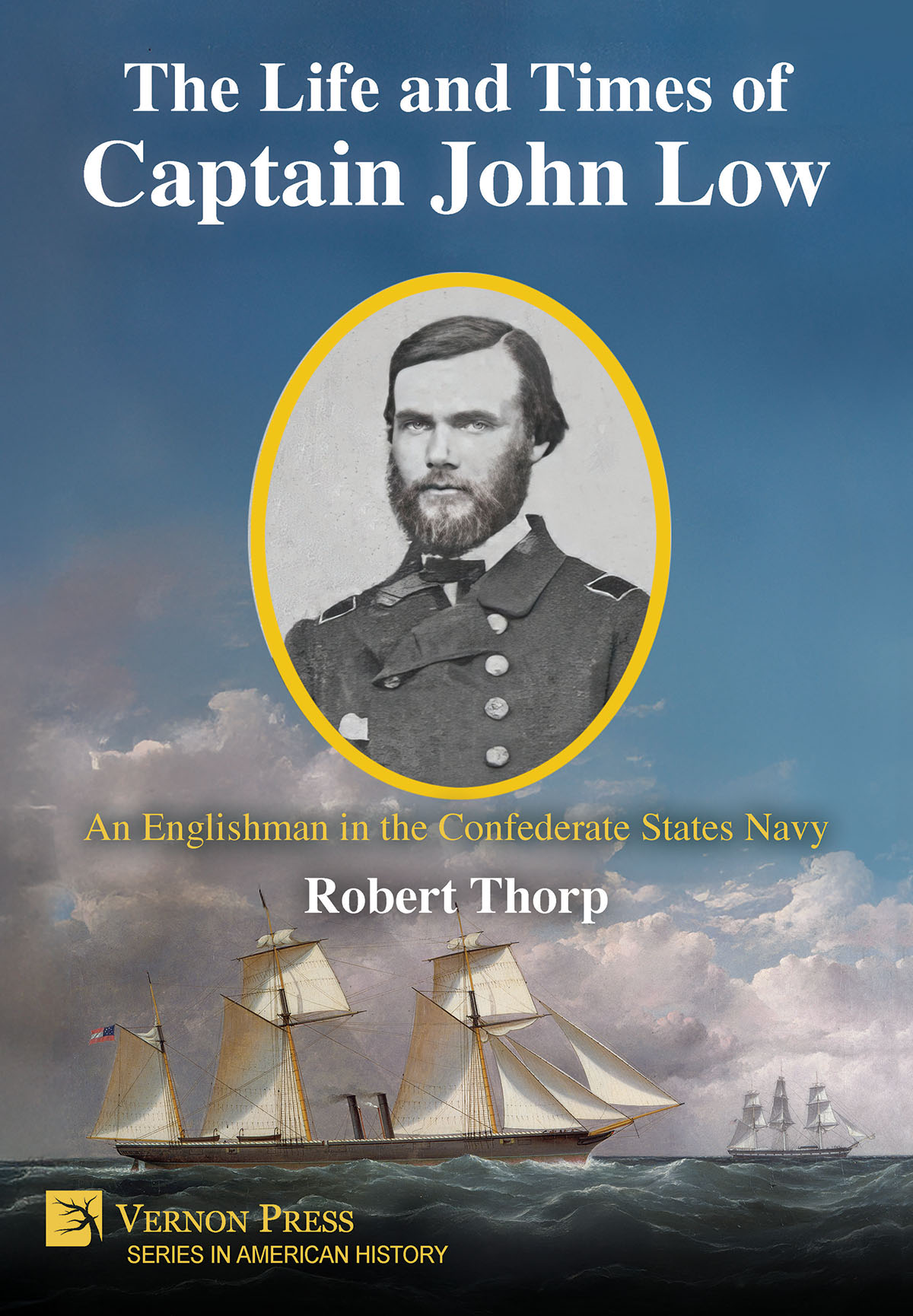
An Englishman in the Confederate States Navy
Robert Thorp
Captain John Low (1836 -1906) earned his place in history through four years of service in the Confederate States Navy (1861-1865). He served on CSS 'Fingal', 'Florida', and 'Alabama', and commanded CSS 'Tuscaloosa' and 'Ajax'. However, it would be wrong to define the man simply by his Civil War record. His seventy-year life was full of adventures, triumphs, tragedies, and altruistic philanthropy. He led a good life and was known as a good man, respected and revered by all who knew him. This book contains a detailed account of Captain Low’s whole life from cradle to grave. Using primary source documents, not available to earlier biographers, the author delves into John Low’s life to a much greater depth than any preceding work has been able to achieve. For the first time ever, his genealogy is fully divulged, allowing previously misunderstood relationships to be challenged and corrected, and the roles of his previously unknown siblings to be fully explored. Description of his military service is based on his personal log books and the eye witness accounts of his contemporaries. Along the way, the book sheds new perspectives on the roles played by his relations, Charles Green and Andrew Low of Savannah, in facilitating purchase of CSS 'Fingal'; it unmasks the mysterious Thomas Byrne, Louisiana’s secret agent, and explains the hitherto unrecognised role of Liverpool’s Isaac, Low & Co. The captain’s post-war life, firstly as a manager of Lancashire cotton mills, and latterly as a successful Liverpool businessman, is similarly illuminated with many previously unwritten facts. Anyone with an interest in Civil War history will find a wealth of new and unique material between these covers. Those who just enjoy a good biography should also be delighted.
Robert Thorp
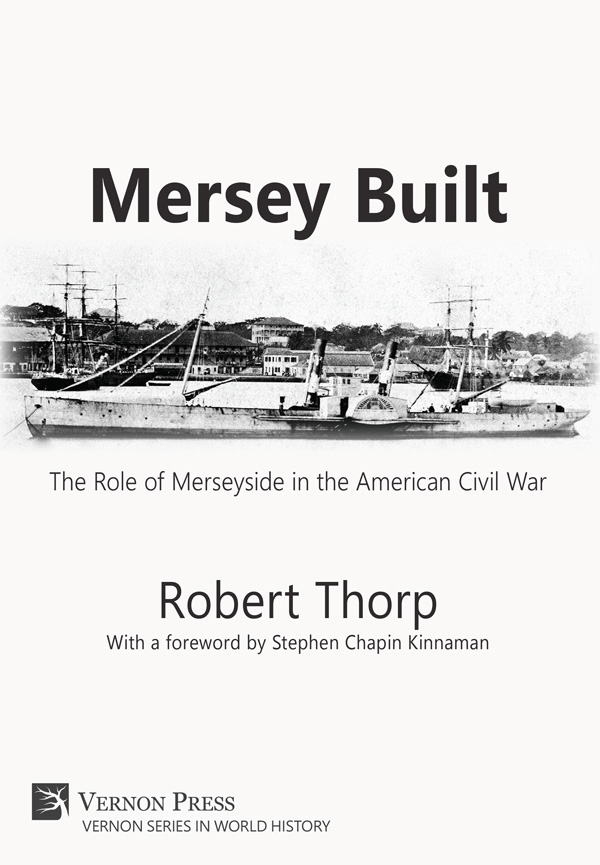
‘Mersey Built’ chronicles the little-known commercial battle that raged between North and South during the American Civil War. The South relied on Europe for its military supplies, which the North tried to stop with a naval blockade of all Southern ports. The South retaliated by destroying Northern merchant ships on the high seas, using war ships, secretly procured from British shipyards and smuggled out of Britain by sympathetic British captains using British crews. The Charleston-based business empire headed by George Trenholm provided a conduit for Confederate finance with its Liverpool branch acting as bankers for the Confederacy’s procurement agents. Merseyside, with its extensive docks and numerous shipyards quickly became the epicenter of Confederate operations in Europe. Several British businessmen bought ships specifically to run supplies through the Union blockade, leaving relationships between the United States and Britain strained, close to breaking point. The book relates the history of Trenholm’s commercial empire, its pre-war expansion into Liverpool and the pivotal role it played in supporting the Confederate war effort. The involvement of other Liverpool-based entrepreneurs and their successes and failures in blockade-running is described. Background histories of the Merseyside ship builders who constructed warships and blockade runners for the Confederacy are included as well as several mini-biographies of the Liverpool-based captains who smuggled out warships and braved the Union blockade. Details of each ship built on Merseyside for involvement in the Civil War are listed. The role of the United States consular service and its extensive, Liverpool-based, spy ring is described, as are the efforts of the United States ambassador in London to influence British government policy on neutrality. The author, a direct descendant of a Liverpool ship builder, and a blockade-running captain, brings new insights and previously unpublished facts to light in this fascinating chapter of history.
Robert Thorp
‘Mersey Built’ chronicles the little-known commercial battle that raged between North and South during the American Civil War. The South relied on Europe for its military supplies, which the North tried to stop with a naval blockade of all Southern ports. The South retaliated by destroying Northern merchant ships on the high seas, using war ships, secretly procured from British shipyards and smuggled out of Britain by sympathetic British captains using British crews. The Charleston-based business empire headed by George Trenholm provided a conduit for Confederate finance with its Liverpool branch acting as bankers for the Confederacy’s procurement agents. Merseyside, with its extensive docks and numerous shipyards quickly became the epicenter of Confederate operations in Europe. Several British businessmen bought ships specifically to run supplies through the Union blockade, leaving relationships between the United States and Britain strained, close to breaking point. The book relates the history of Trenholm’s commercial empire, its pre-war expansion into Liverpool and the pivotal role it played in supporting the Confederate war effort. The involvement of other Liverpool-based entrepreneurs and their successes and failures in blockade-running is described. Background histories of the Merseyside ship builders who constructed warships and blockade runners for the Confederacy are included as well as several mini-biographies of the Liverpool-based captains who smuggled out warships and braved the Union blockade. Details of each ship built on Merseyside for involvement in the Civil War are listed. The role of the United States consular service and its extensive, Liverpool-based, spy ring is described, as are the efforts of the United States ambassador in London to influence British government policy on neutrality. The author, a direct descendant of a Liverpool ship builder, and a blockade-running captain, brings new insights and previously unpublished facts to light in this fascinating chapter of history.