Loading...
Please wait while we load the content...

Loading...
Please wait while we load the content...
Boise State University
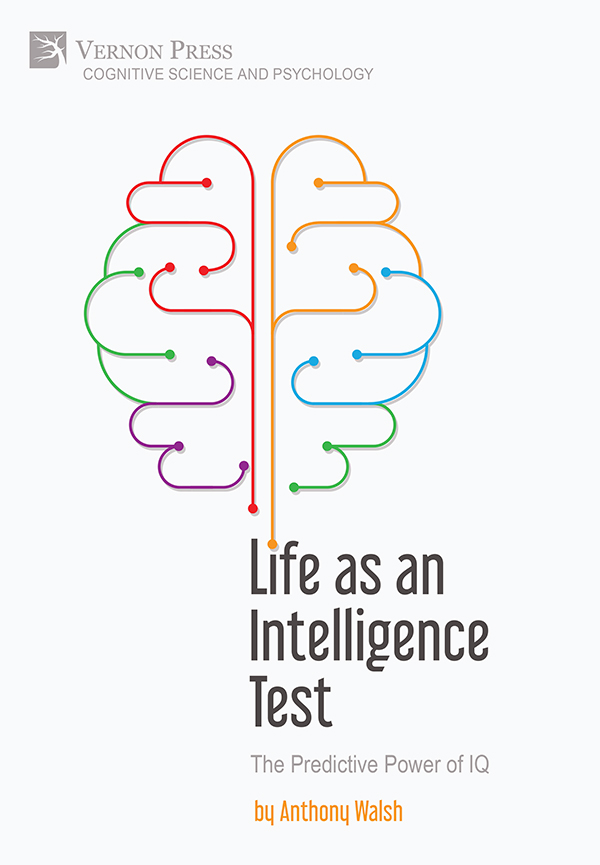
Anthony Walsh
This book examines intelligence as it applies to various facets of human life. It explores the evolutionary origin of intelligence and the genetics and neurobiology of intelligence. Every human being is intelligent, but some are more intelligent than others. We know this both by observing different people’s behavior and position in life and by their different intelligence quotient (IQ) scores. Most of the business of life can be conducted on a basis of habit, with little need for exceptional intelligence, which is irrelevant for many day-to-day pursuits. However, people of higher intelligence do much better in life than those of lower intelligence in so many ways. They attain higher social class, better physical and mental health, are less likely to be criminals, and many other things. IQ tests measure different cognitive abilities, but there is a factor common to them all that psychometricians call Spearman's g, or simply g. What this means is that in tasks that tax the brain, however different they may be from one another, if a person is good at one mental task, he or she is likely to be good at others, although not necessarily to the same degree.
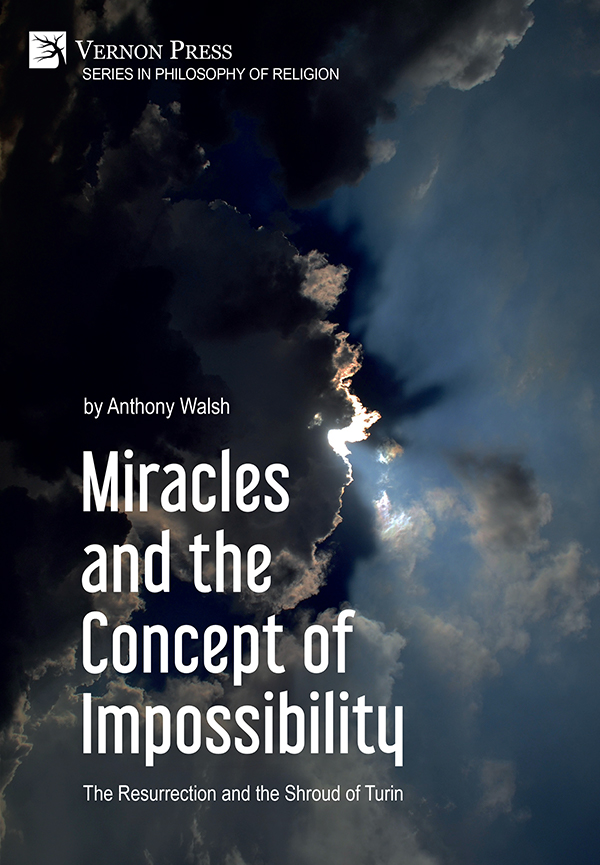
Anthony Walsh
'Miracles and the Concept of Impossibility' takes a fresh look at the miracle of the resurrection of Jesus. A miracle is inexplicable by the methods of science and thus deemed impossible. I examine the concept of impossibility with primary reference to David Hume’s notion that there is a boundary of probability beyond which the improbable becomes the impossible, calculated at 10150. Physicists have declared that the universe is inevitable and, at the same time, impossible. Its inevitability is obvious, but the mind-boggling improbability that a biocentric universe exists vastly exceeds the probability boundary. If a miracle is defined as an impossibility, the universe is a miracle. The origin of life is just as miraculously impossible because the probability of dead organic molecules evolving into the organic molecules of life is even less than it is for the existence of the universe. This book also looks at what the Resurrection means in terms of the atonement and the concepts of hell and universal salvation. This is followed by an examination of the evidence for the Resurrection and historical and archaeological reasons for trusting the New Testament. Secular explanations of the Resurrection are examined and pitted against the Christian account in terms of their explanatory scope and power. The last two chapters look at the “silent witness” to the resurrection, the Shroud of Turin bearing the image of a terribly tortured and crucified man. For 125 years, scientists have been unable to discover how the image was imprinted on the cloth; thus, I conclude that it is the “silent witness” to the Resurrection—the authentic Shroud of Jesus Christ.
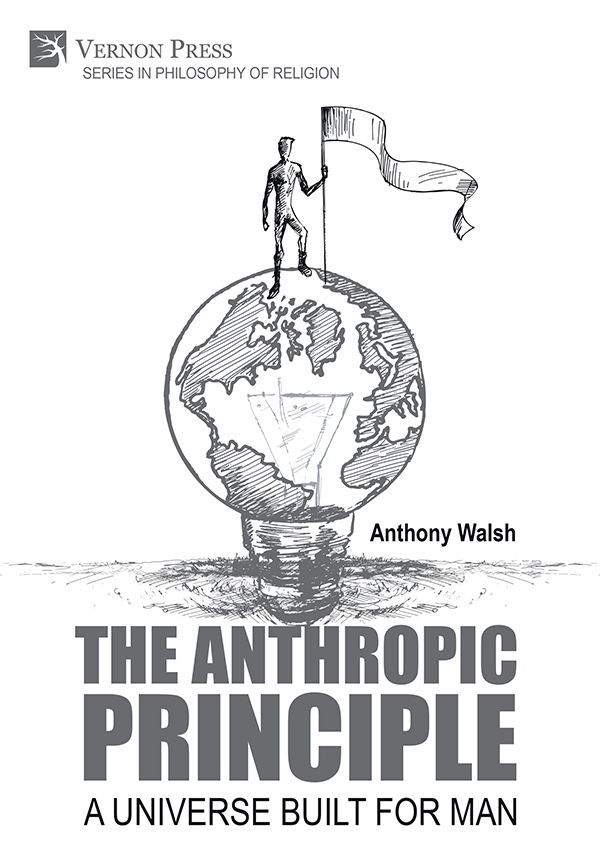
Anthony Walsh
The Copernican Principle states that humankind is an insignificant assemblage of chemical scum living on an accidental planet in a suburb of a purposeless universe. Many prominent scientists, including Nobel laureate physicists, have questioned this scurrilous principle, which has led physicists to propose the Anthropic Principle. This principle posits a purposeful link between the structure of the universe and the existence of humankind and its specialness. The numerous features of the universe are so freakishly fine-tuned for the existence of intelligent life that physicists are beginning to come to grips with the notion that our universe is profoundly purposeful and that there is a powerful and incredibly intelligent Mind behind it all.
Anthony Walsh
“It may seem bizarre, but in my opinion, science offers a surer path to God than religion…science has actually advanced to the point where what were formerly religious questions can be seriously tackled” (Paul Davies, Astrophysicist). Anthony Walsh’s latest riposte to atheistic arguments against God's existence draws on Natural Theology, a knowledge of God based on evidence from both the natural and social sciences. Covering everything from the Big Bang and the origins of life to the mystery of intelligent consciousness, Walsh makes even the most technical scientific writings accessible to the general reader and tackles a question few books on the relationship between science and religion have ever sought to address: how does Christianity positively affect societies, families, and individuals in terms of democracy, justice, happiness, health, and prosperity?
Anthony Walsh
Activists have long claimed that “the personal is political”, but this book posits the converse: that the political is personal. The United States today is bitterly divided. It is less an aspirational melting pot of immigrants and more a salad bowl made up of distinct, often clashing flavors. The successive elections of two divisive presidents—one committed to the perennial leftist dream of “fundamental change” and the other to a conservative vision of “Making America Great Again”—have exacerbated what is arguably the greatest rift in politics since the election of Abraham Lincoln. Taking inspiration from Coleridge’s belief that all humans are temperamentally destined to follow the path of Plato the Idealist or Aristotle the Realist, this book examines the political divide in terms of these temperamental differences. Liberals’ and conservatives’ views of human nature have a large bearing on the political policies they espouse, but their temperaments and personalities have the most significant impact. This book analyses the personality traits of liberals and conservatives in terms of the “Big Five” model—openness to experience, conscientiousness, extraversion, agreeableness, and neuroticism. Conservatives are found in almost all studies to be more conscientious, agreeable, and extroverted, while liberals are found to be more open to new experience and neurotic. The political divisions I explore in this book are all essentially fueled by personality differences. There is a deepening divide between liberals and conservatives in the battle for America’s soul: one side seeks to steer the nation sharply to the left into socialist selfdom, whereas the other side desires a wealthy and free America under the watchful eye of God’s providence. A preponderance of academic texts belongs to the liberal tradition. Conservatives have long lacked a comparable intellectual tradition of their own, although an incipient one is now beginning to form. This book, while maintaining a measure of scholarly distance, is unashamedly written from a conservative point of view.
Anthony Walsh
In the face of increasing attacks on Christianity by militant new atheists, Christians should be able to robustly defend their beliefs in the language spoken by Christianity’s detractors—science. Atheists claim that science and religion are incompatible and in constant conflict, but this book argues that this is assuredly not true. In order to rebut the polemic agenda of the new atheists who want God banned from the public square, this book engages with the physical and natural sciences, social science, philosophy, and history. It shows that evidence from these diverse disciplines constitutes clear signposts to God and the benefits of Christianity for societies, families, and individuals. Answering the New Atheists begins by examining what new atheism is, before demolishing its claim that Christianity is harmful by showing the many benefits it has for freedom and democracy, morality, longevity, and physical and mental health. Many historians of science contend that science was given its impetus by the Christian principle that a rational God wants us to discover his fingerprints on nature. Thus, in subsequent chapters, Walsh presents a well-informed and philosophical-based analysis of the Big Bang and cosmic fine-tuning, the unimaginable improbability of factors that make this planet habitable, and the multiverse often called the “last refuge of the desperate atheist.” Interdisciplinary in its approach, this book adeptly explores the very problematic issues of the origin and evolution of life that have forced many top-rate scientists including Nobel Prize winners, who have thought deeply about the philosophical meaning of their work, to accept God as the Creator of everything.
Anthony Walsh
This book addresses the benefits of Christianity for all, the degradation of our culture since the 1950s, the pernicious effects that cultural Marxism has had on Western cultures, and the loss of religious freedom as the Founders envisioned it due to a number of Supreme Court rulings. We cannot understand the culture war and cultural debasement until we understand cultural Marxism. Cultural Marxism has been "hiding in plain sight" since the 1930s with the immigration to the United States of a cadre of intellectuals from Germany who brought with them the folderol of critical theory, political correctness, gender neutrality, radical feminism, and moral relativism. This intellectual moonshine is designed to weaken family structure and individual morality, and it has worked. The ultimate purpose of cultural Marxism is to destroy Western civilization from within. This goal is clearly and unambiguously stated in their books and articles. In numerous places in these books and articles, cultural Marxists are adamant that if socialism is ever to come to America the two epicenters of Western morality, the family and Christianity, will have to be destroyed by slow, stealthy, and incremental attacks on them. They have been aided in their efforts by anti-Christian rulings by the United States Supreme Court since the 1940s. I do not claim in any sense that the Supreme Court is engaged in a conspiracy with cultural Marxists. Their rulings have been based on a reading of the Establishment Clause of the First Amendment that its authors would not recognize, and have used this clause to eviscerate the Free Exercise Clause—America’s “first freedom.” The Court has purged Christianity from the public square, and in doing so it has unwittingly helped the cultural Marxist agenda by spiritually disarming America.
Questioning Conventional Wisdom
Anthony Walsh
This book is an expedition into a number of controversial issues in the social sciences with the intention of challenging the conventional wisdom on those issues. While most social science research is interesting and important, a fair amount of social science research is thinly disguised advocacy research in which conclusions too often precede inquiries. The primary topics are those that the journal Nature described as "Taboo". In order of the degree of censure, the topics are: race, sex differences, intelligence, and violence. The only way to examine these topics with the social science seal of approval attached is through a strictly environmental lens. To bring biological factors to bear on them is politically incorrect and can bring the wrath of the academy down on one’s head. Although many researchers successfully bring biology into their research on these issues, they are said to risk career and reputation for doing so. Speech codes stifling free intellectual exchange pervade the ivory tower, and an overwhelmingly liberal faculty hell-bent on eliminating any vestiges of opposition to their ideology. This is unconscionable in an institution that is supposed to value free exchange of all ideas and opinions. The current state of academic social science is examined before entering the substantive realm to try to explore how the topics I explore have become protected from any claims of "naturalness." Because the left rejects the idea of human nature, it insists that these things are products of social learning and/or social construction and are entirely fluid. To maintain this position in light of the huge and exponential successes of the natural sciences, the left embraces such frames of reasoning as postmodernism, radical relativism, multiculturalism, and political correctness, all of which are examined in this book. Also discussed are human nature, whiteness studies, political temperaments, various criminal justice issues, and capitalism versus socialism.