Loading...
Please wait while we load the content...

Loading...
Please wait while we load the content...
University of Cagliari, Italy
Pietro Salis and Alessandra Melas
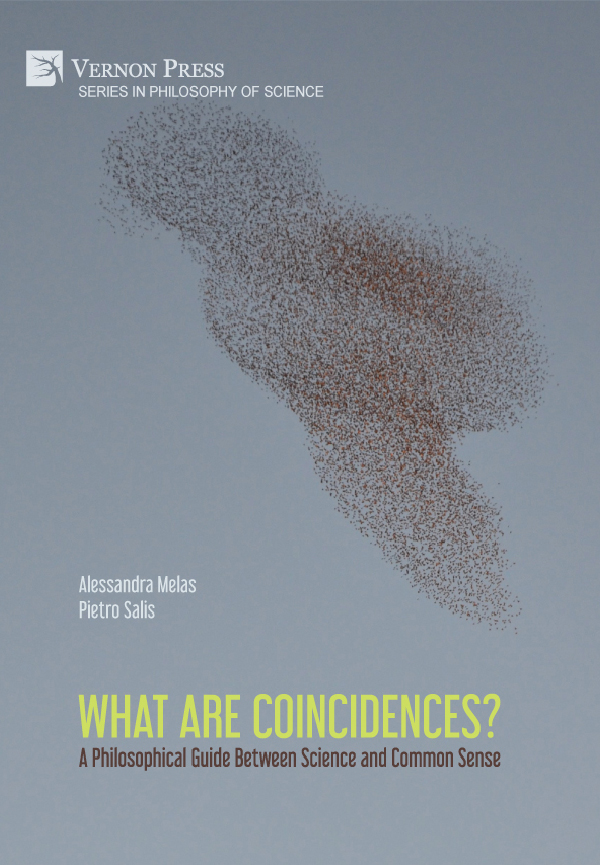
It is a common opinion that chance events cannot be understood in causal terms. Conversely, according to a causal view of chance, intersections between independent causal chains originate accidental events, called “coincidences”. Firstly, this book explores this causal conception of chance and tries to shed new light on it. Such a view has been defended by authors like Antoine Augustine Cournot and Jacques Monod. Second, a relevant alternative is provided by those accounts that, instead of acknowledging an intersection among causal lines, claim to track coincidences back to some common cause. Third, starting from Herbert Hart and Anthony Honoré’s view of coincidences (Causation in the Law. Clarendon Press, Oxford, 1959). This book provides a more detailed account of coincidences, according to which coincidental events are hybrids constituted by ontic (physical) components, which is the intersection between independent causal chains, plus epistemic aspects, including but not limited to, access to information, expectations, relevance, significance, desires, which in turn are psychological aspects. The main target of the present work is to show that the epistemic aspects of coincidences are, together with the independence between the intersecting causal chains, a constitutive part of coincidental phenomena. This book aims to introduce and discuss recent work in psychology concerning one’s judgment about coincidences; this data offers further materials and reasons to reflect upon our understanding of coincidences and to refine our hybrid conception.
Ronald A. Kuipers, Rodolfo Gutiérrez Simón, Susana de Castro, Pilar Salvá Soria, Angel Rivera-Novoa, Rebeca Pérez León, Anthony Vecchio, J. A. Colen, David Haack, Bernhard Josef Sylla, Pietro Salis, Hernán Medina-Botero, Juan Ignacio Cardona Giraldo, Aldir Carvalho Filho, Agnė Alijauskaitė, William Max Knorpp, and Robert Brandom
Richard Rorty is considered one of the most original philosophers of the last decades, and he has generated warm enthusiasm on the part of many intellectuals and students, within and outside the field of philosophy. The collection opens with an essay by Robert Brandom, in which he continues the discussion of Rorty’s “vocabulary vocabulary” that he began in Rorty and his Critics, and ends with an interview in which Brandom talks about Rorty himself as a teacher and friend. The collection is then divided into three further sections, each addressing an aspect of Rorty’s thought. First, a political section contains several essays discussing Rorty’s notorious “prophecy” in Achieving our Country and the idea that he would have foreseen the rise of a political “strongman.” Also discussed are Rorty's view of the cultural left, his view of the relation between truth and democracy, and Rorty on the concept of fraternity. In a second, epistemological section, several essays address Rorty’s historicism, anti-representationalism, and his views on truth and on religion, often through the lenses of his critics (Putnam, Habermas, Dews). A final section addresses the relations between Rorty and other philosophers such as Hume, Heidegger, and Ortega y Gasset. This works contains valuable essays in three languages — English, Portuguese, and Spanish — and is a small example of the reach of Rorty’s thought and its expansion beyond the Anglo-Saxon world in only ten years after his death. It will appeal to Rorty’s scholars and researchers as well as any student of pragmatism and anti-foundationalist thought.