Loading...
Please wait while we load the content...

Loading...
Please wait while we load the content...
University of Surrey
Aino-Kaisa Koistinen, Sara Orning, Line Henriksen, Ingvil Hellstrand, Lucile Desblache, Riccardo Baldissone, Andrea Mubi Brighenti, Sweta Rajan-Rankin, Panos Kompatsiaris, Carl Olsson, Paul Reid-Bowen, Vivian Asimos, Signe Perkone, Ramón Córdova González, Emanuele Prezioso, Jack Boulton, and Donna McCormack
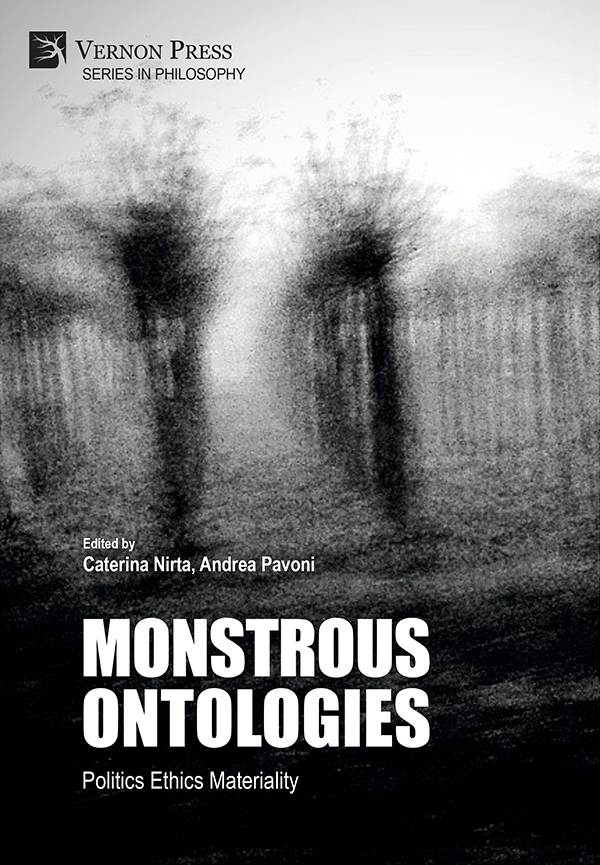
While the presence of monsters in popular culture is ever-increasing, their use as an explicit or implicit category to frame, stigmatise, and demonise the other is seemingly on the rise. At the same time, academic interest for monsters is ever-growing. Usually, monstrosity is understood as a category that emerges to signal a transgression to a given order; this approach has led to the demystification of the insidious characterisations of the (racial, sexual, physical) other as monstrous. While this effort has been necessary, its collateral effects have reduced the monstrous to a mere (socio-cultural) construction of the other: a dialectical framing that de facto deprives monstrosity from any reality. 'Monstrous Ontologies: Politics, Ethics, Materiality' proffers the necessity of challenging these monstrous otherings and their perverse socio-political effects, whilst also asserting that the monstrous is not simply an epistemological construct, but that it has an ontological reality. There is a profound difference between monsters and monstrosity. While the former is an often sterile political and social simplification, the end-product of rhetorical and biopolitical apparatuses; the latter may be understood as a dimension that nurtures the un-definable, that is, that shows the limits of these apparatuses by embodying their material excess: not a 'cultural frame', but the limit to the very mechanism of 'framing'. The monstrous expresses the combining, hybridising, becoming, and creative potential of socio-natural life, albeit colouring this powerful vitalism with the dark hue of a fearful, disgusting, and ultimately indigestible reality that cannot simply be embraced with multicultural naivety. As such, it forces us towards radically changing not the categories, but the very mechanisms of categorisation through which reality is framed and acted upon. Here lies the profound ethical dimension that monstrosity forces us to acknowledge; here lies its profoundly political potential, one that cannot be unfolded by merely deconstructing monstrosity, and rather requires to engage with its uncomfortable, appalling, and revealing materiality. This book will appeal to postgraduate students, PostDocs, and academics alike in the fields of philosophy, critical theory, humanities, sociology and social theory, criminology, human geography, and critical legal theory.
Donna McCormack, Ingrid Bachmann, Jennifer Poole, Emily Jan, Dana Dal Bo, Alexa Wright, Andrew Carnie, Hannah Redler Hawes, Susan Abbey, Margrit Shildrick, Enza De Luca, Heather Ross, and Tammer El-Sheikh
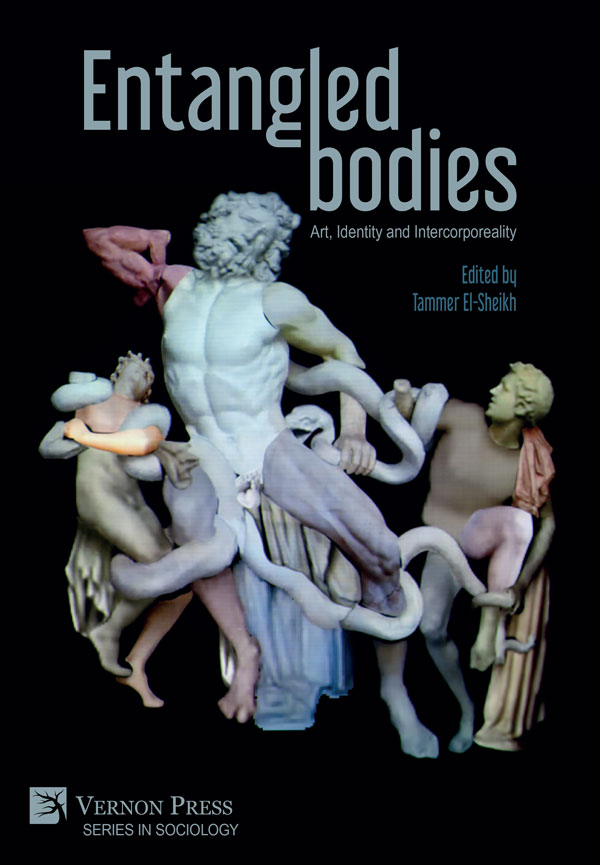
Organ transplantation is a medical innovation that has offered the potential to enhance and save lives since the first successful procedure in the 1950s. Subsequent developments in scientific knowledge and advances in surgical techniques have allowed for more efficient and refined procurement, minimal surgical complications, and increased success rate. However, procedures such as organ transplantation raise questions about the nature of our relationship with our own bodies; about our embodiment and personal and corporeal identity. This book is comprised of academic essays, personal reflections, and creative writing from researchers and artists involved in an ongoing collaborative art-science project about the experience and culture of heart transplantation. The writings and reflections included discuss embodiment, what it means to inhabit a body and define oneself in relation to it, including struggles with identity formation; set in both clinical and private spaces. The uniqueness of this volume consists in the authors’ aim of connecting the specific experience of heart transplantation to the more widely shared experience of relating to the world and one another through the body’s physical, perceived, and imagined boundaries. Such boundaries and the commonly held beliefs in personal autonomy that are associated with them are a subject of ongoing philosophical and scientific debate. What’s more, the resources of art and culture, including popular culture, literature, historical and contemporary art, are extremely useful in revising our views of what it means for the body’s boundaries to be philosophically ‘leaky.’ Following the discussion initiated by contributor Margrit Shildrick, this book contributes to the field of inquiry of the phenomenon of embodiment and inter-corporeality, the growing body of literature emerging from collaborative art-science research projects, and the wider area of disability studies. This book will be of particular interest to those with personal, scholarly, and creative interests in the experience of transplantation, or illness in general.