Loading...
Please wait while we load the content...

Loading...
Please wait while we load the content...
Conservatory of Music of Gallarate; Associazione Europea di Musica e Comunicazione (AEMC), Italy
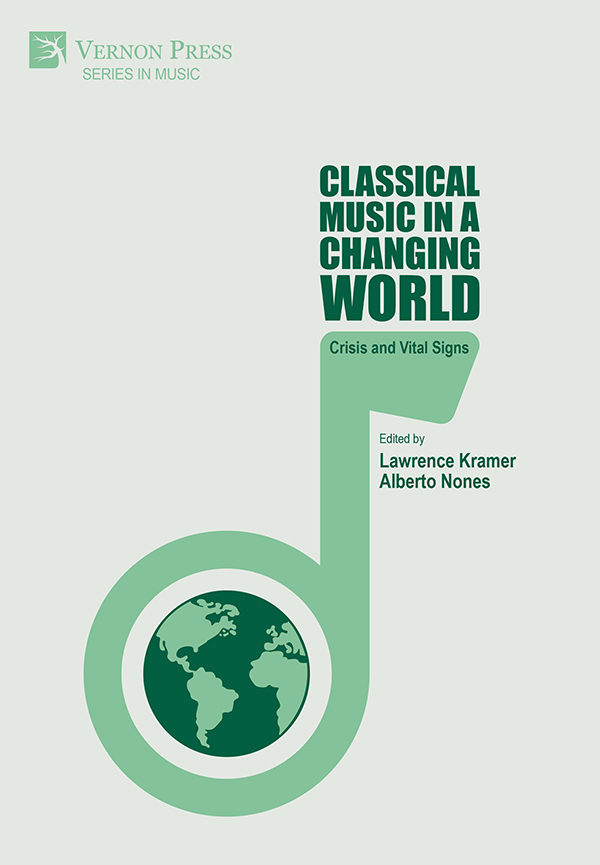
Crisis and Vital Signs
Alberto Nones, Francisco Castillo, Lawrence Kramer, Özgecan Karadağlı, Hamish Robb, Federica Marsico, Natalie Tsaldarakis, and Amy Damron Kyle
In recent years classical music has become a test case for debates over the future of culture. As times have changed, the value traditionally placed on this music has been challenged on social rather than aesthetic grounds. Lovers of classical music have been asked how its privileged history can be reconciled with growing demands for social justice and social inclusiveness. They have been asked how the music’s standing as one of the great accomplishments of the West can be reconciled with the many injustices on which those accomplishments in part depended. How can the future of classical music escape the darker shadows of its past? ‘Classical Music in a Changing World: Crisis and Vital Signs’ addresses the crisis provoked by such questions in two complementary ways. Several of the chapters show how the classical music world is already grappling with the crisis, and finding vital signs beyond the borders of the music’s traditional European strongholds: in Turkey from Ottoman times to the present, in Colombia, and in a Black American film. Other chapters identify areas that still need improvement, especially on behalf of female and LGBTQ+ musicians, and suggest how advances can be made both on concert stages and in schools. This volume, which opens with an introduction by Alberto Nones that contextualizes the book and outlines the main arguments of its chapters, contains an essay by Lawrence Kramer that examines the place of classical music in the history of consciousness—a history now changing rapidly—and concludes with a Postscript written by the two editors. The writing in this volume will be accessible to a wide audience, including scholars and students, professionals and amateurs, performers and listeners. Teachers will find it a source of lively classroom debate, and scholars a source of learning outside the usual arenas. The book’s “vital signs” include the accompanying audio tracks (available for download at: https://vernonpress. com/book/1281), which feature vibrant music-making from a diverse range of performers and composers.
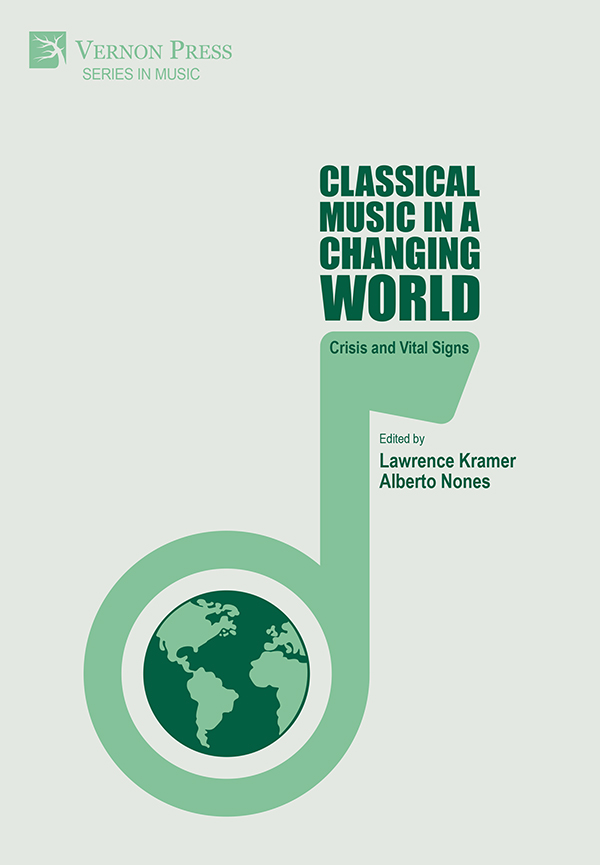
Crisis and Vital Signs
Federica Marsico, Amy Damron Kyle, Natalie Tsaldarakis, Hamish Robb, Özgecan Karadağlı, Lawrence Kramer, Francisco Castillo, and Alberto Nones
In recent years classical music has become a test case for debates over the future of culture. As times have changed, the value traditionally placed on this music has been challenged on social rather than aesthetic grounds. Lovers of classical music have been asked how its privileged history can be reconciled with growing demands for social justice and social inclusiveness. They have been asked how the music’s standing as one of the great accomplishments of the West can be reconciled with the many injustices on which those accomplishments in part depended. How can the future of classical music escape the darker shadows of its past? ‘Classical Music in a Changing World: Crisis and Vital Signs’ addresses the crisis provoked by such questions in two complementary ways. Several of the chapters show how the classical music world is already grappling with the crisis, and finding vital signs beyond the borders of the music’s traditional European strongholds: in Turkey from Ottoman times to the present, in Colombia, and in a Black American film. Other chapters identify areas that still need improvement, especially on behalf of female and LGBTQ+ musicians, and suggest how advances can be made both on concert stages and in schools. This volume, which opens with an introduction by Alberto Nones that contextualizes the book and outlines the main arguments of its chapters, contains an essay by Lawrence Kramer that examines the place of classical music in the history of consciousness—a history now changing rapidly—and concludes with a Postscript written by the two editors. The writing in this volume will be accessible to a wide audience, including scholars and students, professionals and amateurs, performers and listeners. Teachers will find it a source of lively classroom debate, and scholars a source of learning outside the usual arenas. The book’s “vital signs” include the accompanying audio tracks (available for download at: https://vernonpress. com/book/1281), which feature vibrant music-making from a diverse range of performers and composers.
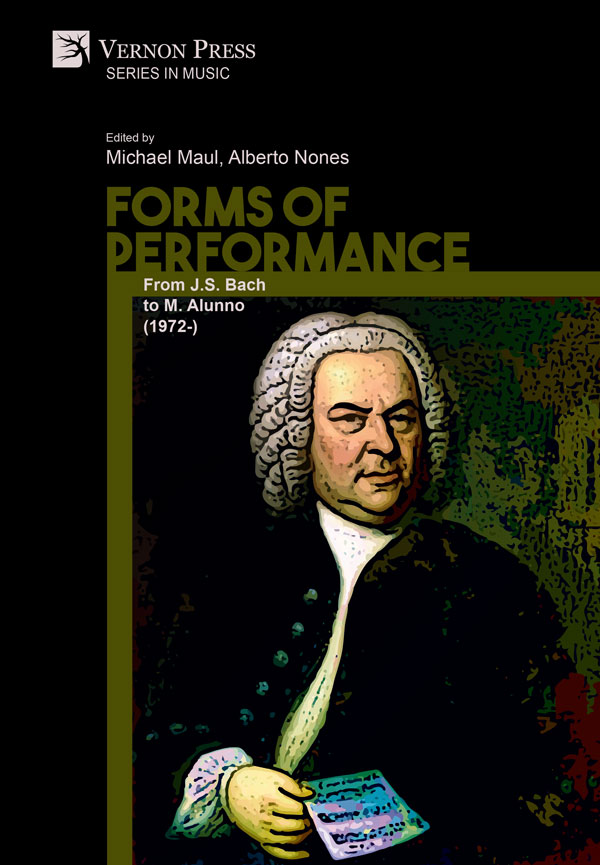
Marco Alunno, Nunzia Santodirocco, Andrés Ruiz, Gianluca Luisi, Andrés Gómez Bravo, Francisco Castillo, Maria Borghesi, Chiara Bertoglio, Michael Maul, Alberto Nones, and Mario Ciferri
Today, Bach is one of the most revered and studied figures of classical music, despite there being a time in which he was almost forgotten. Divided into two sections, this volume explores research on J.S. Bach and more broadly examines the topics of music and performance studies; with the latter focusing on composers active today, such as Marco Alunno, or those from the recent past who are lesser-known and performed, such as Pietro Cimara and Leo Ornstein. Following from Nones’s (ed.) previous publication Music as Communication: Perspectives on Music, Image and Performance (ABE, 2018), this work provides a rather unique contribution as a choral attempt at exploring performance today. The intention of this book and the downloadable audio content, with live recordings of the music explored at the conference from which the volume originated, is to inspire fresh approaches to the study of a monument like Bach, while also encouraging original research of modern composition and performance. Recordings of the performances given over the two days of the conference serve either to clarify arguments made in the papers or to attest to the music explored more generally. This volume is founded on the belief that the history of music is comprised of many figures, some of whom are undeservedly forgotten, and that our understanding of and approach to music is simultaneously shaped by the past and directed by the continual evolution of sounds and attitudes of the present. Examining music styles from baroque (Bach) to contemporary (Alunno), Forms of Performance will be of particular interest to Bach and performance studies scholars, as well as advanced researchers and PhD students in this field.
Michael Maul, Chiara Bertoglio, Maria Borghesi, Francisco Castillo, Mario Ciferri, Andrés Gómez Bravo, Gianluca Luisi, Marco Alunno, Andrés Ruiz, Nunzia Santodirocco, and Alberto Nones
Today, Bach is one of the most revered and studied figures of classical music, despite there being a time in which he was almost forgotten. Divided into two sections, this volume explores research on J.S. Bach and more broadly examines the topics of music and performance studies; with the latter focusing on composers active today, such as Marco Alunno, or those from the recent past who are lesser-known and performed, such as Pietro Cimara and Leo Ornstein. Following from Nones’s (ed.) previous publication Music as Communication: Perspectives on Music, Image and Performance (ABE, 2018), this work provides a rather unique contribution as a choral attempt at exploring performance today. The intention of this book and the downloadable audio content, with live recordings of the music explored at the conference from which the volume originated, is to inspire fresh approaches to the study of a monument like Bach, while also encouraging original research of modern composition and performance. Recordings of the performances given over the two days of the conference serve either to clarify arguments made in the papers or to attest to the music explored more generally. This volume is founded on the belief that the history of music is comprised of many figures, some of whom are undeservedly forgotten, and that our understanding of and approach to music is simultaneously shaped by the past and directed by the continual evolution of sounds and attitudes of the present. Examining music styles from baroque (Bach) to contemporary (Alunno), Forms of Performance will be of particular interest to Bach and performance studies scholars, as well as advanced researchers and PhD students in this field.