Loading...
Please wait while we load the content...

Loading...
Please wait while we load the content...
City University of Istanbul, Turkey; University of Winchester, UK
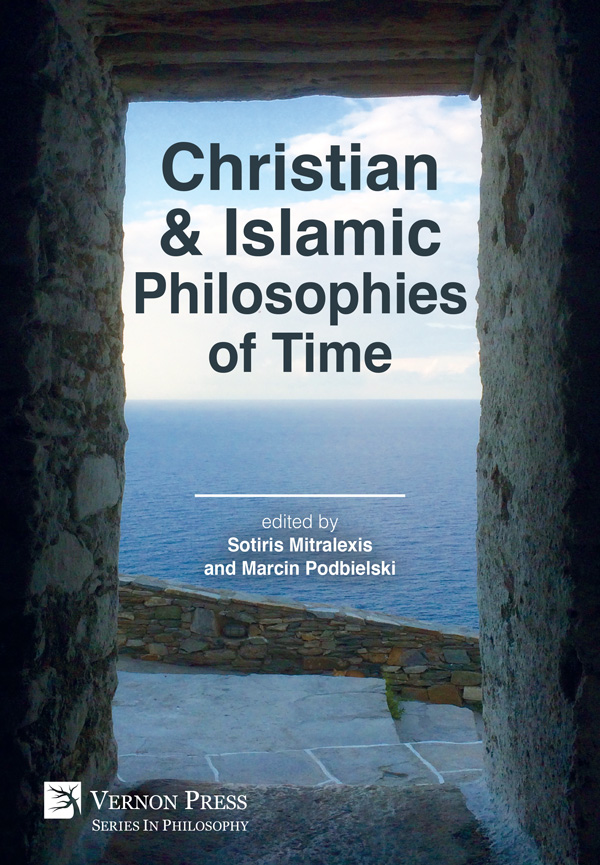
Sotiris Mitralexis
This volume constitutes an attempt at bringing together philosophies of time—or more precisely, philosophies on time and, in a concomitant way, history—emerging from Christianity’s and Islam’s intellectual histories. Starting from the Neoplatonic heritage and the voice of classical philosophy, the volume enters the Byzantine and Arabic intellectual worlds up to Ibn Al-Arabi’s times. A conscious choice in this volume is not to engage with, perhaps, the most prominent figures of Christian and Arabic philosophy, i.e., Augustine on the one hand and Avicenna/Ibn Sina on the other, precisely because these have attracted so much attention due to their prominence in their respective traditions—and beyond. In a certain way, Maximus the Confessor and Ibn Al-Arabi—together with Al-Fārābi—emerge as alternative representatives of their two traditions in this volume, offering two axes for this endeavor. The synthesis of those approaches on time and history, their comparison rather than their mere co-existence, is left to the reader’s critical inquiry and philosophical investigation.
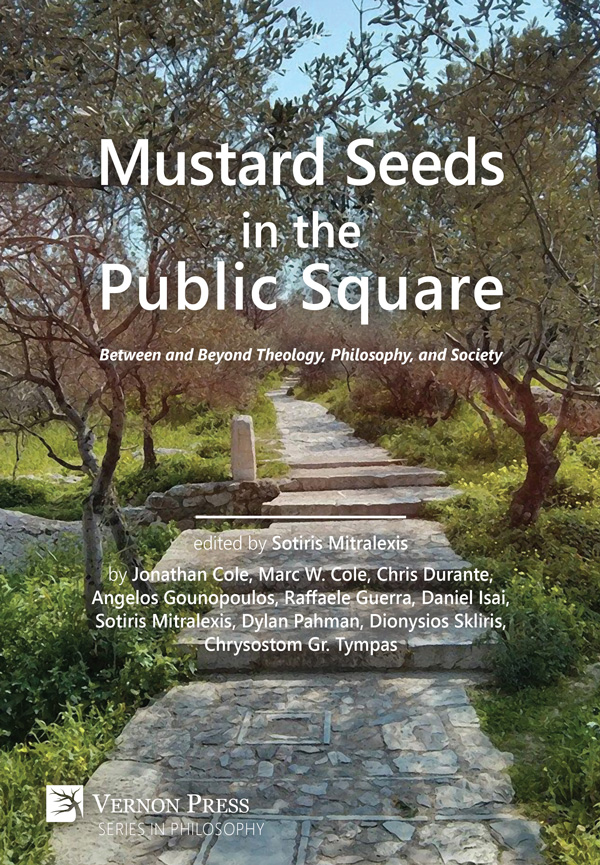
Between and Beyond Theology, Philosophy, and Society
Sotiris Mitralexis, Jonathan Cole, Marc W. Cole, Chris Durante, Angelos Gounopoulos, Raffaele Guerra, Daniel Isai, Dylan Pahman, Dionysios Skliris, and Chrysostom Gr. Tympas
This volume seeks to explore the intersection of theology, philosophy and the public sphere not by referring the social and political to ethics and deontology as is often the case, but rather to ontology itself, to the very nature of beings. The meaning of history and historicity is most pertinent to this enquiry and is approached here both from the perspective of social reality and from the perspective of ontology. Joining together contributions focusing on theory of the public sphere and metaphysics, chapters explore subjects as diverse as the political implications of the Incarnation, the paradox between ontology and history, politically left and right appropriations of Christianity, the fecundity of Maximus the Confessor’s insights for a contemporary political philosophy, modern Orthodox political theology focusing on Christos Yannaras and numerous thematic areas that together form the mosaic of the enquiry in question.