Loading...
Please wait while we load the content...

Loading...
Please wait while we load the content...
University of Innsbruck, Austria
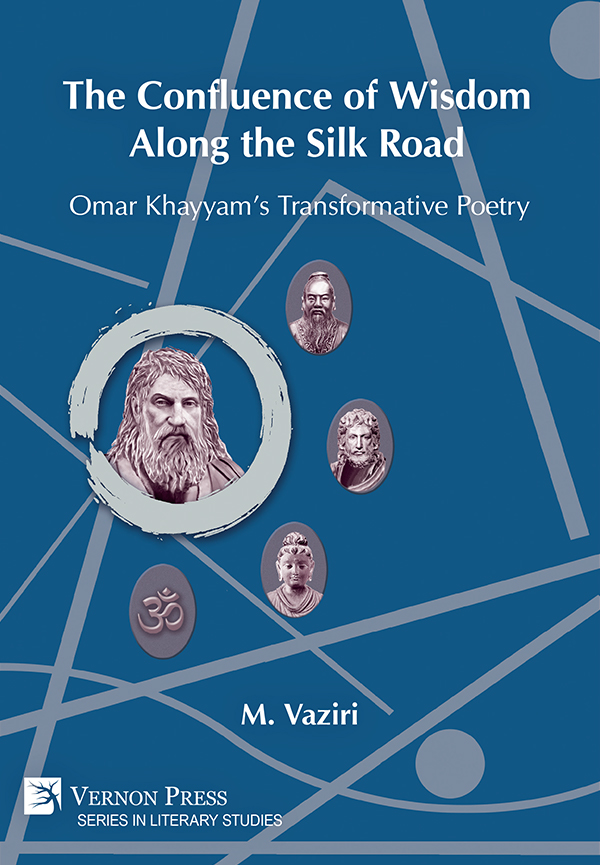
Omar Khayyam’s Transformative Poetry
Mostafa Vaziri
For centuries along the vibrant cultural corridor of the Silk Road of Central Asia, philosophers and thinkers from Hellenic, Chinese and Indian traditions debated existential issues. Out of this stimulating milieu, the iconic poet-mathematician Omar Khayyam emerged in the eleventh century, advancing a transformative intercultural philosophy in his poetic work, the Rubaiyat. Vaziri traces the themes of Khayyam’s Rubaiyat back to the highly influential philosophical traditions of the Silk Road and uncovers fascinating parallels in original works by Heraclitus, Zhuangzi (Daoism), Nagarjuna (Mahayana Buddhism), and the Upanishads. In addition, Vaziri’s elegant translation and unique classification of the verses of the Rubaiyat reveal an existential roadmap laid out by Khayyam. In this pioneering volume, Vaziri not only fuses the multiple disciplines of literature, philosophy, culture, history and medicine but also takes the approach of the Rubaiyat to a new level, presenting it as a source of wisdom therapy that stands the test of time in the face of doubt and confusion, offering a platform for self-restoration.
From the Buddha to Omar Khayyam
Mostafa Vaziri
The critical narrative of this interdisciplinary book offers a first-time look at the interrelationship between biology, mythology and philosophy in human development. Its daring premise follows the trajectory of human thought, starting with the biological roots of fear and the original need for religion, truth-seeking, and myth-making. The narrative then innovatively links a number of maverick philosophical teachings over the centuries, from pre-Buddhist times to the Buddha, from Epicurus and Pyrrho to Lucretius, and eventually to the seminal poetry of Omar Khayyam. These emergent philosophies exemplified liberation from the grasp of mythical and religious thinking and instead espoused an empirical and joyful mind. The narrative concludes with a look at the emancipating philosophical movement that resulted in the European Enlightenment, and it suggests that the philosophical teachings explored in the book may offer the potential for a second, broader Enlightenment.