Loading...
Please wait while we load the content...

Loading...
Please wait while we load the content...
Medicine Hat College, Canada
Allison Dube, Deborah Forbes, Kathryn Shailer, Graham W. Taylor, Carolyn Willekes, Ronald Peter Glasberg, James Cunningham, and Rory Schacter
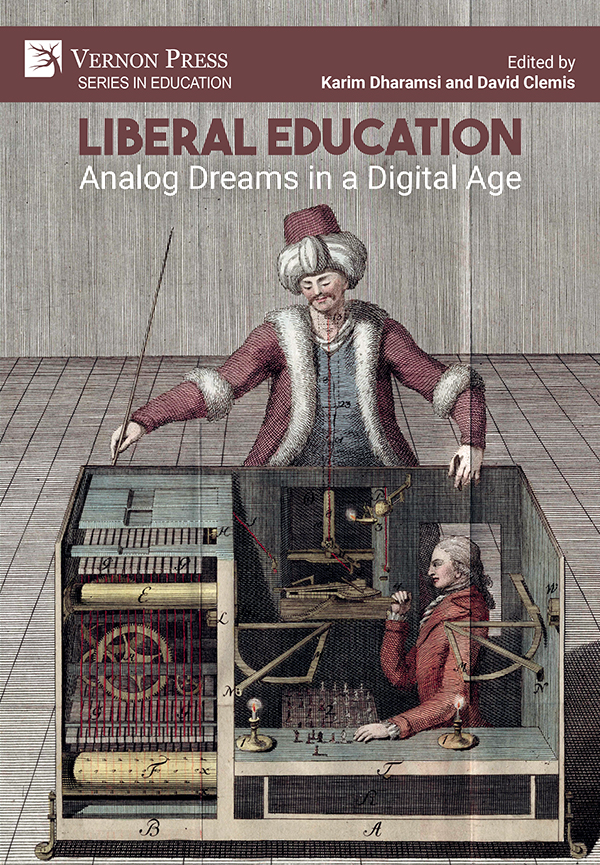
The essays in this collection contemplate the various intersections and barriers between artificial intelligence along with the values and practices of liberal education. For the proponents of liberal education as a core component of undergraduate education, the study of literature, history, philosophy, and the social sciences, like their objects and their forms of practice, are perceived to be about what is essentially human. In spheres previously thought to be exclusively human domains, modern, digitally-constructed artificial intelligence has profound implications for liberal studies, how they may be practiced, and why they are important. This collection explores the implications of AI and the world it is shaping as a potential threat and augmentation of liberal education. These essays also demonstrate how liberal studies illuminate the meaning and significance of AI and how they have shaped its development and character. The contributors to this volume write from the perspectives of philosophy, classical studies, political theory, fine art, curriculum development, and computing and information science. Several essays consider how the conventional concerns and agendas of liberal education have acquired a new urgency in the digital age. They reflect upon how the deployment of artificial intelligence confronts and problematizes what it means to be human, and how liberal education is needed to preserve and ensure what makes us humans thrive. Other essays consider how AI must be understood as an extension of our humanity and how the ethos must inform the further development and deployment of new technologies of liberal education. These challenging essays pose hard questions and the unflinching exploration of matters at the cutting edge of science, culture, and how they merge together with education.
Navneet Kumar, Jason Openo, Robert Randolph, Andrew Moore, David Ohreen, Ronald Glasberg, Deborah Forbes, and James Cunningham
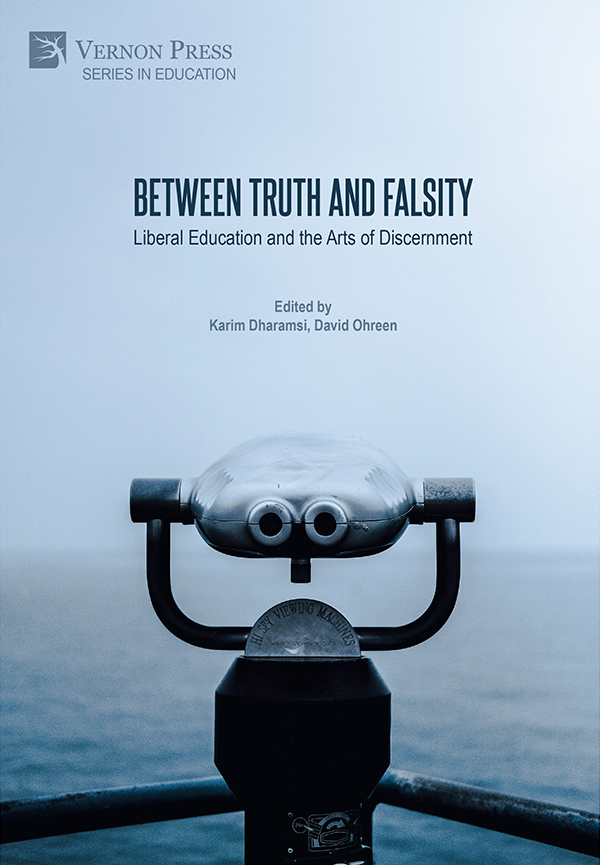
It seems we are awash in information. From the moment we wake until we turn over our phones at night, we are bombarded with images and messages, news and information from a confounding number of sources. But as the amount of information available to us increases ever more rapidly, its quality and reliability seem less credible. Russian troll bots, 4chan, Breitbart, and Rebel Media, challenge our credulity, but they do so by mimicking aesthetic registers consumers expect of “traditional” media outlets. Moreover, traditional news sources, both privately owned and public broadcasters, already weakened by eroding revenue, cuts to budgets, and shifting demographics, are under sustained attack from those who wish to damage their ability to hold powerful people to account. Instead of a multi-perspectival approach, which seeks to report to the public the many ways to address a particular issue, taking the reporter’s role as neutral with regard to outcome, “fake” or “ideologically” driven news sources compete for audience attention and faithfulness, often using emotion to rally people toward a certain political cause or issue. Academics, meanwhile, have their work attacked and undermined by people or groups seeking to advance political or economic interests. They are told they too are political actors, one more voice in a messy public arena instead of a font of reliable information and knowledge. While academics continue to believe that their work, at least in part, enhances our understanding of the world and informs debate, how do we know that their conclusions are indeed more reliable than their critics in the “post-truth” era? ‘Between Truth and Falsity: Liberal Education and the Arts of Discernment’ will aid academics and students seeking to better grasp the value of liberal education within this post-truth era. It seeks to advance pedagogical ideas in order to fight factual erosion and reinforce intellectual capacities that are able to critically assess the chaos of information enveloping all segments of society. This volume will therefore be of particular interest to academics and university educators working in higher education, graduate students theorizing the nature of media and the role of higher education, undergraduates studying liberal education and the nature of the university, and those thinking about liberal education.
Arguments and Reflections on Theory and Practice
Sharon Allan, Magid Youssef, Karim Youssef, Shelly Wismath, Hektor K.T. Yan, Gary Thompson, Jeff Shires, Kathryn Shailer, Brad Quiring, David Ohreen, Heather Mirau, Roberta Lexier, Collette Lemieux, Navneet Kumar, Ronald Glasberg, Deborah Forbes, Allison Dube, James Cunningham, Katherine E. Aidala, and Jan Newberry
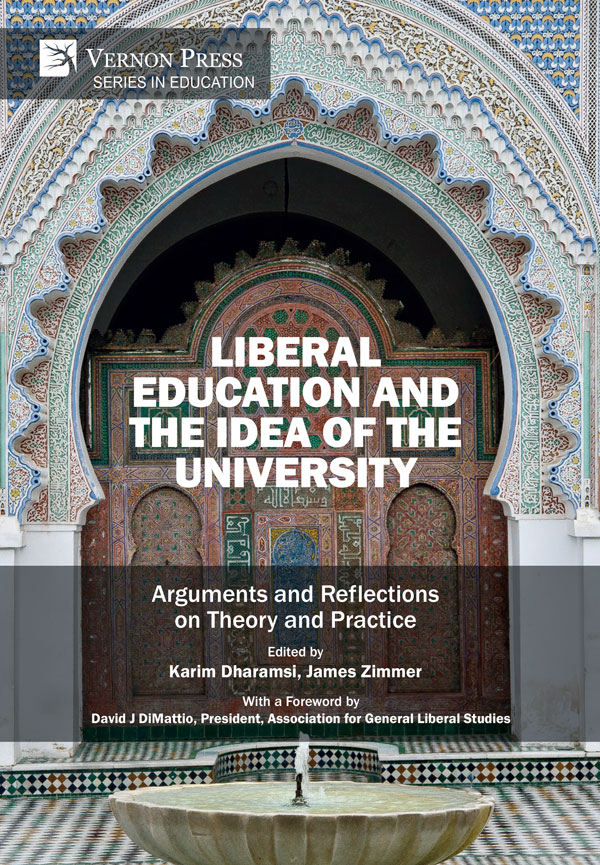
The idea of the university and the idea of liberal education share a family resemblance. However, it is not always explicitly clear what they have in common and what differentiates them. This collection brings together arguments and reflections on the nature of the university and the place of liberal learning in the 21st century. It is divided into two parts. In the first part authors examine the values and ideals that shape our understanding of liberal learning and the university; in the second part authors consider pedagogies informing our practices, asking after what underlying presuppositions, when made explicit, guide our liberal education classrooms in higher education. Unique in its approaches, this volume includes defenses of liberal education’s intrinsic value, the commodification of some of its best ideals, as well as utilitarian defenses that challenge some orthodox conceptions of liberal learning and its justifications. Each in its own right understands liberal learning as essential to the defense of a democratic order. On the pedagogical side, included are essays that defend a view of liberal education from the vantage of STEM subjects, including architecture, as well as those we typically associate with the liberal arts. This volume will aid academics and students seeking to better grasp an understanding of liberal education, but also those seeking to advance their pedagogical ideas about liberal learning. Researchers and students in education, higher education and those interested in the liberal arts and sciences will find this volume a useful addition to their collection.